


Another coat of paint, or a fresh start?
Project at a glance
- Location
- Mount Pleasant, South Carolina
- Existing exterior
- Cedar siding
- Selected direction
- James Hardie fiber cement
- Design discussion
- Blue siding with contrasting light trim
Repair the cedar and paint again, or give the house a new exterior? That was the choice facing the homeowners at this Mount Pleasant home. Our Contract Exteriors team helped them work through both directions, from the existing siding concerns to the materials and colors that would shape the finished house.
It’s a big decision. You want to like what you see when you come home, and you want to understand what you’re committing to before the work begins. A siding sample helps you picture the look. A clear proposal helps you understand how to get there.
These homeowners chose James Hardie fiber cement, with blue siding and contrasting light trim. The story is useful if you’re weighing the same repair-or-replace question. Our Charleston-area remodeling resources can help you work through the next steps for your own home.
Should you repair cedar siding or replace it with fiber cement?
Before getting attached to a new color, give the existing walls a proper look. Which cedar boards can stay? Which need attention? What would another round of repairs and painting actually address? Those answers give the decision a starting point.
At this home, our CE team walked through visible siding concerns with the homeowners and compared replacement with repairing boards and repainting. Working through both options helped make the choice more concrete.
When you have two proposals in front of you, look past the totals for a moment. Do they cover the same walls? The same trim? Removal, preparation and finishing? A lower number is hard to judge until you know what work comes with it.
Our siding planning guide can help you organize the assessment. Keep the project planning checklist beside you when reviewing proposals, and use the comparison below to spot the questions that still need an answer.
| Decision point | Repair and repaint existing cedar | Replace with James Hardie fiber cement |
|---|---|---|
| Existing condition | Ask which boards can stay and which need repair or replacement, and what concerns the assessment identified. | Ask why removal is recommended and how the exposed wall will be assessed before new siding is installed. |
| Work included | Define board repairs, preparation, paint, trim work and cleanup. | Define removal, wall preparation, siding, trim, finish, cleanup and the process for additional findings. |
| Appearance and finish | Decide whether the existing layout and proposed finish achieve the look you want. | Confirm the exact profile, finish and color; review samples beside the materials that will remain. |
| Upkeep | Ask for the care and repainting guidance applicable to the retained siding and selected coating. | James Hardie recommends routine care. Obtain the instructions for the specific installed product and finish. |
| Budget and disruption | Compare the written repair-and-paint scope and its exclusions; ask what happens if more work is needed. | Compare the complete replacement scope, access needs and construction sequence. Neither option has a universal project price or duration. |
| Approvals and warranty | Confirm applicable local/design approvals and the terms covering repair and painting work. | Confirm applicable local/design approvals and distinguish product/finish warranties from the contractor’s workmanship terms. |
Sources: James Hardie homeowner FAQs
Why did these homeowners choose James Hardie?
For these homeowners, the decision brought together two things: the work involved in another cedar repair-and-paint cycle and the appearance of a replacement exterior. Our team reviewed the proposed move to James Hardie and brought siding and trim samples into the discussion.
James Hardie describes its siding as fiber cement made with ingredients including cement, sand and cellulose fiber. It offers different styles and finishes and recommends routine care. The brand gives you options; you still need to know which product and finish your proposal includes.
This is a good place to slow down and get specific. Look for the profile, finish system and trim selections in writing. You should be able to connect the sample in your hand with the material named in your proposal.
Our James Hardie material guide walks through the product, care and finish questions to bring to that conversation.
Sources: James Hardie homeowner FAQs
Evening Blue, light trim and time with the samples
The homeowners selected Evening Blue for the siding and Navajo Beige for the fascia. Our team left samples with them so they could consider the combination at home. That small part of the process deserves some attention: a color becomes easier to judge when it is sitting beside the rest of your house.
Take the samples outside. Hold them beside the masonry, windows and trim that will stay. Look again when the light changes. Give yourself time to decide whether the combination works across the home, then confirm the selections in writing.
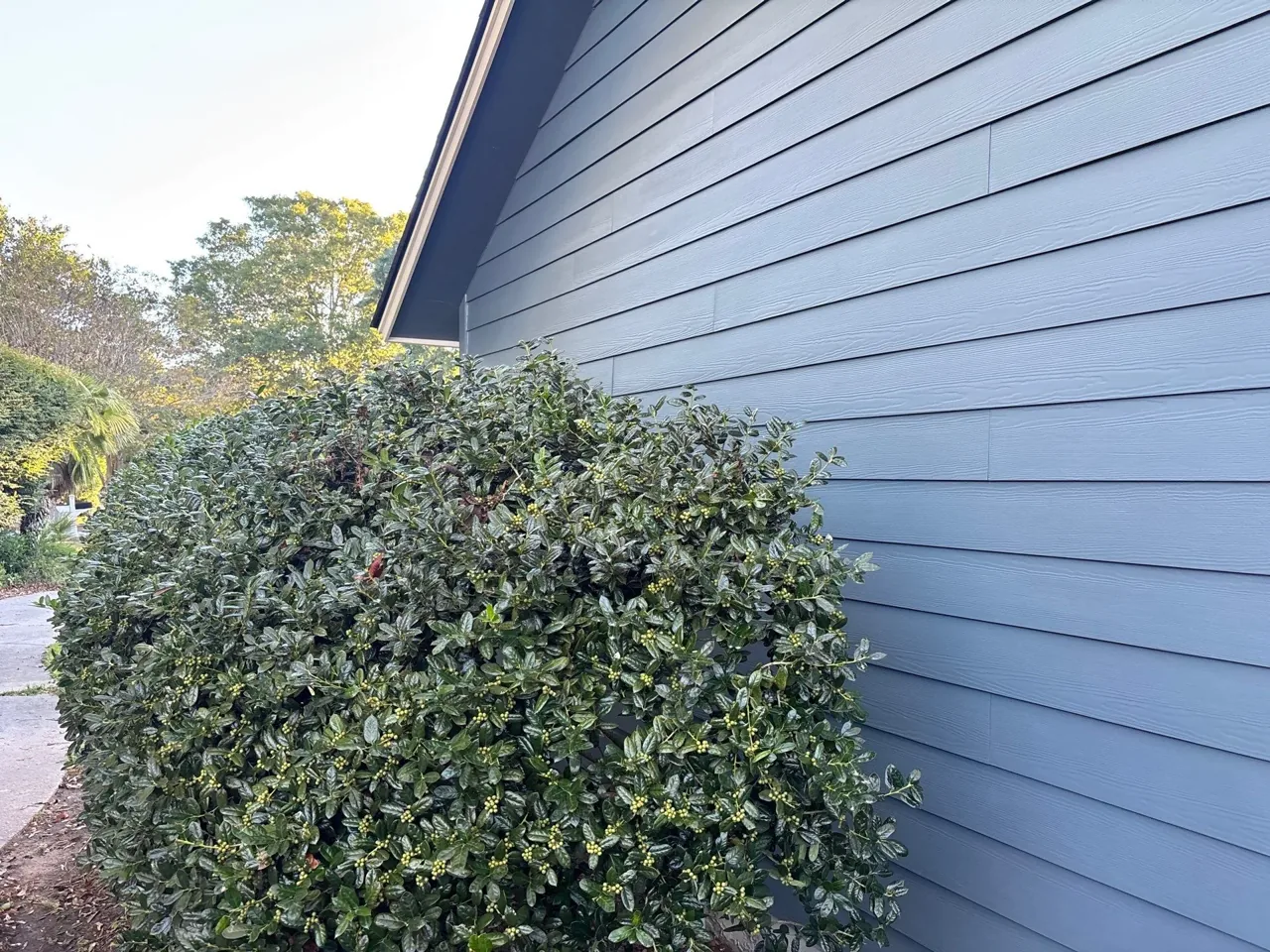
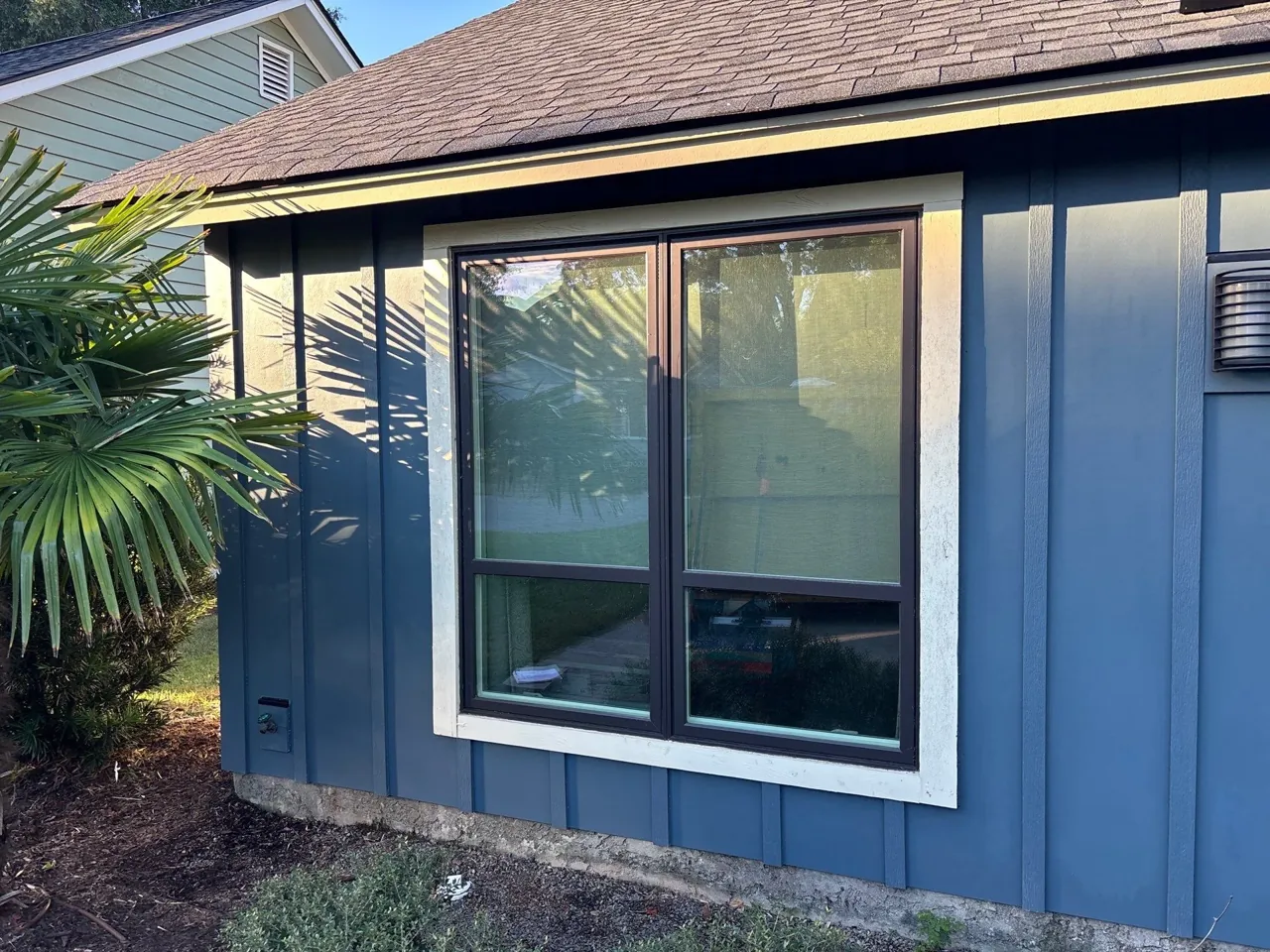
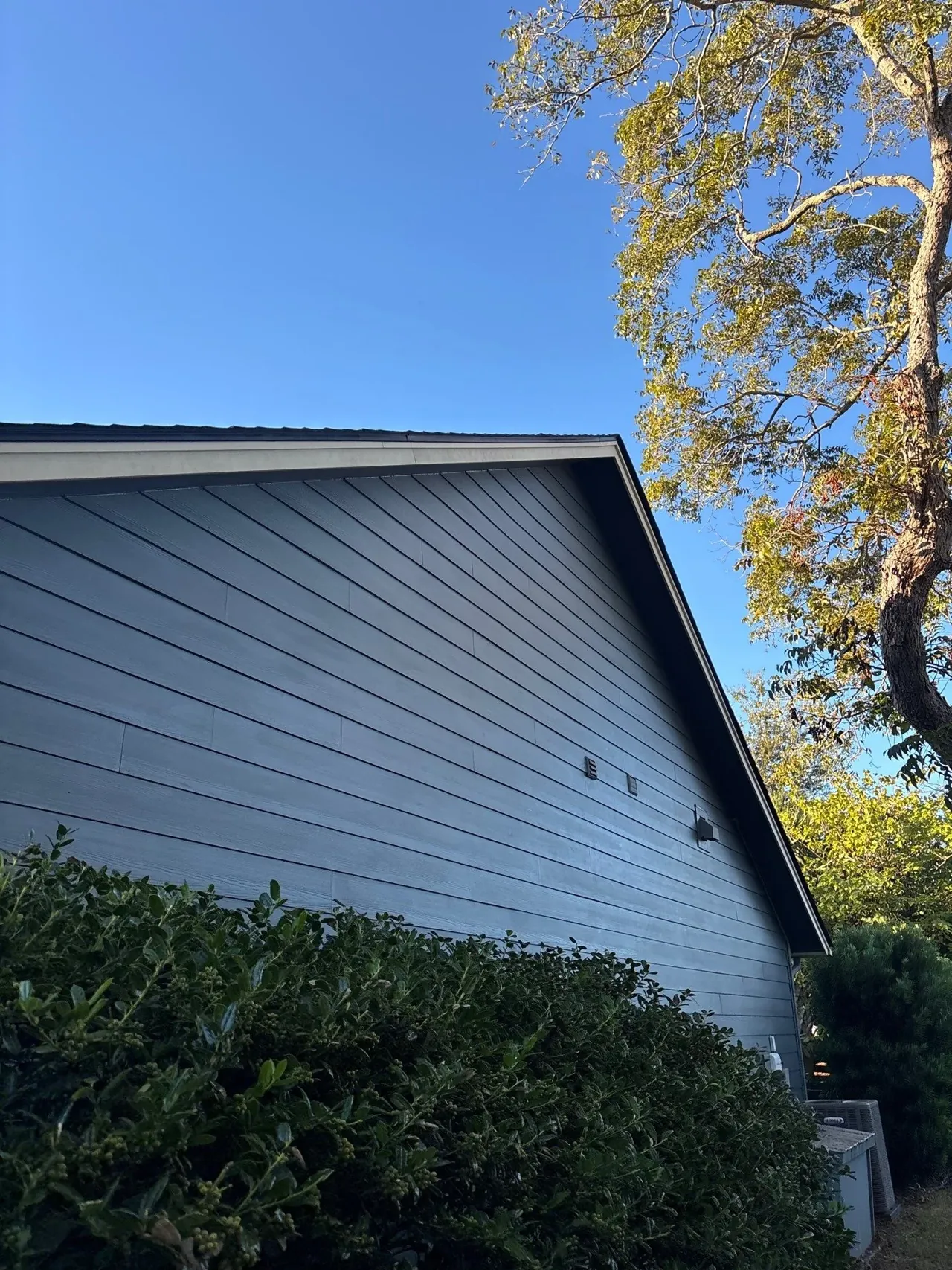
The blue is the first thing you notice in the finished photographs. Then your eye catches the lighter trim and the shift between horizontal and vertical lines. Looking at more than one elevation helps you see how those choices work together around the house.
The work behind the finished exterior
Our CE crews handled the siding removal and installation, work around an existing opening, finishing and touch-ups. The deck was part of the update, too. Its scope changed from resurfacing to a rebuild that included framing work.
That change is worth remembering when you’re planning a project of your own. Have the contractor explain what belongs in the original scope and how any additional work will be presented for your approval. Clear written changes give everyone the same plan to work from.
A weather pause and the expanded deck work also affected the sequence. When you discuss timing, separate material lead time, on-site work, weather allowances and inspections. Leave room in the conversation for what happens if the scope changes.
The project moved through punch items, a final walkthrough and a passed final inspection. Before your own project reaches that stage, ask how the contractor will document the work and which manufacturer instructions apply. James Hardie’s technical-document library is a starting point for finding guidance for the selected product.
Sources: James Hardie installation guidance and technical downloads
A different look—and a useful lesson for your own home
The finished photographs bring the choices together: blue siding, contrasting trim and a mix of horizontal and vertical lines. You can see the palette continue across the home rather than ending at the front elevation.
If you’re at the samples-and-estimates stage, give yourself permission to take it one decision at a time. Understand the existing condition. Work through the options. Look at the samples on your house. Get the scope clear. Each step makes the next conversation easier to have.
That approach is useful for coastal and inland homes alike. For a home in Mount Pleasant, Charleston or a nearby inland community, begin with what is happening at that property and what you want the work to accomplish. The project here illustrates the decision process and finished appearance; it includes no measured energy savings, resale-value analysis or storm-performance testing.
What should Mount Pleasant homeowners check before siding work?
Before ordering materials, find out who is responsible for approving the work at your property. Mount Pleasant’s permit guidance directs scope questions to its Building Inspections Division. Confirm the responsible jurisdiction, then ask who will obtain any required approvals and arrange inspections.
A home in the town’s historic district has another planning consideration: the Historic District Preservation Commission reviews exterior changes and requires approval before work begins. Check applicability with town staff before settling on different materials or a new look. This guidance does not identify the featured home as a historic-district property.
If an HOA or architectural review process applies, get its current requirements for materials, profiles and colors early. It is much easier to work those details into the plan before you place an order. Keep the assessment focused on your actual walls and setting; a Mount Pleasant address alone does not establish salt exposure or moisture problems.
Sources: Town of Mount Pleasant permit and application guidance · Mount Pleasant Historic District Preservation Commission
Your checklist before choosing replacement siding
- Name what you want to solveA damaged area, repeated repairs, appearance or upkeep? Tell the contractor what brought you to the conversation and ask what they observed.
- Put the proposals side by sideCheck the walls, trim, removal, preparation and finishing. Make sure you understand the exclusions.
- Get the selections in writingConfirm the siding profile, finish, color, trim and applicable manufacturer information.
- Live with the samples for a little whileSee them beside the materials that are staying and in different light before making the final choice.
- Talk through additional work nowFind out how discoveries, options and changes will be explained and approved.
- Know what happens at the finishAsk about the walkthrough, inspections, care instructions and separate product and workmanship warranty documents.
A FEW MORE ANSWERS
Questions homeowners ask
Should I replace cedar siding instead of painting it again?
Start with the condition of the cedar you already have. Ask which boards can stay, what needs attention and what the repair-and-paint scope would address. Then compare that complete scope with replacement. The choice should follow the assessment and your priorities for the home.
Is James Hardie siding maintenance-free?
No. James Hardie recommends routine care for its siding and trim. Its homeowner guidance recommends low-pressure cleaning and warns that pressure washing can damage the surface. Follow the care information for the installed product and finish.
Can horizontal and vertical siding be used on the same exterior?
This project’s photographs show both horizontal and vertical lines. If you want a mixed layout, ask your contractor to identify the products, transitions and applicable installation details in the proposed design.
Can photographs tell me what is behind my siding?
No. A finished photograph shows the exterior surface, not the condition of concealed materials. Ask what can be assessed before removal and how any findings during the work will be explained to you.
What should a siding replacement proposal include?
Ask for the wall areas included, removal and disposal, preparation, the exact siding and trim, finish, cleanup, responsibility for applicable approvals, and the process for additional findings. Request separate product, finish and workmanship warranty information so you can compare complete scopes.
What should I bring to a siding consultation?
Bring a few photographs, the concerns you want help with and any colors or styles you like. Existing product or project documents can help, too. You don’t need to have every answer ready; use the conversation to clarify the proposed work, exclusions and next steps.
Do Mount Pleasant siding projects need permits or design approval?
Confirm requirements for the property and proposed scope with the responsible authority. Mount Pleasant directs scope-specific permit questions to its Building Inspections Division. Exterior changes within the town’s historic district require preservation review; any applicable HOA approval should also be checked before work begins.
Sources and review
This project account draws on Contract Exteriors’ direct work with the homeowners, project documentation and construction photographs. The Coastal Home IQ Team prepared the story for editorial review. Customer identities and restricted records remain private; manufacturer guidance supports the general product information.
- James Hardie homeowner FAQs — Material composition and Siding Care guidance; accessed October 21, 2026. Manufacturer statements are distinct from measured results at this home.
- James Hardie installation guidance and technical downloads — A starting point for locating instructions for the selected product; this article does not certify installation details or interpret building code.
- Town of Mount Pleasant permit and application guidance — Scope-specific permit questions and town contacts; accessed October 21, 2026. Confirm the authority responsible for the property.
- Mount Pleasant Historic District Preservation Commission — Exterior-change review within the historic district; accessed October 21, 2026. This is not a claim that the featured home is in the district.
Editorial review details
Reviewed for Contract Exteriors by Bill Schum, Marketing Director, Contract Exteriors, on October 21, 2026. Scope: Editorial review and publication approval of the anonymized project account and selected imagery. This article does not provide engineering or code certification.
Our sourcing and corrections standards · Report a correction
Related planning resources
Explore documented project stories
siding · planning · james hardie · charleston