Decide which part of the opening should stand out
Project at a glance
- Location
- Mount Pleasant, South Carolina
- Recorded project
- One ProVia Heritage fiberglass front entry door with sidelights
- Photos
- December 2024 entry work and installed exterior view
- Visible finish relationship
- Dark door panel with light sidelight frames and surrounding casing
Walk back to the point where you first see your front door. Do you want to notice the door itself, or the whole entry across to the trim on each side? That’s the decision to make before you pick a paint swatch. It’s easier to compare two looks once you know where you want the color to stop.
Sidelights are the fixed, narrow windows beside the door. When you compare their color with the door, you’re usually looking at the framing and trim around the glass. Ask the estimator to point to the exact part they mean. The narrow border right against the glass and the wider casing around the whole entry may be different pieces.
A contrasting door can make the center easier to pick out, particularly if the sidelight frames stay close to the adjacent trim. Matching the door and those frames can make the whole arrangement read as a single opening. Either choice can be deliberate. Compare them against the siding, porch ceiling and window trim you actually see from the walk.
If you’re deciding on glass as well, settle what you want from it before judging the paint. Our guide to clear and privacy glass for sidelights covers that separate decision. Compare the color using the same glass and door shape so you can see which part of the new look comes from the finish.
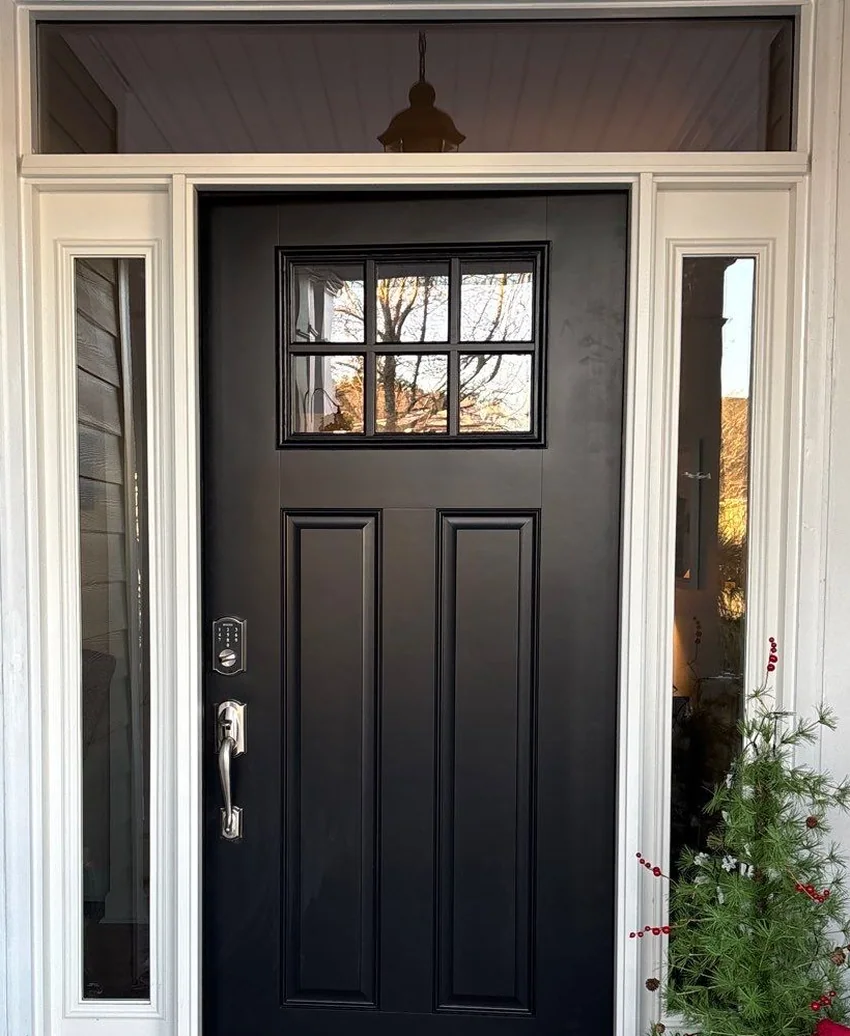
Read the color break in the Mount Pleasant entry
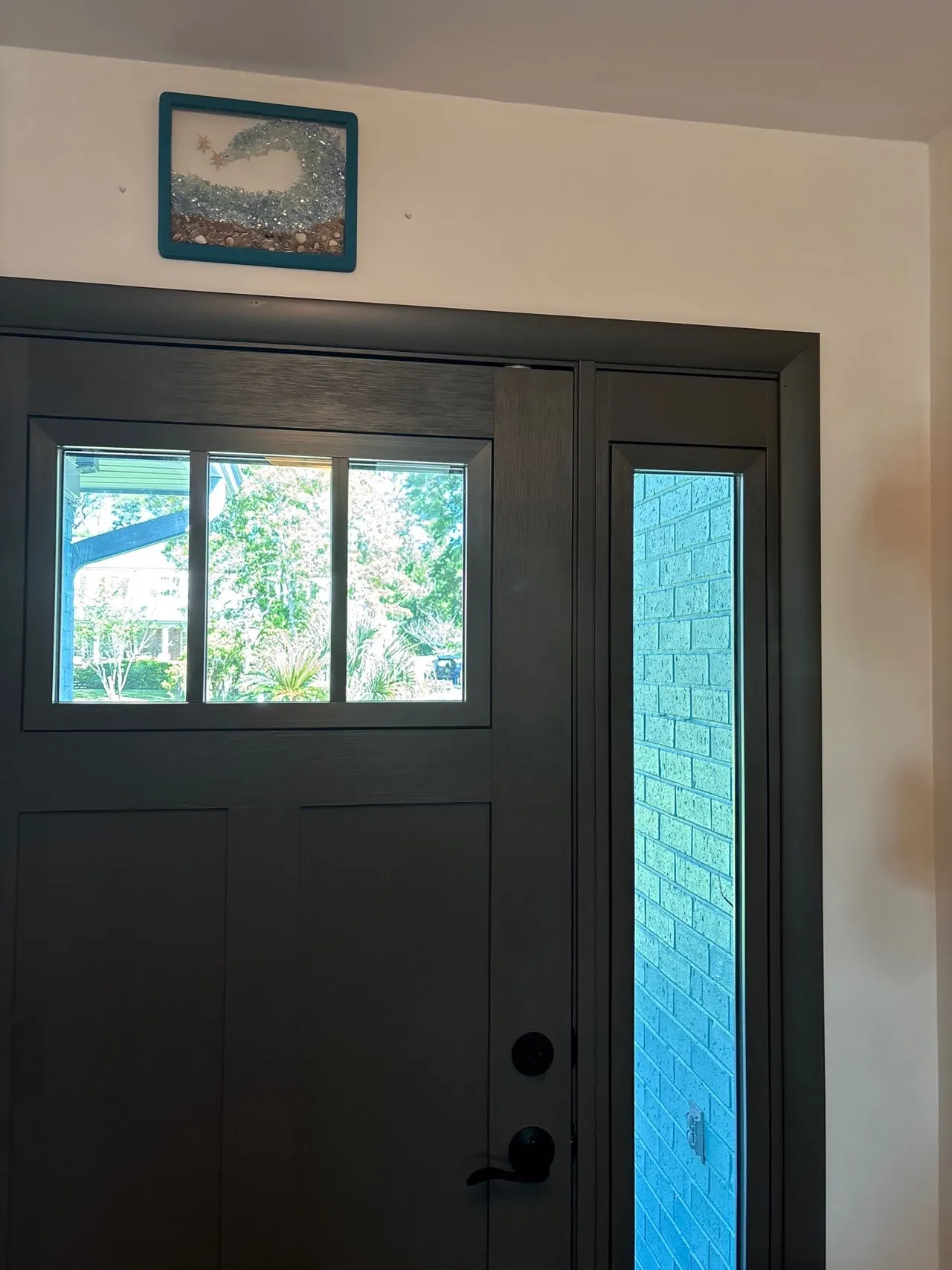
At one Mount Pleasant home, the Contract Exteriors record identifies a ProVia Heritage fiberglass door with sidelights. The installed view shows a dark center door, two pale sidelight frames and a light surround below an upper window. The dark finish stops at the edges of the moving panel. It leaves a line of lighter trim between the door and each narrow glass opening.
That is one example you can sketch on a photo of your own entry. Color the door panel first and leave the side frames as they are. Then color the side frames to match the door. Keep the wider trim and the opening size the same in both sketches. You may find that the second picture feels like a noticeably wider dark area even though no dimensions changed.
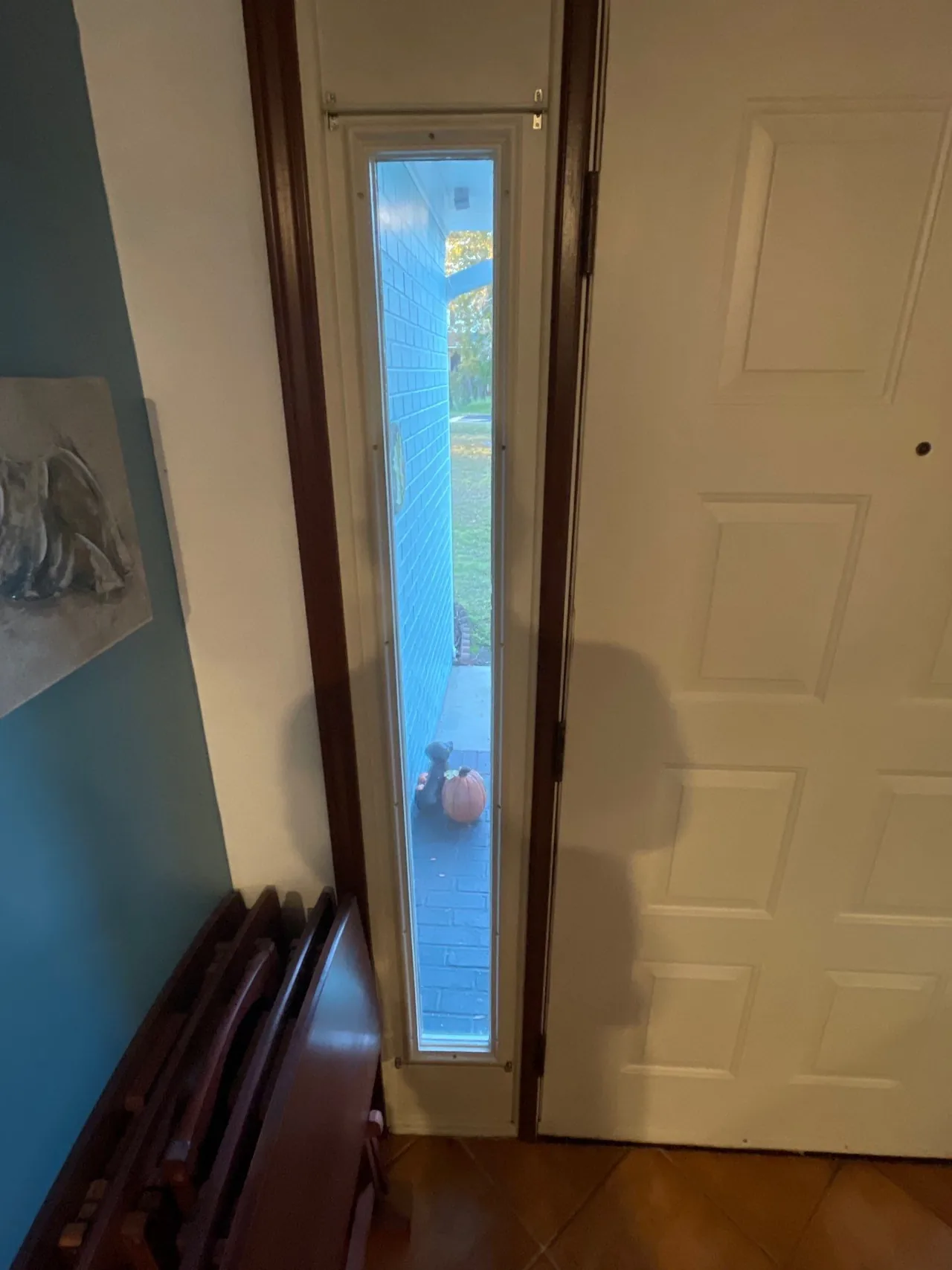
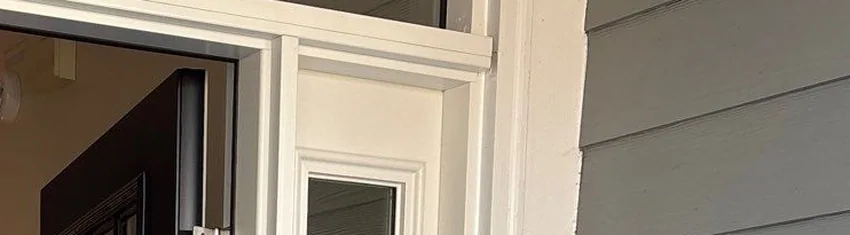
The photo taken with the door open shows why the stop point helps to specify. At the hinge side, the door edge, frame, sidelight and outer casing are visible together. Those pale pieces can look like one continuous band from the front walk. Up close, the quote needs to identify the separate parts that will carry each finish.
The installation photos establish the visible result. They don’t identify the exact paint codes or say which surrounding trim and glazing were retained. If your estimate depends on matching existing trim or reusing part of the opening, ask your contractor to identify what stays and what would be included in the price.
YOUR HOME. OUR EXPERIENCE.
Thinking about updating your entrance?
Talk with Contract Exteriors about your door, glass and the surrounding opening. Start with a free estimate for your project.
Book Your Free EstimateOur team will call to discuss your project and confirm appointment details.
Compare a matching finish in the light your entry gets
Hold the door sample next to the proposed sidelight finish at the actual opening. Step out of the covered area and look back again. The frame and the slab might sit in different light, so two samples held flat on a table can give you the wrong impression of how they’ll look together on the house.
If you like the wider, matching look, compare the sample at the outer edge as well as beside the glass. Ask where the darker finish would meet the exterior casing, a transom above the door or nearby window trim. If you prefer a contrasting center, compare the proposed light color directly against whatever framing or trim will remain. A generic color name can leave an unexpected difference between two pieces.
Use a paper sketch or a marked photo as a way to compare the boundary, then use the exact finish samples to judge the color. Try the view from inside the entry as well. ProVia describes different interior and exterior door colors as an option for its painted doors. Confirm how that option works on the specific system you’re pricing and which finishes are available for the side frames and glass trim.
Decide what you want to see with the door closed, then open it and look at its edge. Tell the estimator if the color relationship changes when the door opens. The frame or edge may sit in view longer than you expect if the entrance opens into a narrow hall.
Color samples also need the right neighbors. Set out the selected paint beside a sample of the siding or trim you plan to keep. Look at the actual edge where they meet. If you’re changing the siding later, compare the door with that planned finish too, or ask whether to decide the surround once the larger exterior palette is settled.
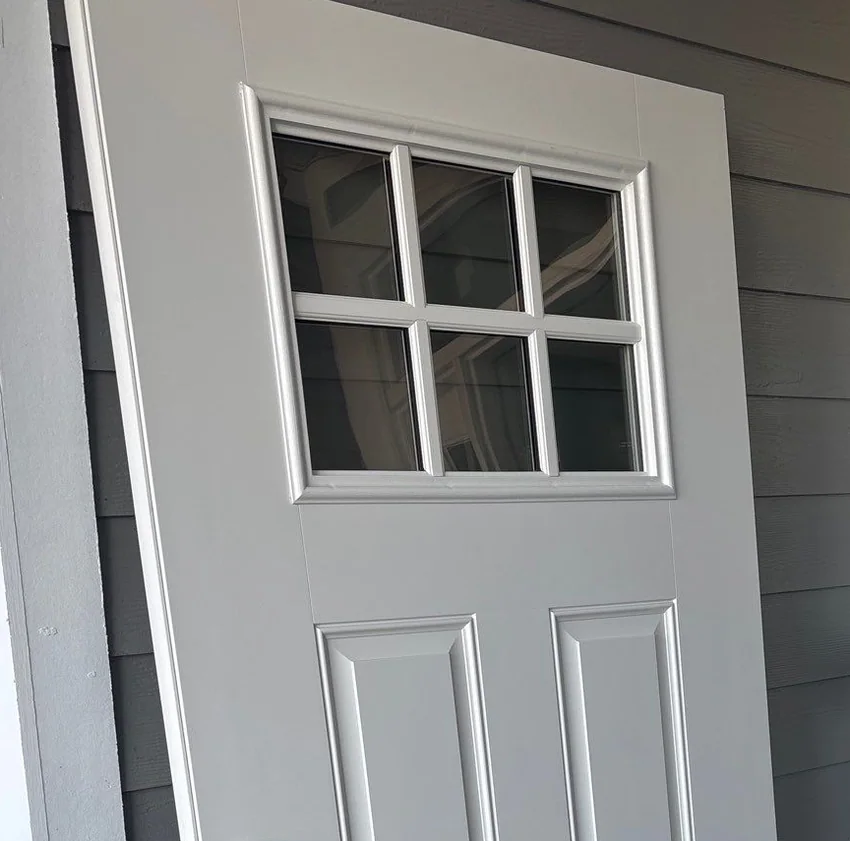
A light-colored panel photographed beside the entry during the work offers another reference for the glass trim. Notice how the pale bars and the surrounding panel read together. Use a current labeled sample on your own estimate, since the photograph doesn’t provide the paint name.
Sources: ProVia — Paint Options for Exterior Doors · ProVia — Current Entry Door Catalog
Put the color boundary on the written order
Ask for a marked sketch that names the outside and inside door colors, the sidelight frame finish and the wider casing or wrap. If there’s an upper window, note its surround too. Save the corresponding labeled samples with the estimate. The drawing shows where the color changes and the labels show exactly what you chose.
Compare two quotes on the same opening before judging the difference. A finish change on the moving panel is one decision. Replacing a side unit, repainting trim or supplying a new frame may change what’s being priced. The front door replacement quote guide walks through those scope choices. Ask each company to describe them the same way.
Clarify which finishes are supplied by the manufacturer and whether a separate finish is planned for on-site trim. ProVia’s paint literature describes factory finishing for painted entry doors. A factory door selection doesn’t automatically tell you what will happen to every piece of casing around the opening.
If the approved colors are no longer available when the order is placed, ask who will show you the closest alternatives. Get a new sample and an updated marked drawing when they propose a change. A substitute on the sash or glass surround may matter even if the door color stays the same.
Bring your marked photo and the retained trim color to an entry door estimate. Start with which part you want to notice as you come up the walk. Ask the estimator to show which parts of the actual configuration can carry those finishes. Then choose the version you can read clearly both from the street and at the threshold.
Another Angle
Read the entry from far away
An entry has two outlines. One belongs to the door you move through. The other belongs to the entire opening framed by sidelights, casing and any glass above. The color arrangement determines how strongly those outlines register from the walk. Often the best choice is to make one readable first and let the other provide a quieter boundary.
In the Mount Pleasant view, the dark rectangle sits between narrow fields of light trim. The high window and side glass are held within that lighter border. The center is easy to locate before the surrounding details become clear. The dark panel takes the role of the front door, while the rest of the opening relates to the house trim and porch.
A matching finish for the slab and sidelight frames would place the emphasis on the wider opening. The dark portion would extend toward the casing, and the narrow glass panels would sit within that larger field. The arrangement could suit an entry whose overall proportions deserve to be seen first. A smaller dark center can be more effective where the surrounding casing already frames the opening clearly.
The glass sets up its own rhythm
Glass has its own pattern independent of paint. In the recorded project, divisions in the door’s upper glass sit next to the long vertical sidelights. Extending the finish to the frames would connect those shapes more strongly. Keeping a pale separation lets the taller glass retain a distinct vertical line. Neither effect changes the size of the glazing.
The close view of the frame junction shows several boundaries that may collapse into one band from the walk. The reveal beside the door, the line around the glass and the outer casing have different depths. Each surface catches light differently. Two physical finish samples are most informative when you compare them on those relative planes.
View the door with the porch in shade and with the sun on the approach. Contrast can be strong in one setting and quieter in another. The change matters most if the entrance is partly recessed or viewed at an angle rather than face on. A drawing shows where the finish ends. In-person samples help you judge how emphatically that edge will read.
Carry the decision to the threshold
As you reach the opening, the relationship between panel, jamb and wall becomes more important than the distant outline. An inside finish can connect with the hall even when the outside is meant to announce the entrance. The seam at the door edge should be understood as part of that change in view. Locate it on the actual elevation rather than treating it as a finish detail to resolve later.
The resulting choice is a balance between a strong center and a larger frame. Favor the view that matters most in daily use if the two mock-ups lead to different preferences. A marked order turns that visual judgment into a clear boundary each person working on the entrance can recognize.
At the threshold, also look back toward the approach. A finish that feels quiet beside the hall trim can become prominent against the outdoor casing. Compare the same opening from that reverse view before deciding where the visual break belongs.
A FEW MORE ANSWERS
Questions homeowners ask
Do the sidelight frames need to match the door?
Choose matching frames for a more unified opening. Choose frames closer to the surrounding trim if you want the door panel to stand out. Check both arrangements on a sketch of the exact opening.
What part of a sidelight has a paint finish?
Ask the estimator to identify the framing around the fixed glass and any glass trim on the system. The broader casing around the whole entry may be a separate part of the work.
Can my ProVia door be a different color inside?
ProVia describes different inside and outside colors for its painted entry doors. Ask the dealer to confirm the available combination for your exact model and frame.
Should a transom above the door match the sidelights?
Include the transom surround in your drawing. Compare it as part of the full composition and confirm which pieces can carry the specified finishes.
How can I compare the colors from the street?
Use two versions of the same photo and mark only which surfaces change. Then compare physical finish samples near the actual entry in the light you expect there.
Does a new door include repainting the surrounding trim?
Check the proposal. Have it identify the factory-finished unit, any retained parts and any painting or wrapping included separately.
Sources and review
Contract Exteriors project evidence: Internal project records and original CompanyCam photographs support the project examples described in this article. Customer records and identifying details remain private. Project examples are separate from the manufacturer guidance and other published references below.
Contract Exteriors records identify one completed-and-paid ProVia Heritage fiberglass entry door with sidelights at the Mount Pleasant project. The same-property gallery shows the installed dark panel and light sidelight frames. Paint codes and whether surrounding components were retained are not documented in the reviewed records.
- ProVia — Paint Options for Exterior Doors — Checked November 21, 2026. Manufacturer describes factory-finished painted entry doors and discusses coordinating trim, sidelights, transoms and door-face colors.
- ProVia — Current Entry Door Catalog — Checked November 21, 2026. Shows current product-line-specific finish and glass-trim combinations; the historic job is identified from Contract Exteriors records.
Editorial review details
Reviewed for Contract Exteriors by Bill Schum, Marketing Director, Contract Exteriors, on November 21, 2026. Scope: Bill Schum provides editorial oversight. Project records, cited sources, image originality and article presentation were checked. AI tools supported research, drafting and editing. Design commentary is an editorial perspective.
Our sourcing and corrections standards · Report a correction
Related planning resources
doors · planning · charleston