


The decision started with the steps
Project at a glance
- Area
- Isle of Palms, South Carolina
- Project
- Stair-and-landing rebuild
- Decking
- TimberTech composite decking
- Railing
- White TimberTech Advantage
- Main decision
- Rebuilding rather than resurfacing
Your front steps are part of the house you use almost without thinking: carrying groceries inside, heading out in the morning, or welcoming someone at the door. When they need attention, the question goes beyond how a new board will look.
For these Isle of Palms homeowners, the conversation began with an aging stair-and-deck area and recurring painting. They reported loose balusters and boards, and they wanted to explore a larger first landing. Our Contract Exteriors team discussed both resurfacing and a new build.
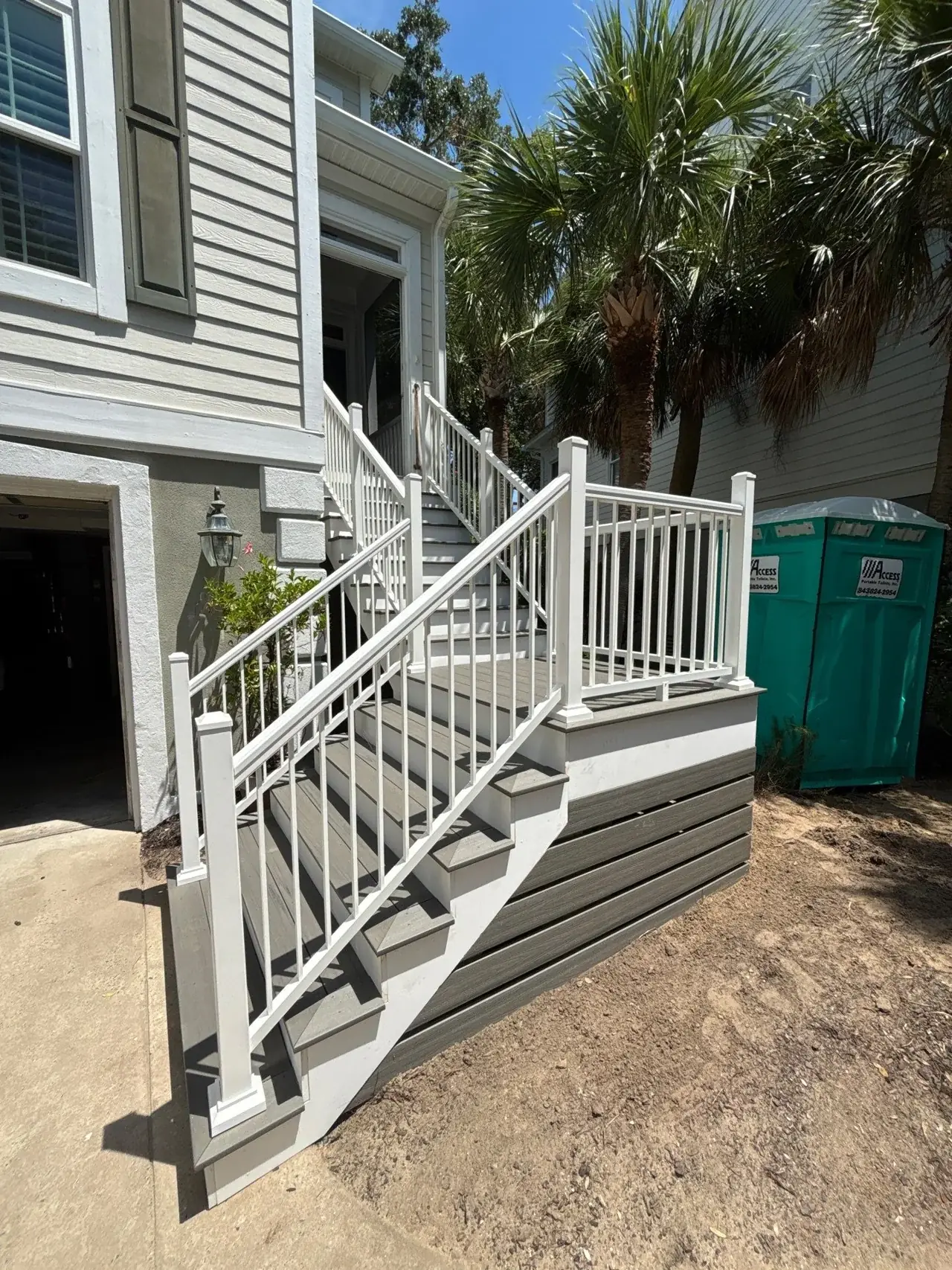
The homeowners chose the rebuild option while planning an extension of the landing and steps. Our Contract Exteriors team completed the new stair-and-landing assembly with TimberTech composite decking and white TimberTech Advantage railing. The layout decision came before the finish selections.
What is the difference between resurfacing and rebuilding?
Resurfacing means replacing the surface boards while retaining suitable existing support, often called the substructure. A full rebuild replaces the supporting assembly as well as the surface. TimberTech distinguishes these as separate kinds of deck replacement.
Neither label tells you enough on its own. Two proposals can both say “deck replacement” and include very different work. Have each contractor identify what stays, what goes and how the existing support will be evaluated.
A new board sample cannot answer that last question. TimberTech's guidance calls for checking the substructure before reusing it; the decision belongs with the person assessing the actual deck.
A layout change does not automatically require a complete rebuild. In some projects, an extension can be designed around portions of an existing structure. For this home, the documented choice was the rebuild option. Ask the contractor to explain how each proposed scope would address your own layout goals.
Our deck planning guide helps organize those scope questions before you compare proposals.
| Planning question | Resurfacing | Rebuilding |
|---|---|---|
| What stays? | Suitable existing support remains; the surface boards are replaced. | The specified supporting assembly, surface and associated components are replaced. |
| What about the layout? | Start with the existing arrangement. Price any extension or alteration explicitly. | Use the drawing to define the proposed landing, stair route and other changes. |
| What must be assessed? | Whether the retained structure suits the proposed work and product. | The requirements for the new work and its connection to the home. |
| What belongs in the quote? | Removal, retained components, preparation, new decking and any separate railing work. | Demolition, new structural scope, decking, stairs, railing, finishes and approvals. |
Sources: TimberTech: deck replacement and resurfacing · TimberTech: product and planning FAQs · TimberTech: extending a deck
Why the landing mattered on this home
The landing was central to the decision. The homeowners wanted to change the space between the stair flights, so comparing new surface materials alone would have left their main question unanswered.
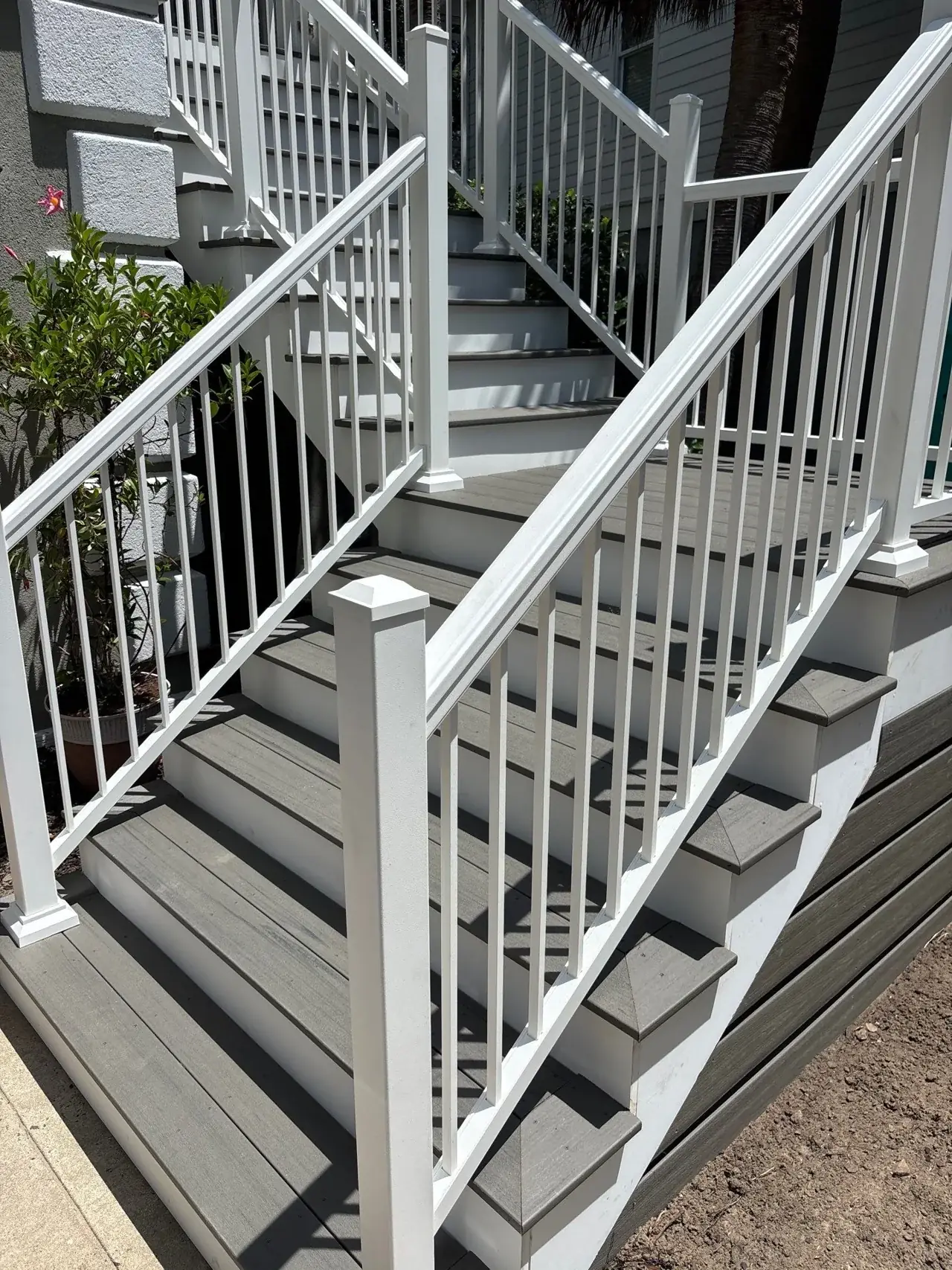
In the project photographs, a landing links the lower stair flight with the flight leading toward the door. White posts and rails outline each change in direction. That pause between flights is a small part of the exterior with a large role in how the entry feels.
For your own project, sketch the route you actually use. Where do you turn? Where does the door open? Where do you stop to reach for your keys? Bring those observations to the consultation and have the contractor work through what the proposed layout can accommodate.
Keep the proposed dimensions on the drawing. Photographs are helpful for seeing relationships, but they aren't a substitute for measurements or a site assessment.
TimberTech decking, white railing and a coordinated finish
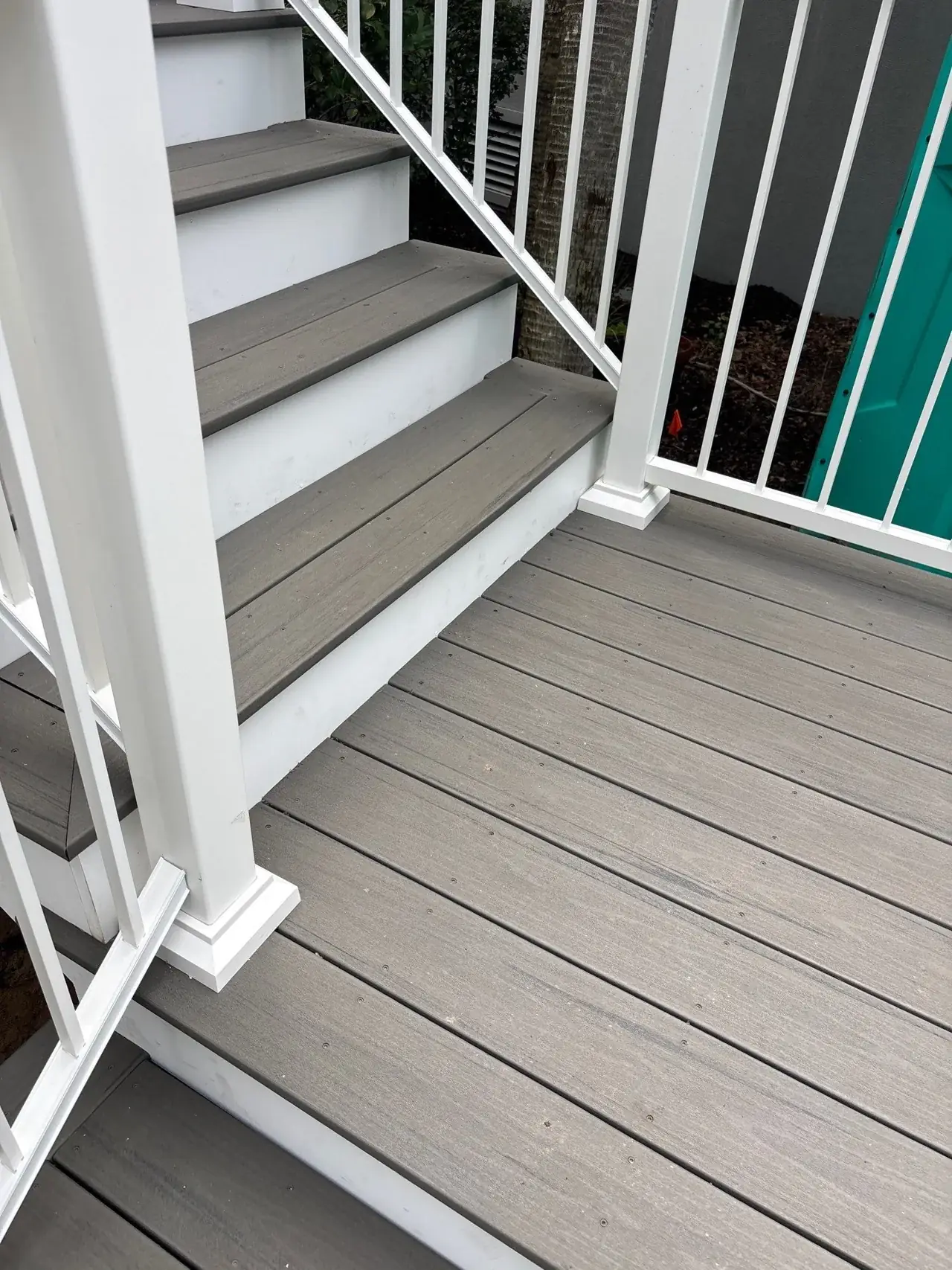
The new assembly combines muted decking with white risers and white railing. Against the home's pale exterior, those white lines keep the stair flights and landing visually connected. The darker walking surfaces give the entry some contrast without adding another strong color.
The project uses TimberTech composite decking. Composite and Advanced PVC are different TimberTech material families, so a proposal should identify the actual collection and material rather than stop at the brand name.
The white railing is TimberTech Advantage. Look at the posts, top rails and vertical balusters together when comparing the design. A railing sample beside a decking board can tell you more than choosing each from a separate screen.
Our TimberTech material guide is a useful starting point for organizing those selections. For a project focused mainly on the rails, the railing replacement guide covers the questions to bring to that conversation.
Sources: TimberTech: decking materials overview · TimberTech: railing overview
Less repainting still leaves a care routine
Reducing repeated painting was part of the homeowners’ decision. TimberTech describes its composite decking as a surface that does not need routine staining, sealing or painting. Cleaning is still part of owning it.
Leaves, tracked-in dirt and everyday spills still need attention. TimberTech's 2026 care guide starts with identifying the decking material, then choosing the recommended cleaner and brush. It also calls for clearing debris from the spaces between boards.
Ask for care instructions for the railing, risers, trim and any retained painted parts, too. A composite walking surface doesn't change the upkeep of every other part of the house.
If the steps receive strong sun, put sample boards outside where you will use them before settling on a finish. TimberTech cautions that all decking can get hot in the sun. Choose with your actual exposure and daily use in mind.
Sources: TimberTech: composite decking overview · TimberTech: 2026 Care & Cleaning Guide · TimberTech: product and planning FAQs
An Isle of Palms planning check
Local planning matters most when it changes what you can build. Before ordering materials, confirm the authority responsible for the property and discuss the actual scope: replacing a surface, rebuilding stairs or changing a landing.
The City of Isle of Palms publishes separate submission guidance for additions and for alterations or renovations. Its guidance for additions includes a site plan and construction drawings, with Wild Dunes approval where applicable. Check the current requirements with the City for your proposed work.
Don't assume that a mailing address establishes every requirement, or that a new board selection leaves the approval process unchanged. Have the proposal identify who handles drawings, applications and inspections.
Our Charleston-area remodeling resources connect this project with the broader planning guides. Use the requirements for your own property when comparing scopes.
Bring these questions to your deck consultation
- What bothers you about the current space? Separate worn finishes from the things you would change about the landing, stairs or route to the door.
- What is staying? Have the proposal identify the retained structure and explain how its suitability will be assessed.
- What will the finished layout look like? Review a drawing that includes the stairs, landing, doorway and railing.
- Which materials go where? List the decking collection, railing, risers, trim and other finishes separately.
- Who handles the practical details? Include approvals, removal, access during construction, cleanup and the process for additional findings.
- What care will remain? Get the product instructions and identify any existing painted components that are outside the new work.
A better starting point than board color
The finished stair-and-landing assembly gives this Isle of Palms entry a consistent look: composite treads, white risers, defined posts and matching railings.
The part worth borrowing is the conversation that came first. The homeowners compared two scopes and chose the one that fit their plans for the entry. That is a useful starting point whether you live on the island or farther inland.
When you plan your own deck, start with what needs to work better. Once that is clear, the board samples have a job to do.
A FEW MORE ANSWERS
Questions homeowners ask
Can TimberTech decking be installed on an existing deck frame?
Potentially, after the existing support has been assessed for the proposed work. TimberTech requires suitable support; the brand of the new boards alone cannot establish whether an old frame can be reused.
Why did these homeowners choose a rebuild rather than resurfacing?
They wanted to change the landing and steps as well as replace the walking surface. They selected the rebuild option while planning that change. Another home may have different options for retaining or extending existing support.
Does composite decking eliminate all maintenance?
No. It can remove routine staining or sealing of the walking surface, but cleaning remains. Railing, trim and retained painted components have their own care requirements.
Does an Isle of Palms deck project need local review?
Discuss the precise scope with the responsible authority. The City publishes guidance for additions and alterations; drawings, site information and other approvals depend on the work and property.
What should a deck replacement proposal specify?
What is removed and retained, the proposed layout, structural assessment or new structural scope, exact materials, stair and railing work, approvals, cleanup and the process for additional findings.
Sources and review
Prepared from matched Contract Exteriors project records, documented homeowner priorities, construction photographs and closeout documentation. Photo permission is recorded. The project is described anonymously; customer identity, exact address, financial details and private correspondence are withheld. Photographs show the visible assembly, not concealed construction or a code certification. No measured savings, precise construction duration, dimensional increase or installed-color identification is claimed.
- TimberTech: deck replacement and resurfacing — General scope definitions; checked October 22, 2026. Not a diagnosis of this home's former structure.
- TimberTech: product and planning FAQs — Existing-support assessment and sun/heat cautions; checked October 22, 2026. No site-specific structural or temperature conclusion.
- TimberTech: decking materials overview — Composite versus Advanced PVC material families; checked October 22, 2026.
- TimberTech: railing overview — Railing selection and Advantage collection reference; checked October 22, 2026.
- TimberTech: 2026 Care & Cleaning Guide — Pages 2–3: identify material, select care products and clear board gaps; accessed October 22, 2026.
- City of Isle of Palms: building permit guidance — Addition and alteration planning guidance, checked October 22, 2026. Confirm actual requirements with the responsible authority.
- TimberTech: extending a deck — General discussion of extensions and possible retained structure; checked October 22, 2026. Not a design or structural assessment of this home.
- TimberTech: composite decking overview — General composite material and care guidance; checked October 22, 2026. No installed color or warranty term is asserted.
Editorial review details
Reviewed for Contract Exteriors by Bill Schum, Marketing Director, Contract Exteriors, on October 22, 2026. Scope: Editorial oversight and publication approval for the anonymized project account and selected imagery. Bill Schum authorized release after the requested editorial reread and readiness checks; research, factual checking and copy preparation were AI-assisted. No personal site attendance or specialist structural/code certification is claimed..
Our sourcing and corrections standards · Report a correction
Related planning resources
Explore documented project stories
decking · railing replacement · planning · timbertech · charleston