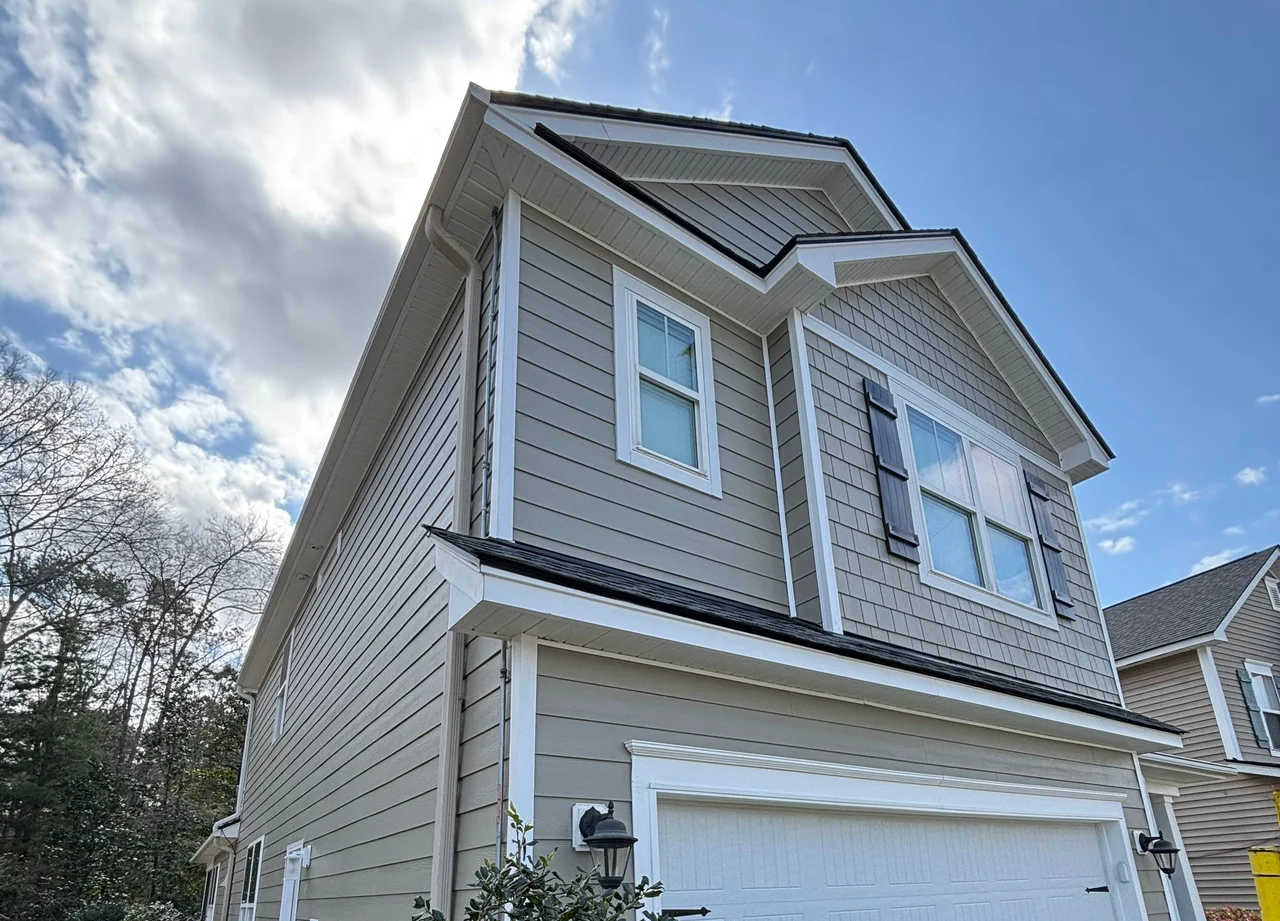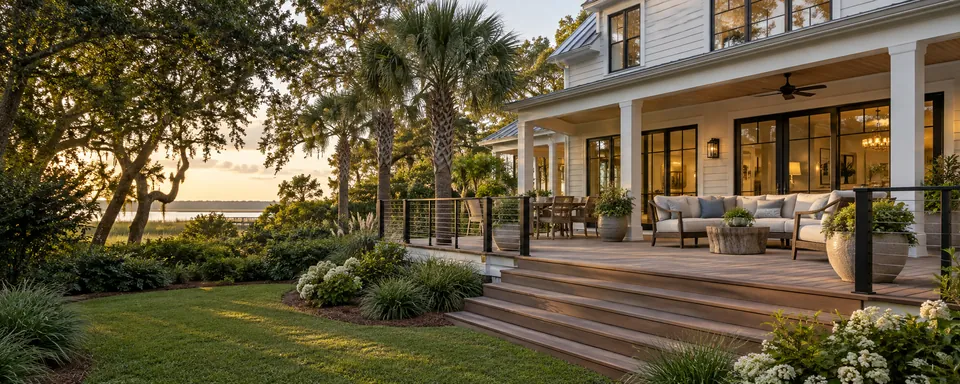
Will your favorites work together?
Project at a glance
- Local example
- Mount Pleasant, South Carolina
- Work
- Cedar-to-James-Hardie replacement
- Selection process
- Revised renderings and physical samples
- Finished palette
- Blue siding, light trim and a red door
You've found a siding color you like, but will it work beside the brick, windows and front door you're keeping? That's where choosing a color becomes choosing a home exterior.
Make a quick list of what stays. James Hardie's color guidance recommends considering those retained features, because they will still be beside the new siding when the project is done. Bring the door, masonry, window frames and paving into the same view.
If you're still deciding on the siding pattern, our lap-versus-board-and-batten comparison is a useful earlier step. Get a feel for the layout before trying to settle every color.
Give yourself more than one look
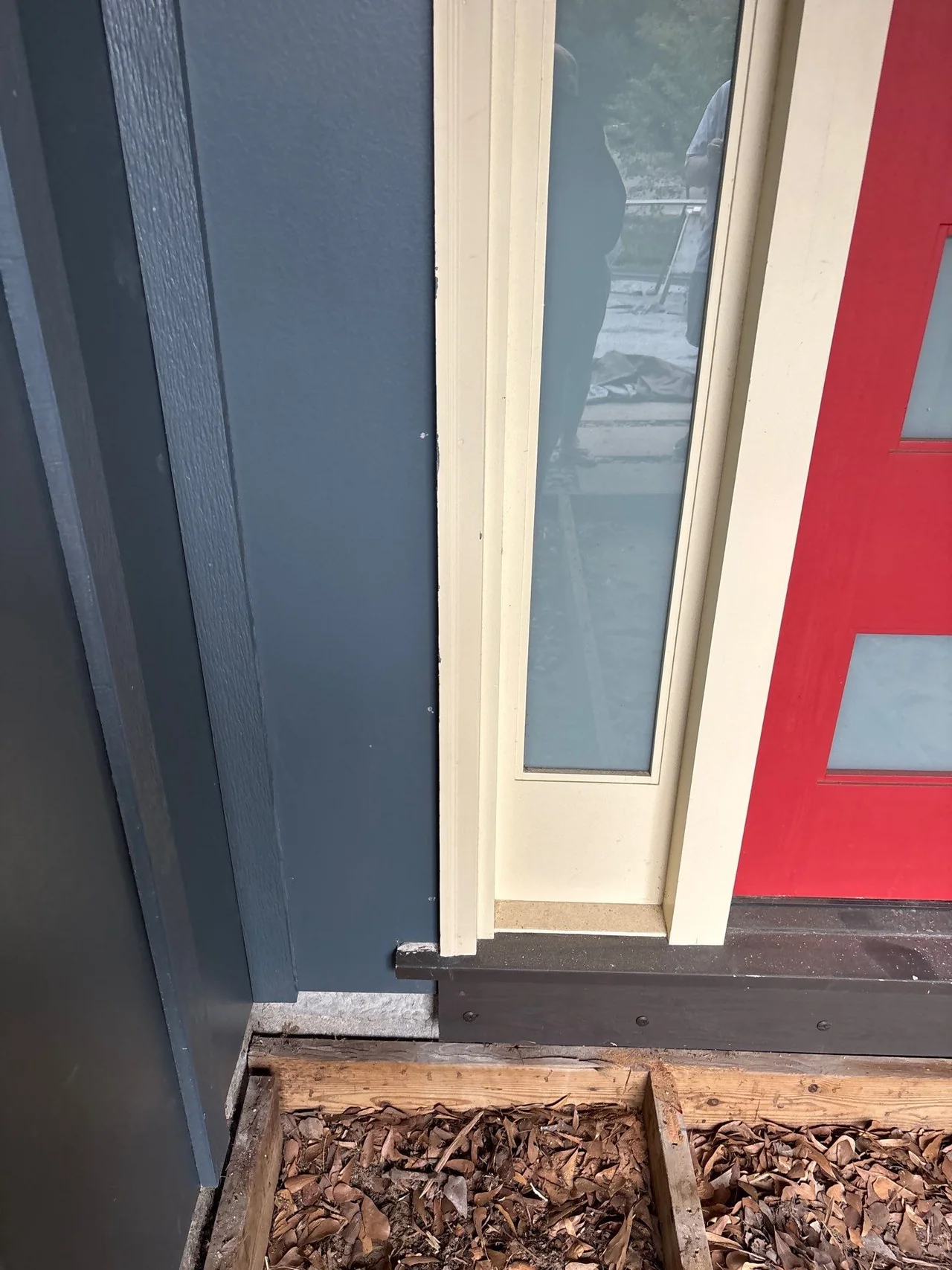
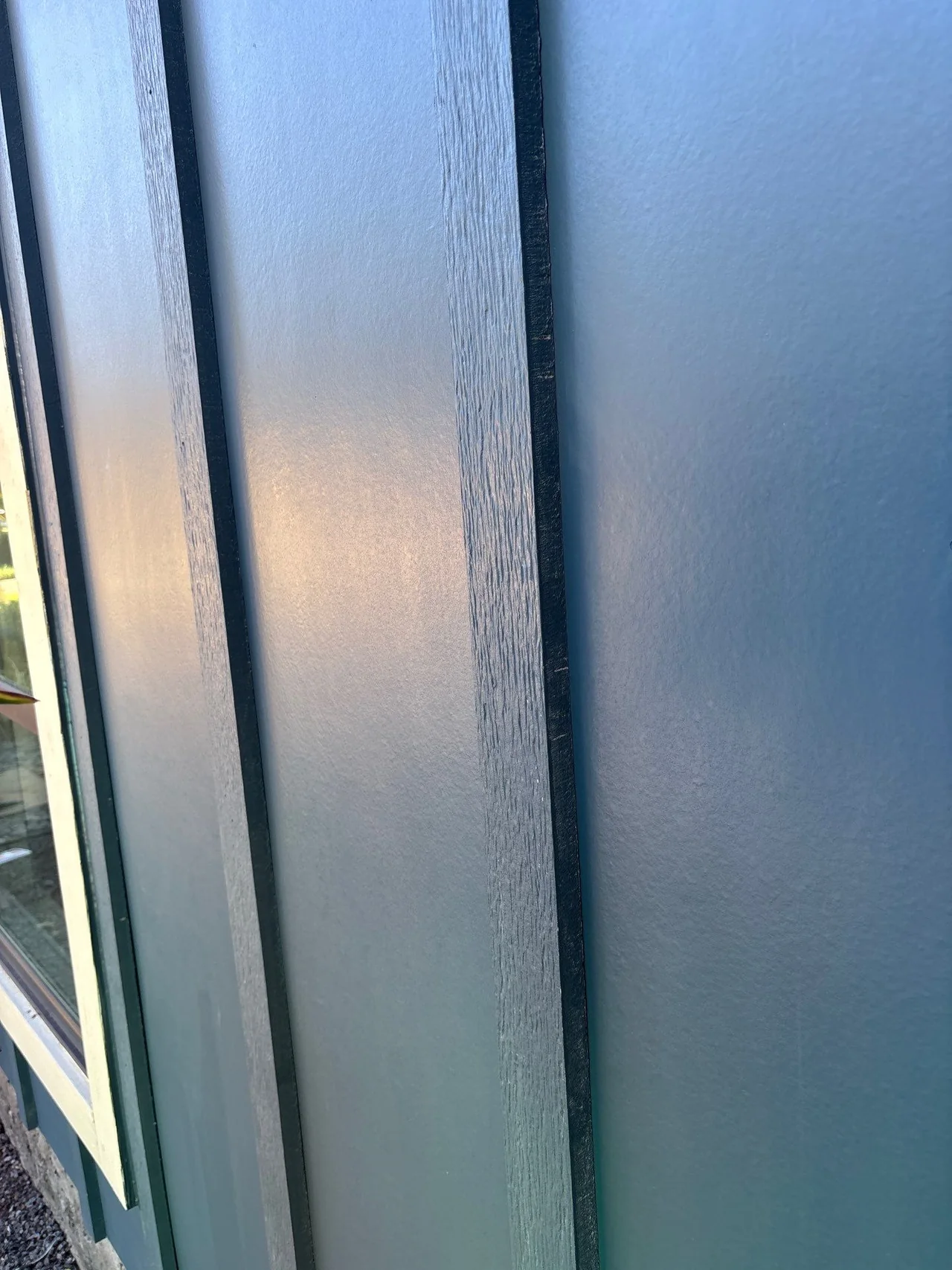
At a Mount Pleasant cedar-to-James-Hardie project, the selections took more than one look. The planning included revised renderings, siding and fascia colors, and physical samples left with the homeowners. The finished exterior combines blue siding, light trim and a red door.
That sequence makes sense for a decision you'll see every time you come home. A rendering helps you imagine the overall change. Samples let you take the colors outside and see them beside your own house.
Use project photographs for ideas, then make the choice with the real samples. The blue you see on a phone isn't an exact color match for a finish you can order.
YOUR HOME. OUR EXPERIENCE.
Thinking about new siding for your home?
Talk with Contract Exteriors about siding options, trim and the work your exterior needs. Start with a free estimate.
Book Your Free EstimateOur team will call to discuss your project and confirm appointment details.
Take the finalists outside
Put the siding and trim samples together beside the materials you're keeping. Look at them close up, then step back. You may like a trim color by itself and feel differently when it frames the larger siding area.
Take the combination into sun and shade, including the entry if it sits under an overhang. Look again at another time of day when you can. James Hardie's guidance recommends checking different light and noticing undertones.
Photographs are handy for remembering your finalists. Return to the physical samples for the last comparison, though: changing light, camera exposure and the screen all affect the picture.
What would you like to notice first?
What do you want to notice first when you pull up to the house? Try trim that stands out, then a quieter combination with the same siding. Add the door sample before deciding; it can change how the other two feel together.
You can also keep one color across two siding patterns. Compare that with a second color before assuming an accent needs both. Our accent-placement guide helps if you're still deciding where the change belongs.
For a Charleston-area project, check any association requirements early. Get the actual combination approved where required, rather than assuming a nearby house settles what you can choose.
Keep the labels with the plan
When you have a favorite, turn over the samples and record the labels. Have the proposal identify each product, profile, texture, finish and color. List the siding, trim and fascia separately if they differ.
Keep the agreed rendering and selection record together. Ask how painting or touch-up work is included, and resolve any unavailable color before approving a substitute.
When you request a free expert opinion about siding replacement, bring the combinations you're deciding between. You don't need a finished design plan. Seeing the options together at your house is how the choice starts to become clearer.
Another Angle
Compose the palette around retained elements
A palette is a set of relationships between surfaces, not a collection of favored color names. Siding occupies one proportion of the elevation; trim, doors and masonry occupy others. Before comparing individual samples, identify the elements that remain and the feature you want the finished house to emphasize. Those fixed conditions give each candidate palette a meaningful setting.
Assemble complete groups for comparison. Each should show the proposed siding and trim beside the same retained window, masonry or door finishes. Label the actual products represented. The exercise concerns visual coordination, not a calibrated color measurement. A sample can inform the selection without reproducing the scale, texture and changing light of the complete exterior.
Consider where contrast should be concentrated. A strong door may serve as the focal point while surrounding trim remains quieter. A clearly articulated window group may deserve the stronger outline instead. These are possible design intentions, not rules for another homeowner. Choosing the emphasis first makes it easier to judge a palette than asking each color independently to be attractive.
Control contrast and proportion
Next, review proportion on the whole elevation. A light trim sample may occupy only a small place on a table yet form a substantial network around the actual openings. A siding color becomes a broad field on the house. Compare their roles in a rendering that retains the real architecture, then use physical samples to examine the proposed finishes beside the elements being kept.
James Hardie's design guidance supports considering retained features and viewing samples in different light. Treat those comparisons as observations rather than an exact photographic match. The documented Mount Pleasant selection process likewise used renderings and samples for different purposes. A compelling project image can suggest a relationship worth testing, but does not identify an interchangeable finish for a different material or product.
Keep each alternative internally consistent. Changing a siding sample while retaining trim from an earlier scheme can make the reason for a preference difficult to follow. Compare two complete candidates, then revise a defined relationship within one of them. This gives disagreement a useful object: the strength of the trim, the role of the door or the connection with the masonry.
Judge the house at today's finish line
Where household preferences differ, return to the shared house image. Identify which feature each person wants to notice first and which relationship feels unresolved. More samples may help after that difference is understood. They are less useful when one person is evaluating the doorway while another is judging the window pattern and neither intention has been stated.
Evaluate the project at its present finish line. If a retained door may be repainted later, compare a version that works with it now. A future alternative can be discussed without becoming necessary to explain today's siding choice. Keep the actual product, texture, finish and color identifiers for each included surface together with the accepted layout and any applicable appearance approval.
The resolved palette should have a clear visual order: the broad wall field, the edges that define it and the feature receiving emphasis. That order can be quiet or contrasting, depending on the house and the owner's preference. The stronger selection is one whose relationships have been examined together, with a complete intended appearance and an exact specification that describes the same choice.
A FEW MORE ANSWERS
Questions homeowners ask
Can I choose the exact siding color from a project photograph?
Use it to narrow the direction, not establish an exact match. Ask for the identified product and finish, then compare physical samples at your house.
Should siding and trim always contrast?
No. Contrast and a quieter coordinated palette are different design preferences. View both combinations beside the elements you plan to keep.
Which existing colors should I compare with new siding samples?
Start with the elements you plan to keep, such as the roof, masonry, windows and doors. Place the siding and trim samples beside those finishes at the house. Keep a short keep-or-change list so a preferred rendering does not depend on replacing something outside your intended scope.
Should I view siding samples in sun and shade?
Yes. Compare the same physical combinations at the house under the different light you normally see. Label the samples and keep the surrounding materials consistent. Use photographs and visualizers to narrow choices, then confirm the actual product and finish rather than ordering from a screen color.
Does a second siding profile need a second color?
No. Compare a shared color across the profiles before introducing another hue. Texture and direction can create their own contrast. Then judge the whole elevation with the trim, door and retained features included, rather than deciding from isolated swatches.
What color information belongs in the final selection record?
Record the manufacturer, product line, profile, texture, finish system and color identifier for each item. List siding and different trim or fascia separately. Confirm availability in the actual proposed products and keep the approved samples and rendering aligned with the current proposal.
Sources and review
Contract Exteriors project evidence: Internal project records and original CompanyCam photographs support the project examples described in this article. Customer records and identifying details remain private. Project examples are separate from the manufacturer guidance and other published references below.
Anonymous Mount Pleasant records document physical samples and design revisions. Unique project photographs illustrate the palette in different parts of the house and at labeled stages, not a calibrated color comparison or an endorsement of an unverified finish system.
- James Hardie: choosing exterior colors — March 28, 2024 design guidance, read October 29, 2026. Retained exterior elements and real samples in different light; no exact color match or performance promise.
- James Hardie: color and design guidance — Read October 29, 2026. Architectural proportions, visualizer and sample resources; product availability and exact specifications need separate confirmation.
Editorial review details
Reviewed for Contract Exteriors by Bill Schum, Marketing Director, Contract Exteriors, on October 30, 2026. Scope: Editorial oversight, source and project-record checks, photo-originality review, and mobile/desktop presentation checks. Research and editing were supported by AI tools. Design commentary reflects an editorial perspective and does not constitute professional architectural or engineering advice or a property-specific site assessment.
Our sourcing and corrections standards · Report a correction
Related planning resources
siding · planning · james hardie · charleston