The extra money should buy something you care about
Project at a glance
- Local example
- Summerville, South Carolina
- Recorded request
- Replace a back wood deck with composite
- Existing arrangement
- Painted deck, railings, stairs and a hot tub
- Stage
- Replacement inquiry; existing-condition photographs
If you've already spent a weekend moving furniture, preparing boards and working through another coat of finish, composite decking has an obvious appeal. If you enjoy maintaining natural wood, that same upgrade may feel less urgent. Neither reaction is wrong. Worth it depends on what you want the new deck to change.
The useful comparison is between two complete projects you could actually buy. A more expensive board might be only part of the total, while new framing, stairs and railings may account for work required with either surface. Looking at the board premium alone can make the difference seem bigger—or smaller—than it is.
Start by naming your reason for considering composite: less refinishing, a different look, replacing worn surfaces or a broader rebuild. Then ask for the additional installed cost of the option that delivers that benefit. It's much easier to judge a specific price difference against a specific priority than to decide whether an entire material category is universally better.
A Summerville wood deck puts the question in context
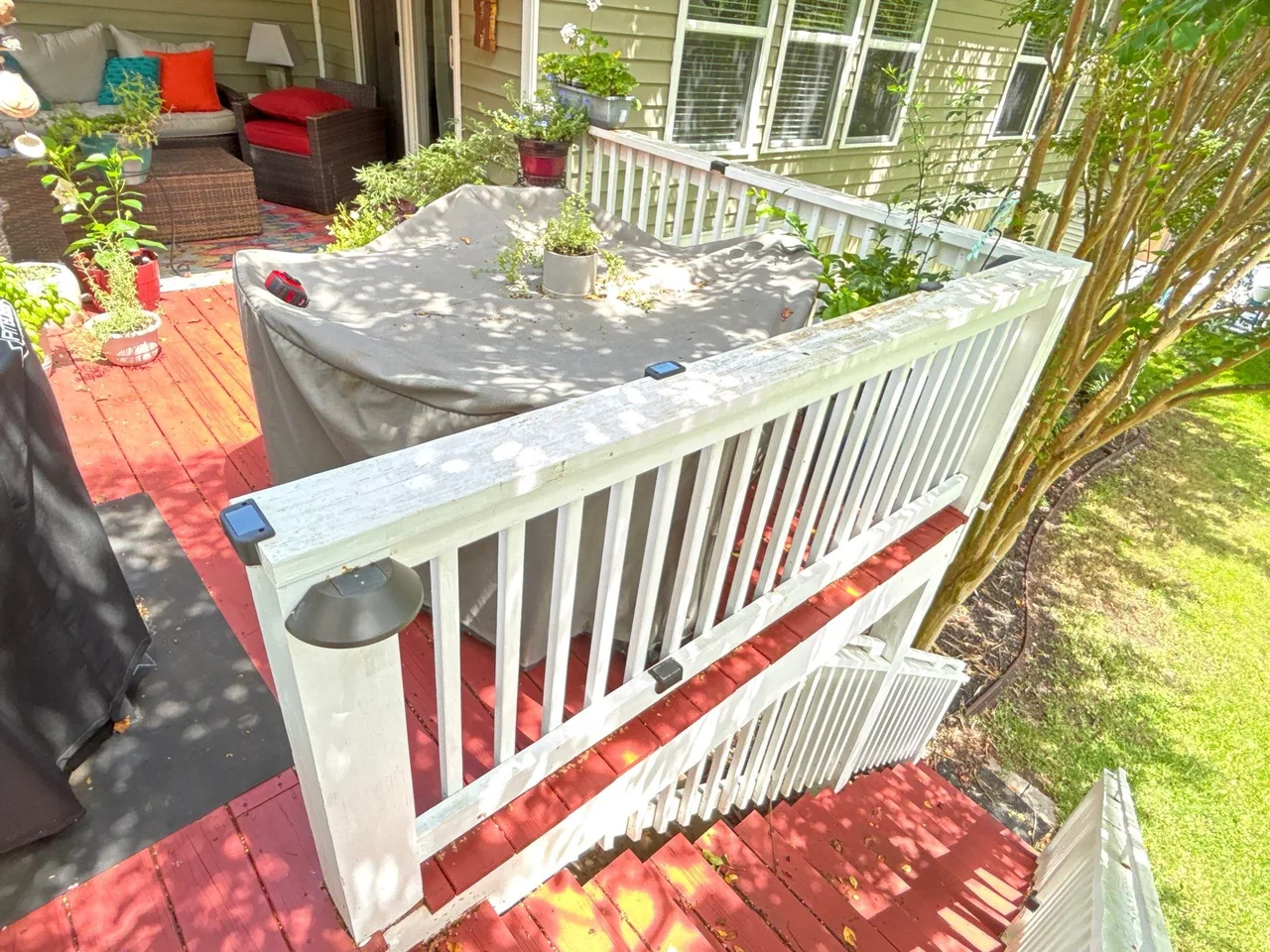
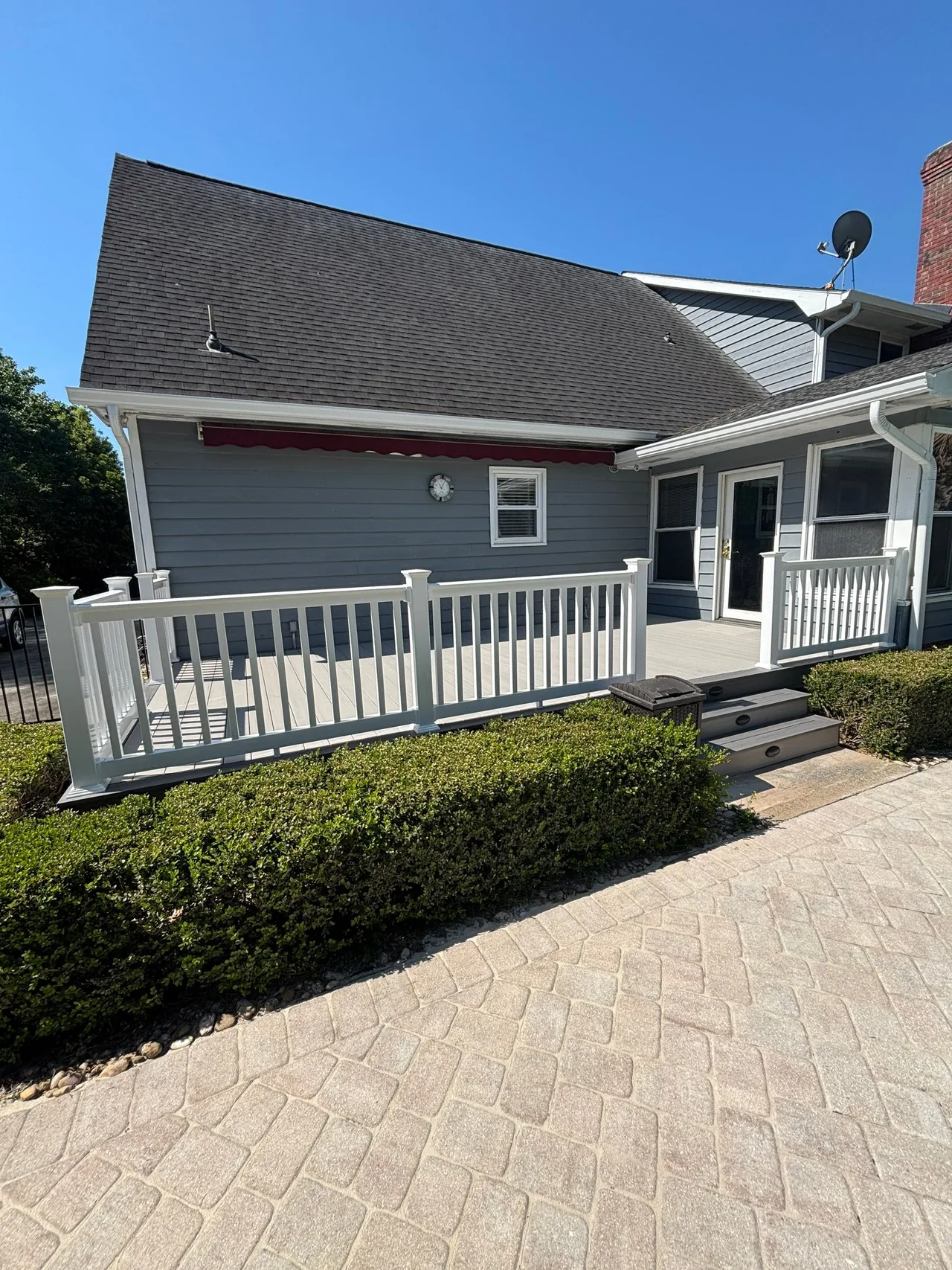
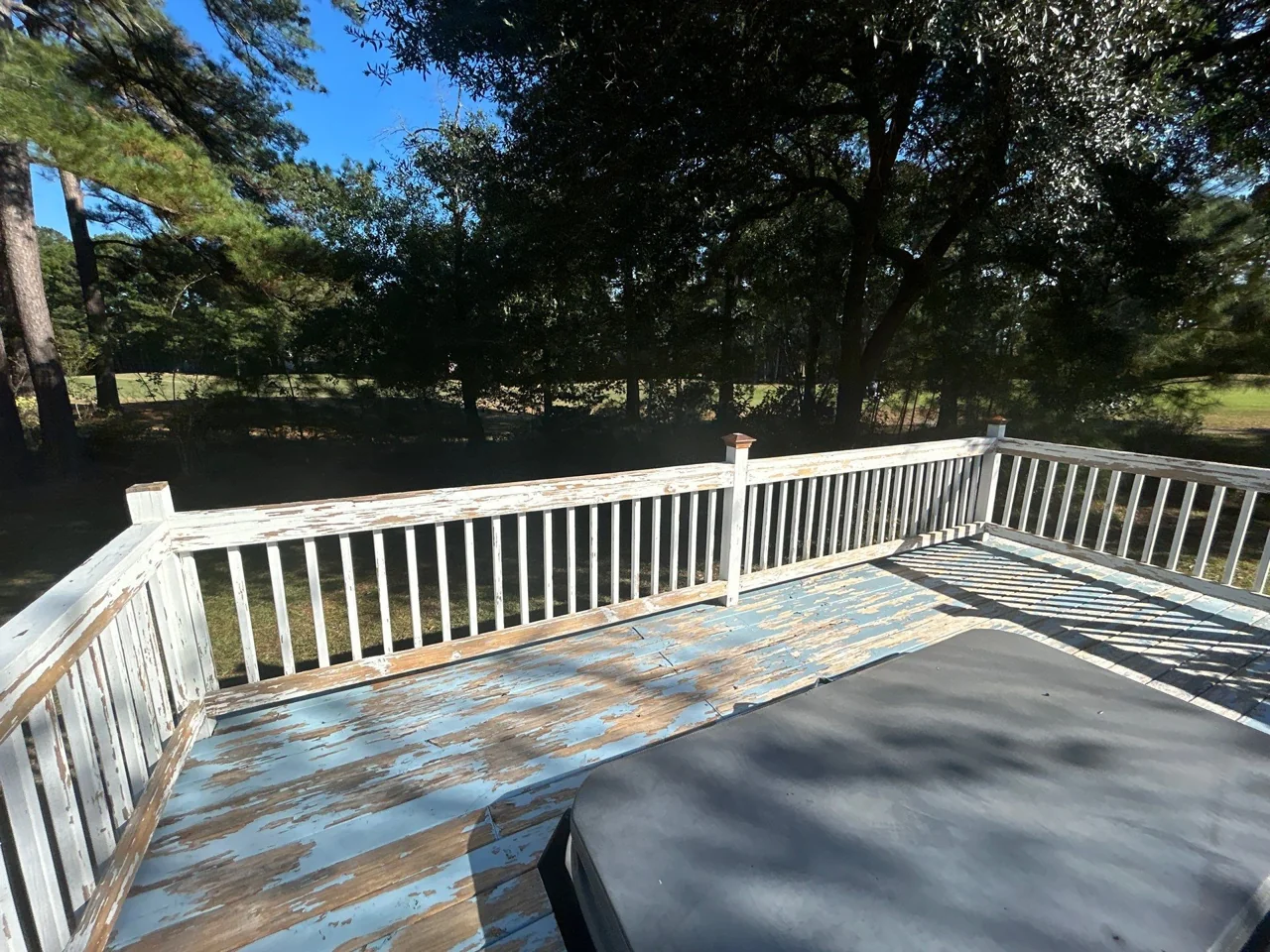
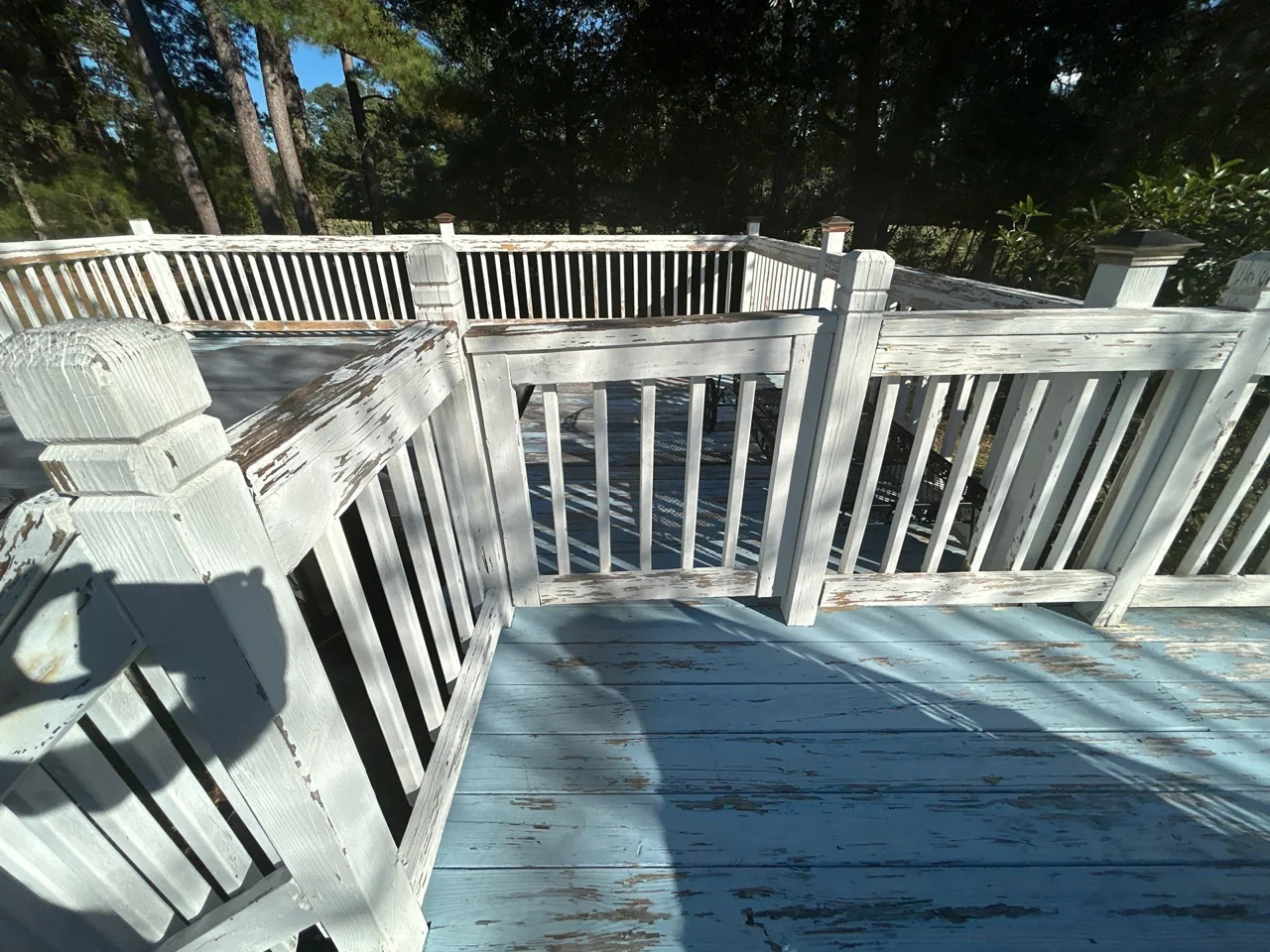
A Summerville homeowner contacted Contract Exteriors about replacing a back wood deck with composite. The existing photographs show painted boards, white railings, stairs and a hot tub occupying part of the deck. That setting makes the decision more concrete than a display of loose boards.
There are surfaces to look after, furniture or equipment to work around and several parts of the outdoor space to coordinate. The recorded request identifies composite as the direction the homeowner wanted to explore. It doesn't document a final collection, installed price or measured maintenance savings. We can use the starting point without inventing a finished result.
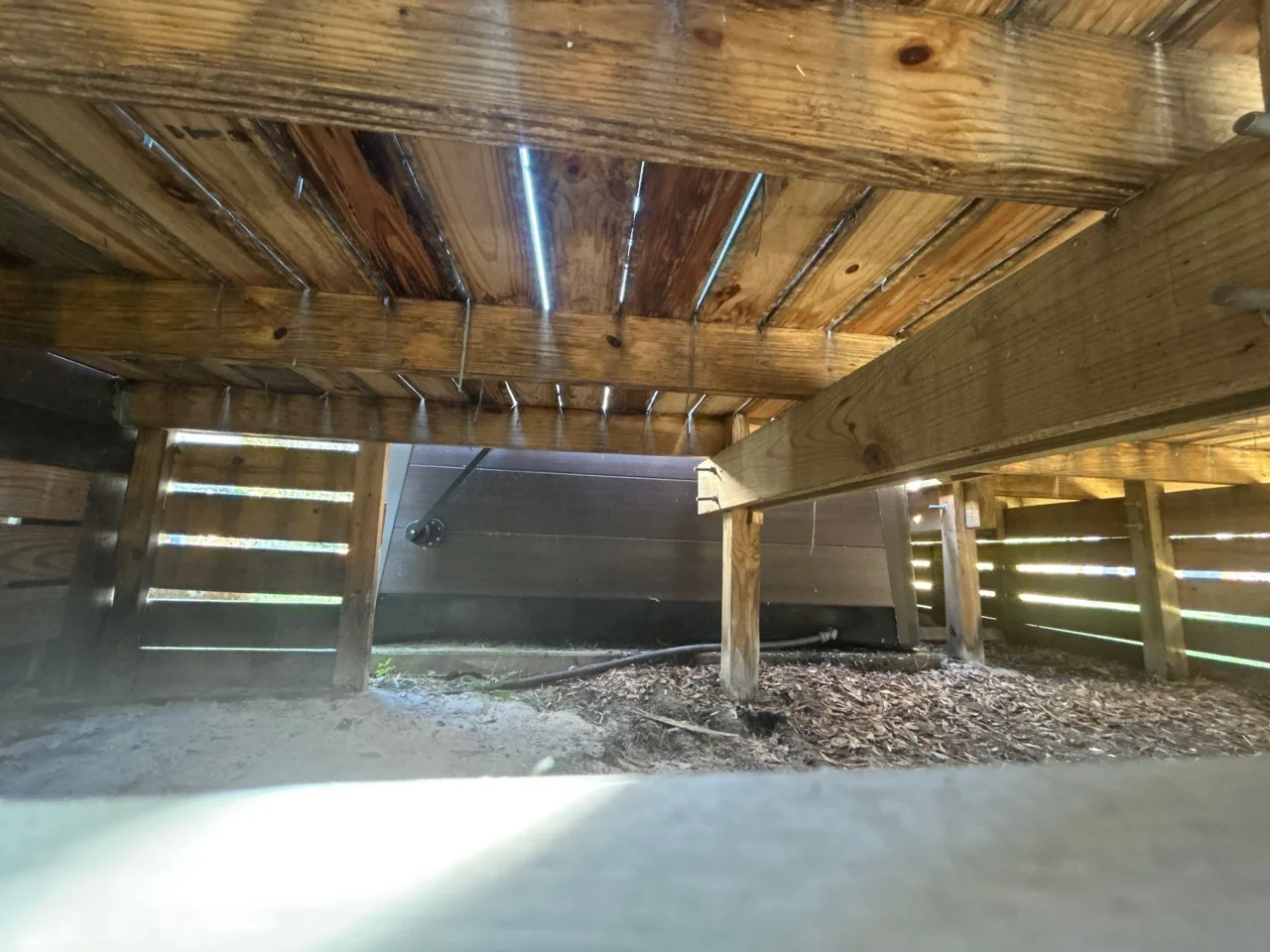
For a similar project, ask which parts would change under each option. Would the layout stay? Are stairs and railings included? What arrangements are needed around a hot tub? Assessment of the structure and any special loads belongs with the responsible professional. Composite boards alone don't answer those questions, and changing the surface doesn't establish that the existing support can stay.
Compare the same deck twice
Before looking at two totals, make the designs comparable. Keep the proposed dimensions, stair arrangement, railing scope and required structural work the same unless you deliberately want an alternative. Otherwise, you may be comparing a smaller wood deck with a larger composite deck and blaming the whole difference on the material.
Ask each proposal to identify the actual decking, finish details, fasteners, borders and surrounding components. Wood species and grade matter. Manufactured collections also vary. A pressure-treated wood option and a premium hardwood are not one interchangeable wood price, just as all composite boards are not a single product.
TimberTech distinguishes wood-fiber composite from its Advanced PVC products, although people sometimes use composite loosely for both. If you're considering TimberTech, have the collection named. Our composite-versus-PVC guide explains that separate choice. For this first decision, stay focused on the extra installed amount for the option you would choose, with any unrelated design upgrades priced separately.
YOUR HOME. OUR EXPERIENCE.
Thinking about updating your deck?
Talk with Contract Exteriors about your existing deck, material choices and how you want to use the space. Start with a free estimate.
Book Your Free EstimateOur team will call to discuss your project and confirm appointment details.
Put a realistic value on the upkeep you would avoid
The main ownership appeal of current TimberTech decking is avoiding the sanding, staining and sealing associated with maintaining a wood finish. TimberTech's wood-cost guidance explains that those recurring materials and labor can change the comparison. That is a manufacturer perspective, not proof of a particular homeowner's savings or a universal refinishing schedule.
Use your own experience or obtain a maintenance quote. What did the last preparation and finish cost? Did you do it yourself or pay someone? How often was it needed for that wood, finish and exposure? Include moving furniture and the inconvenience of keeping the area clear if those tasks matter to you.
You can value your time without pretending it is a contractor's invoice. Keep actual cash expenses in one column and personal time in another. Someone who hires out all refinishing may assess the premium differently from someone who enjoys doing it. Neither should be assigned a made-up annual maintenance bill just to produce a predetermined winner.
Use a simple comparison without inventing a payback promise
Subtract the installed wood proposal from the comparable composite proposal. That is the upfront premium for your actual options. Then look at the wood refinishing expenses you reasonably expect during your own planning period, along with cleaning and inspections for both alternatives.
Here's arithmetic only, not local pricing: if a hypothetical premium were $4,000 and avoided cash spending were $500 a year, simple division would give eight years. It would not establish an eight-year payback for your deck. Maintenance may not occur annually; prices, repairs and how long you keep the house can change the result. The example merely shows which inputs you need.
Don't combine that calculation with an assumed resale gain and call the upgrade free. A future buyer's response is uncertain. If the reduced work is valuable enough to you without a guaranteed return, that's an honest reason to choose it. If the extra amount strains the project budget, ask about a different collection or simpler finish before sacrificing essential work.
Low maintenance still means some maintenance
Leaves, pollen, food spills and ordinary outdoor dirt don't disappear because the boards are manufactured. You'll still clean the deck and care for the other components. That matters if your idea of the upgrade is never having to touch the space again. Less refinishing is a more useful expectation than no work.
TimberTech's current care guidance separates products and cleaning tools, and it calls for continued inspection of the supporting structure. Follow the instructions for the actual collection rather than a generic internet recipe. The railing may have different care requirements from the decking. Our under-trees cleaning guide explores that ownership routine in more detail.
Also look at the rest of the project. Retained wood features, surrounding painted trim or existing railings can keep their own upkeep needs. Ask what the completed proposal would leave you maintaining. That gives you a clearer picture of the time you would save than a broad label applied only to the walking surface.
YOUR HOME. OUR EXPERIENCE.
Ready to turn your deck ideas into a plan?
Bring your questions about boards, layout, stairs and railings to Contract Exteriors. Get help comparing a clear scope for your home.
Book Your Free EstimateOur team will call to discuss your project and confirm appointment details.
Try the appearance and think about the years ahead
Take actual samples outside at your home. Compare them with the siding, door, railing and furnishings that will stay. Look in sun and shade. A photograph can help you narrow a palette, but the sample lets you judge the finish beside your own house before you commit to a large surface.
Discuss heat and comfort as separate selection questions. Don't assume every composite product feels the same, or that changing materials guarantees a cool walking surface. Ask for applicable product information and consider how you intend to use the deck, including shade and footwear. Neither an attractive sample nor a manufacturer's general comparison predicts the exact temperature at your home.
Then think about ownership honestly. If this is your long-term home and avoiding repeated refinishing is a major priority, the premium may be easier to justify. If you expect to sell soon, don't automatically assign the future buyer the same value you do. Make the choice you can support with today's budget and the use you expect.
Read the coverage without treating it as a lifespan
A long warranty can make the premium feel easier to approve, but read what is actually covered. Product defects, appearance changes and installation workmanship are different matters. Ask for the documents applying to the named collection, who provides each coverage and how a claim would be handled. A headline duration is not a measured life expectancy for your particular deck.
This is also a reason to keep the estimate and product selection together. If a lower-priced alternate changes the collection, confirm whether its appearance, care requirements or coverage change too. You can still prefer it, but make that choice with the relevant information. The value comparison should follow the product you buy, rather than the best specification from somewhere else in the brand's range.
Choose the complete project you can stand behind
Composite is a strong candidate when you want the outdoor space without the same commitment to maintaining a wood finish. Wood remains a reasonable comparison when initial cost and natural material character lead the decision. You don't have to dismiss one option to understand why the other suits you better.
For a replacement, settle the condition and scope questions before treating the material premium as the only remaining choice. Our wood-to-composite guide explains the conversion process, including the difference between replacing boards and addressing the structure. A new surface should be part of a properly assessed project rather than a way to avoid that assessment.
Bring your preferred layout, photographs and maintenance priorities to Contract Exteriors. Ask for an identified TimberTech option, a complete installed scope and any sensible alternatives. You should leave knowing what the additional money buys, what work remains on your calendar and why the choice fits your home. That's a better definition of worth it than a guaranteed savings claim.
Another Angle
Value includes the way a material asks to be owned
The comparison between wood and composite is often presented as a contest between authenticity and convenience. That is too simple. Both can be used thoughtfully, and both can disappoint when the wider setting is poorly resolved. The more useful question is which material relationship the homeowner wants to maintain over time.
Wood can accommodate a changing finish and the visible character of natural material. A manufactured surface offers a different kind of continuity: a selected color and grain treatment intended to remain the visual basis of the deck without repeated refinishing. Those are distinct ownership preferences, not merely points on a performance chart.
For the Summerville deck, the existing white railings, painted walking surface and hot tub create several visual and practical relationships. A new board choice would sit within that arrangement unless the wider plan also changed. The premium should therefore be judged against the future deck as a whole, rather than a close-up comparison of grain patterns.
Edit the composition before upgrading every finish
A deck is a platform for use, but it also sits between the house and the garden. Its edges, stair placement and railing determine how that transition is understood. An expensive walking surface cannot by itself resolve an awkward route or a railing that dominates the view from a favorite seat.
This creates a useful budget tradeoff. A simpler finish within a well-organized layout may contribute more than the most elaborate board pattern in an unchanged arrangement that does not work. Conversely, retaining an already successful layout can allow the material itself to become the only significant alteration. Neither approach requires decorative complexity as proof of an upgrade.
The hot tub in the local example illustrates why the usable surface matters more than the nominal area. The space people see and walk through is shaped by the equipment, its access and the surrounding routes. This is a design observation; structural suitability and any special loads require their own appropriate assessment. A refined finish does not replace that responsibility.
Choose continuity deliberately
Color should be assessed at the scale of the deck and against the home. A small dark sample can look richly textured in the hand yet become a dominant field outdoors. A quieter tone may allow the railing, furniture or garden to lead. The right choice depends on the desired hierarchy, not a general rule that premium materials must attract attention.
There is value in asking what should remain visually consistent across seasons and future furniture changes. A restrained base can accommodate those changes without redesigning the entire outdoor setting. A strongly patterned border or contrasting field offers more emphasis, but it also becomes a continuing commitment in the composition.
From this perspective, worth it is partly a question of how much attention the material should require—both physical upkeep and visual attention. The strongest choice gives the homeowner the relationship they prefer with the space. It can be natural wood cared for intentionally or an identified manufactured finish chosen for continuity. What matters is that the ownership decision and the design decision support each other.
A FEW MORE ANSWERS
Questions homeowners ask
How much more will composite cost on my deck?
Ask for comparable installed proposals. The difference depends on the actual wood and manufactured products, design, stairs, railings and structural work; a board-only price is not a complete project premium.
Does composite decking eliminate staining and sealing?
Current TimberTech decking is intended to avoid sanding, staining and sealing. Cleaning and supporting-structure inspections remain necessary, and retained components have their own care requirements.
Can I keep my framing to make the upgrade cheaper?
Only after an appropriate assessment confirms that retaining it is suitable for the proposed product, layout and loads. Existing boards do not establish framing condition.
Is PVC the same as wood-fiber composite?
No. TimberTech treats Advanced PVC and wood-fiber composite as different product types. Confirm the actual collection and compare its specifications and care instructions.
Will the higher price come back when I sell?
That is not guaranteed. Resale depends on the market, property and buyer. Value the use and upkeep benefits without assuming a fixed return.
How do I calculate my own maintenance comparison?
Use matching installed proposals and realistic cash expenses over your likely ownership period. Keep personal time separate and label assumptions; a simple division is not a proven payback forecast.
Sources and review
Contract Exteriors project evidence: Internal project records and original CompanyCam photographs support the project examples described in this article. Customer records and identifying details remain private. Project examples are separate from the manufacturer guidance and other published references below.
Actual Contract Exteriors request and original existing-condition photographs privately matched to the same property. Requested work is separated from selected products and completed results; private customer details omitted.
- Contract Exteriors project evidence — Private request and original existing-condition photographs matched to the same property. Public link opens the company portfolio, not private customer records.
- TimberTech: wood-fiber composite versus wood
- TimberTech: wood deck ownership costs
- TimberTech: current product care guidance
Editorial review details
Reviewed for Contract Exteriors by Bill Schum, Marketing Director, Contract Exteriors, on November 16, 2026. Scope: Editorial oversight, source and project-record checks, photo-originality review, and mobile/desktop presentation checks. Research and editing were supported by AI tools. Design commentary reflects an editorial perspective and does not constitute professional architectural or engineering advice or a property-specific site assessment.
Our sourcing and corrections standards · Report a correction
Related planning resources
decking · planning · timbertech · charleston