
Why compare both materials for your Conway deck?
Project at a glance
- Location
- Conway, South Carolina
- Starting point
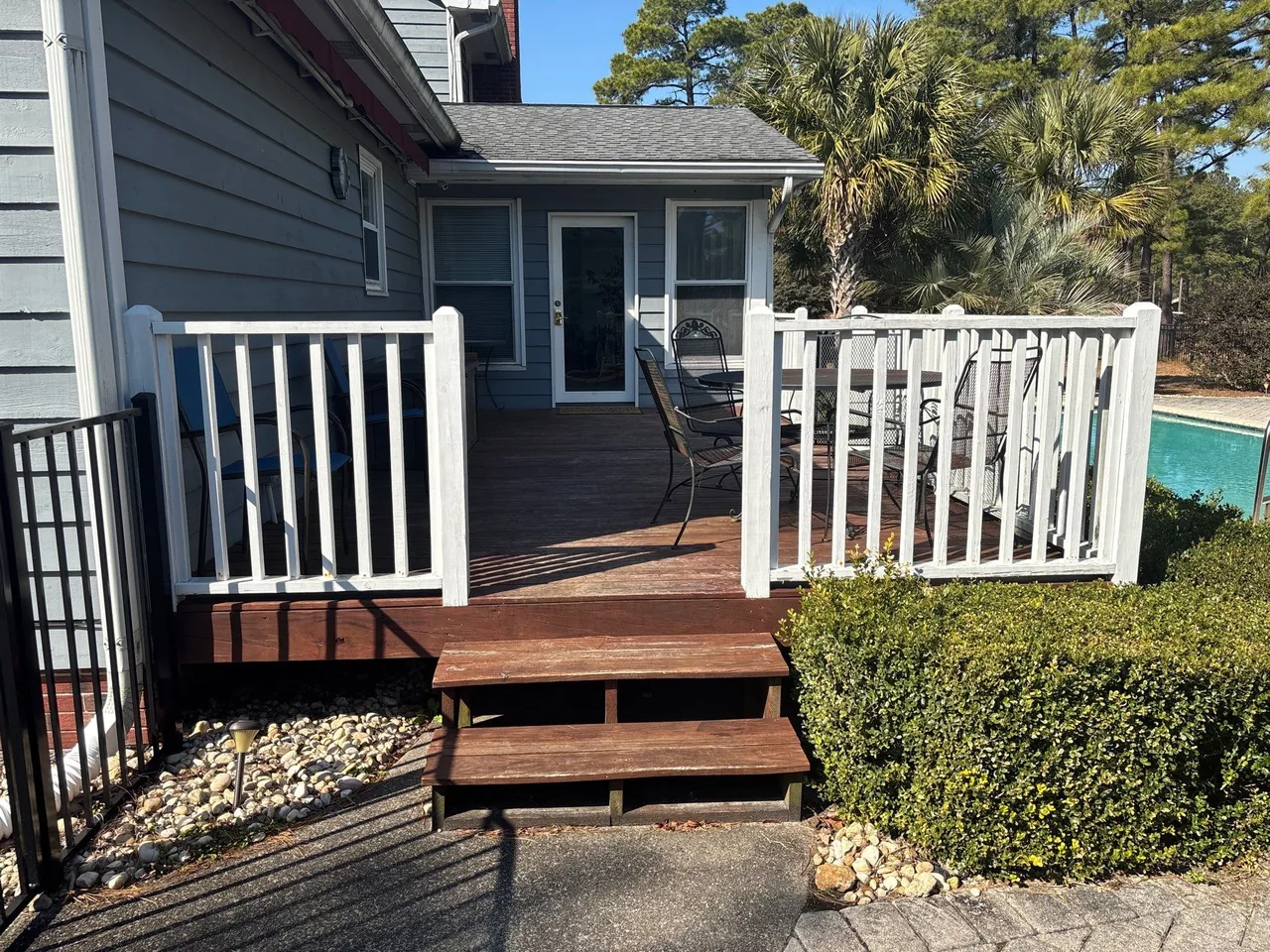
- Existing wood deck and railings
- Homeowner priority
- Less upkeep; compare composite and PVC samples
- Completed decking
- TimberTech AZEK Landmark PVC in Boardwalk
- Project type
- Deck resurfacing
You can like the look of TimberTech and still have a fairly big decision left to make. The brand offers both composite and PVC decking. Similar-looking samples can belong to different material families, with different prices and care instructions.
That was part of the conversation at a Contract Exteriors project in Conway’s 29526 area. The homeowners wanted to replace their wood decking and railings and reduce future upkeep. They had already researched TimberTech and gathered samples. Our team planned to bring gray and darker brown options in both composite and PVC, and getting the color right became an important part of the discussion.
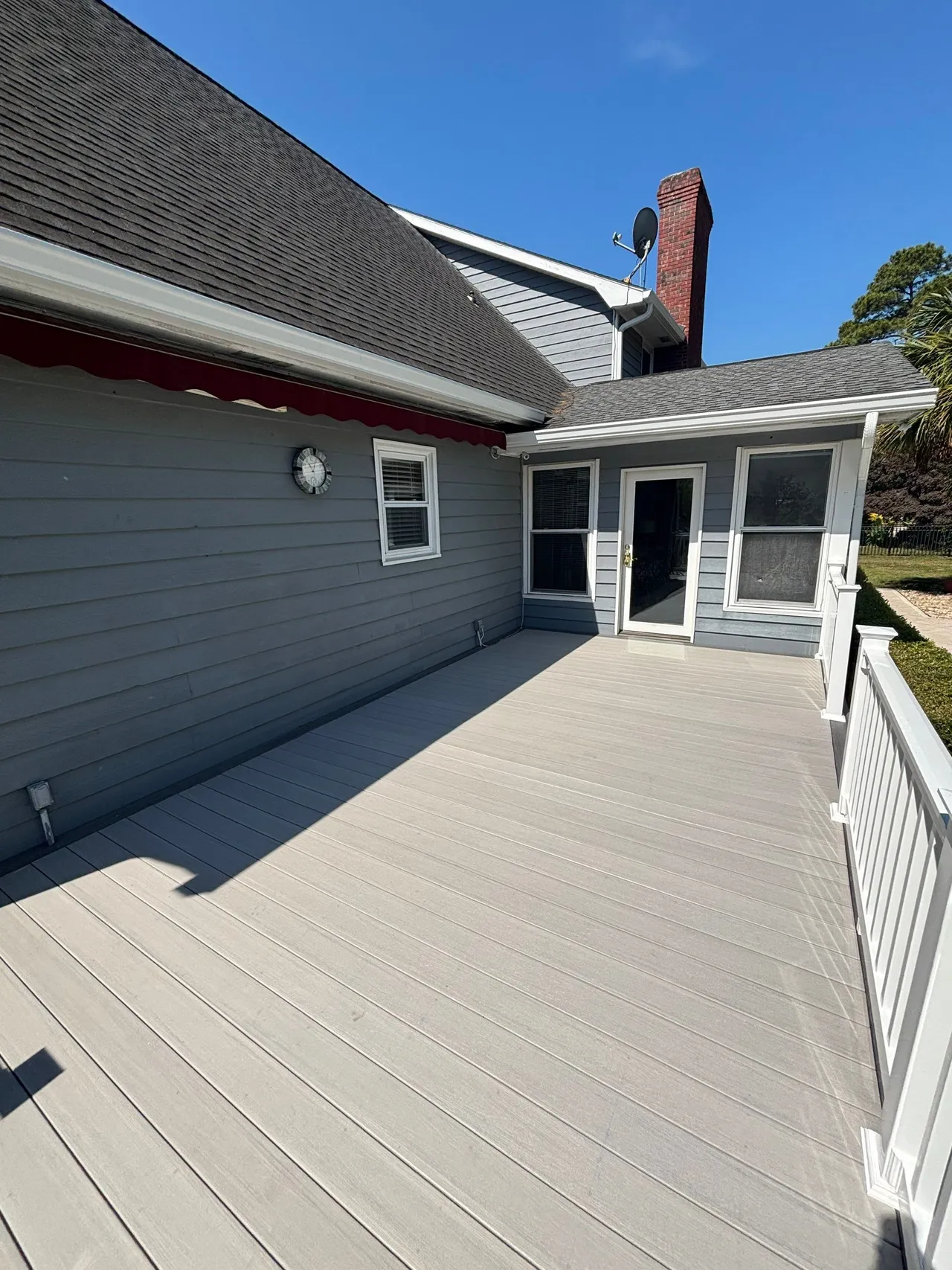
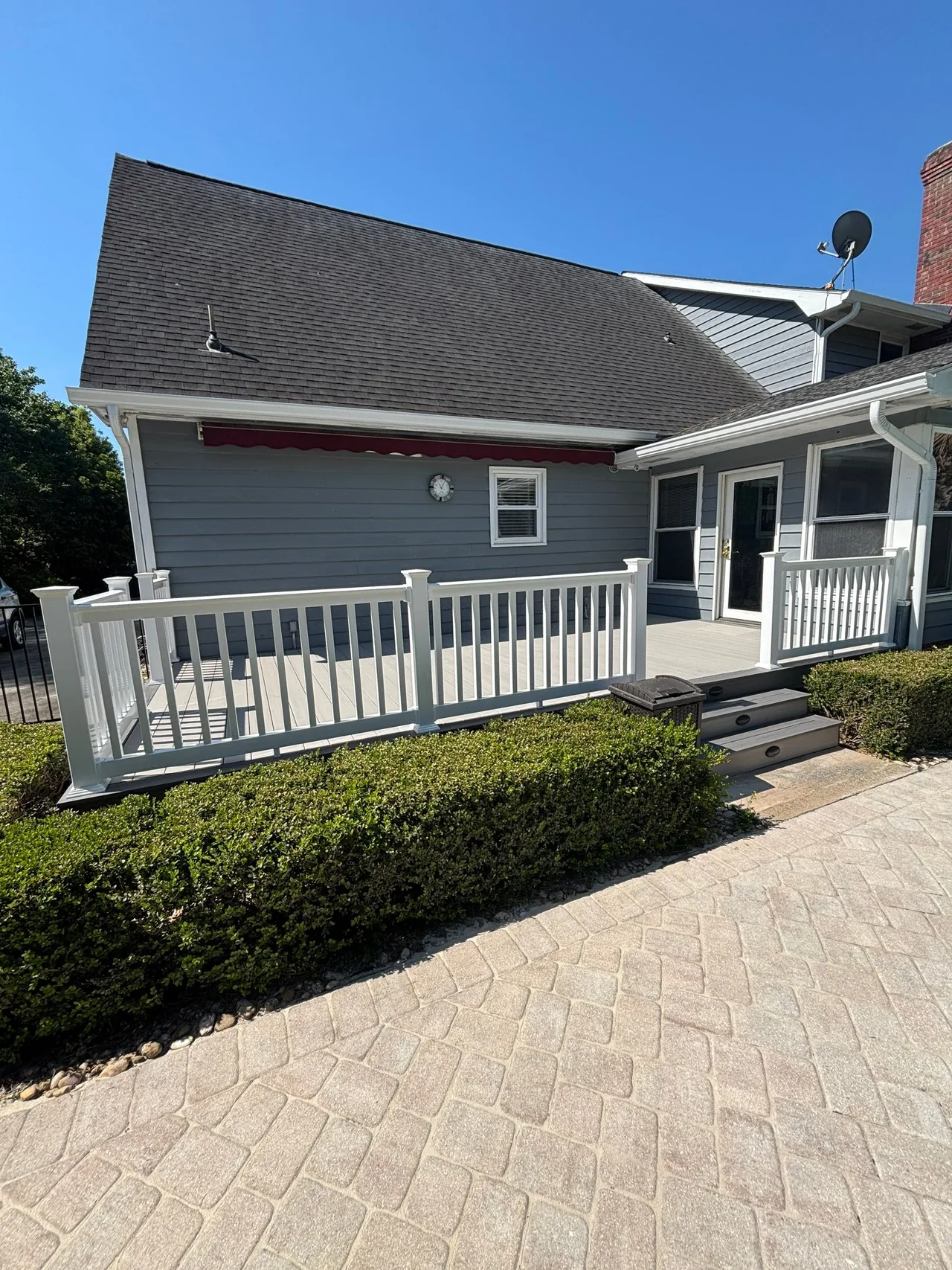
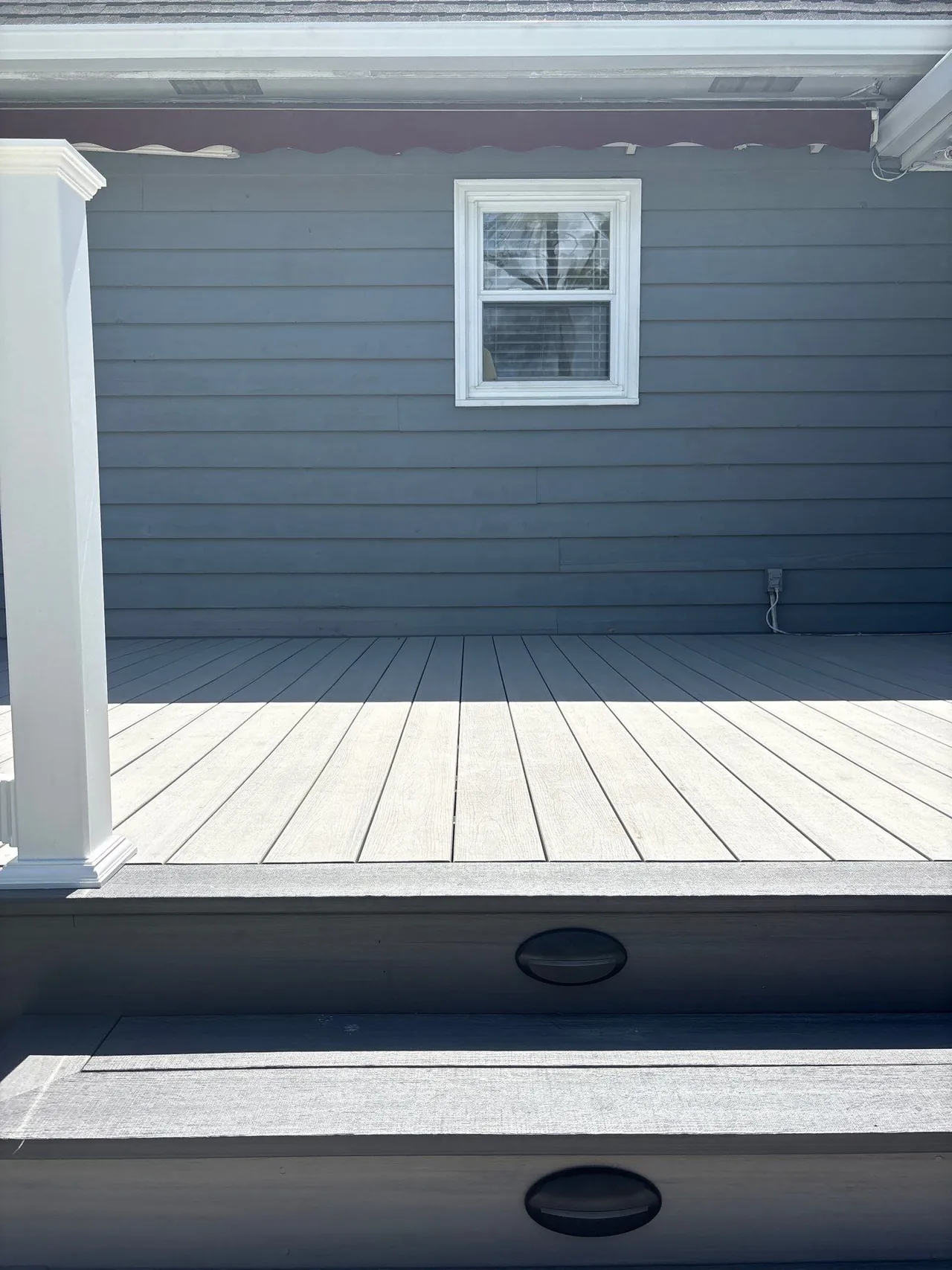
The completed resurfacing project used TimberTech AZEK Landmark PVC in Boardwalk. It gives us a real local example of the finished material, alongside a useful reminder: compare the exact boards you could buy. The TimberTech guide is a good place to get familiar with the two families before narrowing your samples.
Sources: TimberTech: Decking overview
What is the difference between composite and PVC decking?
TimberTech composite decking combines wood fibers with plastics. Its protective outer layer, called a cap, helps shield the board. TimberTech Advanced PVC uses engineered polymers without wood fibers. Both can give you a wood-style surface without the regular staining and sealing associated with wood decking.
The collection matters as well as the material. Composite collections have different finishes and three- or four-sided caps; Advanced PVC also comes in several collections and colors. Have the collection and color written down beside each sample so you know which specifications and care guide apply.
Sources: TimberTech: Decking overview · TimberTech: PVC vs. composite decking
When might PVC be worth the higher price?
PVC deserves a closer look when a wood-free board and moisture resistance are high on your list. TimberTech identifies Advanced PVC as its strongest moisture-resistance option. That can be relevant around a pool or in a frequently wet area, but the choice should reflect your own deck’s setting and use. A Conway address by itself does not tell you how much sun, shade or water the deck gets.
Composite remains a sensible option to compare when you want less upkeep than wood and need to keep the initial project cost in check. You may find a composite collection whose color and grain you prefer. There is no reason to dismiss that option before seeing the complete price and product details.
Put the difference into a question you can answer: what would the additional PVC cost buy in the two proposals in front of you? If the extra cost means giving up another important part of the project, discuss that tradeoff. The right comparison uses the same deck size, railing scope and finish details.
Sources: TimberTech: PVC vs. composite decking · TimberTech: Decking overview
How should you compare color and heat in the sun?
Take your finalists outside. A board that looks warm gray indoors can read differently beside your siding, white railings and landscaping. Set the samples where the deck will be used and look at them in both sun and shade. Include the railing color in that decision; it occupies a lot of the view.
In the Conway project, color was a documented priority and the installed choice was Boardwalk. TimberTech describes Boardwalk as a light, warm gray within its Landmark Collection. The finished photographs show that color beside the home’s gray siding and white railings. Use that finished look as a reference while you compare your own samples and priorities.
Comfort needs its own check. TimberTech states that all decking gets hot in sunlight and darker colors generally feel hotter. Its heat guide recommends letting samples sit in full sun for at least two hours before comparing them. Follow that guidance carefully, avoid contact with a hot surface, and consider how shade will affect the area you actually use. A quick touch of a sample indoors cannot tell you what a sunny afternoon will feel like.
Sources: TimberTech: Landmark Collection · TimberTech: Heat-resistant decking guide
Does low maintenance mean you can forget about cleaning?
You can cross routine sanding, staining and sealing off the decking to-do list with these TimberTech options. Cleaning stays on it. Dirt, spills and material left sitting on the surface still need attention, and the wood framing beneath a resurfaced deck remains a separate inspection and care concern.
There is a practical difference between the cleaning instructions, too. TimberTech specifies a stiff natural-fiber brush for Advanced PVC, while composite calls for a medium-to-stiff nylon brush. It warns that a stiff natural-fiber brush can dull composite decking. Use the current cleaner and brush recommendations for the exact product instead of assuming the same supplies suit both.
Ask for the care guide with the quote. Check it against the way you use the space, including mats, outdoor furniture and nearby plants. TimberTech also cautions against leaving rubber-backed mats and other nonporous items on its decking for extended periods because they may cause discoloration.
Sources: TimberTech: Care and cleaning
What should the two installed quotes include?
Request a composite option and a PVC option with the same scope. Each should name the collection and color and spell out removal, decking, railings, steps, edge trim, fastening system, cleanup and any proposed work to the supporting structure. A cheaper board price tells you little if one quote includes new railings and the other leaves them out.
This is another useful lesson from the Conway consultation. The homeowners initially expected the whole structure to be rebuilt, while the proposed work was resurfacing. The scope needed explaining before they could judge the proposal. If you are keeping any existing framing, have the contractor explain what will be assessed, retained or replaced and how additional work would be handled. Our rebuild-or-resurface guide explores that separate scope decision.
Keep product coverage separate from installation and retained-structure coverage. Ask for the applicable written warranties for the exact collection and purchase date, including exclusions and any labor terms. TimberTech publishes product and fade-and-stain warranties separately; a long product warranty should not be read as blanket coverage for the whole deck.
Bring your preferred samples, a few photographs of the existing space and your must-have features to the consultation. Our project-planning resources can help you organize the conversation. That makes it easier to discuss a complete project price without guessing at a Conway average or borrowing someone else’s job cost.
Sources: TimberTech: Warranty information
Which option belongs on your shortlist?
Start with a composite sample you like and a PVC sample you like. Keep composite in the running if the installed price and appearance fit your priorities. Give PVC serious consideration if the wood-free construction and moisture resistance justify its extra cost for your space. With either choice, look at the color outdoors and be comfortable with the cleaning requirements.
For this Conway project, the finished result was Landmark PVC in Boardwalk. Your decision can land somewhere else. The useful goal is a material you understand, a look you want to live with and a proposal that clearly states the work.
If you are planning a deck in Conway, Contract Exteriors can discuss both material families and the condition of your existing space. Explore our decking resources for the broader planning questions, then bring your finalists to a free expert-opinion conversation.
A FEW MORE ANSWERS
Questions homeowners ask
Is all TimberTech decking PVC?
No. TimberTech offers composite decking made with wood fibers and plastics, as well as Advanced PVC decking made without wood fibers. Ask for the exact collection and color on the proposal so you can compare the right product details and care instructions.
Is TimberTech composite always cheaper than PVC?
Composite typically has a lower upfront price, but the exact collections and installed scope matter. Compare two proposals with the same decking area, railings, steps, trim and preparation. Do not assume a board-price comparison gives you the complete project-cost difference.
Will PVC decking stay cool enough for bare feet?
PVC decking can still get hot in direct sunlight. Color, exposure and shade matter. Compare your actual finalists outdoors using TimberTech’s sample guidance, and plan for footwear and shade rather than assuming any material will remain comfortable on every sunny day.
Does choosing PVC mean the framing must be replaced?
The decking material alone does not answer that question. Have the existing structure assessed and the proposed retained or replacement work explained in writing. Deck-board selection and the condition of the supporting structure are related planning decisions that each need attention.
Sources and review
The anonymous Conway example comes from matched Contract Exteriors project records and original CompanyCam photographs. Recorded goals, sample discussion and the completed PVC selection are distinguished from general manufacturer guidance. The records do not establish a single reason PVC was selected, measured heat or moisture performance, or a comparative cost saving. All featured project photographs are from this same Conway project; manufacturer sources were accessed October 23, 2026.
- TimberTech: Decking overview — Current composite and PVC composition and collection distinctions. Accessed October 23, 2026.
- TimberTech: PVC vs. composite decking — General material and upfront-price comparison; not a Conway quote or project outcome. Accessed October 23, 2026.
- TimberTech: Landmark Collection — Exact PVC collection and Boardwalk color. Accessed October 23, 2026.
- TimberTech: Heat-resistant decking guide — Sun exposure, color and sample-comparison guidance; no measured project temperature claim. Accessed October 23, 2026.
- TimberTech: Care and cleaning — Different brush recommendations and ongoing cleaning precautions. Accessed October 23, 2026.
- TimberTech: Warranty information — Separate product and fade/stain documents; exact purchase-date terms must be checked. Accessed October 23, 2026.
Editorial review details
Reviewed for Contract Exteriors by Bill Schum, Marketing Director, Contract Exteriors, on October 23, 2026. Scope: Editorial oversight and publication approval under Bill Schum’s delegated quality checks. AI-assisted source research, exact Conway/29526 project matching, privacy and photo review, complete prose reread and isolated native desktop/mobile inspection. No personal site attendance or specialist technical review is claimed.
Our sourcing and corrections standards · Report a correction