Get clear on what “move the meter” means
Project at a glance
- Local example
- Myrtle Beach, South Carolina
- Project
- Vinyl siding replacement
- Stage
- Progress and completed photographs
- Decision
- Keep the meter in place, coordinate temporary work or consider relocation
You might hear a contractor say they’ll need the meter moved. Before deciding what to do, ask whether they mean the equipment may need to be temporarily disconnected so work can take place, or whether they want it to end up in a different location. Those are different requests. If the equipment will go back in the same place, you need a schedule and agreement about who handles the work. A permanent relocation can add a new location decision and other requirements from the utility or responsible authority. Ask the estimator to use specific language in the proposal so you know which question to take to the provider.
The visible meter is only one part of what is on the wall. An electrician or the utility can identify the equipment involved and explain which party is responsible for it. Start with the provider named on your electric bill. A photo taken from a normal distance and a description of the wall work can help explain the request. There’s no need to open a box, move a line or get close enough to read equipment markings for a preliminary siding estimate.
Use the wall to explain what the siding crew needs
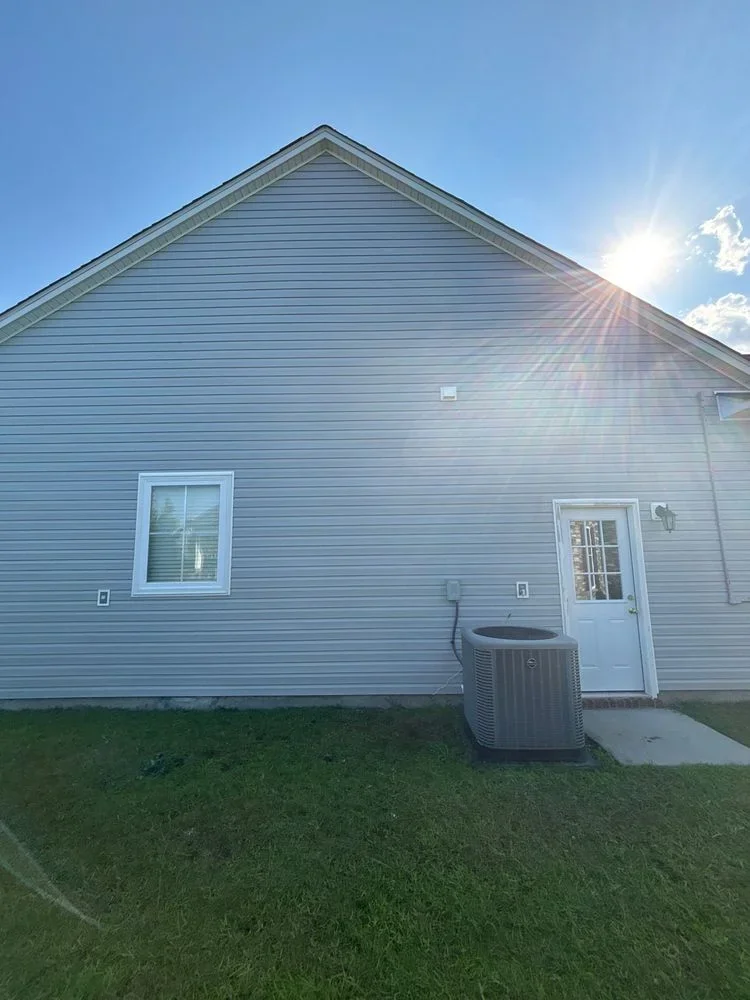
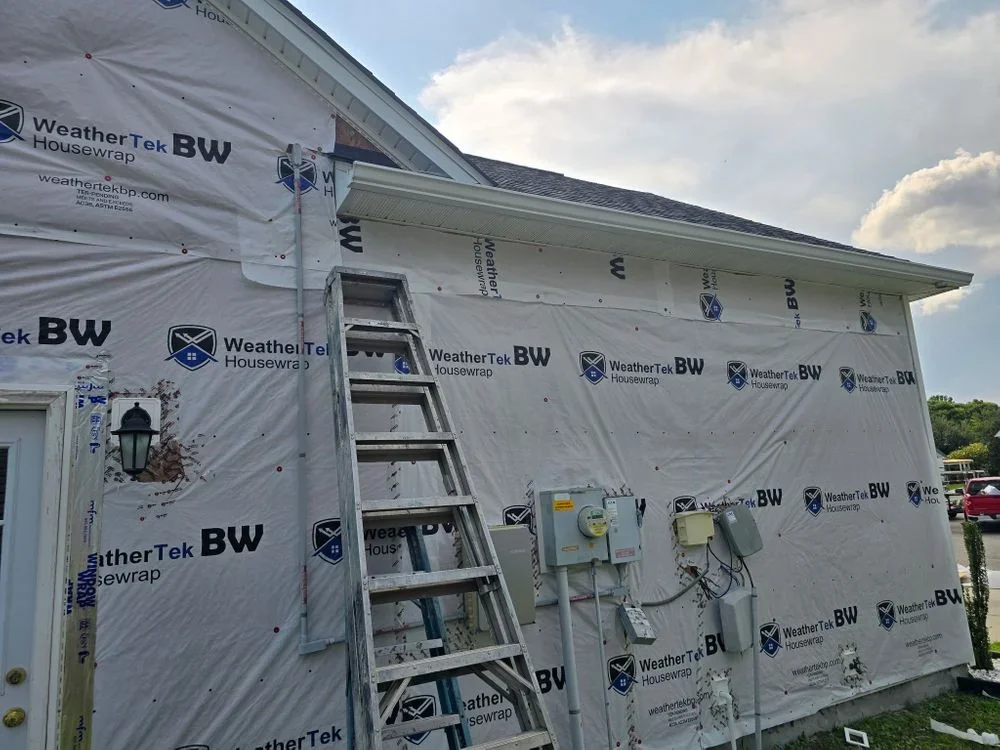
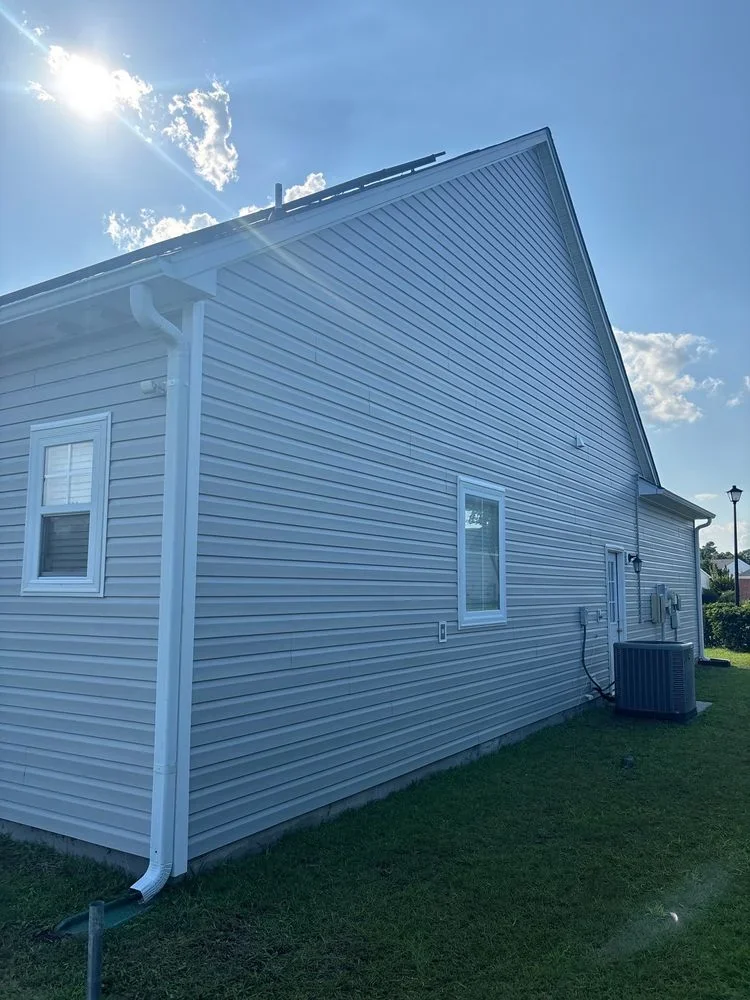
In a completed Contract Exteriors vinyl siding project in Myrtle Beach, several pieces of service equipment share a wall near the outdoor air-conditioning unit. One photograph shows the wall with wrap visible during siding work. A later photograph shows horizontal siding on the wall again. Taken together, the photographs help explain the question to ask on an estimate: What does the crew need to do in the portion of the wall immediately around the existing equipment? Each service has its own responsibilities. The project pictures document the wall at two stages, while your contractor and provider can explain what your equipment allows.
Ask the siding contractor to mark the affected area in one of your pictures. If the plan is to work with the equipment in its current position, have them describe the finished result around it and identify anything still subject to confirmation. If they need access to a section behind or immediately next to the equipment, establish exactly why before asking the utility about a service visit. A description such as “the wall work needs access behind the existing service equipment” gives the provider something concrete to respond to. The siding quote should identify the proposed work at the wall. The equipment decision goes through the appropriate parties.
YOUR HOME. OUR EXPERIENCE.
Planning vinyl siding around service equipment?
Bring a picture of the wall to a Contract Exteriors estimate to discuss the siding scope and any coordination you need to arrange.
Book Your Free EstimateOur team will call to discuss your project and confirm appointment details.
Compare three possible answers before setting a date
If the equipment can stay in place, start with the wall. Have the proposal explain the siding scope at the equipment and what the crew expects to preserve. Keep the equipment accessible in the finished design. If other work, such as a fence or planting bed, is planned beside it, discuss that with the provider before it is drawn into the finished layout.
If the equipment needs temporary service coordination, focus on timing. Ask the provider and electrician who is authorized to perform the necessary work, whether the house would lose power, and who arranges restoration. Give the siding crew the same information. Have everyone identify what must be finished before the next party can take over.
If the equipment needs to end up somewhere else, start with location. Treat the new location as a separate decision. Your provider can say what it needs to approve and whether the utility, electrician and local authority must each be involved. Schedule the siding around that outcome instead of assuming a relocation is included with the new wall finish.
The distinction between those three answers matters even if the quote uses one line for all work at the side wall. Ask for a written explanation of which option is included and which would require a separate price or appointment. If the contractor is still waiting on an answer, put that dependency in the estimate. It will help everyone see what could change the start date.
If the rest of the siding looks sound, see what to check before replacing just one wall. If you are planning larger changes to the same wall, compare the sequence in our guide to windows before vinyl siding.
Ask the provider about access and ownership early
Dominion Energy’s South Carolina service manual calls for outdoor meters to remain accessible to authorized company staff and addresses meter tampering and equipment damage. Santee Cooper’s customer forms provide a different starting point for its customers. Use the rules and contacts of the provider that actually serves your address. Ask how it wants the request submitted, who can confirm what is involved, and what steps are needed before siding can start. If clearance or access is in doubt, have the provider review the actual layout instead of relying on a neighboring home or an old estimate.
Ask specifically who will communicate the date and who will contact you if it changes. Any work that involves cutting or restoring power is an issue for the responsible provider and trades. If a confirmed outage will affect work from home, a refrigerator or equipment the household relies on, make those arrangements before crews arrive. Ask how you’ll know when service is restored and when the siding crew can finish the wall. Leave the equipment itself to qualified professionals.
Sources: Dominion Energy South Carolina, Electric Service and Meter Installations Manual · Santee Cooper, customer forms and service resources
Plan the order if more than one crew needs the wall
Ask the siding contractor which work at the rest of the house can proceed while the service area is waiting. If the provider needs more information or the electrician can only visit later, you may have a choice between changing the start date and doing the other elevations first. Either can be workable. Confirm what will protect any work already underway and whether another crew visit changes the quote. Keep one person responsible for updating the schedule so a tentative date is not mistaken for a confirmed appointment.
When everything is ready, make sure each party is using the same description. A siding estimate that assumes the meter stays is a different plan from a service request that assumes it will be moved. Share the current drawing or marked photo so the last conversation starts from the same wall and the same decision.
Put the handoff in the written scope
Write down who decides whether the equipment can stay, who makes any utility request and who is responsible for confirming the wall is ready. If a separate trade is involved, ask whether it invoices you directly or is included in the contractor’s quote. If the appointment moves, identify who protects the work in progress and reschedules the next step. See the companion guide to lights and other wall fixtures when you’re ready to go through the rest of the exterior. The meter has a separate service decision, so give that part of the quote its own line and settle it first.
Another Angle
The equipment belongs in the composition of the side wall
On a drawing, a service group is easy to reduce to a small mark. At eye level it occupies a visible piece of the elevation, especially where uninterrupted siding makes departures from the pattern stand out. The Myrtle Beach example illustrates a useful tension. Horizontal siding provides a continuous background, while service boxes, lines and equipment give the wall a practical center. An entry, window or corner can register as the feature you notice first. The equipment can remain plainly visible and do its job without taking over the appearance of the wall.
A permanent move is sometimes tempting for visual reasons. Think about the viewpoint in question. A meter rarely seen from the front walk may matter more to the person who uses the side entrance every day. Shifting it to a wall that reads more quietly on paper may create a new interruption close to a patio or another approach. Consider what you would see from both locations. A meaningful design improvement should justify the additional work and preserve the service access the provider requires.
Give access a place in the landscape
A choice about an electric meter extends beyond what the siding looks like around it. The lawn, path or side yard may also be the way someone reaches the equipment. Design decisions around planting and screening can change that route over time. The problem often starts with a reasonable wish to make a practical wall less conspicuous. As the landscaping matures or the side yard acquires storage, a service point can begin to feel hemmed in. Plan the landscape with the utility’s access requirements in view while the siding work is still being discussed.
This is a case where a simple architectural judgment can help. A quiet service wall benefits from a legible approach. Keep the visual focus on the paneling, windows or entrance where it belongs and let the location of the equipment remain evident. A design that works only when the service is hidden is harder to live with. A design that acknowledges where service takes place can give the house a composed appearance without erasing how it functions.
Make a small intervention do enough
A complete replacement of the siding need not trigger a complete reorganization of the elevation. There may be good reasons to reconsider where the equipment sits, especially if a planned addition changes the site. A wall that is simply due for new siding presents a different opportunity. If the current location can remain and the detail around it can be resolved through the proposed scope, retaining it can preserve a clear relationship between the service equipment and the route to it. The wall can feel renewed even when the most prominent practical element stays in the same position.
The decision has its own scale. Siding runs across the elevation. Service equipment belongs to a much smaller part of it, with obligations that reach beyond its appearance. A successful update lets those scales coexist. The siding establishes a coherent face, and the equipment can still be reached and identified. The tradeoff is worth weighing before a cosmetic preference becomes a separate service project.
A FEW MORE ANSWERS
Questions homeowners ask
How do I tell who provides my electric service?
Use the utility name and service address on your bill. Ask that provider which team handles a siding-related service request.
Does a temporary disconnect mean the meter must end up somewhere else?
No. Those are separate decisions. The utility and a qualified electrician can explain what the proposed wall work requires and whether the equipment can return to the same location.
Who should call to arrange any service work?
Ask the utility how it takes requests. Confirm whether the homeowner, contractor or electrician should initiate it, and put the responsible person in the written scope.
Should I keep the area around the meter clear after the remodel?
Yes. Ask your provider what access and clearance it requires at your address. Review any planned landscape changes, screens or other improvements at that wall.
What if the crew discovers a problem behind the old siding near the meter?
Ask the siding contractor to document it and identify the decision needed before work proceeds. Have the appropriate electrician or utility assess any issue involving the service equipment.
Can I compare siding quotes before the utility answers?
Yes. Compare the siding scopes and mark the meter work as unresolved. Ask each estimator to state what is included if the equipment stays and what requires separate service coordination.
Sources and review
Contract Exteriors project evidence: Internal project records and original CompanyCam photographs support the project examples described in this article. Customer records and identifying details remain private. Project examples are separate from the manufacturer guidance and other published references below.
- Santee Cooper, customer forms and service resources
- Dominion Energy South Carolina, Electric Service and Meter Installations Manual
Editorial review details
Reviewed for Contract Exteriors by Bill Schum, Marketing Director, Contract Exteriors, on November 18, 2026. Scope: Bill Schum provides editorial oversight. AI tools supported research, drafting, checking cited sources and project records, reviewing photographs and page presentation, and editing. Design commentary reflects an editorial perspective. Property-specific work requires assessment by an appropriate professional.
Our sourcing and corrections standards · Report a correction