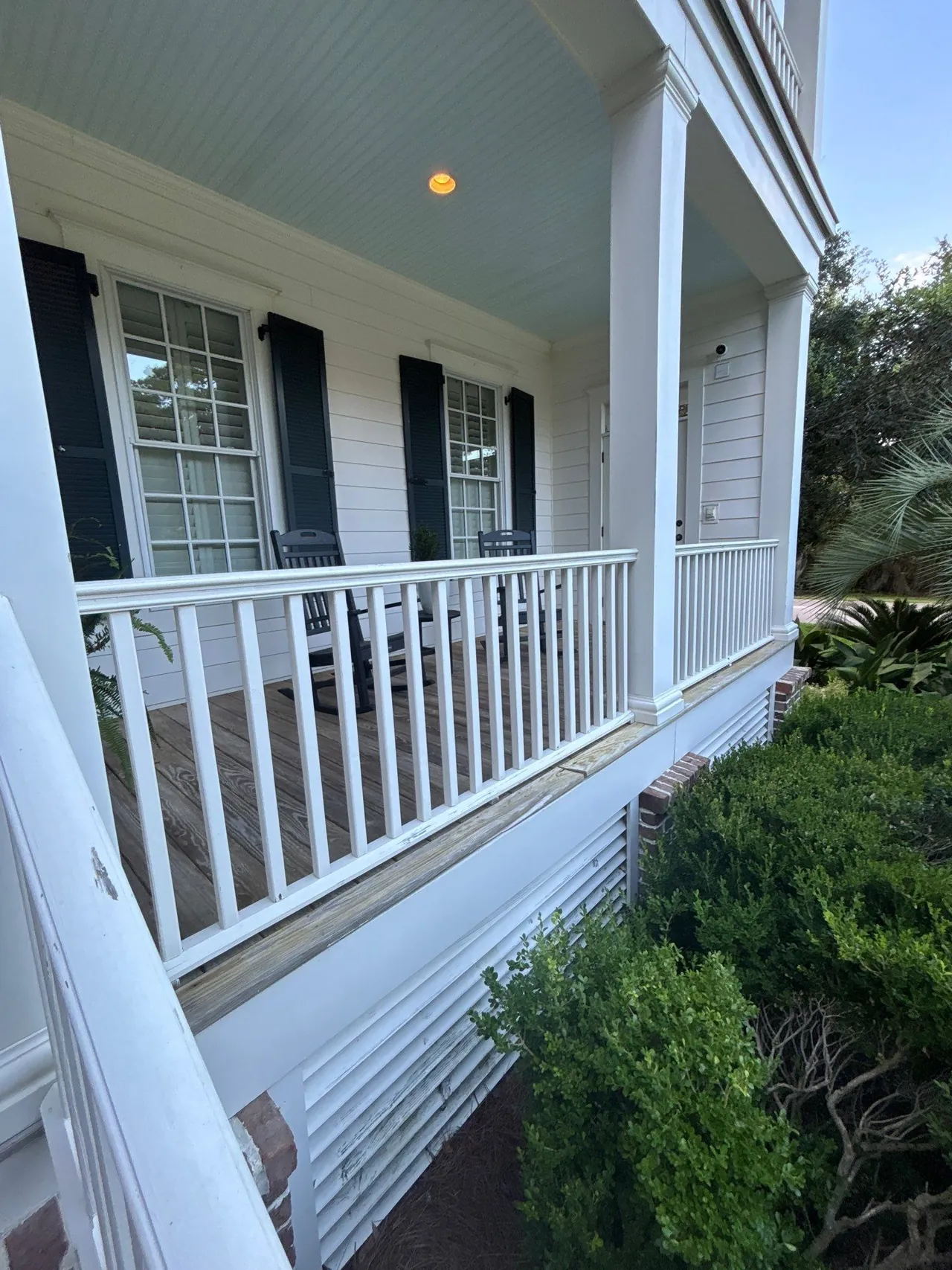
What would you like to stop doing?
Project at a glance
- Local example
- Pawleys Island, South Carolina
- Stage
- Railing replacement planning
- Existing material
- Wood railings
- Areas
- Lower and upper front decks
If you're tired of repainting the porch rails, “low maintenance” sounds pretty good. Before settling on a replacement, ask one more question: what will you still need to do?
For a home near salt water, the answer depends on the actual railing and exposure. Our aluminum-versus-composite guide compares the broader material choices. Here, let's look at owning the replacement—cleaning it, keeping an eye on its connections and knowing when to ask for help.
A roof over the porch does not settle the exposure question
A covered porch can feel sheltered, but that doesn't mean every connection is free of salt. FEMA's coastal corrosion guidance describes sheltered exterior connections where salt can collect without rain rinsing it away.
That's worth discussing at the consultation. Ask the contractor to consider the parts tucked under the porch or behind trim, as well as the rail you can easily see. The important question is how your particular setting affects the proposed system.
An oceanfront porch and an inland porch shouldn't automatically get the same care plan. If splash, flooding or direct water contact is relevant, have the manufacturer address suitability and warranty terms for that use.
Sources: FEMA: coastal corrosion guidance
Get the care plan before choosing the rails
Start with the instructions for the exact product. TimberTech's 2026 schedule calls for annual cleaning more than one mile from the seashore and twice-yearly cleaning less than one mile away, starting at six months. Its composite-railing footnote asks owners within one mile of the seashore, an estuary or marine environment to seek manufacturer advice.
For routine care, the guidance describes a soft cloth, rinse water and nonabrasive, pH-neutral detergent. It also says to contact TimberTech about persistent corrosion or whitening. Decking pressure-washing instructions are a different set of directions.
Ask for that care document while you're comparing the quote. You should be comfortable with the routine before choosing the finish, and know which components those instructions cover.
YOUR HOME. OUR EXPERIENCE.
Thinking about replacing your railings?
Talk with Contract Exteriors about your existing deck or porch, railing options and the view you want to keep. Start with a free estimate.
Book Your Free EstimateOur team will call to discuss your project and confirm appointment details.
Start with the upkeep that brought you here
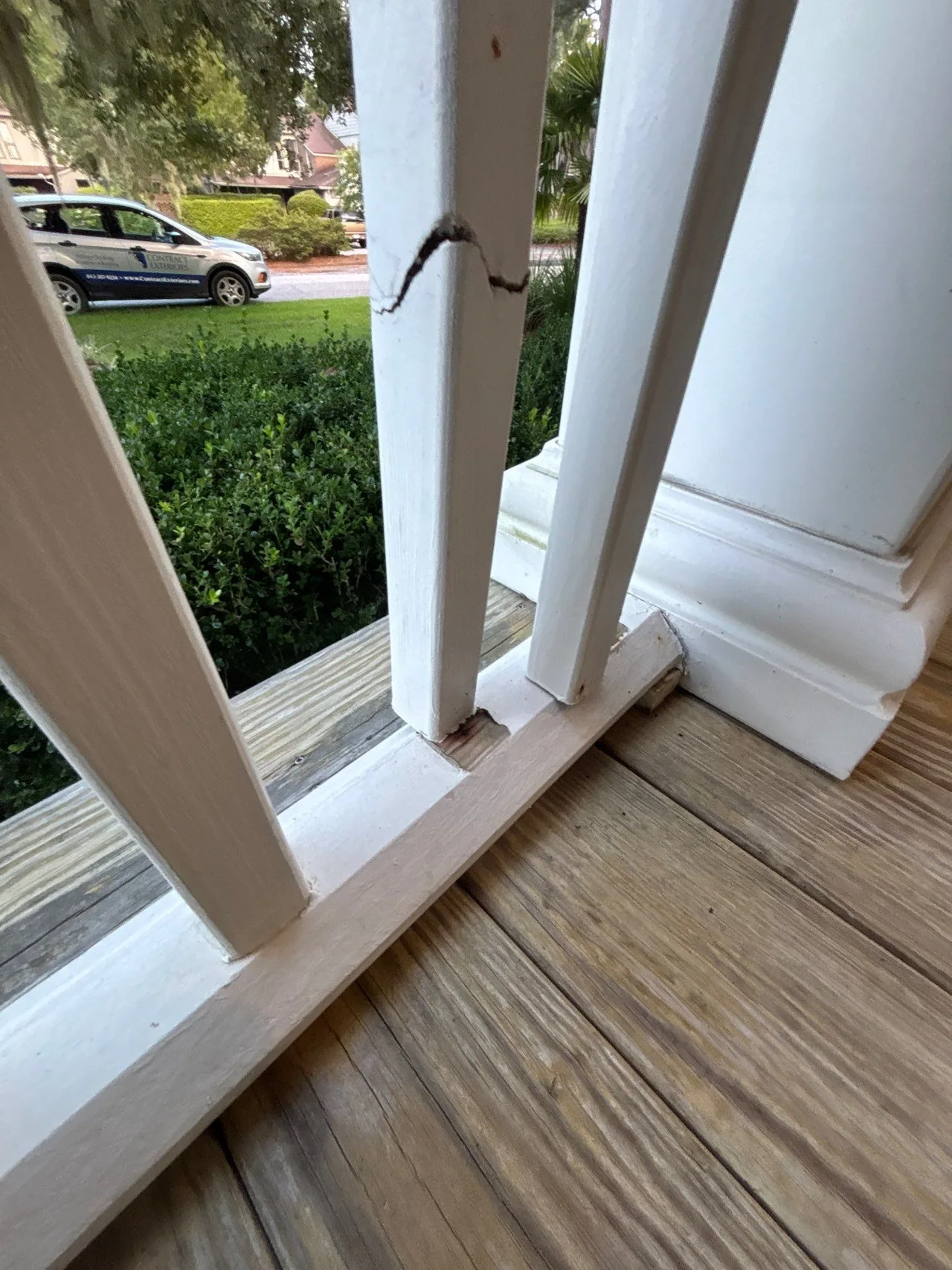
One Pawleys Island homeowner contacted Contract Exteriors about deteriorating wood railings on the lower and upper front decks. The project was still in replacement planning. It's a useful reminder that a railing purchase begins with something the homeowner already wants to change.
If upkeep is your frustration, describe it specifically. Repainting worn wood is one task; reaching the connections on an upper deck is another. Ask how the proposed replacement changes that work and what access you'll need to care for it.
We don't know that salt caused the condition of those original wood rails. The lesson to bring to your own consultation is simpler: compare the next care routine alongside the look of the new railing.
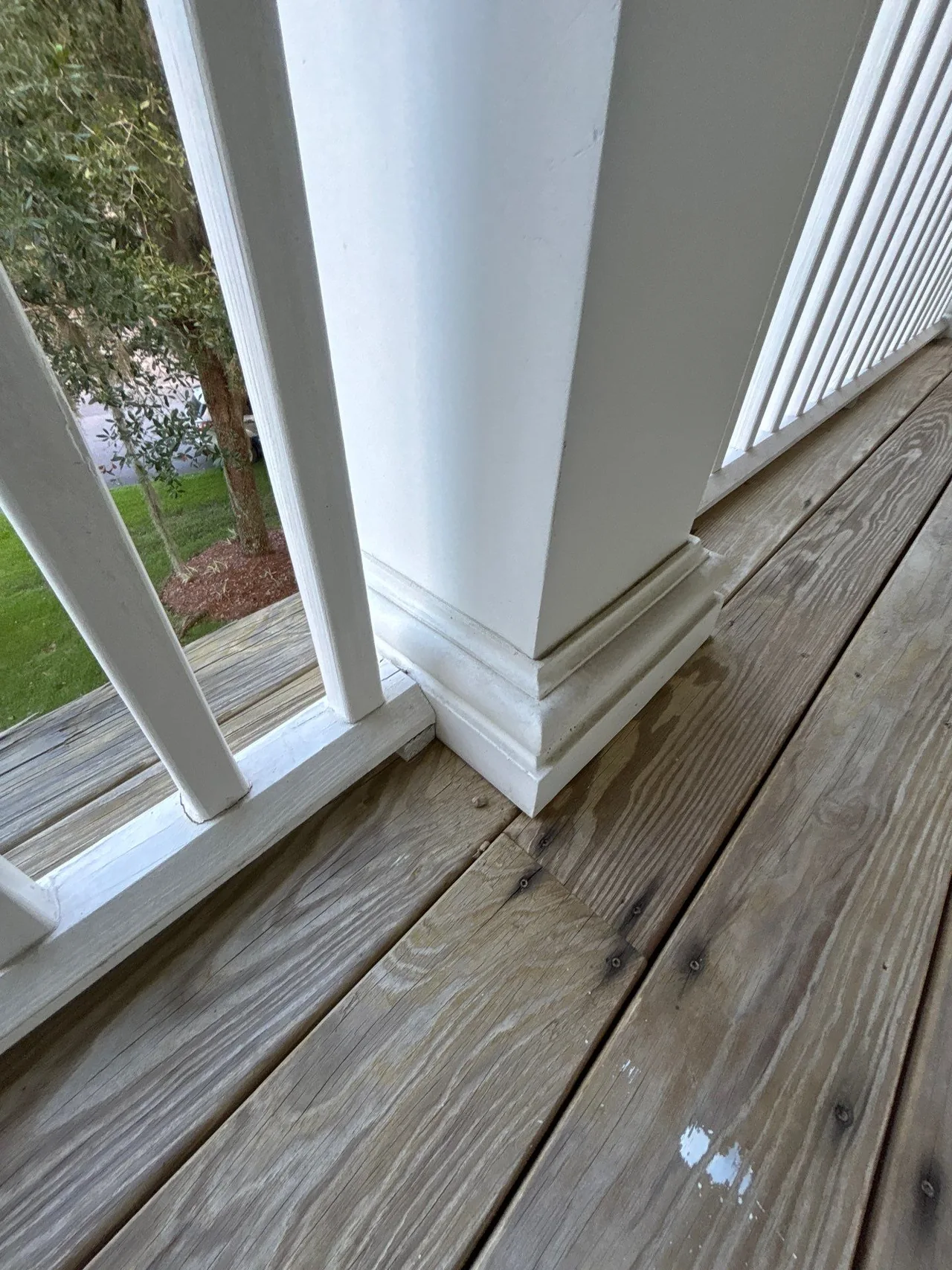
Separate cleaning from a repair or replacement decision
Dirt and a loose connection aren't the same problem. If you notice movement, a split piece or damage at a connection, arrange an assessment instead of treating a wash or fresh paint as the repair.
Have the contractor point out which part needs attention and explain the recommended work. You don't need to identify the failed component before making the call.
If you'd like to replace the rails while keeping the deck, our Pawleys Island replacement-scope guide covers that choice. Contract Exteriors handles complete railing installations and replacements, so ask whether the assessed work fits that service.
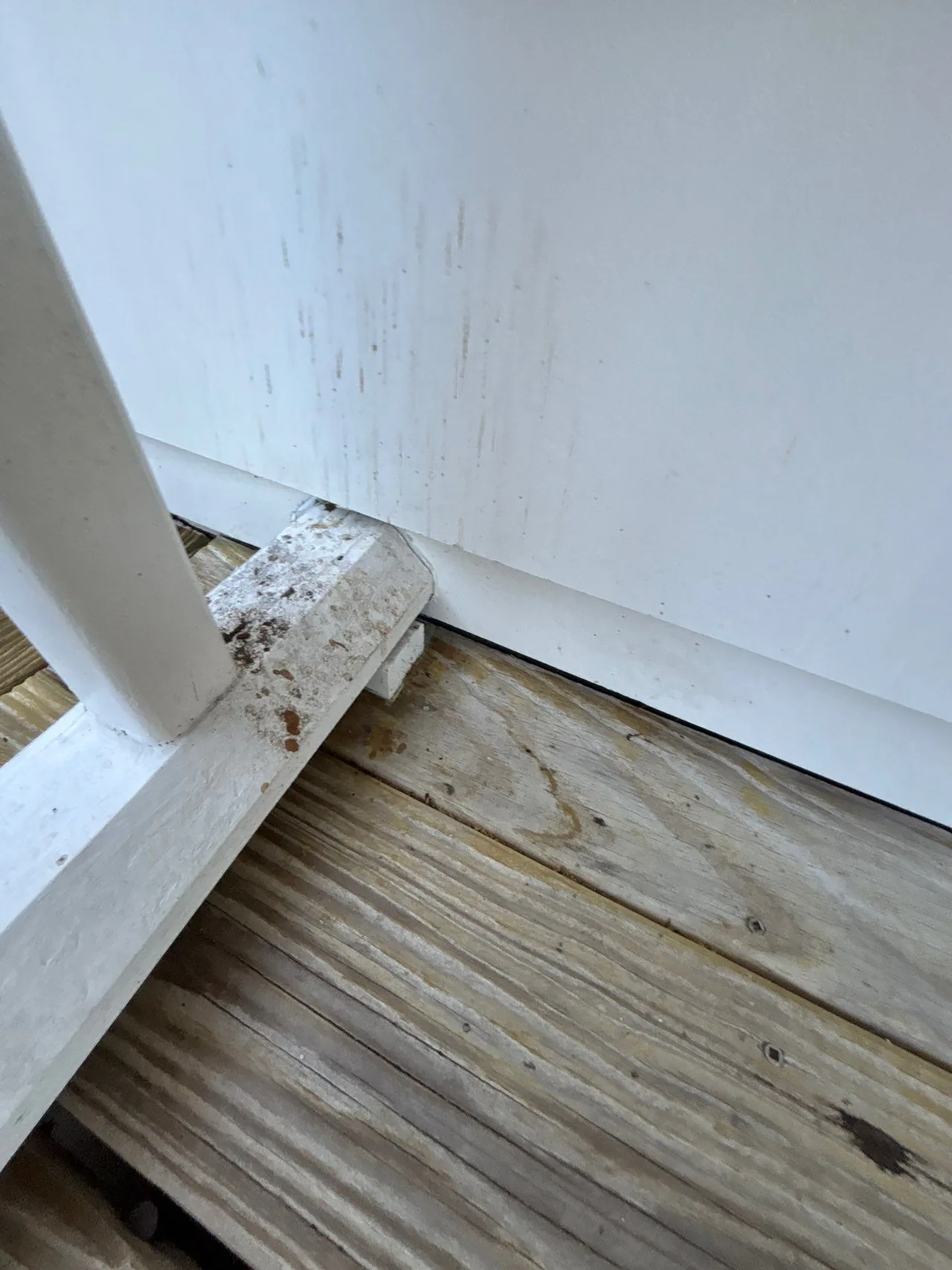
Know what happens after installation
Along with the quote, request the names of the rails, posts, balusters and supplied hardware, plus their current care instructions. Ask how accessible connections should be checked and whom to call if something changes.
Keep the written warranty with those documents. Check the covered components, application exclusions and purchase date rather than relying on the headline warranty length.
When you request a free expert opinion, tell Contract Exteriors what you want to stop doing and what care you can comfortably keep up with. A replacement should make sense on an ordinary maintenance day as well as the day it is installed.
Another Angle
Give care access a place in the design
A railing has a public appearance and a closer ownership scale. From the yard it forms an outline around the porch; from within it is a sequence of rails, posts and junctions that someone will need to look after. A design selected entirely at the first scale leaves the second insufficiently examined. Give practical care access a place in the selection before the appearance is treated as resolved.
Begin with the proposed perimeter on the actual porch plan. Identify the normal walking area and the locations a person can approach without leaving it. Then have the contractor explain any areas needing a separate arrangement for the prescribed routine. This is an access question, not a recommendation to climb, reach beyond the rail or dismantle a component. A realistic ownership plan should not depend on improvisation.
Now include the furniture that will remain. A table, planter or chair can be an important part of the room while also affecting how the perimeter is approached. Compare whether its place is essential to the intended layout or could remain flexible. The tradeoff concerns the household's arrangement and applicable safe use; it does not justify altering the assessed guard or its required components.
Judge the perimeter at two scales
Look closely at the proposed junctions in the available sample or drawing. Their appearance may be part of what you value: a defined post base, a particular cap or a continuous-looking rail. Ask which of those details affect the documented care routine and how that routine is intended to be carried out. Decorative interest deserves the same ownership consideration as the broad material choice.
This can lead to a discerning comparison between two suitable options. One may offer the profile you prefer strongly enough to accept its actual care arrangement. Another may fit a simpler approach to ownership. The exact applicable instructions must supply the factual basis; the aesthetic weighting remains yours. A more elaborate appearance is neither automatically impractical nor automatically worth a commitment left undefined.
Keep the two viewing scales separate while making that judgment. A detail prominent in a close photograph may be quiet within the whole elevation, while a broad line may dominate from across the yard. Decide which aspects warrant the greatest attention in the selection. The same discipline that improves an appearance comparison can help avoid accepting an ownership complication for a detail the household scarcely values.
Connect the preferred detail with realistic ownership
The Pawleys Island photographs show existing wood conditions and the component relationships discussed in the main guide. They can prompt attention to junctions, but cannot predict the care demands of a new system. Use the exact proposed assembly and its applicable documents to test this ownership question. The actual setting and any concerns about condition still need the appropriate assessment described in the main article.
If routine care will be arranged through another person or service, include that fact while comparing the options. The useful question is whether the selected appearance comes with a permitted, practical routine the household can organize. Keep damage, movement and unfamiliar changes on their separate assessment track. A convenient care arrangement is part of ownership, not evidence that the assembly can be presumed sound indefinitely.
The final design judgment should connect a preferred profile with a realistic way of living with it. Identify which details matter visually, how their prescribed care is approached and what the household is prepared to arrange. This adds an ownership consequence to the material comparison without repeating a maintenance checklist: the railing is chosen as an enduring part of an occupied porch, seen from afar and cared for at close range.
A FEW MORE ANSWERS
Questions homeowners ask
Does composite railing eliminate metal-maintenance questions?
No. The complete system may include metal balusters, brackets or hardware. Ask which components are proposed and follow the applicable instructions for the whole assembly.
Does a covered porch need less cleaning?
Do not assume it does. Sheltered exterior connections may collect salt without rain rinsing them. Confirm care requirements for the exact product and exposure.
Which parts of the railing should have care instructions?
Ask about the complete proposed assembly: rails, posts, balusters, brackets, fasteners and finishes. A composite rail can include metal components with their own requirements. Keep the applicable documents together so the care plan follows the actual combination rather than the broad material name.
Can I use one cleaner for every part of the railing?
Do not assume one method suits all components and finishes. Check the manufacturer's instructions for the exact system and confirm compatible cleaning products and precautions. If the paperwork identifies more than one component manufacturer, resolve the care requirements before choosing supplies.
Should warranty coverage be part of a coastal railing comparison?
Yes. Request the actual written terms for the proposed product and exposure, including maintenance conditions, exclusions and separate workmanship coverage. A general claim about a long warranty is less useful than knowing which components and circumstances it covers.
How can the railing layout make future care easier to plan?
Review access to both sides of the rails and posts with your furniture and planting in place. Ask how cleaning and inspection would be arranged at the proposed location. Do not lean over or climb the railing to reach difficult areas; discuss suitable access with the contractor.
Sources and review
Contract Exteriors project evidence: Internal project records and original CompanyCam photographs support the project examples described in this article. Customer records and identifying details remain private. Project examples are separate from the manufacturer guidance and other published references below.
An anonymous Pawleys Island wood-railing replacement inquiry supplies original-condition details only. The images are not a diagnosis of salt damage, a completed replacement or a comparative maintenance study.
- FEMA: coastal corrosion guidance — Technical Bulletin 8, June 2019, printed pages 13–14; government-hosted copy. Read October 28, 2026. General connector-exposure context, not an assessment of this property or an installation specification.
- TimberTech: 2026 care and cleaning guide — Pages 3–4 and footnote on page 7, read October 28, 2026. Railing-specific schedule, gentle care and persistent-condition escalation. No property exposure classification or decking washing method transferred.
- TimberTech: current warranty documents — Current product-specific document directory checked October 28, 2026. Coverage depends on the actual product, application, purchase date and terms.
Editorial review details
Reviewed for Contract Exteriors by Bill Schum, Marketing Director, Contract Exteriors, on October 30, 2026. Scope: Editorial oversight, source and project-record checks, photo-originality review, and mobile/desktop presentation checks. Research and editing were supported by AI tools. Design commentary reflects an editorial perspective and does not constitute professional architectural or engineering advice or a property-specific site assessment.
Our sourcing and corrections standards · Report a correction