The blinds are part of the room, too
Project at a glance
- Local example
- Mount Pleasant, South Carolina
- Recorded work
- Eight replacement windows, with OKNA sliding windows listed in the project record
- Stages shown
- Installed views from several rooms
- Homeowner decision
- What needs to be measured before existing treatments can be refitted?
You probably don't think about the depth of your window opening when you close the blinds at night. When you're ordering replacement windows, though, that little bit of space deserves a look. A shade that fits neatly today is something you'll want to account for before the new windows arrive.
For a Charleston-area homeowner planning a whole-home replacement, the easiest starting point is a room-by-room walk. Leave the treatments where they are for that first conversation. Show the consultant which ones you hope to keep and which ones you're already ready to change.
You don't need to settle on new curtains before choosing a window. You do need everyone to understand what the finished opening should accommodate. Our window planning resources cover the bigger replacement decision; this is one of the smaller details that helps the room feel finished.
What changes from room to room
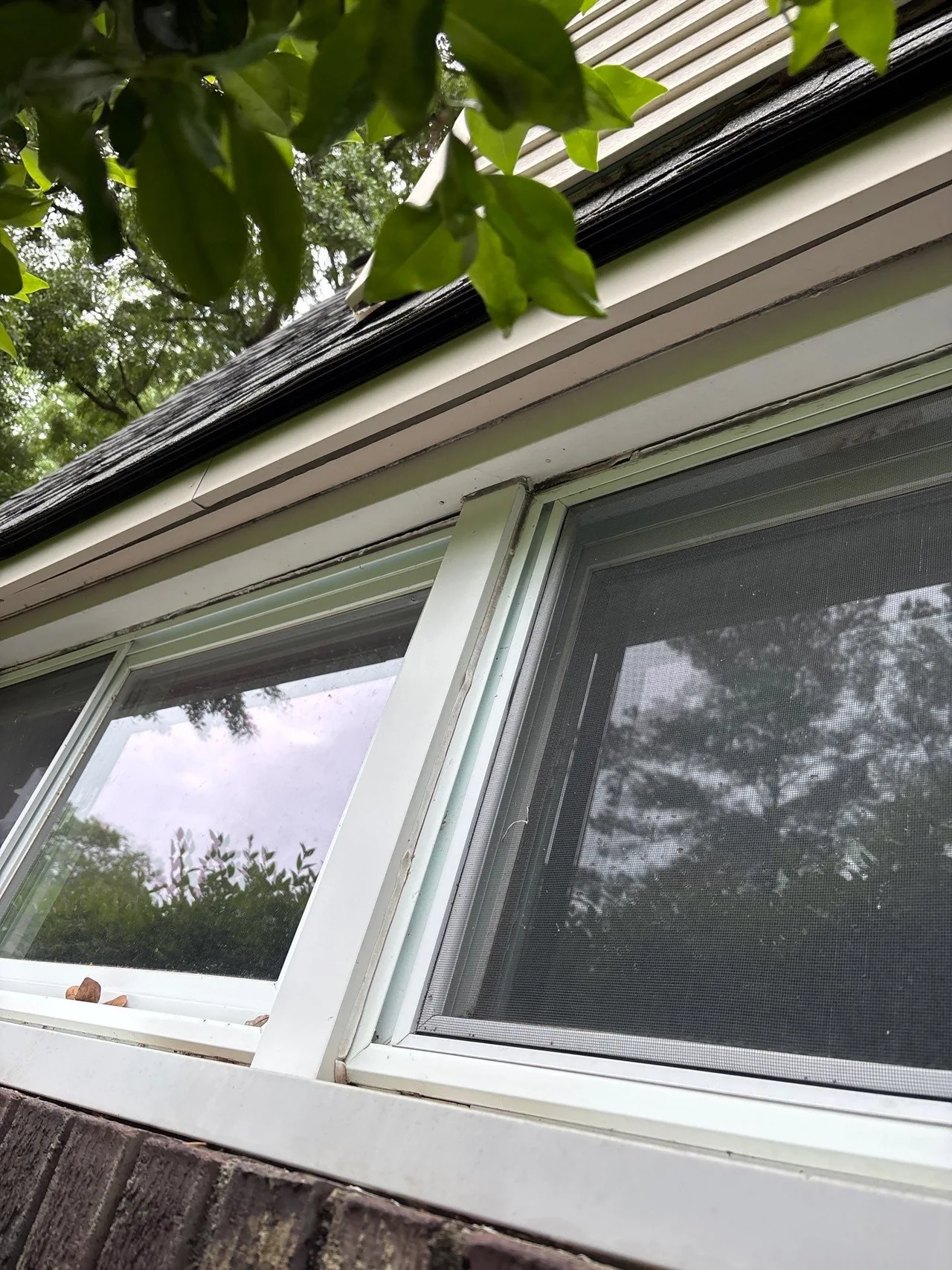
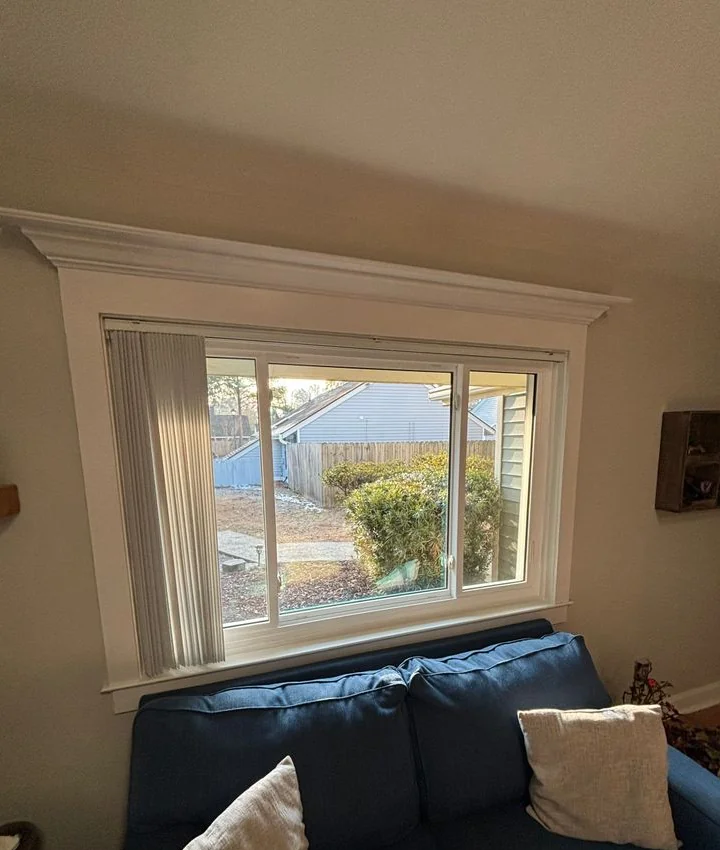
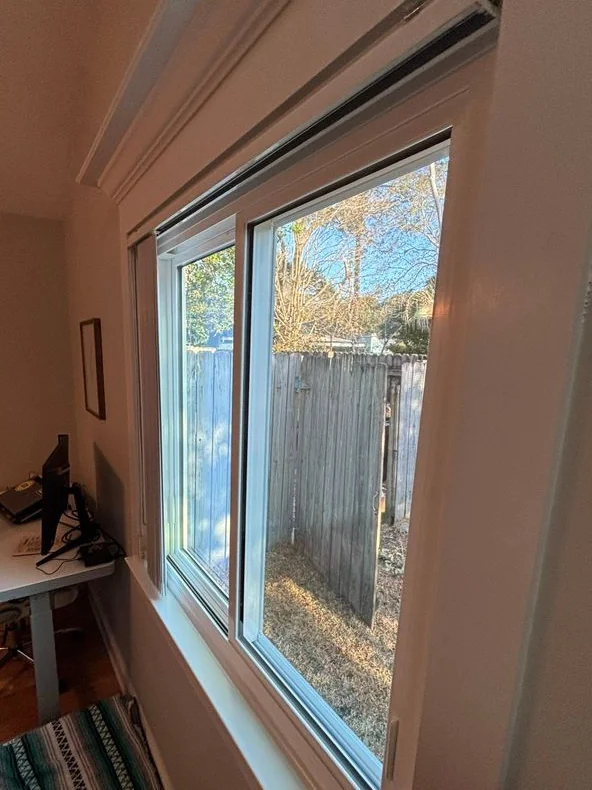
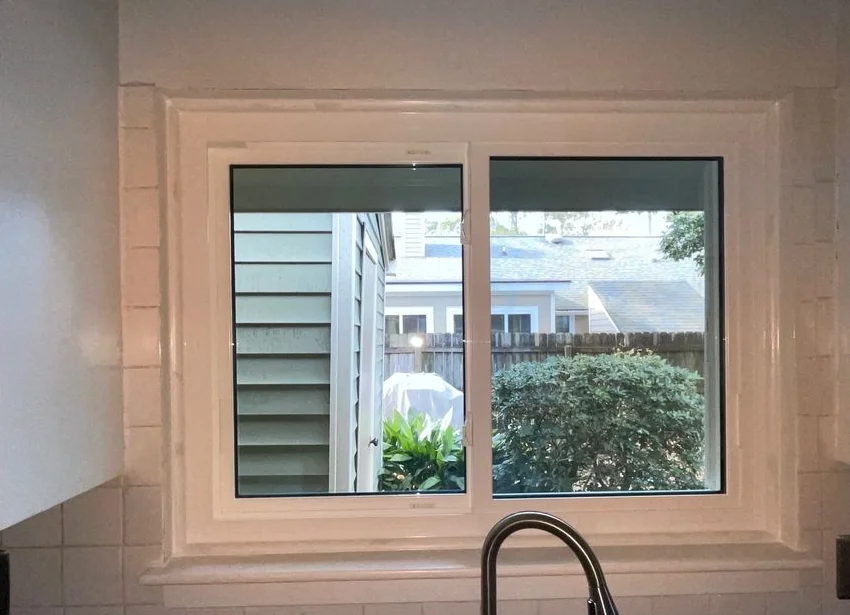
Contract Exteriors replaced eight windows at a Mount Pleasant home. Later views show a living-room slider with vertical blinds gathered to one side, a close view of another window and its trim, and a window set behind a sink. They are three different spaces around the opening: room for a hanging treatment, room to reach the operating parts, and a work surface that limits access from below. Bring those differences up before the measurements are finalized.
Those treatments give the consultant something concrete to discuss. Is the blind mounted inside the opening? Will its brackets remain? Does the curtain clear the hardware when someone opens the window? A few minutes looking at the actual arrangement is more useful than assuming every opening in the house will be handled the same way.
The photographs show how the replacement windows and treatments occupy the openings after installation. Use them to think through the details that matter in your own rooms, from a bracket tucked into a recess to a rod bridging a wider opening. Your proposal can explain the plan for each opening you want to keep looking and working as it did before.
Check where the treatment sits
An inside-mounted blind sits within the window opening. Hunter Douglas identifies depth and obstructions such as locks and handles as fit considerations. Have the available depth, mounting position and room for operation checked against the proposed replacement.
An outside-mounted shade or curtain uses space around the opening instead. Discuss any trim changes, the existing fasteners and how the treatment moves past the window hardware. Keeping an outside mount may be a workable option, but it still needs to be considered with the finished trim.
If you're replacing treatments as well, wait until the finished dimensions are confirmed before committing to a custom order. Have the window installer and treatment supplier agree on the measurements each needs. This is a fit check for the actual products, not a universal clearance number.
Take a straight-on photo of each opening with the treatment in place, then a closer photo of the inside mounting point and any hardware that projects into the opening. Open and close the current window and treatment while you're there. Note where you have to reach around a rail, hold the curtain out of the way, or lift a blind before using the lock. Those small movements tell the installer which clearances matter to you. Take photos for your consultation that keep personal details out of view.
Give the estimator two separate questions. Can the proposed opening accept the existing brackets or rod mounts? And after everything is mounted, can you still operate the window and treatment comfortably? A bracket may fit in the space available while a tilt wand catches on a handle or a curtain crosses the place you reach to open the window. The useful time to find that out is when the replacement configuration can still change.
Sources: Hunter Douglas: Inside vs Outside Mount Blinds · Hunter Douglas: Window Treatment Installation & Operation
YOUR HOME. OUR EXPERIENCE.
Planning a whole-home window replacement?
Talk with Contract Exteriors about your rooms, window options and the work around each opening. Start with a free estimate.
Book Your Free EstimateOur team will call to discuss your project and confirm appointment details.
Decide who handles the finishing touches
Removal and refitting are worth discussing before installation day. Who takes down the blinds? Where will they be stored? Who removes the curtain rods if access requires it, and who deals with the old fastener holes? Ask for those responsibilities in writing rather than leaving them for the crew to sort out on arrival.
The same goes for trim. If a change is proposed, understand which pieces stay and what finishing work is included. Our guide to coordinating window grids covers another detail that can change the finished look; use it alongside the treatment discussion if you're considering a different window pattern.
Keep privacy in the plan, too. If bedrooms or street-facing rooms will be uncovered for a while, discuss an appropriate temporary arrangement and its removal with the installer. Don't attach anything to a new window without confirming that it's suitable.
If you plan to keep some treatments and replace others, group them by decision instead of making one rule for the house. A curtain rod on the wall might be fine to leave in a room where the nearby trim stays. An inside-mounted shade in the next room may need a measurement after the opening is finished. Ask the estimator to record those rooms separately so you can plan the order of work and know who will come back if a fitting needs a second visit.
Keep the choice tied to how you use the room
You may like the existing curtains but want a shade that's easier to operate. Or you may be happy with everything and simply want to keep it. Either is a useful starting point. Tell the consultant what matters before the replacement scope is settled.
Before the quote is final, walk through one room together and make sure the notes explain what you want. Start with what stays, then write down who removes each item, who checks fit and who reinstalls it. If a treatment can't go back in the same place, ask whether moving it is realistic or whether you should plan to replace it. Repeat that check for rooms with different window or treatment types. A simple agreement for each type of room can prevent the whole-home scope from overlooking the few openings that need special attention.
Bring a short list of the treatments you hope to retain to your Contract Exteriors consultation. For each room, leave with a clear answer about measurement, access, finishing and refitting. Our project planning tools can help keep those notes together with the rest of your whole-home window brief.
Another Angle
One Opening, Different Roles
Window replacement changes a room at its perimeter. The glass, frame, trim and treatment occupy the same visual opening, yet they do different work in the composition. The window establishes a view and a division of the wall. Curtains can soften that division; a blind can sit more quietly within it. Our editorial view is that retaining a treatment should begin with the role it plays in the room, followed by the practical fit checks in the main guide. Keeping something simply because it is already there can preserve either a successful relationship or an unresolved one.
The Mount Pleasant project shows why different rooms can call for different treatments. In the living room, the gathered vertical blinds occupy one side of a wide opening beside a sofa. At the kitchen sink, the view through the window and the reach across the counter give the opening a different role. Continuity can come from a repeated color or a consistent relationship to the trim, even where the hardware and the way each treatment opens are different.
How the Hardware Changes the Room
Consider a hypothetical room in which the curtains remain in good condition and suit the furniture, but the new window introduces a more visible frame. Retaining the curtains can preserve a familiar softness while allowing the frame to become a clearer edge. The question is whether the two elements support one another when the curtains are open as well as closed. A treatment selected only from its closed appearance may obscure the very proportions that made the replacement attractive. Compare both positions before deciding whether retention is the most coherent choice.
A second hypothetical room may favor a quieter treatment inside the opening. That can leave the surrounding wall and trim more exposed, which makes their relationship to the replacement more noticeable. The tradeoff is useful: an unobtrusive shade may reduce visual clutter, while a fuller curtain may better connect the window to a large room. Neither choice should be justified by a vague promise of a more expensive look. The useful test is whether the treatment gives the opening an appropriate presence alongside the other elements that will remain.
Keeping What Fits the Room
There is also a sensible boundary to the project. New windows do not create an obligation to redecorate every room. A selective plan can retain treatments that work, replace those that no longer fit the intended arrangement and defer purely decorative changes. The cost of that restraint is that some older details will remain visible beside the new work. That can be acceptable when it is deliberate. What tends to feel unfinished is an accidental mixture of mounting heights, exposed old fixings or trim changes that nobody included in the finish discussion.
The strongest brief therefore describes a finished relationship rather than a shopping list. Identify what the window should reveal, how the treatment should sit around it and which existing details deserve to remain. Then reconcile that visual intention with the measured fit, operation and finishing responsibilities. This approach gives a whole-home replacement a coherent stopping point: the rooms can continue to feel like the homeowner's rooms, with new windows integrated into them. It also leaves room for later decorating choices without requiring the window project to resolve every decision at once.
A FEW MORE ANSWERS
Questions homeowners ask
Should I remove my blinds before the estimate?
Leave them in place for the initial discussion so the consultant can see the mounting arrangement and what you hope to retain. Agree on removal requirements before installation.
Does matching the old blind width guarantee a fit?
No. Have depth, bracket placement, hardware and operating clearance checked with the proposed window and finished opening.
Can curtains stay if the trim changes?
Possibly. Review the rod mounting and curtain position against the proposed trim. The answer depends on the actual arrangement.
Who puts the blinds back up?
Confirm this in the proposal. Do not assume removal, storage, refitting or treatment replacement is included in the window installation scope.
When should I order new custom shades?
Have the finished dimensions and mounting requirements confirmed with the installer and treatment supplier before placing the order.
Can I keep the old curtain rods if I replace the curtains?
Have the rod, wall or trim mounting points, and the new curtain hardware checked together. Confirm who handles any rod removal or refitting and whether work around the old fastener holes is included.
Sources and review
Contract Exteriors project evidence: Internal project records and original CompanyCam photographs support the project examples described in this article. Customer records and identifying details remain private. Project examples are separate from the manufacturer guidance and other published references below.
Replacement example matched to completed and paid Contract Exteriors window work in Mount Pleasant, South Carolina. CRM lists eight windows with OKNA sliders. The installed images show window treatments or opening clearances as visible on their capture dates. The article makes no claim that a particular treatment was reused.
- Hunter Douglas: Inside vs Outside Mount Blinds — Manufacturer guidance dated May 16, 2022, read November 20, 2026: mounting position, opening depth and hardware obstructions. General fit guidance; no claim these treatments are Hunter Douglas.
- Hunter Douglas: Window Treatment Installation & Operation — Read November 20, 2026: product-specific measurement and professional fit considerations; no universal clearance inferred.
Editorial review details
Reviewed for Contract Exteriors by Bill Schum, Marketing Director, Contract Exteriors, on November 20, 2026. Scope: Editorial oversight by Bill Schum. AI-assisted research, drafting and editing. Publication checks covered the cited sources, matched Contract Exteriors project records, original photographs and the article’s appearance on phone and desktop.
Our sourcing and corrections standards · Report a correction
Related planning resources
windows · planning · okna · charleston