
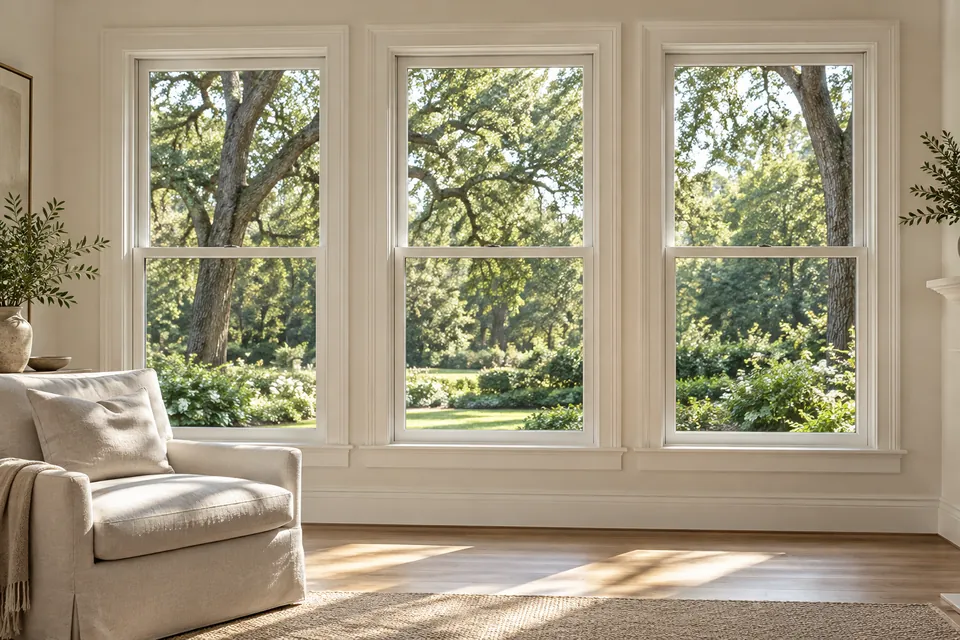

When the brightest room becomes the least comfortable
The room looked wonderful when you bought the house. Big windows, plenty of daylight, a view you actually wanted to sit beside. Then you lived through a few sunny afternoons and started closing the blinds before anyone came over.
If that sounds familiar, bring that experience to your window consultation. Tell the contractor when the room becomes uncomfortable, where you sit, and whether the problem follows the sun. A useful recommendation starts with how the room behaves.
For homeowners around Myrtle Beach, Pawleys Island and Charleston, the question is practical: how do you keep the light you enjoy while reducing unwanted solar heat? Comparing the right ratings gives you a better starting point than choosing by brand or pane count alone.
What should you look for in windows for a hot room?
Compare solar heat gain coefficient (SHGC), U-factor and visible transmittance (VT) for the actual window and glass package being quoted. Together, they describe solar heat, insulating performance and daylight. They do not predict the final temperature of your room.
The National Fenestration Rating Council explains these ratings so homeowners can compare products. Ask for the corresponding whole-window documentation, rather than relying on an isolated glass-only figure or a verbal description such as “premium glass.”
Use this table beside two written proposals. Leave a blank where a rating is missing and ask the contractor to fill it in before you decide.
| Rating | What it describes | How to use it |
|---|---|---|
| SHGC | Solar heat admitted through the product. | Lower values admit less solar heat; discuss exposure and shading. |
| U-factor | Insulating performance. | Lower values indicate better insulation. |
| Visible transmittance (VT) | Daylight transmitted through the product. | Higher values admit more visible light; compare alongside SHGC. |
Sources: NFRC: Window performance ratings · U.S. Department of Energy: Consumer Guide to Energy-Efficient Windows
Why afternoon sun changes the conversation
A sunny west-facing room deserves a specific discussion about solar heat gain and shading. ENERGY STAR’s buying guidance highlights west-facing windows because they receive summer sun during the warmest part of the day. It also identifies low SHGC as important for sun-exposed windows in warmer climates.
That does not mean every opening in your house should automatically receive a different glass package. Start with a room-by-room review of orientation, trees, porches, window area and the time the discomfort occurs. Ask how the proposed selection addresses those conditions.
A mailing address cannot tell you how much afternoon shade a particular wall receives. A shaded window under a porch and an exposed window across the same room may have very different surroundings. Photograph both during the hours that bother you.
Sources: ENERGY STAR: Residential Windows, Doors & Skylights
A real Pawleys Island selection—and what it tells us
In a previously documented Contract Exteriors project in Pawleys Island, the completed scope included six replacement windows. The recorded selection identified OKNA 800 Series windows with SunSeal tempered glass. The original concerns involved windows that were difficult to open or close and recorded sash/frame issues.
That project gives us a real example of a glass package appearing alongside a window-series selection. It does not establish that afternoon heat prompted the purchase, or tell us the installed units’ exact SHGC, U-factor or daylight rating. We have no measured before-and-after room temperatures or utility savings for the home.
The useful lesson is to carry the selection one step further in your own proposal: ask the contractor to connect the named package with its applicable ratings and the rooms where it will be installed. Our Pawleys Island window replacement story explains the documented operating concerns and completed project in more detail.
Will lower-SHGC glass make the room too dark?
SHGC describes solar heat gain; visible transmittance describes daylight. A lower SHGC is not, by itself, a measurement of how bright the room will look. Compare VT alongside SHGC and review the proposed glass appearance.
This is where a sample earns its place in the conversation. Ask to see the proposed option beside another package, and discuss how its appearance will work with neighboring windows that are staying. Notice color, reflections and the view as well as the numbers.
Write down what matters most in that room: preserving the garden view, keeping a reading corner bright, or making the afternoon dining area more comfortable. Those priorities help explain which tradeoffs you are willing to make.
Does a hot room mean you need replacement windows?
No. A hot room alone does not prove the windows have failed or that replacement will solve the whole problem. Solar exposure, shading and the rest of the home need consideration before you commit to a major purchase.
If replacement is already justified by condition, operation or a broader renovation, use the opportunity to compare suitable glass packages. If the windows are otherwise serviceable, ask whether shading or a broader comfort assessment should come first.
Keep the installation scope in view, too. ENERGY STAR notes that poor installation can leave even a good window drafty. Our window replacement planning guide helps you compare the opening preparation and finish work alongside the product.
Sources: ENERGY STAR: Residential Windows, Doors & Skylights
What should the upgrade cost—and what could it save?
Ask for an itemized comparison using the same openings, window styles and installation scope. Then have any optional glass-package price shown separately. That lets you see what changes when you choose a different package, rather than comparing two unrelated project totals.
There is no verified local price range or payback calculation in this guide. A responsible savings estimate would need a baseline for the existing windows, the proposed ratings, window area and orientation, shading, household operation, weather and energy costs.
If someone promises a percentage off your entire electric bill, ask what was modeled and which portion of the bill was included. Reduced solar heat gain is a product characteristic; a household savings percentage requires a separate calculation.
Five things to put in your replacement-window proposal
1. The exact units. Identify the model, operating style, glass package and configuration for each included opening.
2. The comparison ratings. Request applicable whole-window U-factor, SHGC and VT documentation. Confirm ENERGY STAR qualification for your location if it is part of the proposal.
3. The installation work. Define preparation, sealing, flashing, trim, disposal and responsibility for unexpected findings.
4. Appearance and everyday use. Review samples, grids, frame color, daylight priorities and operation.
5. The complete price and closeout. Separate optional upgrades, clarify approval responsibilities, and obtain care, product-warranty and workmanship documents.
For OKNA proposals, our OKNA homeowner guide provides a place to start the product conversation. The manufacturer’s DH800 page links thermal and structural performance information; have the contractor identify the documentation applicable to your order.
Energy ratings do not establish storm-impact approval. Have the contractor confirm applicable requirements for the actual property and proposed work. A coastal location or the word “tempered” should not substitute for the required product documentation.
Sources: OKNA: Double Hung DH800
Keep the view. Make a better-informed choice.
You should be able to explain why the proposed glass belongs in your home. “This is our best window” is less useful than a proposal that connects the product, the ratings, the installation and the room you want to improve.
Bring two or three photographs and a short note about when the room becomes uncomfortable. Ask Contract Exteriors to assess the existing windows and discuss whether replacement fits the problem. If it does, you will have a clear framework for comparing the options before you place an order.
A FEW MORE ANSWERS
Questions homeowners ask
What type of replacement window is best for a sunny room?
Compare the exact window’s SHGC, U-factor and visible transmittance with its installation scope. The appropriate selection depends on the existing windows, orientation, shading and your priorities; no single brand or pane count settles the decision.
What does a lower SHGC mean?
It means the rated product admits less solar heat. It is not a prediction of room temperature or a percentage reduction in the household electric bill.
Is tempered glass the same as solar-control glass?
No. Tempering and solar-control performance describe different attributes. Ask for both the specified glass type and the applicable energy-performance ratings.
Did the Pawleys Island project prove energy savings?
No. It documents a six-window replacement selection and completed work. We do not have a measured energy or room-temperature result for that home.
Sources and review
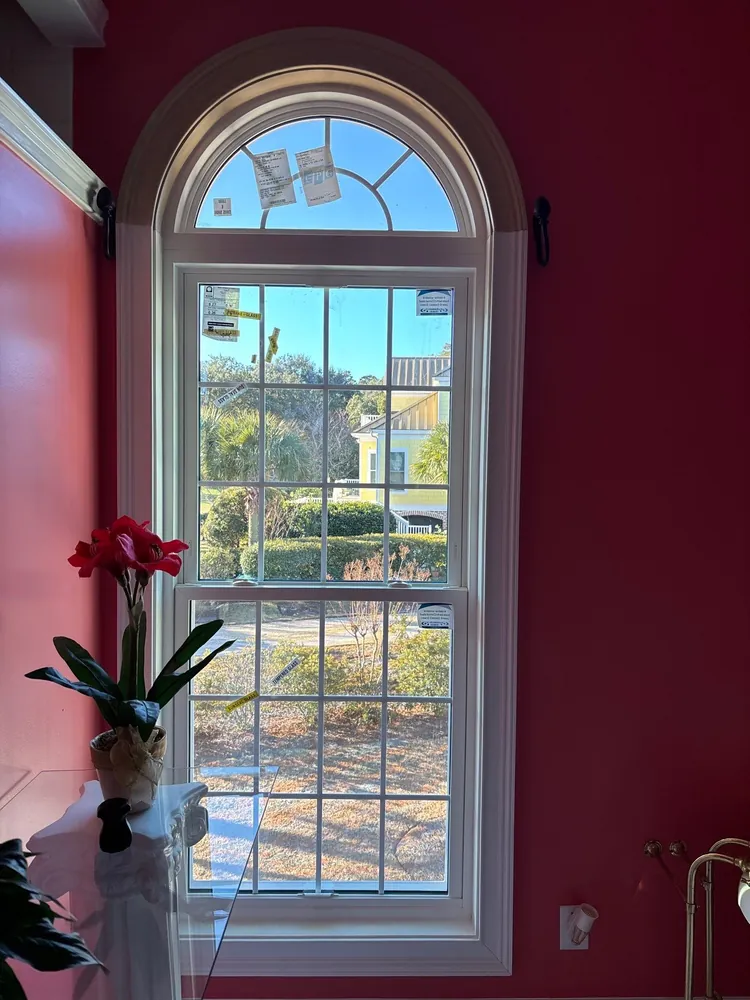
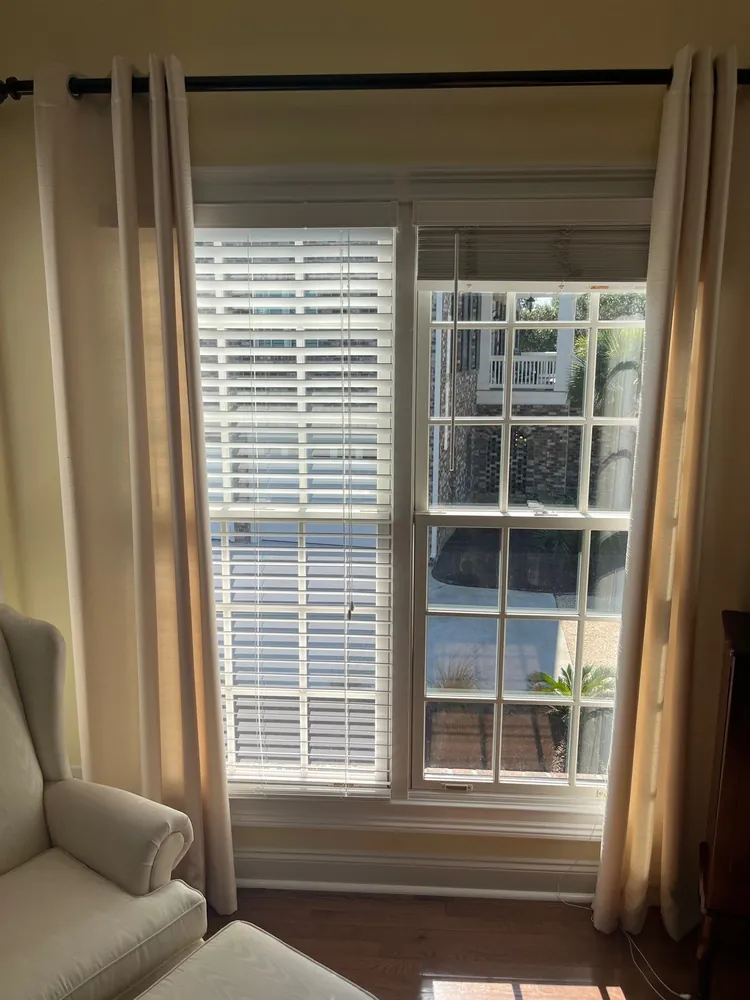
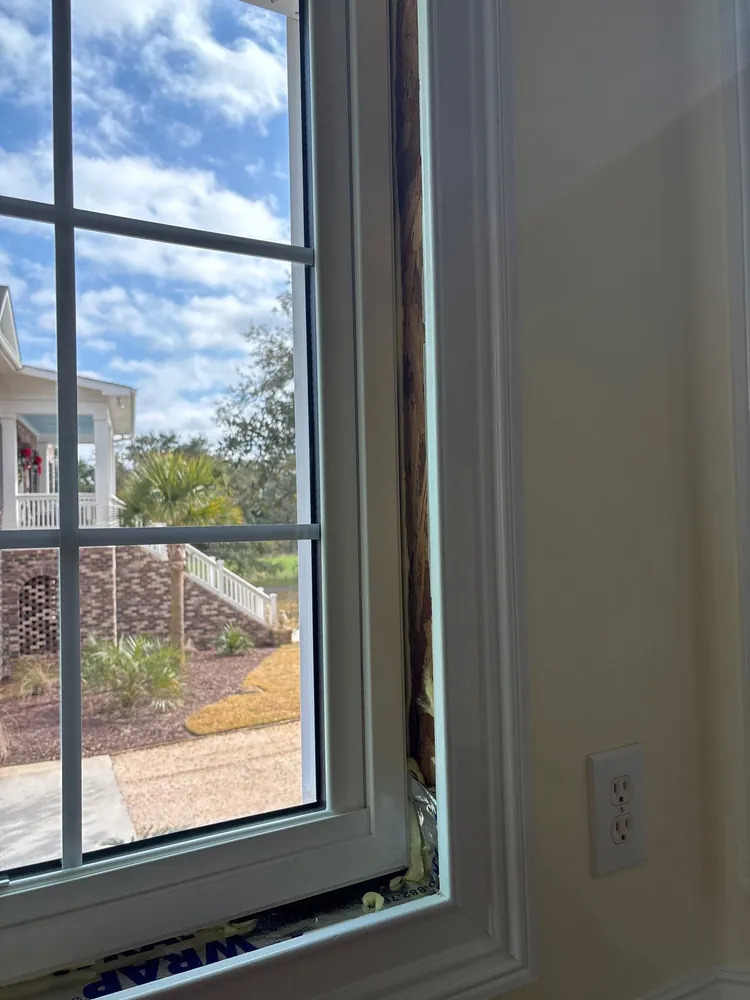
The example is the documented Pawleys Island six-window account. Three unused photographs from the matched original window project replace the reused imagery: an arched room view during installation, the original window coverings, and an opening before finish work is complete. Original-job photo permission was rechecked separately from later one-window and decking work. All published article photos were visually compared to exclude reused frames and recrops. No customer interview, temperature measurement, energy rating or utility savings result is asserted.
- U.S. Department of Energy: Consumer Guide to Energy-Efficient Windows — Definitions of U-factor and SHGC; no project-specific savings estimate. Checked October 22, 2026.
- NFRC: Window performance ratings — U-factor, SHGC, daylight and independent energy-performance ratings. Checked October 22, 2026.
- ENERGY STAR: Residential Windows, Doors & Skylights — Orientation, climate-appropriate product selection and installation considerations. Checked October 22, 2026.
- OKNA: Double Hung DH800 — Manufacturer product information and linked performance documentation; optional features are not assumed installed. Checked October 22, 2026.
- Coastal Home IQ: Pawleys Island project account — Previously published Contract Exteriors project account, supplemented by three unused approved photographs from the same original six-window job. Not a new field investigation.
- OKNA: Enviro-Star 800 Series — Manufacturer product family; featured project configuration comes from the published project account.
Editorial review details
Reviewed for Contract Exteriors by Bill Schum, Marketing Director, Contract Exteriors, on October 22, 2026. Scope: Editorial oversight under Bill Schum’s delegated quality checks; AI-assisted research, evidence matching, revision and reread. No personal site attendance, technical diagnosis or specialist certification is claimed..
Our sourcing and corrections standards · Report a correction
Related planning resources
windows · planning · okna · myrtle beach · charleston