
Where will your dog meet the screen?
Project at a glance
- Location
- Myrtle Beach, South Carolina
- Starting space
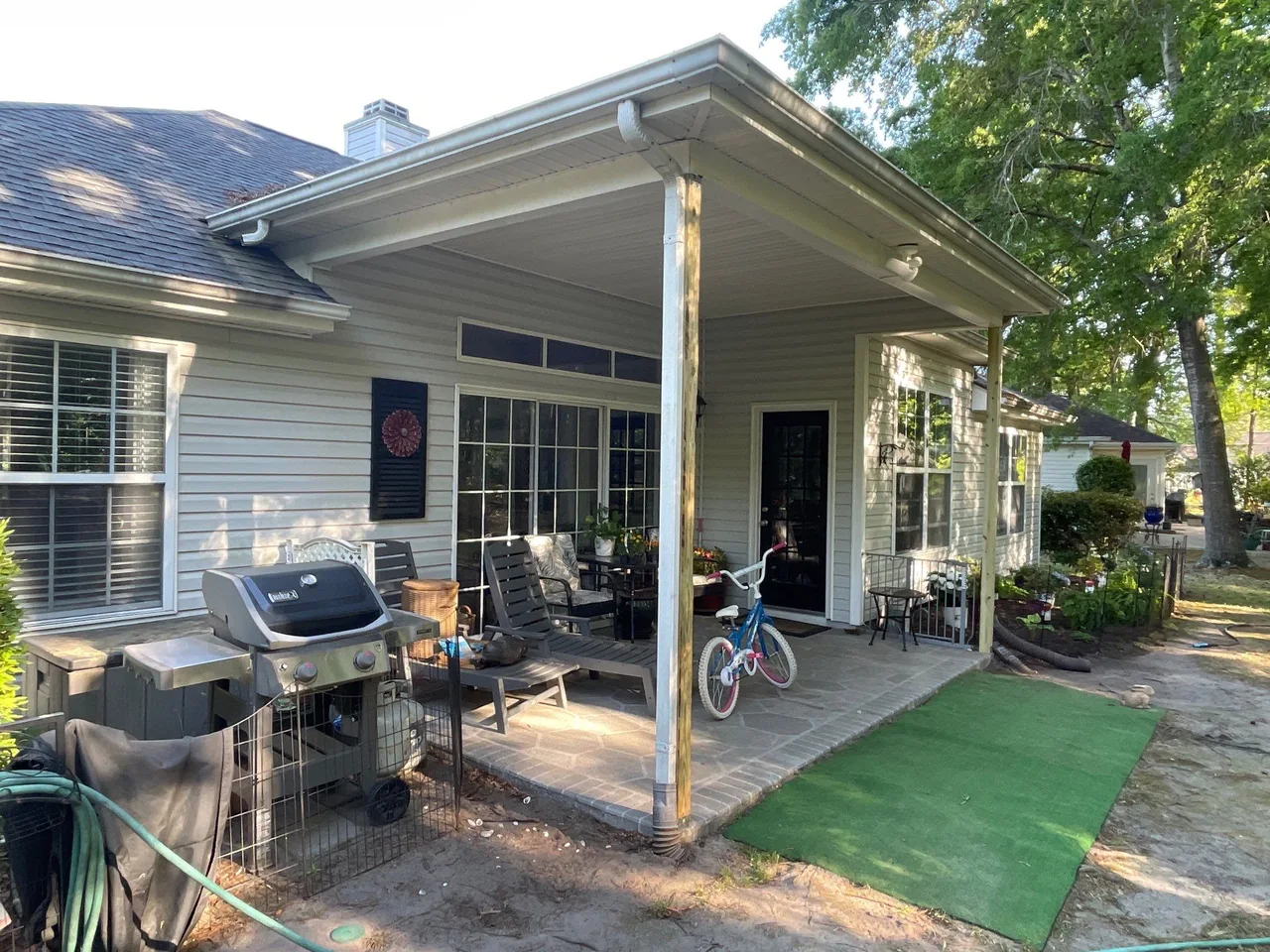
- Open covered rear patio
- Project scope
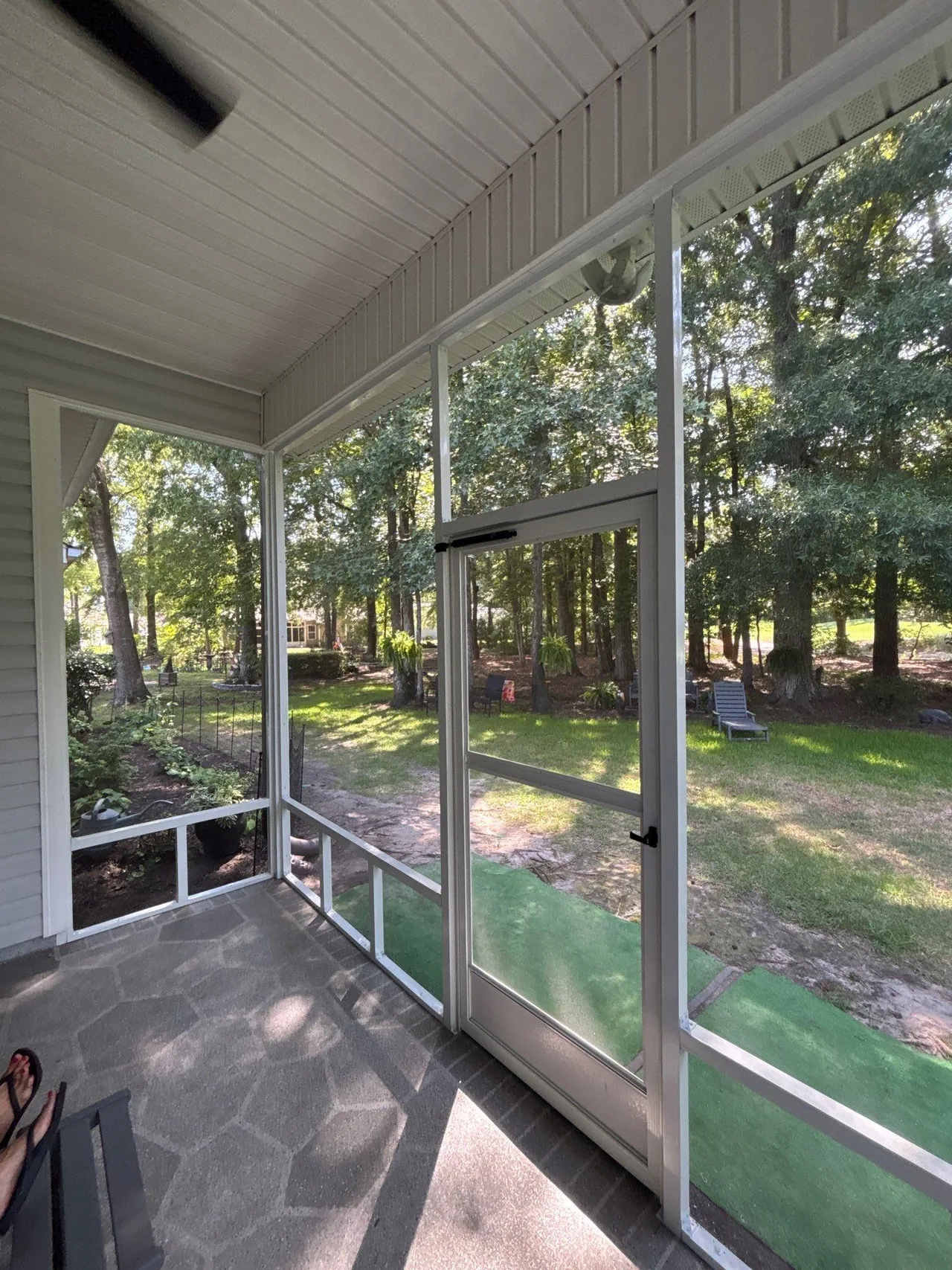
- Fixed screen enclosure beneath the existing cover
- Visible layout
- White framing, upper and lower screen sections, hinged entry door
- Stage
- Installation photographed in August 2026; completion recorded afterward
A squirrel crosses the yard. Your dog heads for the edge of the porch. Before you choose a screen color, that is the moment worth designing around: where will paws, a nose or a shoulder meet the enclosure?
For Myrtle Beach homeowners planning a fixed screen enclosure, the useful choice is between tougher mesh, a different lower-panel layout, or a combination. Start with how the space will be used. A small dog that watches from the floor creates a different planning question from one that jumps against the door.
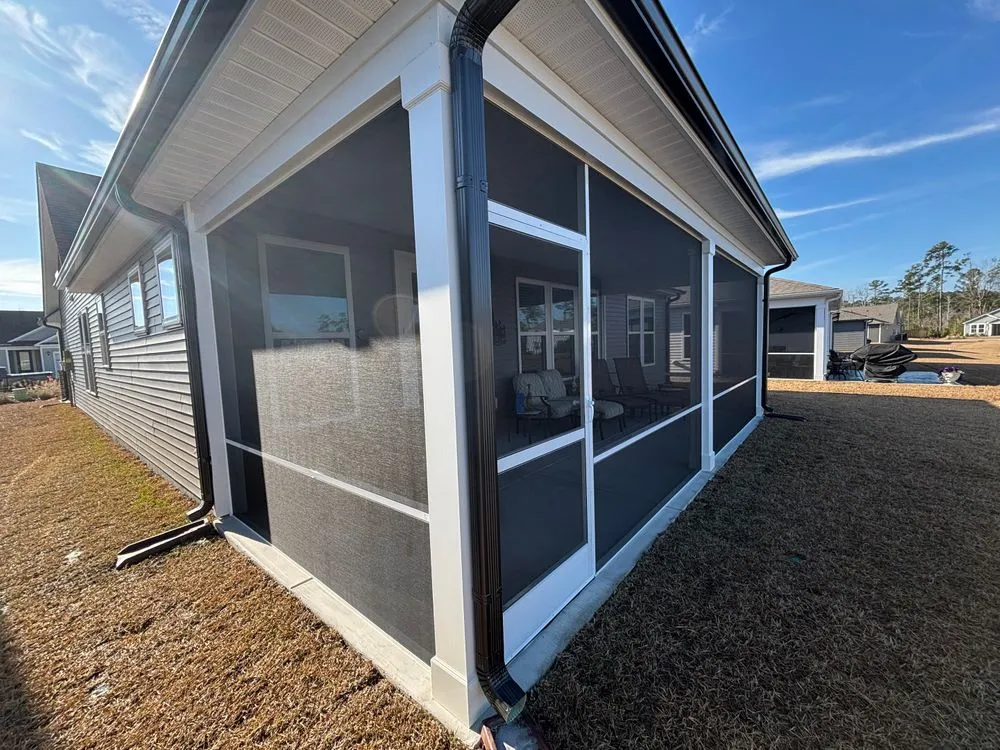
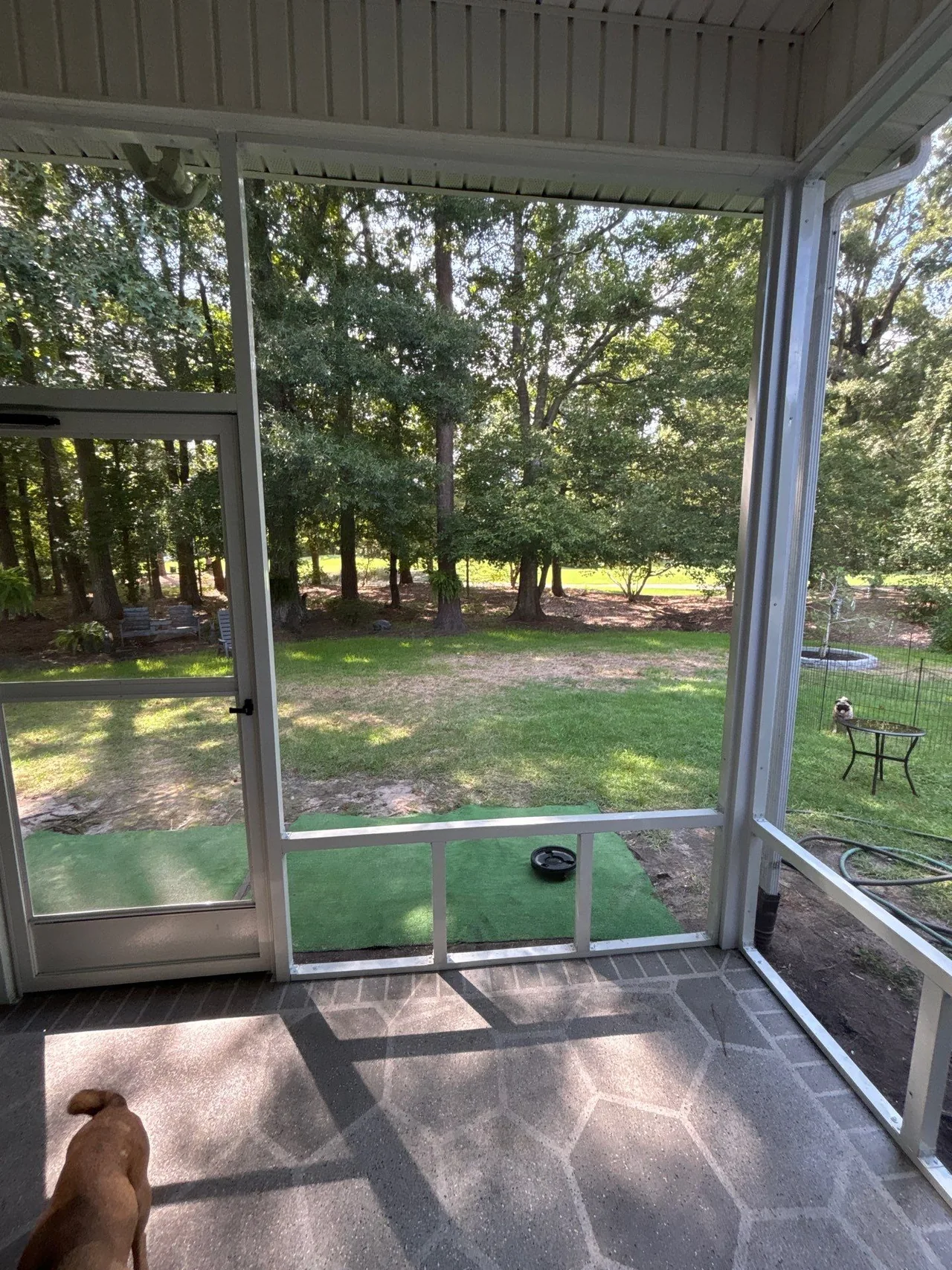
At this Contract Exteriors project in Myrtle Beach’s 29579 area, an open covered patio became a fixed screen enclosure. The installation photographs show white framing, a hinged screen door and horizontal rails dividing the openings into upper and lower sections. That division is a layout detail you can compare from your own chairs and from the yard.
Our screened-room planning guide covers the wider enclosure project. Here, the focus is the part a pet is most likely to reach—and what you give up or gain when you change it.
If you are still deciding whether the existing space can be enclosed, our guide to screening an existing covered porch starts with that earlier assessment.
What does pet-resistant screen actually do?
Pet-resistant screen is mesh made to resist the tears and punctures that paws and claws can cause. It remains a woven insect screen, so you can look through the opening rather than having a solid surface at the bottom.
Phifer describes its PetScreen as tear- and puncture-resistant screening for damage from most dogs and cats, with porch and patio enclosures among its uses. That is a useful product category to ask about when durability matters. Get the exact proposed mesh name in writing; “heavy duty” by itself leaves too much unspecified.
Pet resistance is a material feature, not a promise that every dog can safely be left behind the screen. Explain jumping, scratching or forceful pushing before selecting the enclosure. The mesh, its attachment, the surrounding frame and the door all belong in that conversation.
See a sample at the consultation. Look through it in daylight, close up and from your usual seat. A material that looks unobtrusive on a small swatch may feel different across an entire wall.
What changes if the lower section is solid?
A solid lower panel replaces the mesh in that part of the opening. It is often called a kick panel or kick plate. Where it is fitted, an everyday bump meets the panel rather than exposed screening.
Digger Specialties’ ScreenRail range illustrates the distinction: its kick-panel option has an aluminum panel at the bottom, while its mid-rail option divides the screen with a horizontal rail. Those are different arrangements. A rail across an opening does not, by itself, make the section below it solid.
The tradeoff is easy to picture. A solid panel interrupts the low view of the yard and removes an area of open mesh. Sit down before approving its height: the view from a dining chair, a low lounge seat and the kitchen window may be quite different.
Ask which compatible lower-panel options the contractor can actually provide for your proposed enclosure. Manufacturer examples explain the choice; they do not establish that every configuration suits your porch or is offered in your quote.
Which layout fits your priorities?
You do not have to make every side identical simply because the first drawing does. Discuss whether the most exposed area needs a different treatment from the side that faces your favorite view, then have the contractor confirm what the selected system allows.
Screen Tight identifies existing framing, mesh choice and opening size as factors in selecting a screening system. Use that as a reason to request a complete layout, rather than buying mesh first and hoping it fits the rest of the design.
Will a tougher screen also stop tiny insects?
Choose for the problem you actually have. Resistance to pet damage and protection from very small insects are separate features. A product can address both, but you should not assume one label guarantees the other.
Phifer’s No-See-Um screen, for example, uses a tightly woven mesh intended to keep out most smaller flying insects. If tiny insects are a problem at your home, say so when comparing pet-resistant materials. Ask about the proposed screen’s insect protection, view and airflow together.
Keep expectations grounded: an intact enclosure and a closed door matter too. Changing the mesh does not address an opening left at a damaged edge or a door that will not close properly.
Sources: Phifer: No-See-Um screening
What should you check at the screen door?
The door can get more daily contact than an entire wall. Walk the route from the house to the yard, with room for the dog and the people who use the space. Check the latch location, the swing and how the door will close after someone passes through.
Ask whether the door has the same mesh as the wall panels and what is proposed below its horizontal rail. Include any closer, latch or panel option in the written scope. Do not assume a mesh upgrade on the walls automatically upgrades the door.
Keep the route into the house in the discussion as well. Our patio-door planning resources address that separate opening. A porch enclosure should fit the way you move through both doors, with furniture placed where you actually want it.
What belongs in a complete enclosure quote?
Request a panel-by-panel drawing, the framing finish, exact mesh, any solid lower sections and the full door specification. Identify what happens to the existing posts, floor and surrounding finishes, and which assessment or additional work is included.
For a fair price comparison, hold the layout and scope constant. A mesh-only price is not the same thing as a complete enclosure with framing, doors and finish work. Ask what changing the lower panels adds or removes, how damaged material would later be replaced, and what the written product and workmanship warranties each cover.
At a Myrtle Beach mailing address, confirm the responsible authority for the actual property and proposed scope. Horry County Code Enforcement is an official starting point where county jurisdiction applies. Your contractor should identify the appropriate applications and inspections; check association review separately if it applies.
Our project-planning resources can help you organize the conversation. Bring photographs of the existing porch, a rough furniture layout and a description of where your dog scratches, jumps or rests. Those details are more useful than simply asking for the strongest screen.
Sources: Horry County Code Enforcement
A FEW MORE ANSWERS
Questions homeowners ask
Does a horizontal rail mean the bottom panel is solid?
No. A horizontal rail can divide two screened sections. Ask for a drawing that identifies mesh and solid material in every opening.
Can I use pet-resistant mesh above a solid lower panel?
A combination may be possible when the selected enclosure system supports it. Have the contractor confirm compatible materials, the layout and the effect on the view before ordering.
Does pet-resistant mesh guarantee my dog cannot get out?
No. Do not treat the material label as an escape-prevention guarantee. Discuss your dog’s behavior, the framing, mesh attachment and door arrangement when planning the enclosure.
Sources and review
Based on matched Contract Exteriors project records and dated Myrtle Beach installation photographs. The photos illustrate layout; manufacturer examples explain available product categories and do not identify the installed mesh or establish a tested pet-damage outcome.
- Phifer: PetScreen product description — Tear and puncture resistance; porch applications. Product example, not identification of this project’s mesh. Accessed October 27, 2026.
- Digger Specialties: ScreenRail configurations — Distinguishes kick panels, mid-rails and other configurations. Product example, not a claim this system was installed. Accessed October 27, 2026.
- Screen Tight: Choosing a porch screening system — Existing framing, screen material and opening size affect system selection. Accessed October 27, 2026.
- Phifer: No-See-Um screening — Small-insect screening serves a different selection priority from pet resistance. Accessed October 27, 2026.
- Horry County Code Enforcement — Official starting point for address- and scope-specific questions. Accessed October 27, 2026.
Editorial review details
Reviewed for Contract Exteriors by Bill Schum, Marketing Director, Contract Exteriors, on October 27, 2026. Scope: Editorial oversight under Bill Schum’s delegated quality checks. AI-assisted original-record and source review, complete prose reread and isolated phone/desktop layout review. No personal site attendance, installation certification or measured pet-damage result claimed.
Our sourcing and corrections standards · Report a correction