Start with the problem, not the age on the label
Project at a glance
- Location
- Myrtle Beach, South Carolina
- Documented request
- Replace two sliders leading to a screened room for function and appearance
- Project record
- Replacement work completed in February 2026
- Photographs
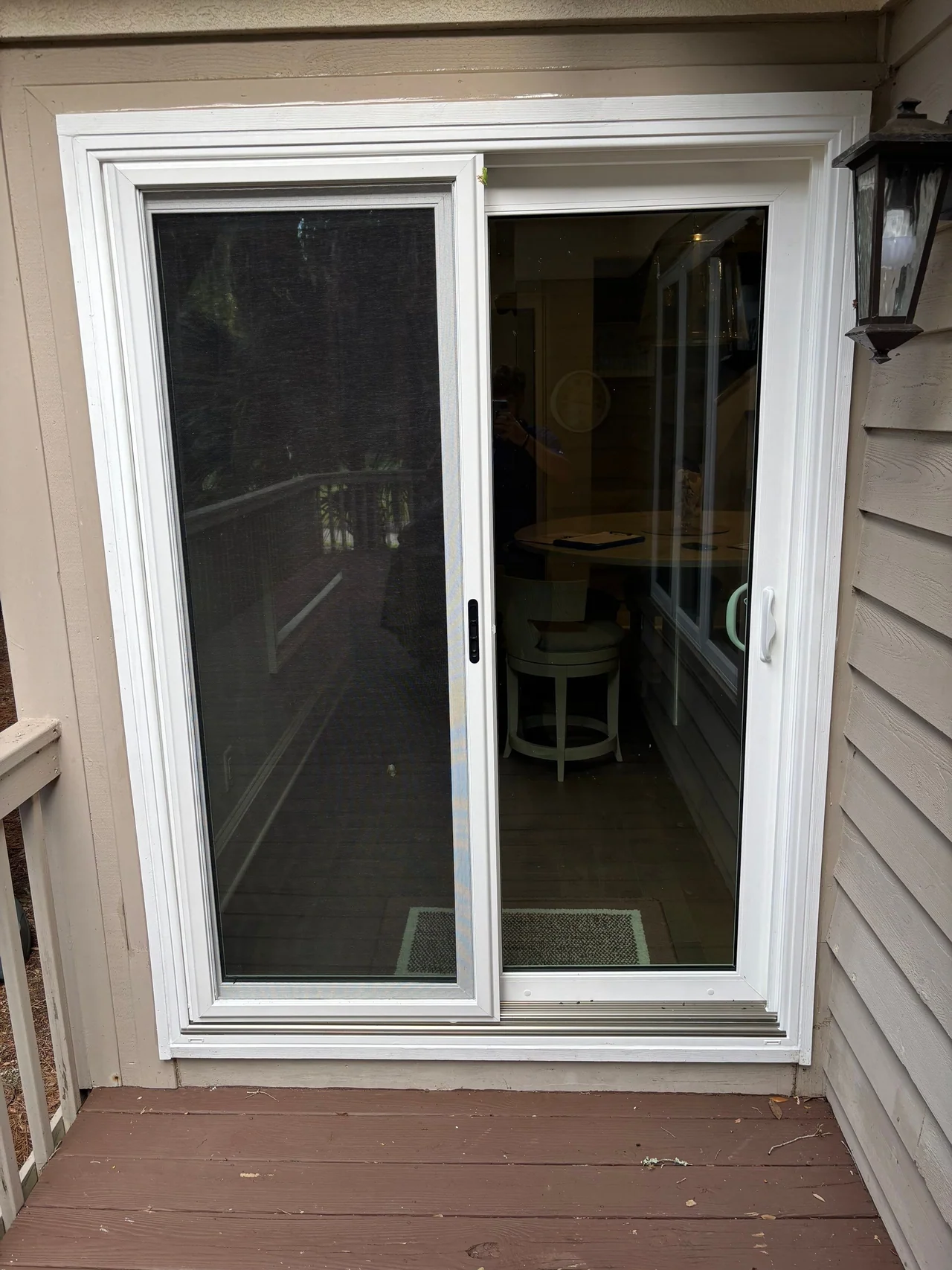
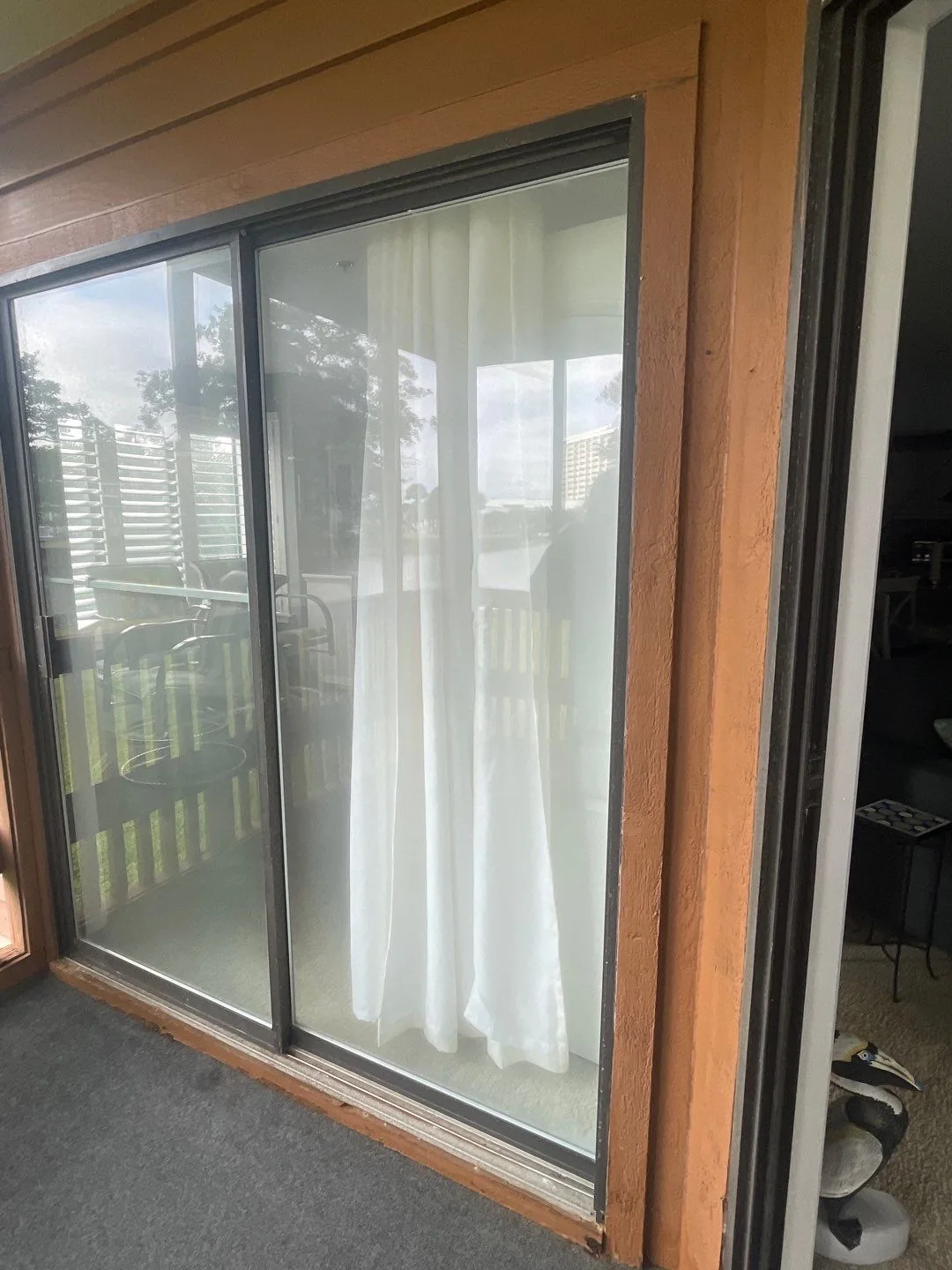
- Original doors and a replacement door during installation
A patio door that needs a hard shove every morning gets old quickly. So does a latch you have to line up just right before leaving the house. Those frustrations are good reasons to investigate the door. They don't, by themselves, tell you whether you need a complete replacement or a smaller repair.
Around Myrtle Beach, the useful first question is what has changed. Did the door gradually become harder to move? Does it travel smoothly but fail to latch? Is the problem actually the insect screen? Describe that behavior before shopping. A provider can evaluate a specific symptom more usefully than a general request to make an old door new again.
Our patio-door planning guide covers the larger replacement choices. This guide helps with the decision that comes first: whether preserving the existing system is a sensible option. Contract Exteriors provides replacement installations and new additions rather than door repairs. If an assessment points to a serviceable component, ask the manufacturer or an appropriate repair provider about that work.
What one Myrtle Beach replacement helps explain
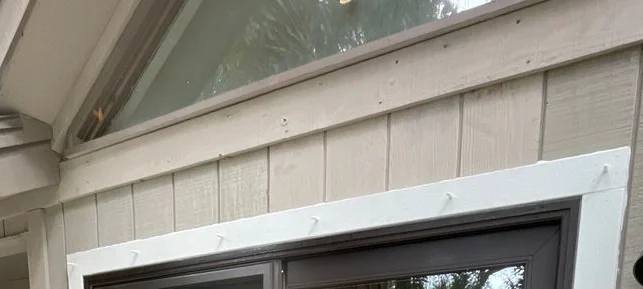
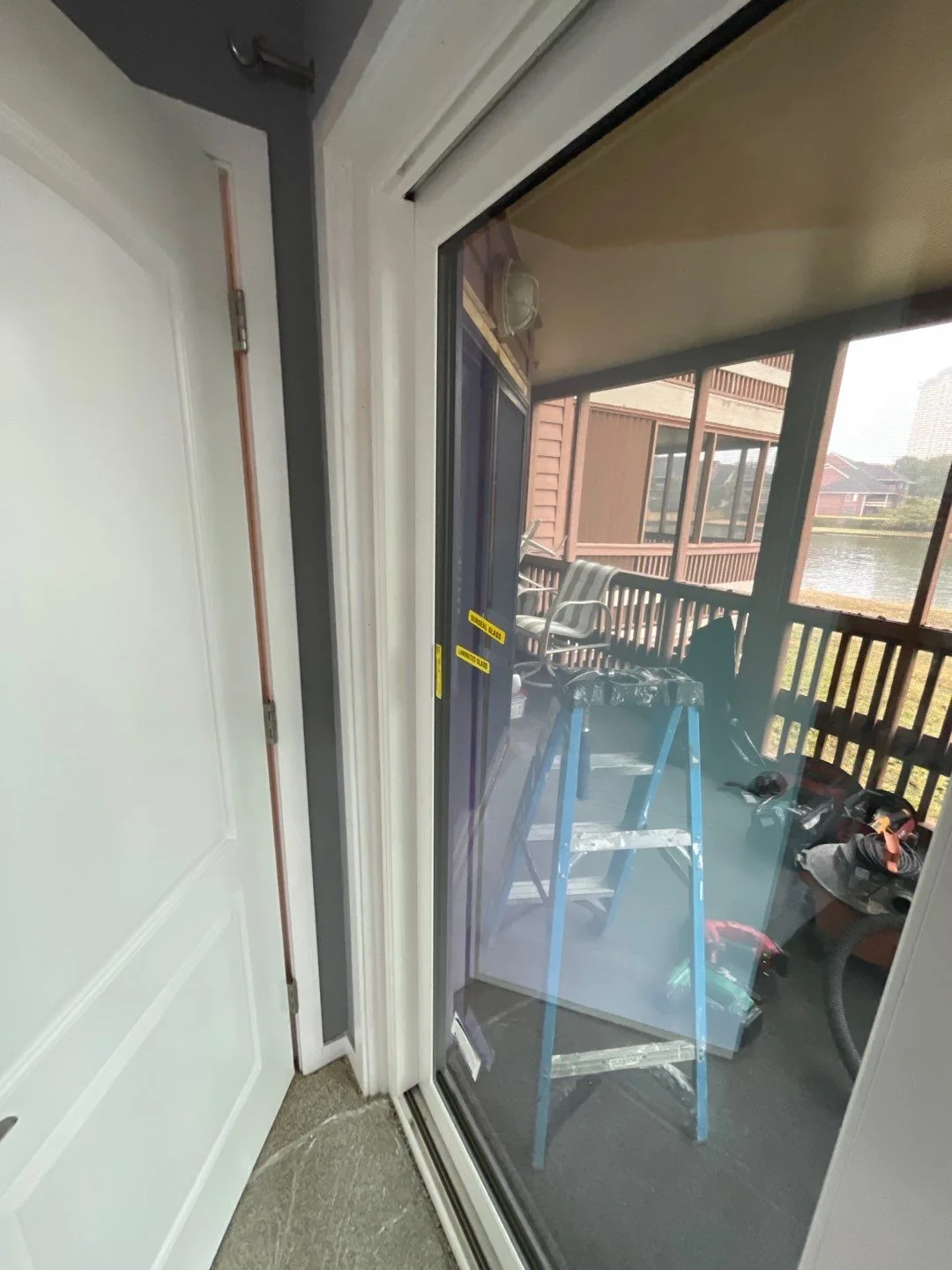
A Myrtle Beach homeowner asked Contract Exteriors to replace two sliding doors opening onto a screened room. The original request identified both function and appearance as reasons for the change. The company record marks the work complete in February 2026. The photographs used here include the original sliding doors and a white-framed replacement during installation.
That example matters because a homeowner can have more than one reason to replace a door. A component repair might address a particular operating issue while leaving the original frame, glass area, finish and overall arrangement in place. A replacement can be considered as a different project, with its own costs and disruption, when the goal includes changing more than one worn part.
The record doesn't identify a failed roller or establish that repair was impossible. We aren't using the finished job to make that claim. Instead, it illustrates a useful distinction for your own decision: repairing a specific fault and choosing a different complete door system are two different ways of spending money. First decide which result you need.
When a smaller repair deserves a fair look
Start with the door's identification label, model and any paperwork you have. Parts, adjustments and care instructions vary. An older door isn't automatically unrepairable, and a replacement component that looks similar isn't automatically compatible. The original manufacturer or a service provider can help establish which options are actually available before you compare the cost.
Andersen's care guidance for its gliding patio doors explains that debris and roller care can affect operation. Its separate roller guide describes inspection, adjustment and replacement options for identified Andersen models. Those resources demonstrate why hard sliding doesn't always mean the entire unit has failed; they aren't instructions for an unidentified door or proof that the pictured Myrtle Beach doors were Andersen products.
If the frame is suitable to retain and the concern is confined to a serviceable part, ask what a repair would include and what improvement to expect. Get any remaining limitations in plain language. A repair can be useful without making an old unit equivalent to a new one. The question is whether it restores the function you need at a cost you're comfortable paying.
Sources: Andersen: Care for gliding patio-door tracks and rollers · Andersen: Identify replacement gliding-door rollers
YOUR HOME. OUR EXPERIENCE.
Considering a patio-door replacement?
Talk with Contract Exteriors about your opening, door style and the way you move between indoors and outdoors. Start with a free estimate.
Book Your Free EstimateOur team will call to discuss your project and confirm appointment details.
A latch problem needs its own explanation
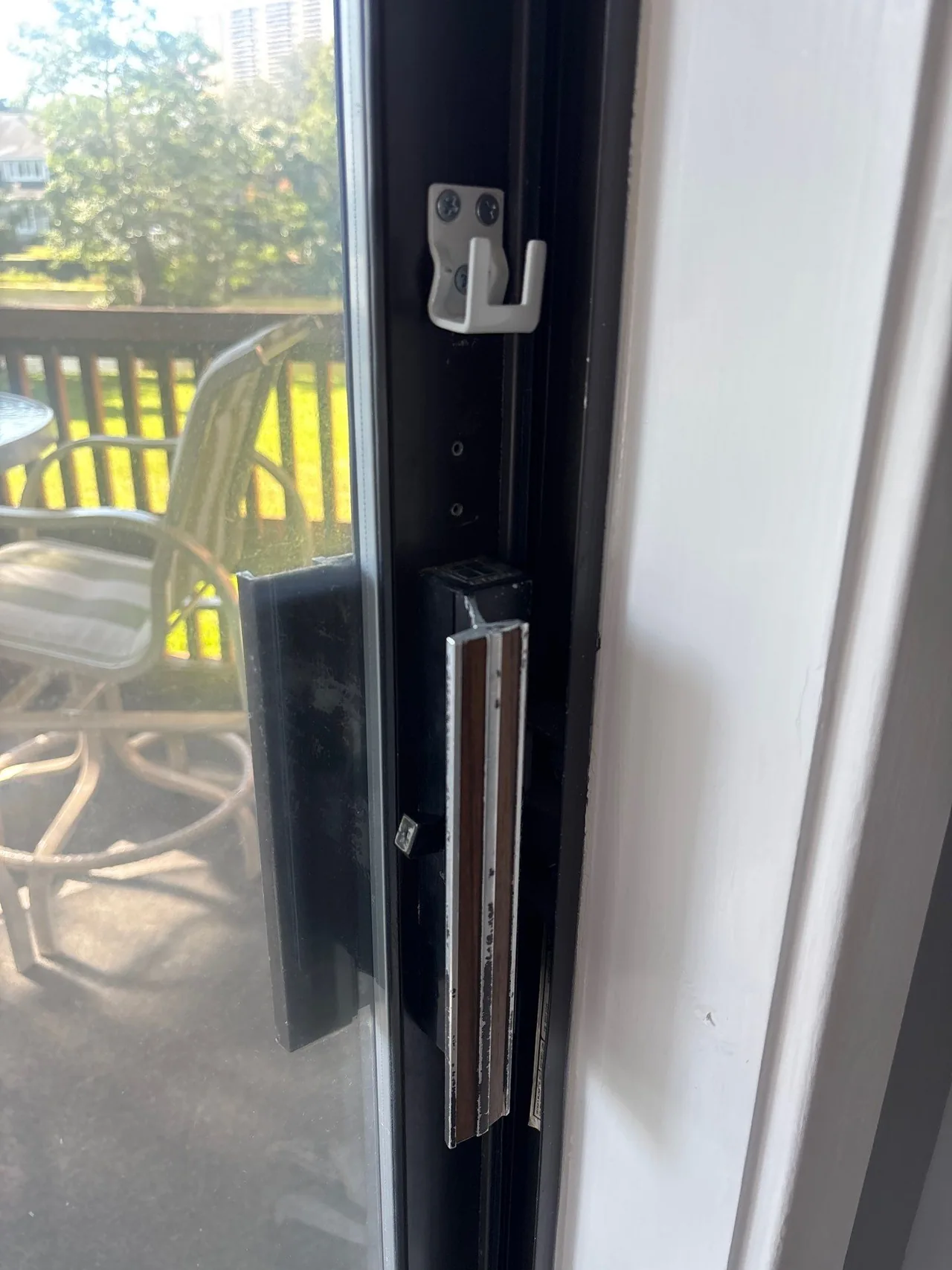
A door can slide and still fail to close securely. Tell the assessor whether the panel reaches the jamb, whether the latch engages and whether the handle feels different from before. Avoid forcing the hardware to compensate for an unexplained alignment problem. If the door won't secure, arrange prompt assistance rather than treating it as a cosmetic inconvenience.
Andersen's locking-hardware guidance explains that, on specified gliding-door series, an alignment issue or a hardware component can affect latching. That supports investigating the mechanism before jumping to a replacement conclusion. It does not establish which part has failed on another brand, and it doesn't justify fitting a generic lock without checking compatibility.
Ask the repair provider to explain both the proposed work and its limit. Will it address the reason the latch misses, or only replace the visible handle? Will any operating problem remain? Those questions help you distinguish a useful repair from an incomplete one without needing to take the door apart yourself.
When the decision becomes larger than one component
Replacement becomes more relevant when the assessment identifies concerns across the system, suitable repair parts can't be obtained, or the existing arrangement no longer fits how you use the space. The frame and surrounding opening deserve attention alongside the moving panel. Ask what can reasonably be retained and what would remain a limitation after a proposed repair.
Water entry deserves a separate investigation. Record when it happens and where you first see it, without assuming the door panel is the only possible source. A new unit should be planned with the condition of the opening and water-management details in mind. Don't accept a promise that swapping the door will fix an uninvestigated leak or concealed damage.
Appearance can be a legitimate part of the decision, too. Perhaps you want a different frame finish or an operating arrangement better suited to the porch. Our French-door-to-slider guide addresses a different layout choice. Keep those preferences separate from claims that the existing door is beyond repair; you can choose an upgrade without inventing a failure diagnosis.
Compare two complete proposals, not two loose numbers
A useful repair estimate identifies the affected component, the proposed work, parts availability and any warranty on that work. It should also explain what isn't being addressed. If the provider cannot yet identify the cause, ask what further assessment is needed before committing to a result. An unexplained allowance is a different level of certainty from a defined repair. Keep the written repair scope with the door identification information so a future service visit starts with an accurate history.
A replacement estimate has a broader job. It should identify the door configuration and glass, which panels operate, the interior and exterior finishes, removal, work around the opening and cleanup. Clarify what happens to the existing screen and trim. Ask how newly exposed conditions would be discussed and approved, rather than assuming every possible repair is included in the starting figure.
There isn't a universal percentage of replacement cost that makes every repair worthwhile. Compare the actual scope, the expected remaining limitations and your priorities. A modest repair may fit a door you otherwise like. A series of uncertain repairs may fit poorly when you already want a different complete system. The sensible choice depends on the assessed condition, not a convenient rule of thumb.
YOUR HOME. OUR EXPERIENCE.
Ready to plan your new patio door?
Bring your questions about operation, glass and surrounding finish work to Contract Exteriors. Get help defining a complete replacement scope.
Book Your Free EstimateOur team will call to discuss your project and confirm appointment details.
Think about the screened room as well as the opening
In the Myrtle Beach example, the doors connect indoor rooms to a screened space. That relationship matters to replacement planning. Furniture, curtains, a screen panel and the preferred direction of travel all affect everyday use. Stand on both sides of each opening and consider where a person carrying a tray would naturally reach for the handle.
If the property has association rules, confirm any requirements for visible frame color, glass appearance or documentation before ordering. A door that looks similar from a distance may have a different panel arrangement or visible frame width. Our condo patio-door guide explores those coordination questions; it is a separate property example, rather than a rule automatically assigned to this project.
Also explain what you want to keep around the opening. Existing flooring, blinds and trim can influence the finishing discussion. Request clear responsibilities for removal and reinstatement where needed. These details can make the difference between a replacement proposal that sounds complete and one that actually describes the finished opening you expect.
Make the first appointment useful
Before the visit, collect the model information and note how the door behaves. A short description such as 'the panel rolls smoothly but the latch misses' is more helpful than 'the whole thing is broken.' Photograph the opening from both sides and mention any earlier repairs, recurring water or changes in the surrounding finishes. Leave heavy panel removal to a suitable professional.
Ask for a clear next step: a maintenance task identified in the correct care instructions, a specified component repair through a provider offering it, or a replacement assessment for the whole opening. Keep any urgent security or damage concerns separate from optional design upgrades so they receive the attention they need.
Choose repair when a defined, suitable repair delivers the result you want. Choose replacement when the assessed condition or your broader goals justify a new system. If you're considering the latter, Contract Exteriors can review the opening and discuss replacement options with you. You should leave that discussion understanding what the project addresses, what it includes and what still needs confirmation.
Another Angle
Preserve a relationship that works
A patio door occupies a small part of the floor plan but governs a much larger relationship. It connects an interior room to a porch, garden or deck, and its everyday operation determines how readily people move between them. That makes the repair-versus-replacement decision more than a comparison between an old appearance and a new one. The useful design question is whether the existing opening still supports the route, view and habits the household wants to retain.
The Myrtle Beach example offers a clear setting for that question. Two doors connect the home to a screened room, a space that already mediates between indoors and outdoors. The screened boundary, seating and existing openings form a sequence. Changing the door should be considered within that sequence rather than as an isolated object on a product page. A lighter-looking frame might appeal, but its appearance matters alongside the handle location, the usable opening and the way someone approaches it from the furniture on either side.
Change the arrangement deliberately
A successful component repair can preserve those relationships with relatively little visual change. When the opening is well placed and the homeowner likes the existing arrangement, continuity can be a positive result. There is no inherent design advantage in discarding a familiar configuration merely because it is familiar. Conversely, if the arrangement itself is frustrating, restoring the original mechanism may leave the underlying difficulty untouched. That is a question of use, distinct from whether the hardware is technically repairable and requiring an honest conversation about the desired result.
Replacement creates an opportunity to reconsider the visible frame and operating arrangement, but it also introduces decisions that were previously settled. Which side should open? Where will the handle fall relative to the route through the room? How will curtains or blinds meet the new perimeter? These details are easy to overlook when the discussion centers on the size of the glass. Yet they are encountered every day, while a product's isolated appearance is usually admired only during selection. Keeping a few existing relationships may be more useful than changing everything at once.
Judge the finished transition
The threshold also deserves to be understood as a transition, rather than merely a line at the bottom of the photograph. Interior flooring, the door sill and the porch surface come together there. Their actual condition and the selected system require an appropriate assessment; this perspective does not prescribe a construction detail. As a planning matter, however, the homeowner should understand what the finished transition will look and feel like, and which adjacent surfaces the proposal includes. Visual continuity and a clearly described scope can support each other without pretending every surface must be replaced.
The strongest decision is therefore based on the relationship worth preserving or improving. Repair makes sense as a design choice when it restores an opening that already serves the household well. Replacement merits consideration when the assessed condition or the desired arrangement calls for a different system. The photograph of a new door is only one part of that judgment. The more revealing test is whether the finished opening helps people move naturally between the rooms they actually use, with the surrounding work and the remaining limitations understood.
A FEW MORE ANSWERS
Questions homeowners ask
Does a sticking slider always need replacement?
No. Cleaning, adjustment or a compatible replacement component may help, depending on the actual door and cause. Have the problem assessed rather than diagnosing it from age or resistance alone.
Does Contract Exteriors repair sliding-door rollers?
Contract Exteriors focuses on replacement installations and new additions, rather than component repairs. Contact the original manufacturer or a provider offering door repair when that is the appropriate option.
Can I use any replacement handle or roller?
No. Identify the manufacturer and model so the provider can check compatibility and availability. Similar appearance does not establish that a part will fit or function correctly.
Will replacing the door fix a leak?
That depends on the source of the water and the condition of the opening. Investigate recurring water and include appropriate opening and water-management work in the agreed scope; don't assume the panel alone is responsible.
What if only the screen is difficult to move?
Distinguish the insect-screen problem from the glass-door operation. The screen may have separate rollers and service requirements; use the correct model guidance or repair provider.
What should I ask before replacing a condo patio door?
Confirm the association's requirements, operating configuration, frame and glass appearance, and the work at the surrounding finishes. Check those details before the system is ordered.
Sources and review
Contract Exteriors project evidence: Internal project records and original CompanyCam photographs support the project examples described in this article. Customer records and identifying details remain private. Project examples are separate from the manufacturer guidance and other published references below.
Same-property two-slider replacement for reported function and appearance; CRM completion February2026, original slider and installation-stage photographs. No claim repair was impossible or failed component was diagnosed.
- Contract Exteriors project evidence — Original company project records and same-property photographs privately matched. Public link opens the portfolio; private customer records remain private.
- Andersen: Care for gliding patio-door tracks and rollers — Manufacturer-specific cleaning and care; illustrates serviceable operating concerns, not instructions for unidentified doors.
- Andersen: Identify replacement gliding-door rollers — Compatible components, inspection and adjustment distinctions for named models; no diagnosis of featured door.
- Andersen: Gliding-door locking hardware — Named-series alignment/hardware considerations; not proof of a particular failure.
- Contract Exteriors: Exterior door replacement — Current replacement/new-addition scope and distinction from component repair services.
Editorial review details
Reviewed for Contract Exteriors by Bill Schum, Marketing Director, Contract Exteriors, on November 17, 2026. Scope: Editorial oversight, with AI-assisted research, source and project-record checks, photo review and page-presentation review under the publication quality process. Design commentary is an editorial perspective.
Our sourcing and corrections standards · Report a correction