Start with the part of the door you’ll actually use
Project at a glance
- Location
- Johns Island, South Carolina
- Project record
- Completed Contract Exteriors sliding patio door replacement
- Scope or existing condition
- Framed screen and two-panel door opening above an existing deck
When you compare replacement patio doors, it’s easy to spend the appointment looking at the glass, locks and frame colors. Then the door goes in and the little thing you touch most often is a narrow screen handle. Maybe you use it every morning when the deck is still shaded. Maybe the door stays shut most days, and you would rather see the garden through clear glass.
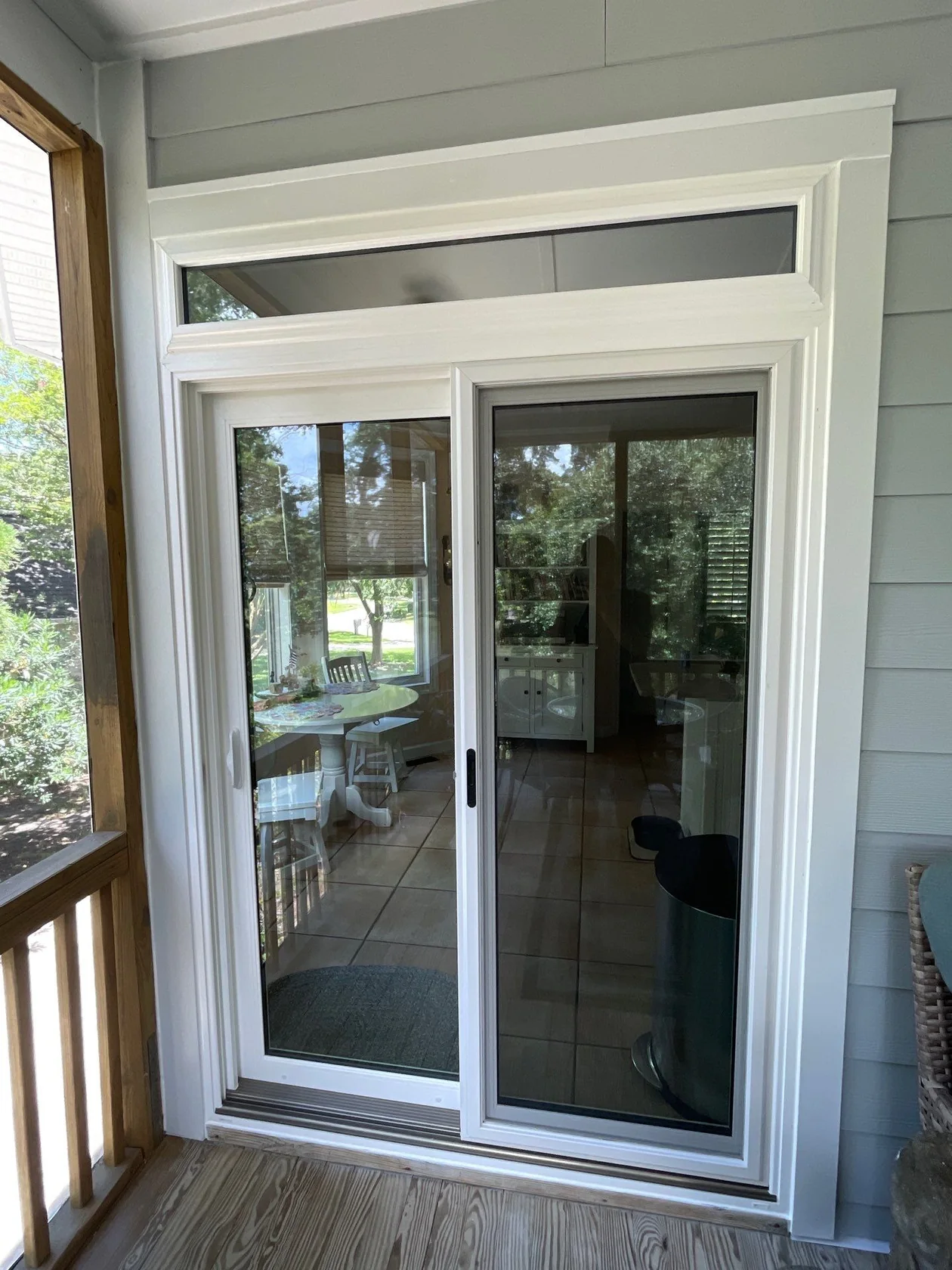
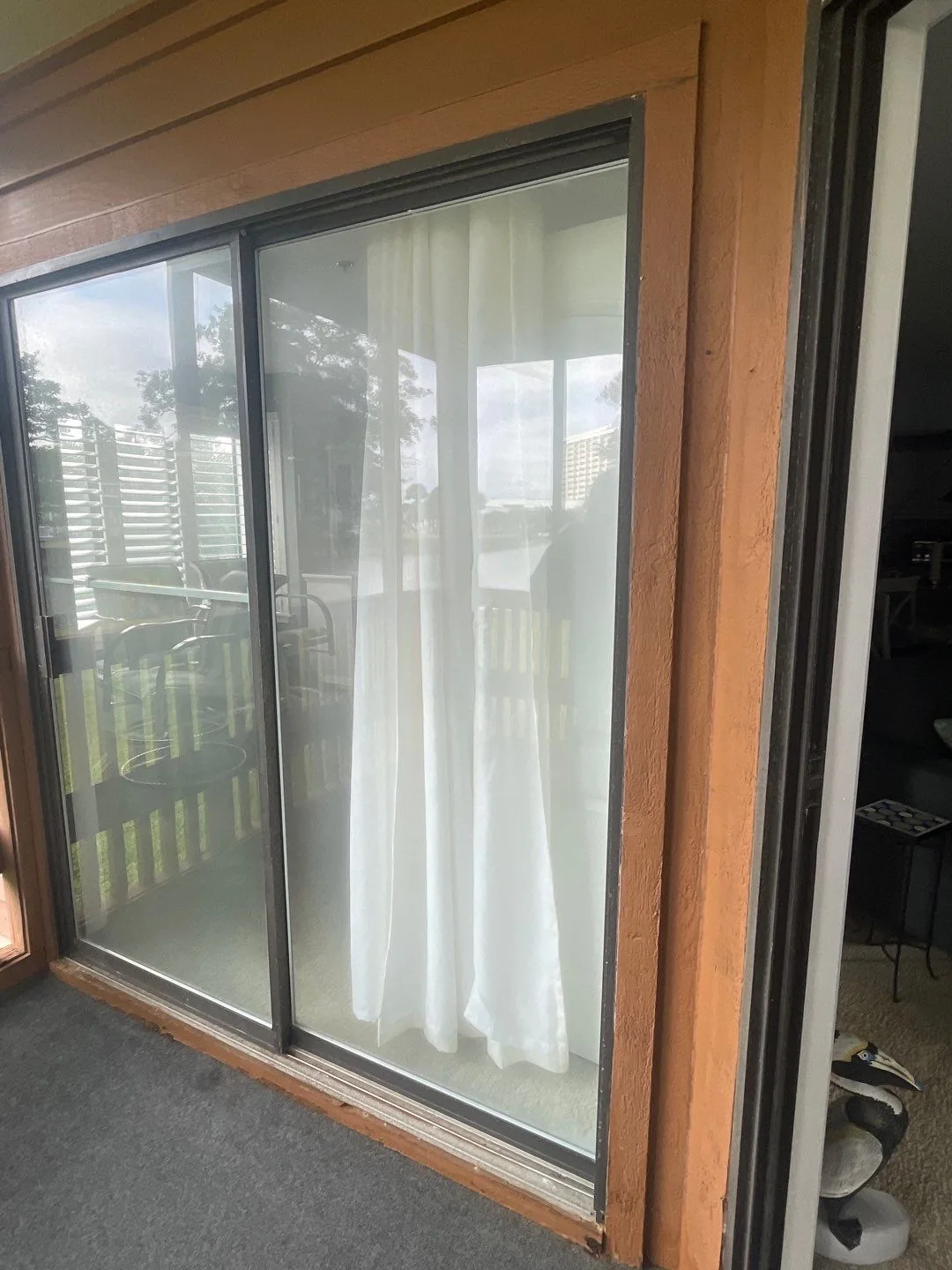
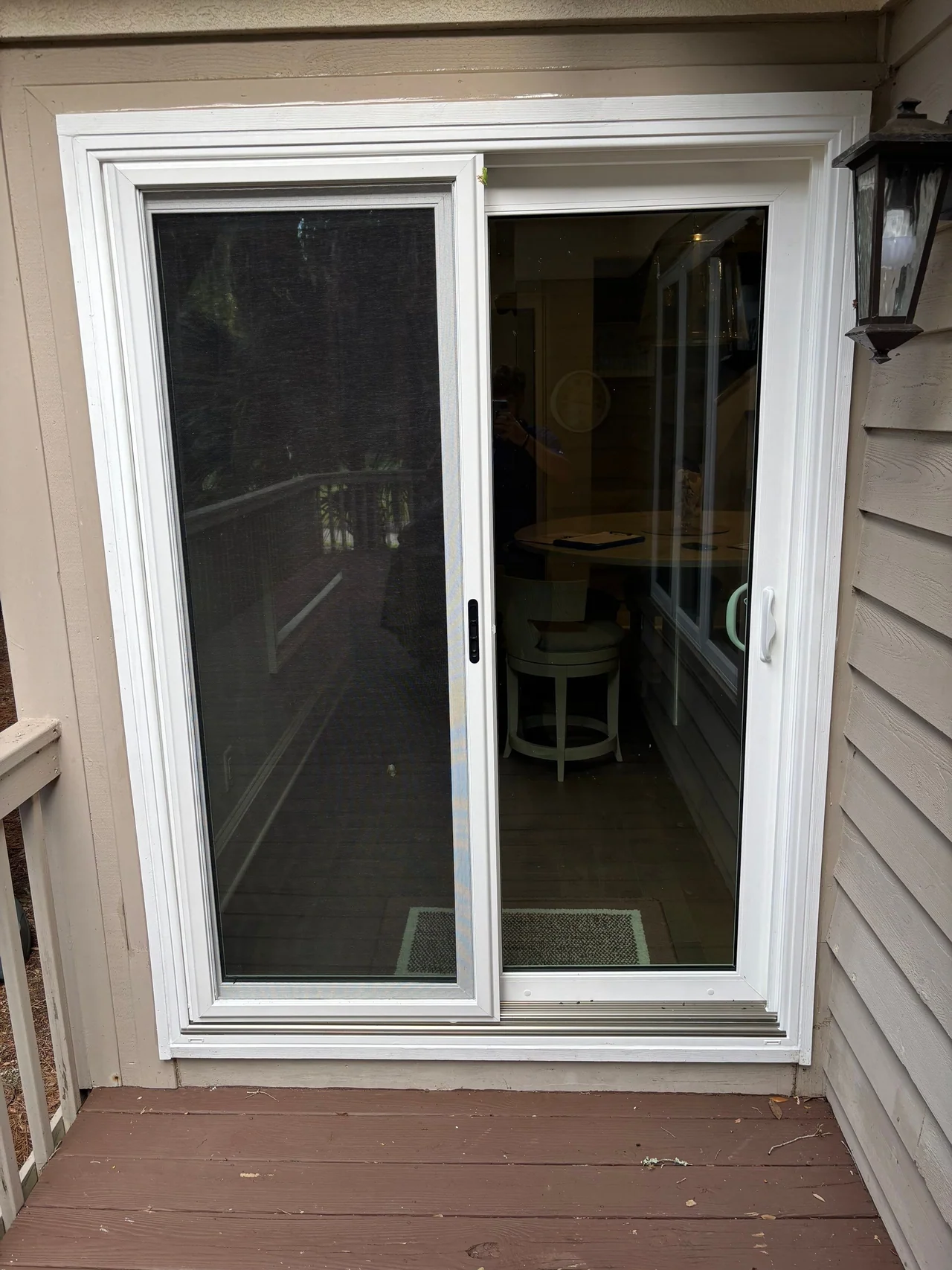
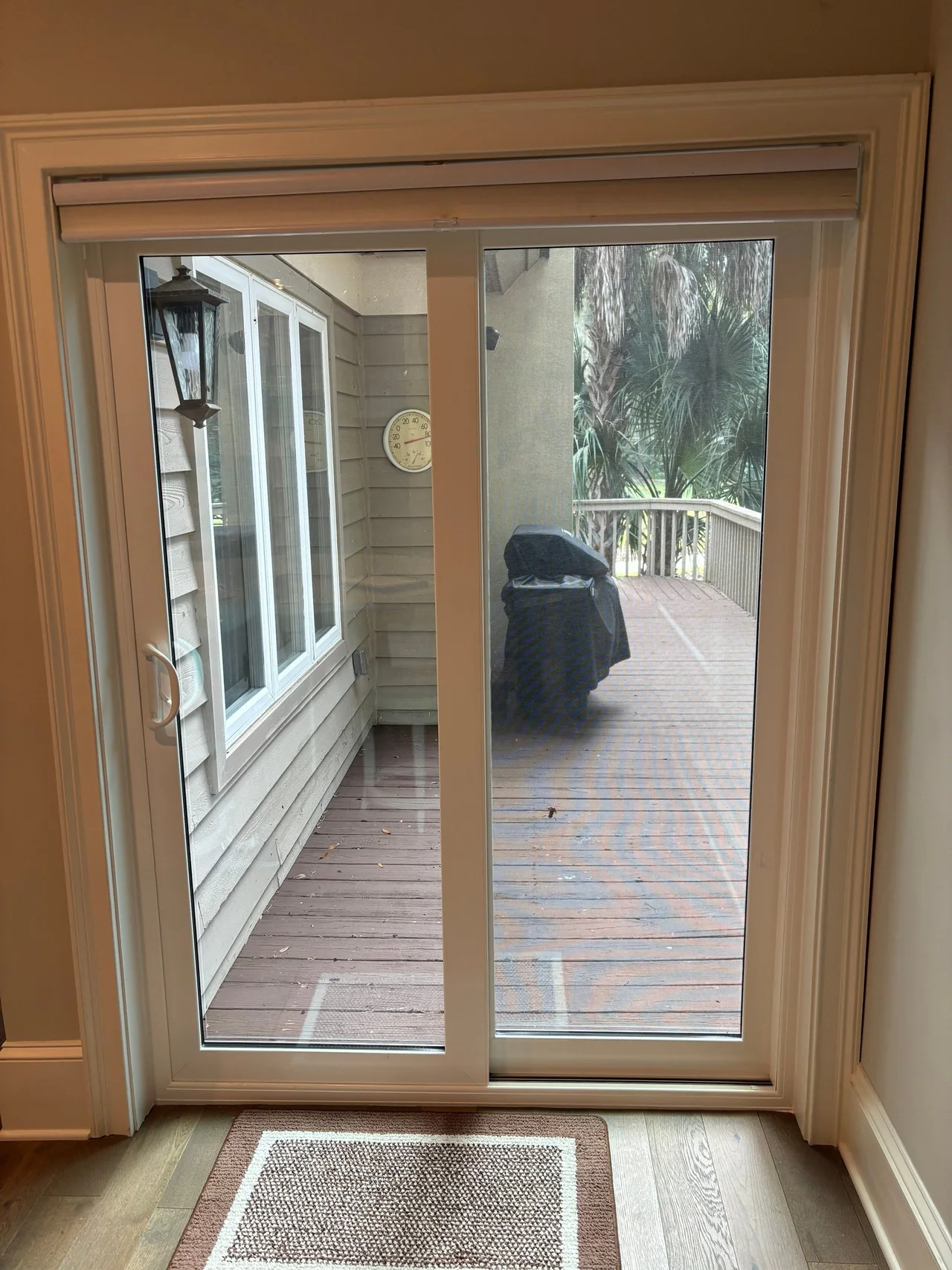
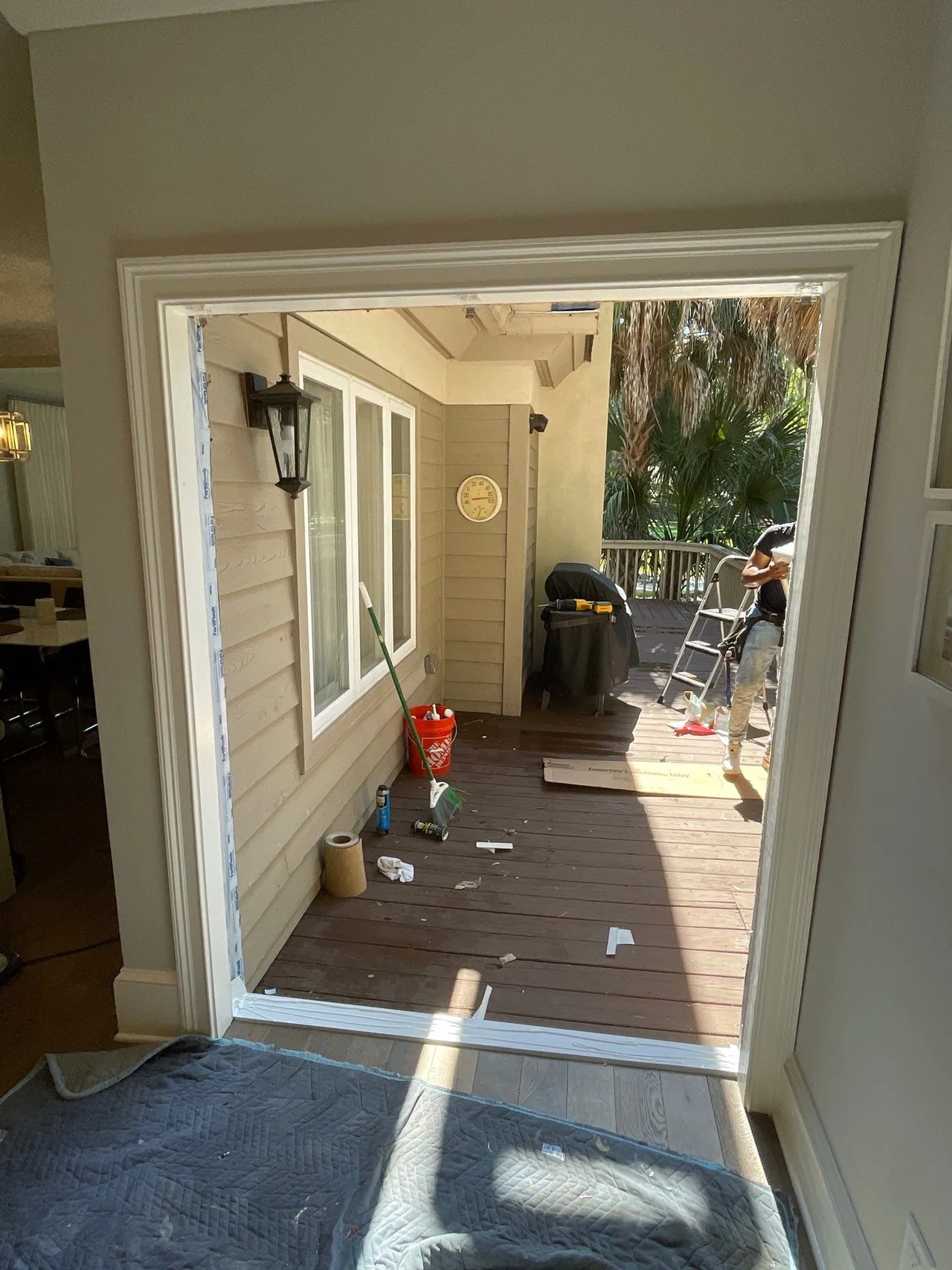
In a Contract Exteriors replacement on Johns Island, a two-panel sliding patio door opens onto a deck alongside the house. The outside view shows a framed screen across one side of the door. Inside, a mat sits in front of the track and the view follows the deck toward its open edge. The photographs give you two ways to assess the same opening. From the deck you can see where the screen sits in the surrounding wall. From indoors you can see where the panel, handle and mat line up with the route out. That simple comparison can make a showroom choice much easier to picture at home.
When a framed sliding screen makes sense
A framed screen moves as a rigid panel. Think about how it feels to use the handle when you are coming in from the deck with something in your other hand. Is the pull easy to find? Can you move it comfortably from both sides? Ask to try a display with the same hardware, or have the contractor point out where the pull and latch would sit on a drawing of your proposed door.
The panel stays visible when you slide it out of the way. If the patio door also supplies the best view from a nearby sofa or dining table, see what the parked mesh looks like against the glass. Stand where you would normally stand to open the door and then sit where you would normally sit. A difference you barely notice standing in the showroom may matter more when that door is directly in your line of sight. It may matter very little when most of the view comes through separate windows.
When a retractable screen deserves a look
A retractable design stores the mesh in a housing when you put it away. That can appeal to someone who opens the patio door occasionally and prefers the view with the mesh out of sight the rest of the time. Try the handle and latch on the exact design. Ask the dealer to show the housing, the track and the remaining passage width on your proposed door. If you plan to use it from the outside, try it from that side too.
The ordering detail that matters is compatibility. For example, Andersen’s published compatibility guidance distinguishes between gliding door series, versions and exterior lock configurations for one of its retractable screens. Use that as a reason to ask for a manufacturer-confirmed combination on your own quote. The Johns Island door is an OKNA Elegante. OKNA describes a separate screen track for that product on its Elegante product page. Ask your supplier to identify the screen actually offered with your model and finish.
YOUR HOME. OUR EXPERIENCE.
Planning a project in Johns Island?
Share photos of the existing area with Contract Exteriors so the team can discuss your priorities.
Book Your Free EstimateOur team will call to discuss your project and confirm appointment details.
Test the route while the screen is open
Make the same trip you make on a normal night. Walk from the kitchen, move the screen aside and head to the place you set down a plate. Then return with your hands full. If that trip takes you toward a stair or around the end of a table, check whether the side you walk through puts you in a good position. In the Johns Island example, the deck runs along the wall. Two openings that look nearly identical on a product sheet could put you in different spots on a deck laid out that way.
Look down as well as ahead. Where will the interior mat fit when it sits flat? Is there room to stand and handle the latch outside? Is there a planned change to flooring or deck boards at the same time? Those are details to show your contractor when you also compare the door threshold. Keep the screen and the sill as separate decisions in the quote so you can see which detail affects the route.
Ask what you can clean and service later
On a Lowcountry deck, a screen track that is easy to reach is worth seeing in person. Picture where pollen, leaves or grit would collect around the door you are considering. Ask the installer which surfaces you can get to for regular cleaning, and ask them to show the manufacturer's instructions for the exact screen. Try reaching the track while standing in a comfortable position, especially if there is a step right outside or a furniture piece close to the opening.
Then ask what happens if you eventually damage the mesh or a moving part wears out. The list may differ depending on whether the proposal uses a framed panel or a housed retractable unit. Which parts can the dealer order? Can you service the screen separately from the glass door? Ask who you would call, which model details you should save and what documentation you receive after installation. If breakage or trouble sliding is the reason you started shopping, the repair-or-replace guide can help you organize that conversation.
Consider how often you open the glass
Notice whether the patio door normally stays shut when you are indoors or spends an hour open while you sit nearby. Pick the screen for the use you actually have. You can use the patio door planning hub to put that choice beside other decisions such as panel layout and the available finish.
YOUR HOME. OUR EXPERIENCE.
Bring your notes to the estimate
Show Contract Exteriors the existing conditions and the choices you want to compare.
Book Your Free EstimateOur team will call to discuss your project and confirm appointment details.
Get one drawing and one line on the quote
Ask for a quick sketch marking the moving glass panel, fixed glass, screen when closed and screen when parked. Give the drawing an inside or outside viewpoint and ask the contractor to label which side you actually walk through. Then ask for a line on the proposal showing what type of screen is included or optional, its finish, its hardware and the quoted track or housing. Do this before you sign, when you still have a chance to compare two packages on the same basis.
Two photos of your own opening are enough to start. Take one from inside at the place you normally approach the door and another from the deck showing any stairs, furniture or wall beside the door. When you request an estimate, tell Contract Exteriors which side you use most often and what you want to see through the glass.
Another Angle
Read the frame and the view together
The visual difference between these screen systems has less to do with the texture of the mesh by itself than with where its edges sit in relation to the edges of the door. A slider already has a strong vertical division where its panels meet. A framed screen introduces a second plane with its own vertical lines. Look straight at the assembly and the divisions may align closely. Look at it obliquely from a chair at one end of the room and the screen frame starts to separate from the glass line. That change in relation can be more visible than the screen cloth.
The Johns Island photographs offer a useful example of how the frame belongs to two spaces at once. Inside, the door is set in a trimmed recess where the frame creates a clear transition to the deck. Outside, the door is at one end of a wall that continues alongside the deck. The route through the opening turns into movement parallel to that wall. The same screen edge that might register as an extra vertical line from the interior is a useful visual cue from outside. It marks the part of the assembly a person reaches for before crossing.
Look at the assembly in motion
A retractable screen usually makes its strongest visual case where the interior has few competing lines and the glass is prominent. When the mesh is put away, the housing and handle still occupy positions in the assembly, so their relationship to the jamb and trim matters. A slim housing in an awkward position may be more conspicuous than a larger component lined up with an existing edge. Ask to see those edges on the actual proposed unit. A product photograph taken straight on can hide the angle from which the assembly will commonly be seen in your home.
The framed panel has a different advantage. Its location is immediately legible. In a household that uses the deck routinely, the ease of seeing and reaching that separate panel may be worth more than the uninterrupted glass. The sliding screen can also look well integrated if its frame, movement and parked position respect the door’s existing geometry. Matching the frame finish is only one part of making the two planes read together.
Choose for the room and the route together
Treat the screen as a detail that changes over the course of the day. The drawing that shows the door closed is only one of its states. The useful views are the door closed with the screen parked, the glass open with the mesh drawn, and the clear passage when both are out of the way. A good selection will hold up across the states you actually use. Give the room’s main view and the path to the deck equal weight. If the view is what makes the room, study the parked position from your seat. If the patio door is the house’s most active threshold, give priority to the thing you reach for on every trip outside.
A screen’s value can change as the house changes around it. Before ordering, look at which of these views and routes would survive a future furniture change. A screen that works in several arrangements gives you more options.
A FEW MORE ANSWERS
Questions homeowners ask
Does a sliding patio door quote always include the screen?
Ask the contractor to list it explicitly. A quote should say which screen and hardware are included and which selections change the price.
Can I order a retractable screen later?
Sometimes. Before relying on that plan, ask about the exact series, production version, hardware and approved parts.
What if my deck furniture is right beside the opening?
Test both sides of the path with the furniture in its normal position. Allow for where you stand to reach the screen and where you move after crossing.
Is the latch part of the glass door lock?
Treat the two as separate items on the quote. Ask to see how each operates and what hardware comes with the screen.
Will the screen block part of my view when it’s parked?
A framed screen remains in the assembly when it slides clear of the opening. Look from your usual seat or standing position to judge how much you notice it.
Should the installer show me how to remove the screen?
Ask for the manufacturer’s cleaning and service instructions and a demonstration of the routine maintenance the supplier recommends for that model.
Sources and review
Contract Exteriors project evidence: Internal project records and original CompanyCam photographs support the project examples described in this article. Customer records and identifying details remain private. Project examples are separate from the manufacturer guidance and other published references below.
Editorial review details
Reviewed for Contract Exteriors by Bill Schum, Marketing Director, Contract Exteriors, on November 19, 2026. Scope: Bill Schum provides editorial oversight. AI tools supported research, drafting, checking sources and project records, photo and page review, and editing. Design commentary is an editorial perspective. Property-specific work requires assessment by an appropriate professional.
Our sourcing and corrections standards · Report a correction