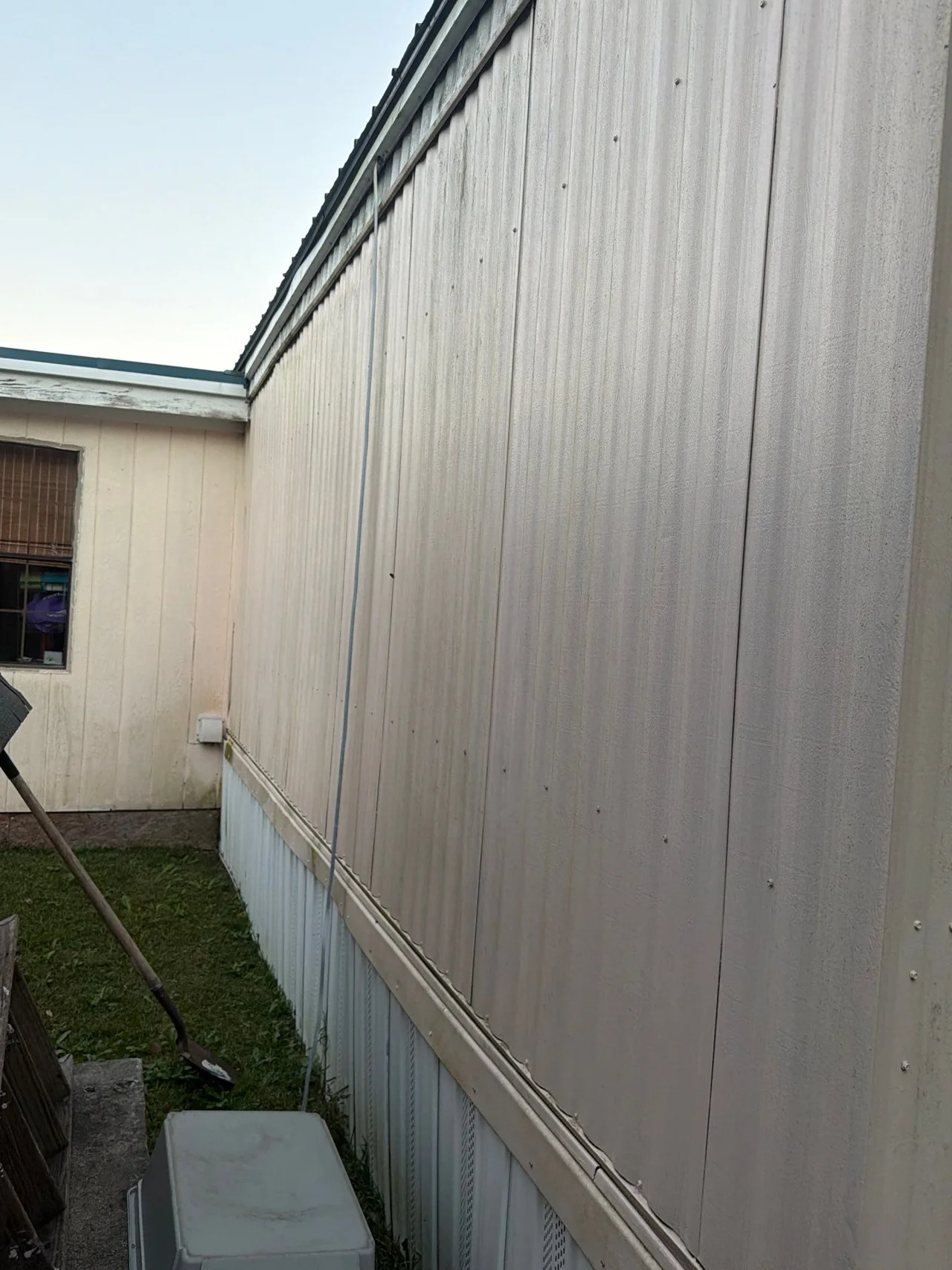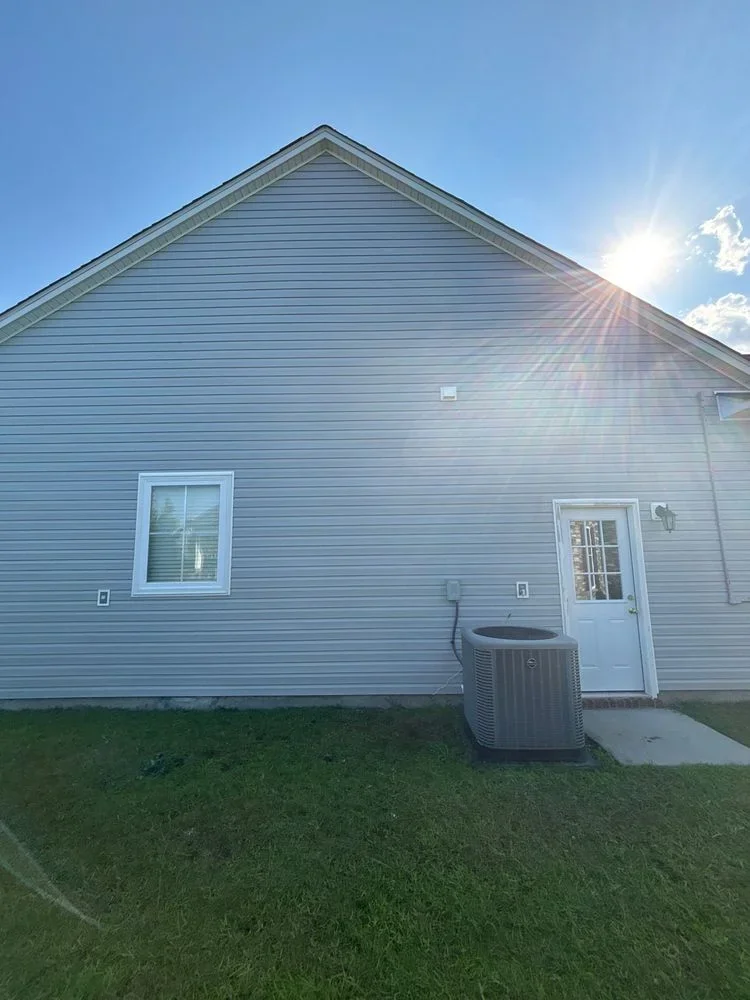
Look at the whole shed before choosing the panels
Project at a glance
- Local example
- Summerville, South Carolina
- Building
- Existing backyard shed
- Recorded work
- CertainTeed vinyl siding
- Scope distinction
- New siding alongside retained roof, openings and exposed wood
Sometimes the little building in the backyard needs attention before the house does. You may want to tidy up its walls without turning it into a completely different structure. That's a reasonable starting point, as long as the scope is clear.
Walk around the shed and separate the parts you want changed from the parts you expect to keep. The wall covering is one item. The roof, doors, windows, porch and trim are others. Bring that list to the contractor rather than treating ‘new siding’ as shorthand for making everything new.
There's a useful difference between making the shed look cared for and rebuilding the shed. If the doors stick, the bottom of a wall feels soft or water is getting inside, those questions deserve attention before anybody picks a siding profile. New panels can give a sound wall a cleaner surface, but they aren't a repair plan for framing or moisture problems you haven't checked.
A Summerville job focused on the shed walls
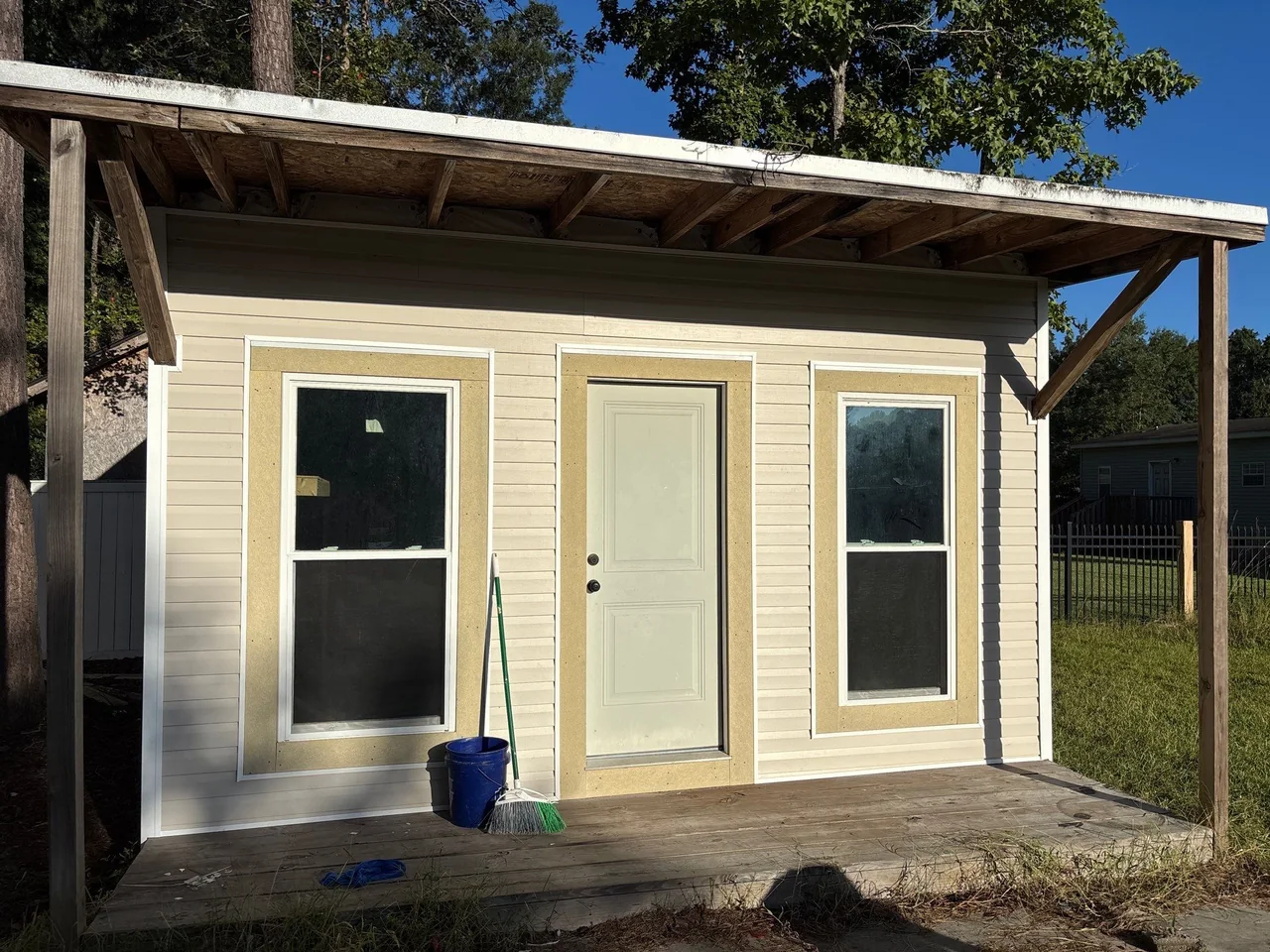
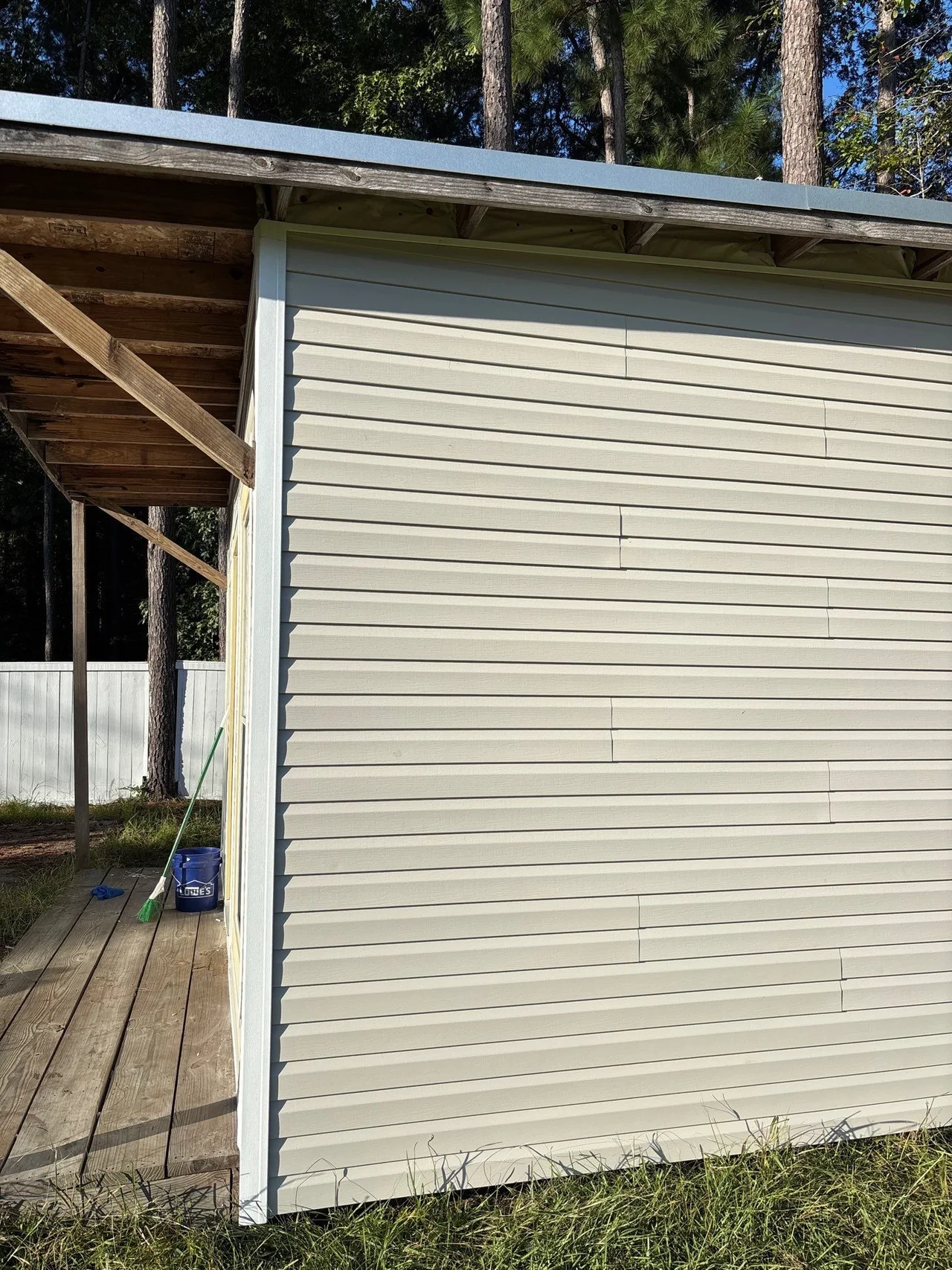
At a Summerville property, a homeowner asked Contract Exteriors to side a backyard shed. The project focused on that smaller building, with CertainTeed vinyl siding recorded as the completed work.
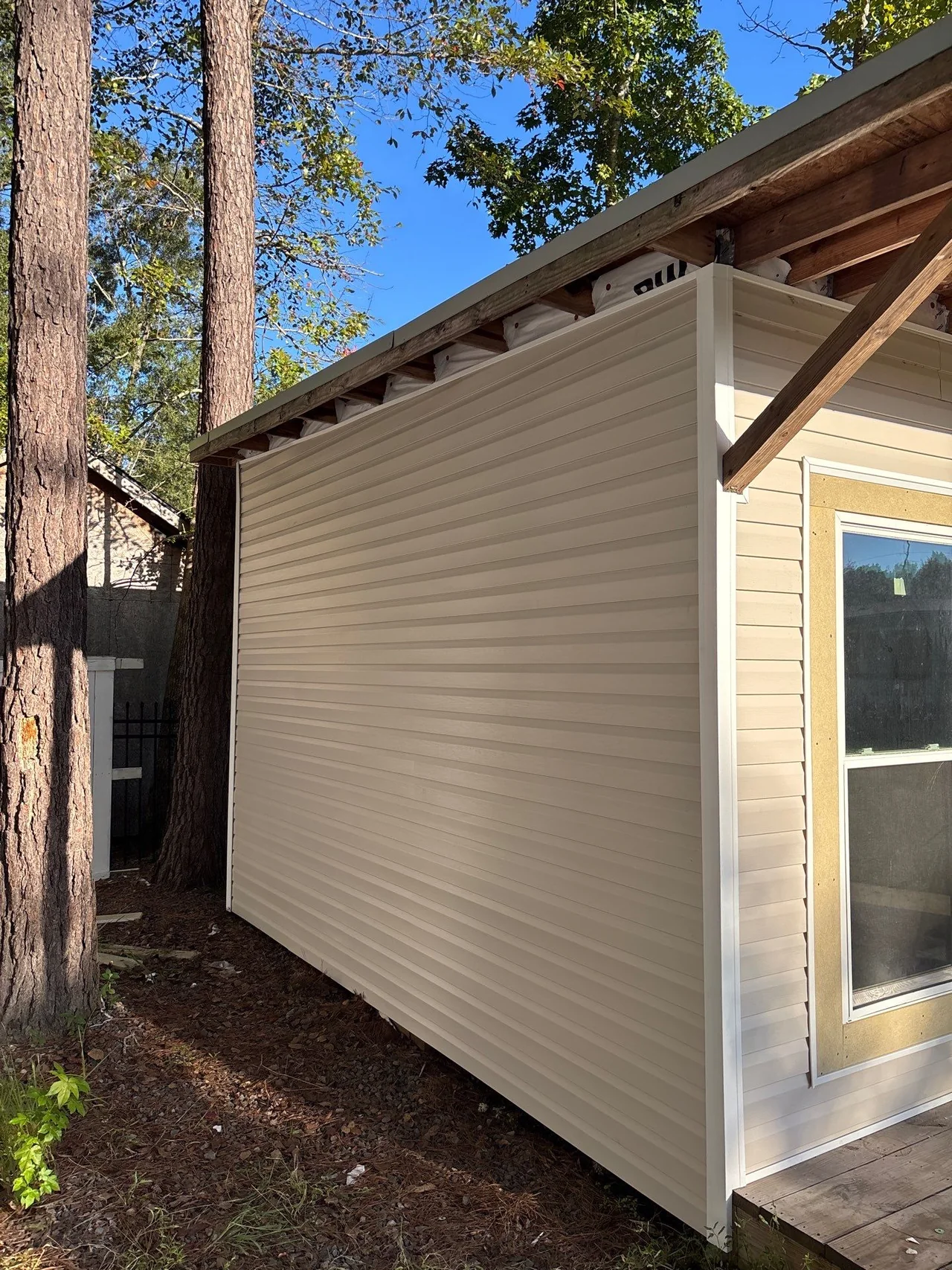
The installed siding gives the side walls a consistent horizontal finish. At the front, a door and two windows sit beneath an existing projecting roof, with exposed wood elements still visible around them. It's a useful example of a focused wall-covering project rather than a complete outbuilding makeover.
That distinction is worth making before you compare estimates. If you want painted trim, a changed doorway or work on the small porch too, say so. Don't rely on the word ‘siding’ to include a separate task that hasn't been discussed.
Have the existing building assessed first
The first decision is whether the shed is a sensible candidate for the work you want. Tell the contractor about leaks, soft areas, loose materials or other concerns you've noticed. Ask what needs assessment or repair before the wall finish is chosen.
CertainTeed's guidance calls for a smooth, flat supporting surface and explains that vinyl siding isn't watertight. Its wall-preparation and opening requirements are reasons to discuss the complete scope, rather than seeing the panels as a way to cover every problem.
Have the contractor assess your building and the applicable requirements for the actual address. If work beyond the wall covering is needed, agree how it fits into the project before choosing a finish.
For vinyl siding, the Polymeric Exterior Products Association's installation guidance calls for a suitable, level wall base and addresses the water-resistive layer behind the exterior covering. Those are assembly details worth discussing even on a small outbuilding. Ask whether the current wall is appropriate for the intended system and where water will be directed at openings and bottom edges. Don't assume the same installation detail fits every shed construction.
YOUR HOME. OUR EXPERIENCE.
Considering vinyl siding for your home?
Talk with Contract Exteriors about the existing exterior, vinyl options and what belongs in the replacement scope. Start with a free estimate.
Book Your Free EstimateOur team will call to discuss your project and confirm appointment details.
Write down where the siding job stops
Ask the proposal to identify the wall areas, siding product, corners and opening trim actually included. Have the contractor explain what will be retained, what will be replaced and how any additional repair findings will be handled.
Then review the visible wood separately. A vinyl wall can sit beside a wood post, roof edge or window surround that still needs its own finish decision. If painting, wrapping or replacing any of those parts is wanted, have the exact work included or clearly excluded.
The same applies to doors and windows. Decide whether they're staying and whether any change would affect the surrounding siding. Our window-and-siding sequencing guide covers that coordination question in more detail.
Get the trim on the list, too: corners, the door opening, window edges, the roof-to-wall junction and the lower edge of the wall. PEPA's accessories guide explains how J-channel and other vinyl-system pieces relate to openings and flashing. It doesn't tell us whether the Summerville shed needed any particular repair, but it shows why a simple-sounding 'siding only' quote still deserves a few lines about the edges. For a larger exterior-project checklist, compare the choices on the planning page.
Choose a finish that fits the scale of the project
Look at the sample beside the retained roof, trim and nearby house. A shed can coordinate with the property without copying every detail. The useful choice is one that looks deliberate and matches the work you're actually commissioning.
Our vinyl-siding hub covers the broader material questions. For a shed estimate, bring clear views of every wall and a short list of what you want to keep. Ask for a defined scope and an assessment of suitability before deciding whether a focused siding project meets your goal.
If you're also considering removing or replacing the building, compare that as a separate option with the appropriate professionals. A new exterior finish is only useful if keeping the shed still makes sense for you.
Another Angle
Decide the shed’s role in the garden
A small outbuilding can influence the character of a garden more than its size suggests. It may terminate a view from the house, sit beside a patio or form an edge to a frequently used path. The first design decision is the role the shed should play in that setting; the finish should follow that decision. It can be a quiet background element or a modest focal point. A siding project is most convincing when the retained structure and the new wall finish support that role together.
The Summerville example offers a useful distinction between renewing the wall surface and redesigning the building. Its horizontal vinyl siding gives the walls an ordered finish, while the projecting roof, doorway, windows and visible wood remain part of the composition. The result should be read as a focused intervention. It is unnecessary to describe every retained element as a defect or every difference as something that must be removed. The design question is whether the combination looks deliberate and suits the owner's intended use of the building.
Coordinate without copying every detail
Matching the house exactly is one possible approach, but it is not the only way to create a coherent property. A related wall color can connect the shed to the main building, while a different trim treatment acknowledges its smaller scale. Conversely, repeating strong contrasts from a large house may give a modest shed more visual emphasis than intended. Compare the sample within the actual garden view, including planting and the retained roof. An isolated swatch beside a catalog photograph cannot resolve those relationships.
The openings deserve particular attention because they give a small elevation much of its identity. At the Summerville shed, the front door and flanking windows make a clear arrangement beneath the projecting roof. A new wall finish should allow that arrangement to remain legible. If exposed wood is retained, decide whether its contrast is intentional and what future finish, if any, belongs in the scope. Avoid allowing an unspecified later painting project to become the only explanation for how the building is supposed to look when the current work ends.
Keep a focused project visually complete
There is also a useful tradeoff between improvement and elaboration. Adding decorative layers can make an outbuilding more prominent, but prominence may not be its best role. A simple siding choice with a clear relationship to the openings can be enough for a structure used principally for storage. A building intended to frame a sitting area might justify more attention to its front elevation. These are hypothetical uses to test in the design conversation, not claims about how the featured owner uses this shed or about the building's suitability for a different occupancy.
Review the proposal from the places where the shed is actually seen: the house, the main path and any nearby outdoor activity area. Look at the wall finish together with the elements that will remain visible at completion. Then compare that intended appearance with the written scope. The strongest small project has an understood endpoint, even when it is intentionally limited. Renewing the siding need not become a complete renovation, but the decisions about retained trim, openings and the roof should be explicit enough that a focused improvement feels finished on its own terms.
A FEW MORE ANSWERS
Questions homeowners ask
Does a shed need the same siding color as the house?
No. Compare the actual sample with the house and the shed's retained roof and trim. Matching and coordinating are both design choices; check any applicable association requirements before ordering.
Is painting the wood trim part of a vinyl-siding job?
Only if the proposal includes it. Ask whether each retained wood element will be painted, wrapped, replaced or left as it is, and identify who is responsible for that work.
Can vinyl siding hide a damaged shed wall?
Don't use new panels as a substitute for assessment and necessary repairs. Have the contractor explain the condition of the supporting surfaces and how repair findings would change the scope.
Do the shed windows have to be replaced?
Not automatically. Have their condition and the proposed surrounding work assessed. If replacement is planned, coordinate it before finalizing the siding and opening trim.
Does a small outbuilding avoid permit or association review?
Don't assume that from its size or its use as a shed. Confirm the requirements for the actual address, existing structure and proposed work with the responsible authority and any association.
What should I bring to the estimate?
Bring views of all walls, the openings and roof edges, plus a list of retained parts and concerns. Include painting or other finish work you expect so it can be priced and assigned explicitly.
Sources and review
Contract Exteriors project evidence: Internal project records and original CompanyCam photographs support the project examples described in this article. Customer records and identifying details remain private. Project examples are separate from the manufacturer guidance and other published references below.
This guide draws on one verified Contract Exteriors shed-siding project in Summerville and original same-job photographs. The example distinguishes the completed wall covering from retained parts; it is not a structural assessment or a recommendation for a new occupancy.
- CertainTeed: How to Install Vinyl Siding — Read November 2, 2026. Supporting-surface and water-management principles inform scope questions; no installation dimensions or verdict about the featured structure transferred.
- Polymeric Exterior Products Association: vinyl siding installation basics — Manufacturer-association installation guide for suitable substrate, basic fastening and moisture-layer planning; no claim about hidden conditions at this shed.
- Polymeric Exterior Products Association: siding accessories and openings — Primary association detail on vinyl J-channel, opening trim and flashing, conditional on actual chosen system.
Editorial review details
Reviewed for Contract Exteriors by Bill Schum, Marketing Director, Contract Exteriors, on November 2, 2026. Scope: Editorial oversight, cited-source and project-record checks, photo-originality review, and mobile/desktop presentation checks. Research and editing were supported by AI tools. Design commentary is an editorial perspective, not professional architectural or engineering advice or a property-specific assessment.
Our sourcing and corrections standards · Report a correction
Related planning resources
vinyl siding · siding · planning · charleston