Two totals can describe two very different projects
Project at a glance
- Local example
- Murrells Inlet, South Carolina
- Recorded request
- Replacement of about 20 windows
- Reported age
- Current windows described as about 20 years old
- Stage
- Consultation; existing-condition photographs
You ask two companies about replacing the windows, and the numbers come back far apart. It's tempting to assume one company is expensive or the other has found a bargain. Before deciding either, put the proposals beside each other and look for the actual work. You may discover that you haven't been offered the same project yet.
For Grand Strand homeowners, the useful comparison starts with the house you have and the result you want. Which openings are included? What will operate differently? What will happen to the existing trim? A total without those answers gives you a budget figure, but little help deciding whether it buys the right solution. The missing detail is worth recovering before you negotiate.
This guide is about comparing whole-home replacement proposals. Contract Exteriors focuses its window offering on whole-home replacement; a small repair or isolated glass problem may call for a different provider or assessment. You can explore our window planning hub for the broader decisions. Here, the aim is to turn competing prices into choices you can understand without becoming a window specialist.
An approximate window count is a starting point
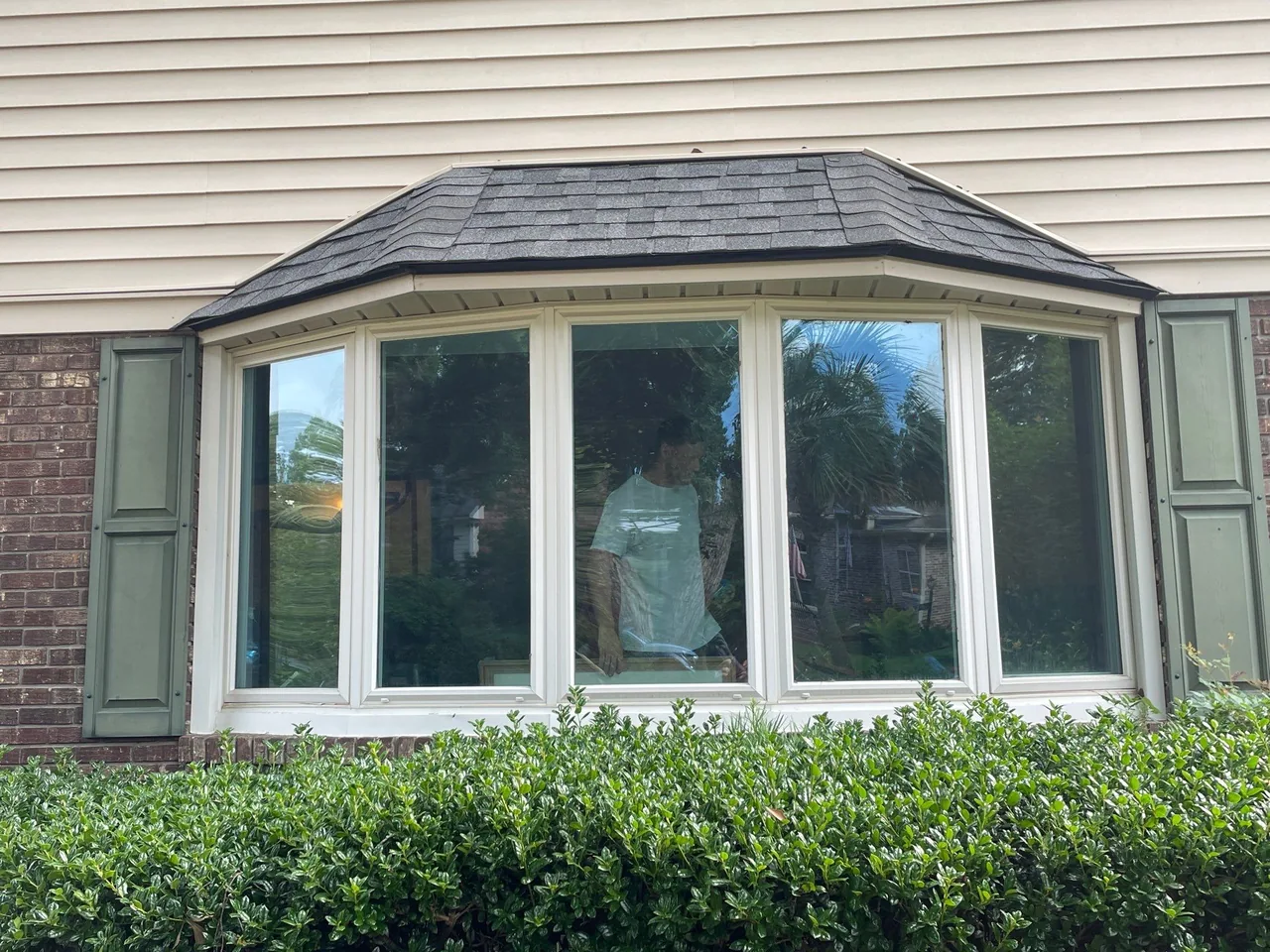
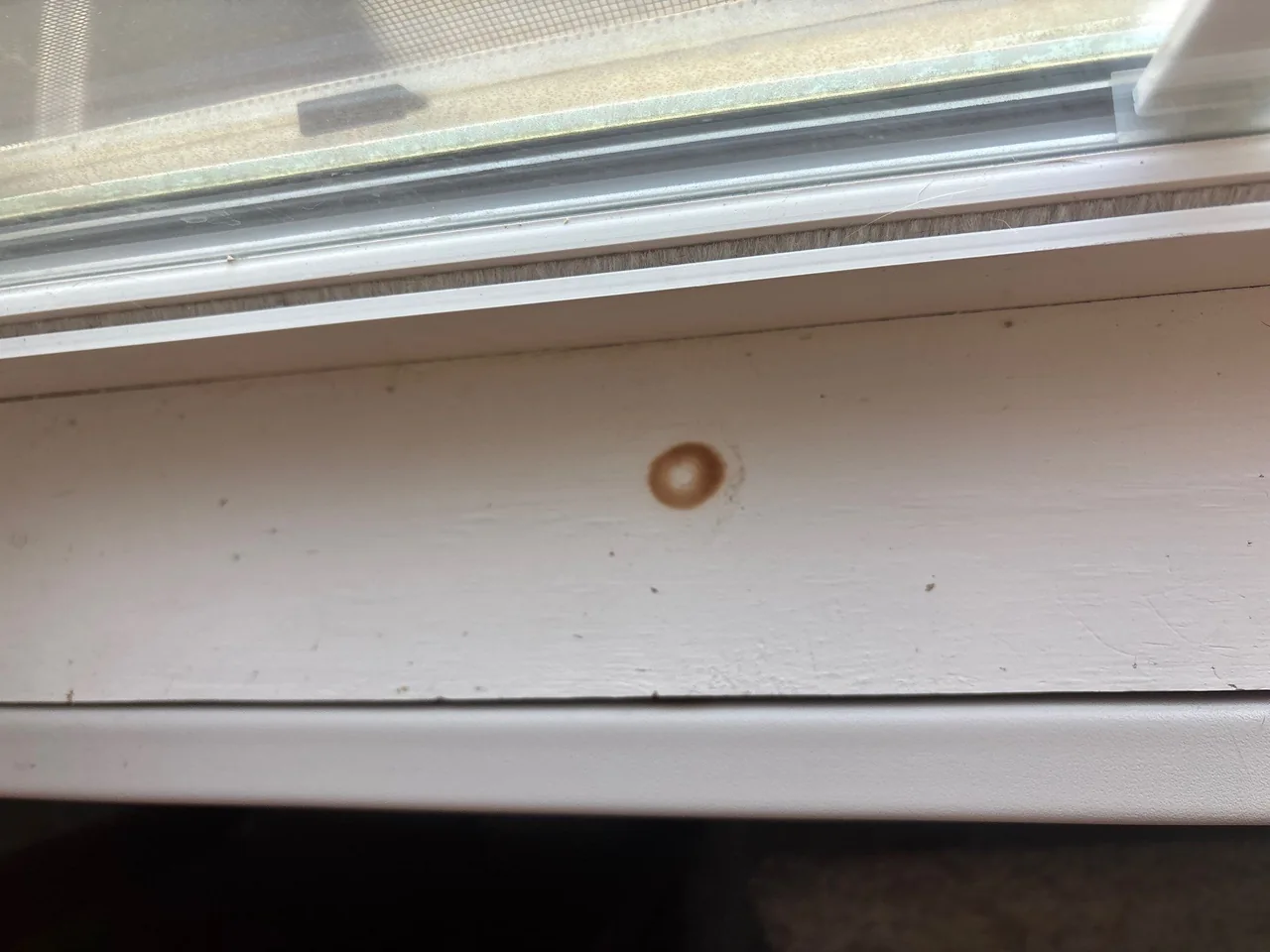
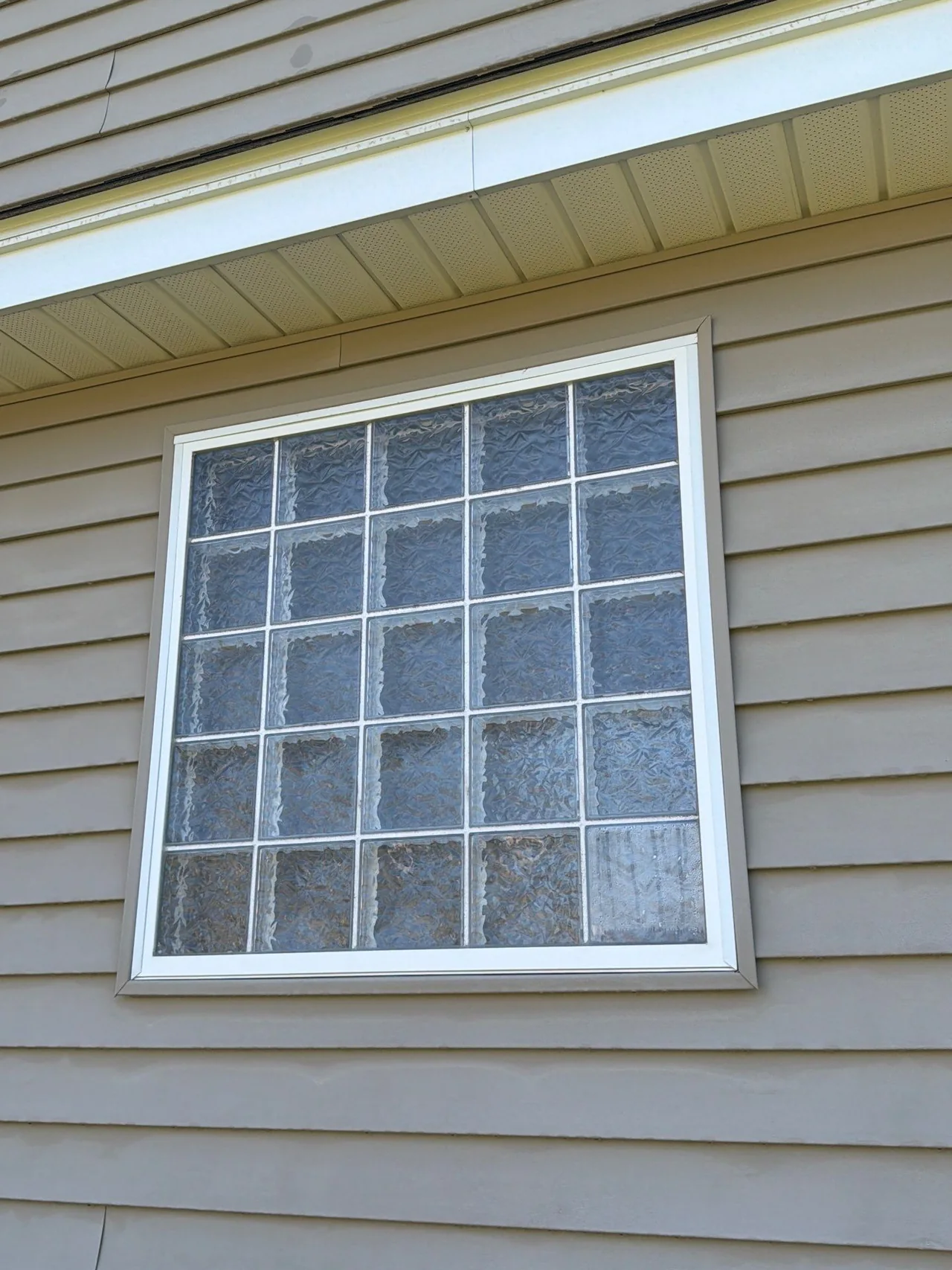
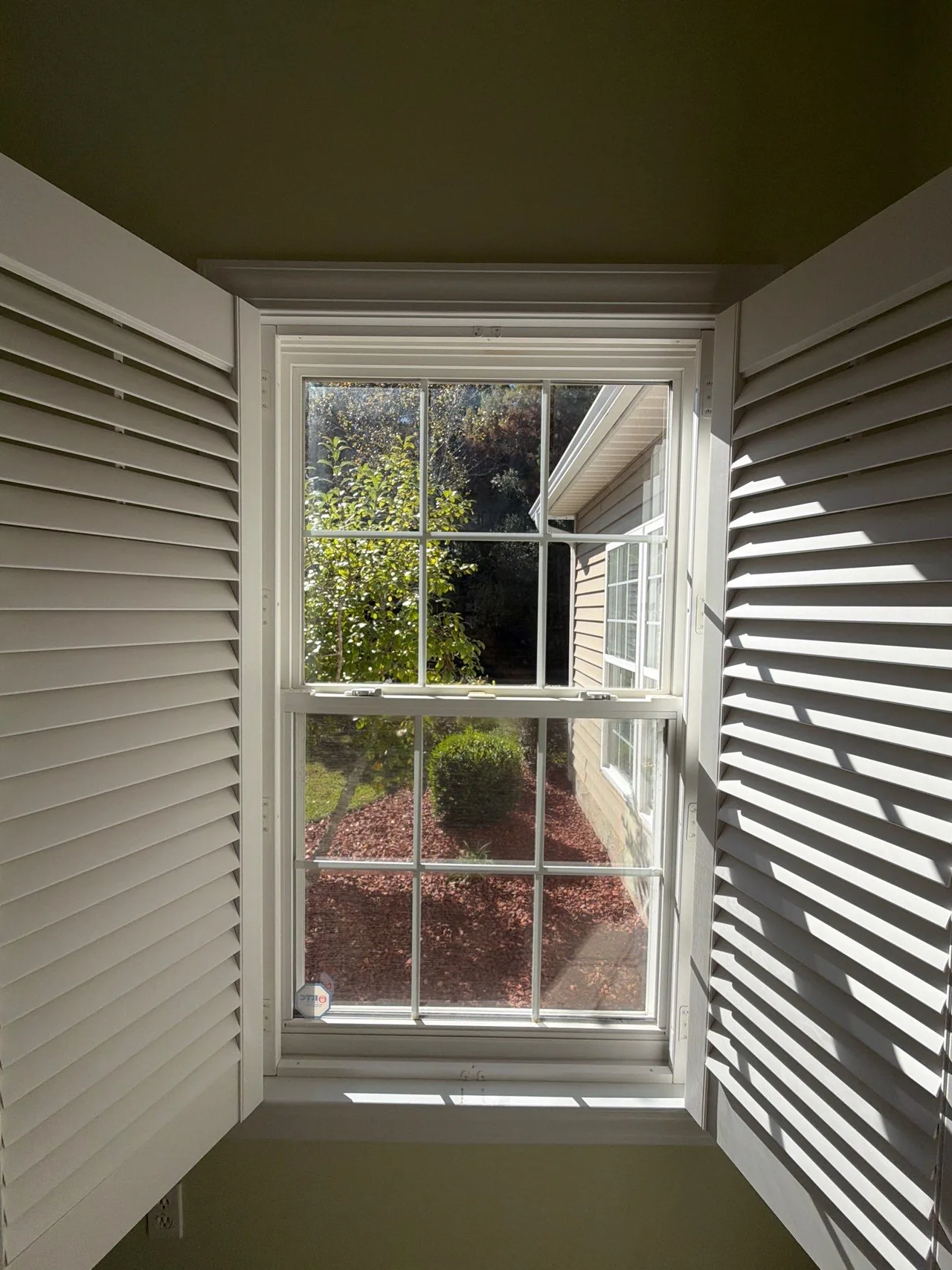
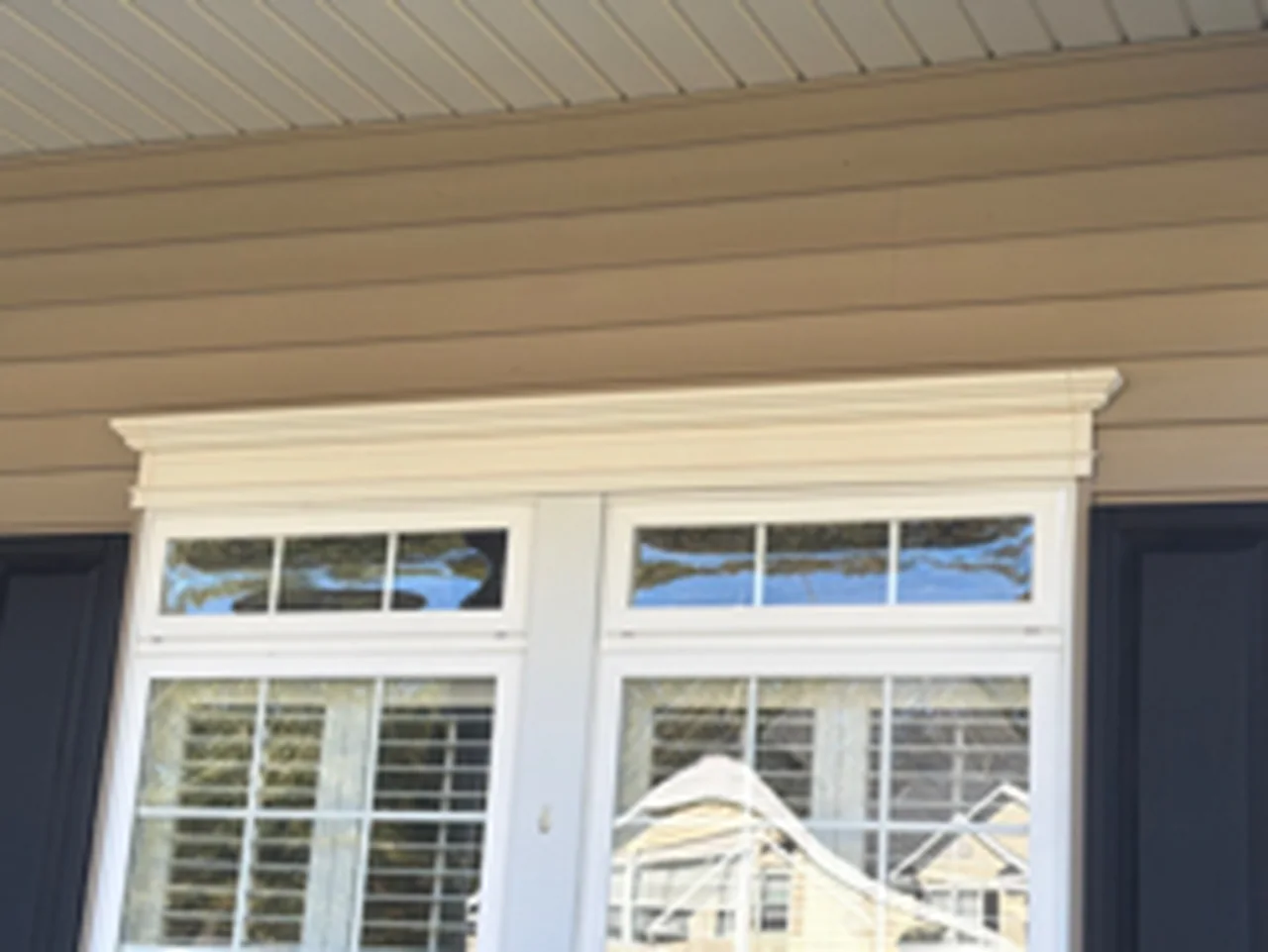
A Murrells Inlet homeowner contacted Contract Exteriors about replacing roughly 20 windows, describing the existing windows as about 20 years old. The photographs show existing exterior and sheltered windows, including a pair beneath a covered area. This is a planning example, with no completed replacement or final product selection being presented.
That initial count is useful for starting a conversation. It isn't an opening schedule. A group of windows can look like one feature from the sofa while containing several units that need to be specified. Ask the person preparing the proposal how each opening is counted, and make sure every proposal uses the same convention. Otherwise, even a simple price-per-window comparison can be misleading.
Walk through the rooms with a rough list and let the contractor confirm it. Mark the location of each included opening in words you both recognize: kitchen sink, front bedroom, living-room left. You don't need to supply order dimensions. You do need a reliable way to notice when one proposal includes an opening that another leaves out, or when a proposed change hasn't reached the written list.
Name the product before judging the upgrade
A manufacturer name is a useful introduction, but it doesn't describe every choice in that manufacturer's range. Ask for the series, operating style, frame colors, glass package and screen arrangement proposed for each opening. If an alternative costs more, ask what changes in that particular configuration. An upgrade should have a purpose you can explain in terms of your home and daily use.
For example, you might prefer an operating window in one room and a fixed view in another. That is a design conversation before it becomes a price comparison. Don't assume the least expensive arrangement is unsuitable, or that the most expensive one will make the room more enjoyable. Our guide to mixing window styles explains how those choices can work together across a whole-home project.
Ask for an identified alternative rather than a vague premium allowance. If you decide against the option, you should know exactly which feature returns to the base specification. This makes the decision easier to revisit and reduces the chance that a remembered showroom conversation becomes different from the product described in the order. Keep approved changes attached to the same opening list.
YOUR HOME. OUR EXPERIENCE.
Planning a whole-home window replacement?
Talk with Contract Exteriors about your rooms, window options and the work around each opening. Start with a free estimate.
Book Your Free EstimateOur team will call to discuss your project and confirm appointment details.
Separate energy performance from the price tag
ENERGY STAR's buying guidance advises asking for the exact U-factor and solar heat gain coefficient, or SHGC, of the windows under consideration. U-factor describes heat transfer; SHGC describes solar heat admitted. Compare the documented configuration, rather than assuming a higher-priced window automatically has better energy performance. Ask the contractor to explain the numbers in ordinary language.
Bring the room experience into that discussion. A glare problem, an uncomfortable seat near glass and a window that won't open are different concerns. Tell the contractor which one you're trying to address, then ask why the proposed specification fits. Don't accept a promise of a particular bill reduction without an appropriate assessment of your existing house and the proposed change.
A whole-home quote can include choices for different rooms without requiring a different appearance on every wall. The useful question is which differences matter and why. Ask whether an alternative changes the view, visible tint or other qualities you care about, and compare actual samples where available. Energy labels help compare products; they don't replace the rest of the buying decision.
Sources: ENERGY STAR: High Performing Windows or Storm Windows
Find out what the installation price includes
Ask the contractor to describe the proposed replacement approach and what stays in place. Then ask which removal, preparation, installation and finish work is included. You aren't asking for a set of instructions to carry out yourself. You're asking for the boundary of the work you're buying, especially where the new window meets parts of the house that will remain.
A useful proposal also addresses responsibility for blinds, shutters, furniture access, debris removal and any painting or staining that may be needed. These items should be discussed as they apply to your house; they aren't universal extras on every job. Our interior-trim guide explores one common source of confusion. A clean handoff matters when a window order affects more than the glass you first noticed.
If one contractor includes a finish task and another expects you to arrange it, record that difference before comparing totals. You can ask for a revised scope or price for the missing work. Leaving it unresolved can make the less expensive proposal harder to budget, even when the window product itself is suitable. The objective is a clear responsibility, whether the contractor or another agreed professional handles it.
Make uncertainty visible before the old windows come out
Some conditions may need further assessment once existing materials are removed. Ask how additional work would be documented, priced and approved. A sensible conversation starts before installation day: who contacts you, what explanation you receive and who is allowed to authorize a change. You shouldn't need to make a hurried decision without understanding what is being proposed.
Read exclusions with the same care as the included work. An exclusion isn't automatically unreasonable; it tells you where a responsibility sits. The problem is an important responsibility that nobody has discussed. If a proposal contains an allowance, ask what it covers and how an unused or exceeded allowance will be handled under that agreement. Avoid treating a placeholder as a final known cost.
In the Murrells Inlet example, the reported age of the windows doesn't establish hidden damage, a required installation method or the cause of any room discomfort. Your own quote should follow the same principle. Start with what has actually been assessed, identify what remains uncertain and agree on the next decision. Neither a photograph nor an age estimate is a substitute for examining the particular opening.
YOUR HOME. OUR EXPERIENCE.
Ready to compare your whole-home window options?
Bring your questions about styles, glass, finishes and installation scope to Contract Exteriors. Get help planning the next step for your home.
Book Your Free EstimateOur team will call to discuss your project and confirm appointment details.
Compare the handoff as carefully as the product
Ask about the product warranty and the installation warranty separately. ENERGY STAR's guidance highlights that their coverage periods and responsibilities may differ. Read the actual terms for the proposed product and work, including who receives a later concern. A broad lifetime label doesn't answer every question about service, exclusions or a future change in ownership.
Also ask what the schedule refers to: product ordering, a projected installation window or completion of all agreed finishing. If you need to arrange time away from work, identify when the date becomes sufficiently confirmed for those plans. A promising delivery estimate shouldn't become a guaranteed installation date simply because that would make your calendar easier to organize.
When the work is ready for review, use the opening list again. Compare the delivered scope with what you agreed to, ask how any remaining items will be resolved and retain the relevant product and care information. Clear documentation isn't just something to collect before signing; it is the reference that helps both parties recognize when the project has reached its agreed finish.
Sources: ENERGY STAR: High Performing Windows or Storm Windows
Choose the differences you actually want to pay for
Return to the competing totals only after the main differences are visible. If the opening count, product specification and work responsibilities are aligned, you can make a more informed decision about price and service. If they remain different, name those differences rather than forcing them into a single price-per-window figure. You may reasonably prefer either proposal once the choices are clear.
Use your priorities to sort optional upgrades. Perhaps consistent exterior color matters more than changing every operating style, or easier use matters more than an ornamental detail. Those are personal choices, not a reason to assume every household needs the same package. Ask for the cost of a clearly described alternative and consider what it would add to your ordinary routine.
Before requesting a whole-home consultation with Contract Exteriors, use Build your project to organize your concerns and preferences. Bring any proposals you want help understanding, along with the rooms and openings that matter most. A useful comparison ends with a defined project, an understandable price and responsibilities you can follow—not simply a winner in a contest between two unexplained totals.
How to line up two window quotes
Pick one room and line up the same opening on both quotes. If the information is missing, mark it as a question for the estimator.
- The window Record the room, opening, series, operation, glass package and screen on each quote. Ask for the exact configuration’s energy ratings when you’re comparing a glass upgrade.
- The work Mark what will be removed and what stays. Check which trim, paint, blinds and cleanup responsibilities are included for that opening.
- The exceptions Underline exclusions and allowances. Ask how additional work will be documented, priced and approved if something is uncovered.
- The handoff Put the product and workmanship terms side by side and confirm whom you should contact if an issue comes up.
Another Angle
Read the room as well as the unit
A window quote is also a description of how a house will be seen and inhabited. The purchase may be counted in units, but the finished result is experienced in relationships: one opening beside another, a frame against the wall, a view above a seat. Reading the proposal at both scales helps explain why the apparently straightforward instruction to replace the windows can lead to quite different choices.
The Murrells Inlet consultation includes grouped living-room windows as well as openings experienced from other settings. Those photographs suggest a useful distinction between the individual unit and the composition of the room. They do not establish a preferred replacement design. They show why the homeowner should understand whether a proposal retains the familiar arrangement or changes something that contributes to the room's character.
Consider a hypothetical group of three adjacent windows. Replacing each with the same operating style might preserve repetition; introducing a fixed central view could change the balance between frame divisions and open glass. Neither arrangement is inherently superior. The worthwhile question is whether that difference serves the way the room is used, and whether the proposed configuration has been assessed as suitable. A price comparison that leaves the arrangement unspecified cannot answer it.
Give retained finishes a place in the scope
The view from inside can be as important as the elevation seen from the street. Furniture determines which parts of an opening are encountered at seated eye level, while curtains and shutters introduce another layer around the frame. An apparently small change to the visible proportions may therefore be more noticeable in daily life than a premium feature selected from a sample. This is an editorial design consideration, not a measured finding at the featured house.
That perspective gives retained materials a proper place in the budget. Existing interior trim may already connect a window to the room's proportions and finishes. Changing it may be worthwhile, but it should be an intentional part of the proposal rather than a surprise delegated to someone after the windows arrive. The value of a finish decision lies partly in the coherence it preserves, not simply in whether the item is new.
Choose purposeful consistency
Consistency deserves the same careful reading. A house can have a unified exterior without every room requiring an identical operating window. Conversely, selecting a different feature for every opening can produce more variation than the architecture needs. The useful middle ground is a small, understandable set of decisions: which visual relationships remain consistent, where function justifies a difference and how that difference appears from both sides of the wall.
This is why the strongest quote is not necessarily the one with the longest upgrade list. An orderly opening schedule, a clear account of the retained elements and a few purposeful alternatives may support a better decision than many loosely defined enhancements. Compare the visible result and everyday use alongside the specification and installation responsibilities. The contractor must resolve technical suitability; the homeowner can judge whether the proposed changes belong to the house they intend to live in. That makes the price intelligible as a design choice as well as a purchase.
A FEW MORE ANSWERS
Questions homeowners ask
Is price per window a fair way to compare quotes?
Only when the counted openings, product configurations and included work are comparable. Check the opening schedule and full scope before relying on an average.
Does a more expensive window always save more energy?
No. Compare the exact product's documented U-factor and SHGC, and ask how the specification relates to your needs. Price alone doesn't establish energy performance or household savings.
Should a quote list every opening?
Ask for an identifiable opening-by-opening list showing the proposed products and relevant choices. It makes omissions, alternatives and later changes easier to understand.
What if damage is discovered during replacement?
Agree beforehand on documentation, pricing and authorization for additional work. Ask who contacts you and what you will receive before you decide.
Are product and installation warranties the same?
They may cover different things and have different terms. Request both applicable documents and identify the service contact for each responsibility.
Can Contract Exteriors quote just one replacement window?
Contract Exteriors focuses on whole-home window replacement. Discuss your complete project with the team; an isolated repair or glass-only need may require a different provider.
Sources and review
Contract Exteriors project evidence: Internal project records and original CompanyCam photographs support the project examples described in this article. Customer records and identifying details remain private. Project examples are separate from the manufacturer guidance and other published references below.
Original Contract Exteriors consultation photographs privately matched to the recorded local request. Existing conditions illustrate a buying decision; no completed installation, selected product or measured outcome is implied.
- Contract Exteriors project evidence — Private approximately 20-window inquiry matched to original Murrells Inlet consultation photographs. The public link opens the company portfolio, not private customer records.
- ENERGY STAR: High Performing Windows or Storm Windows — Exact product ratings and separate product/installation warranty guidance. National price examples, expired incentive text and delivery estimates are not applied to this local inquiry.
Editorial review details
Reviewed for Contract Exteriors by Bill Schum, Marketing Director, Contract Exteriors, on November 17, 2026. Scope: Editorial oversight, source and project-record checks, photo-originality review, and mobile/desktop presentation checks. Research and editing were supported by AI tools. Design commentary reflects an editorial perspective and does not constitute professional architectural or engineering advice or a property-specific site assessment.
Our sourcing and corrections standards · Report a correction