
What to Check After Rotted Siding Comes Off
Quick answer
When rotted siding comes off, the important finding is how far the damage extends and where water may be entering.
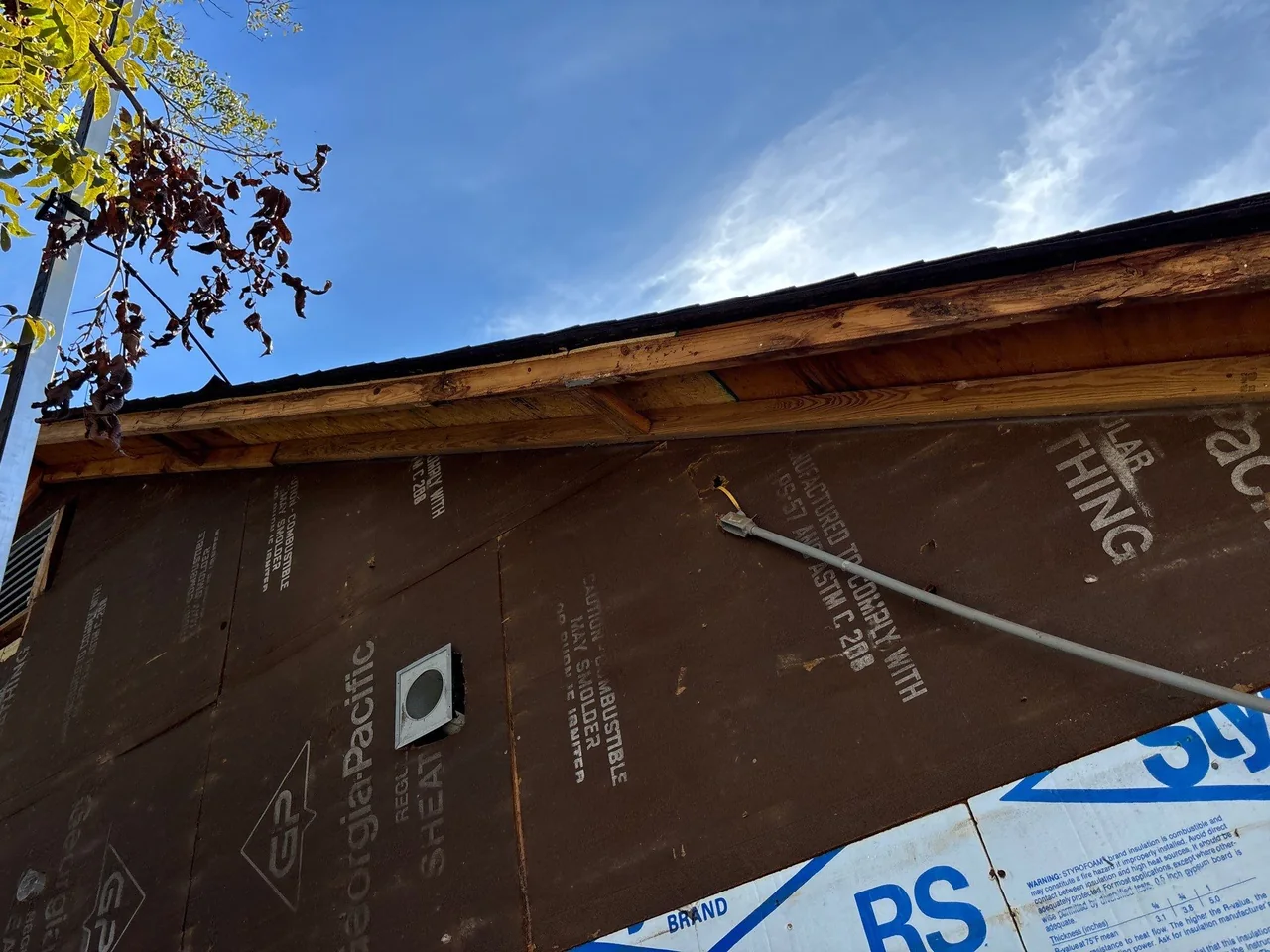
From the project. Recorded work. Cedar siding replaced with James Hardie fiber cement Photos. Exposed upper wall, weather barrier during work and finished siding Project sources
Project photos by Contract Exteriors Mount Pleasant, South Carolina
Read the full article TranscriptRelated videos
All videos

Related articles
All articlesVideo transcript
When rotted siding comes off, the important finding is how far the damage extends and where water may be entering.
The visible boards or panels are the cladding. Behind them, a typical wall has layers for water management and a substrate or sheathing. There may also be framing behind the sheathing. Your wall may have a different assembly or older work in certain sections. Ask the contractor to identify the actual layer in the photograph or walkthrough. That separates a limited cladding repair from an area that needs more investigation and helps you understand what any proposed repair actually replaces.
A photo of discolored material gives you a place to start asking questions. Ask what led the contractor to identify damage, how far the area has been inspected, and where sound material was found. In Mount Pleasant, the town's building permit guidance describes how permitting can depend on the work and inspection requirements.
Ask how the proposal handles conditions the crew cannot see until the siding comes off. Have the contractor explain how they will document a scope change before asking you to approve it.
Ask for a walkthrough before the wall is covered and a written description of the repair and water-management details.

YOUR HOME. YOUR NEXT CHAPTER.
Bring your plans
to life.
Fresh siding. A deck made for gathering. A home that feels more like you. Talk through your ideas with a Contract Exteriors expert and find the right next step for your home.
Speak to an ExpertContract Exteriors will call to discuss your project and confirm appointment details.