Another touch-up, or time for a closer look?
Project at a glance
- Local example
- Myrtle Beach, South Carolina
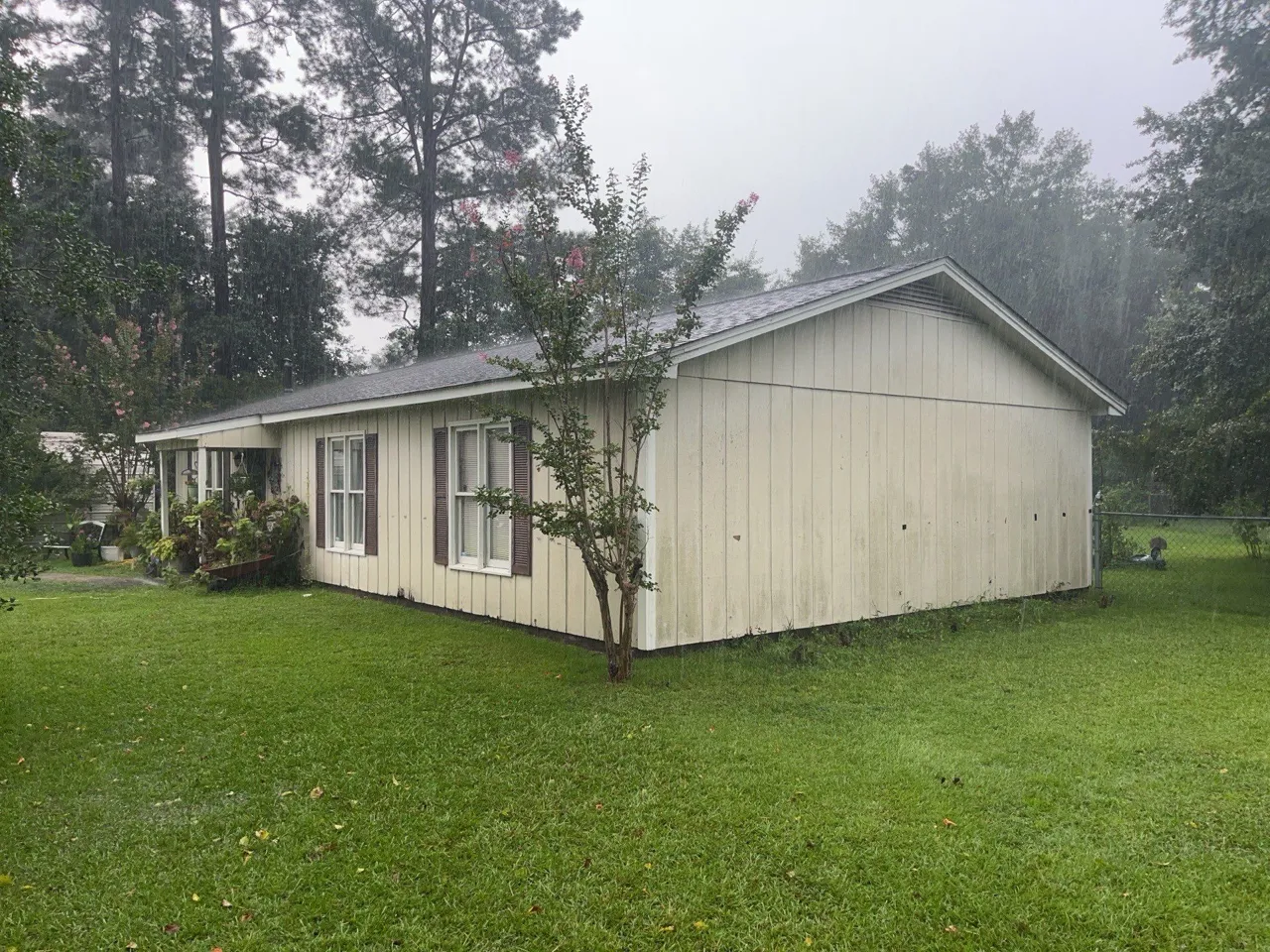
- Original exterior
- T-111 siding
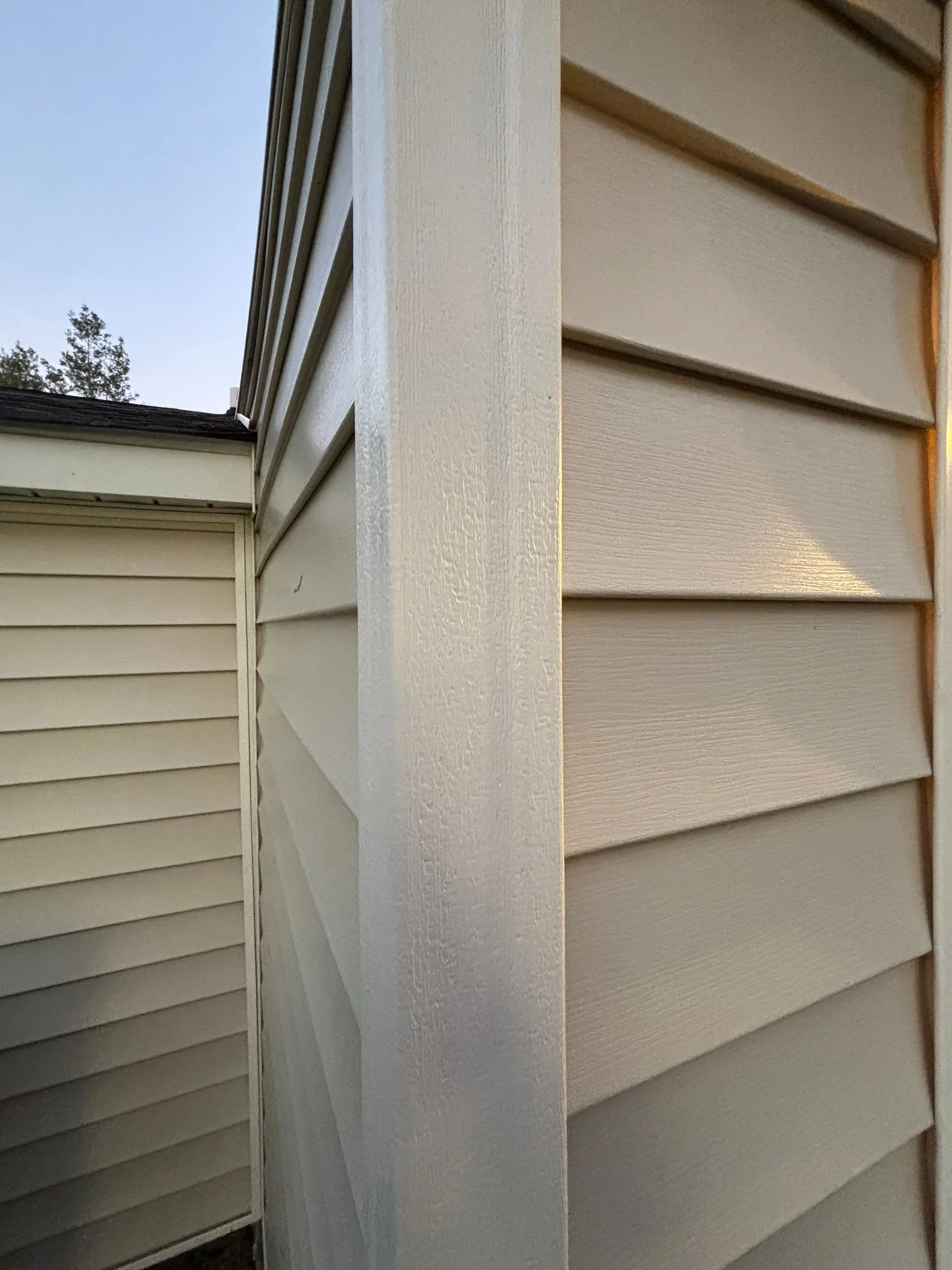
- Replacement
- Vinyl siding
- Recorded priority
- Less upkeep
That rough patch at the bottom of the wall is easy to put off. Maybe another coat of paint will tidy it up until spring. But if the same boards keep needing attention, it's worth asking what you're repairing before touching them up again.
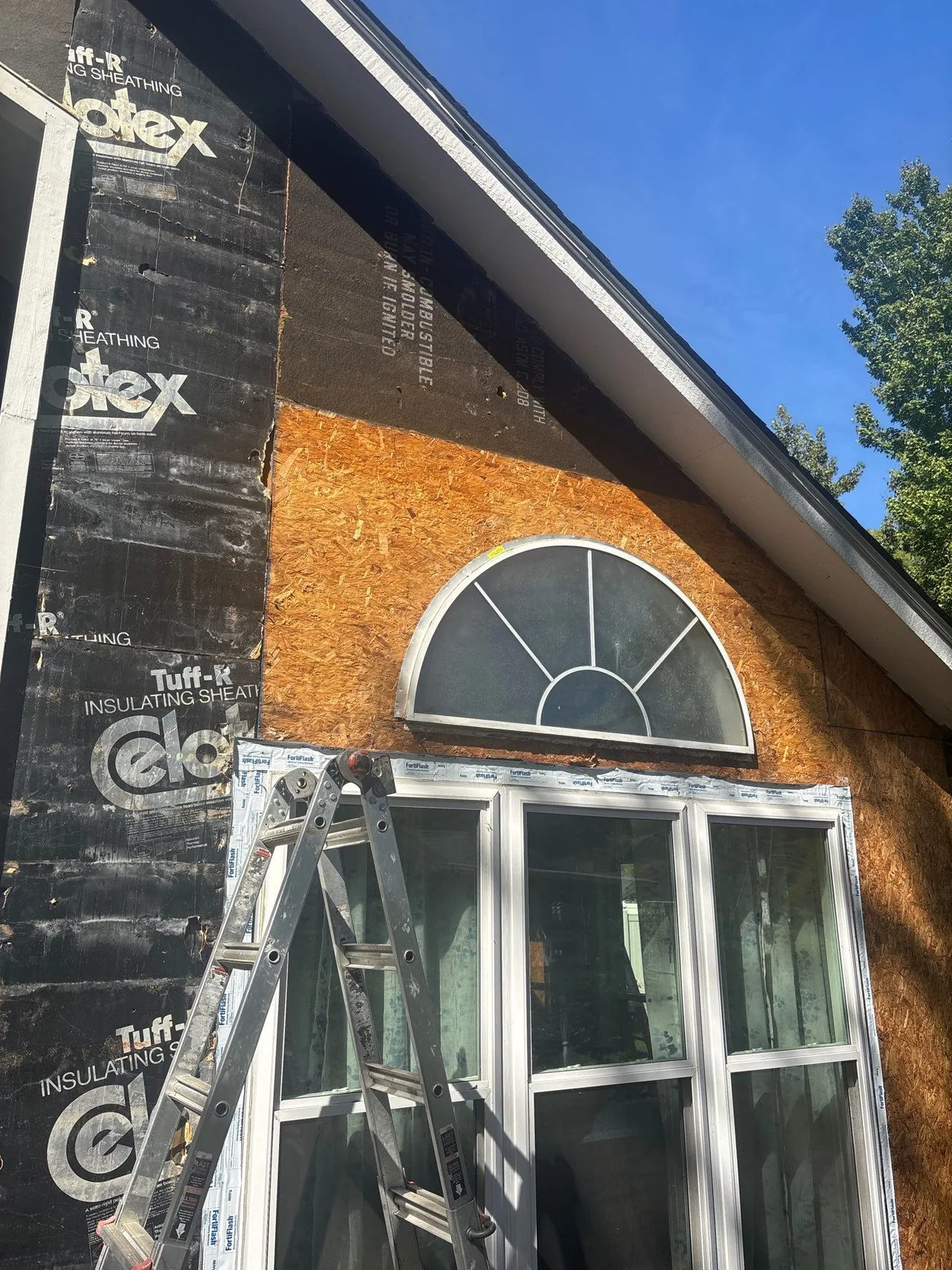
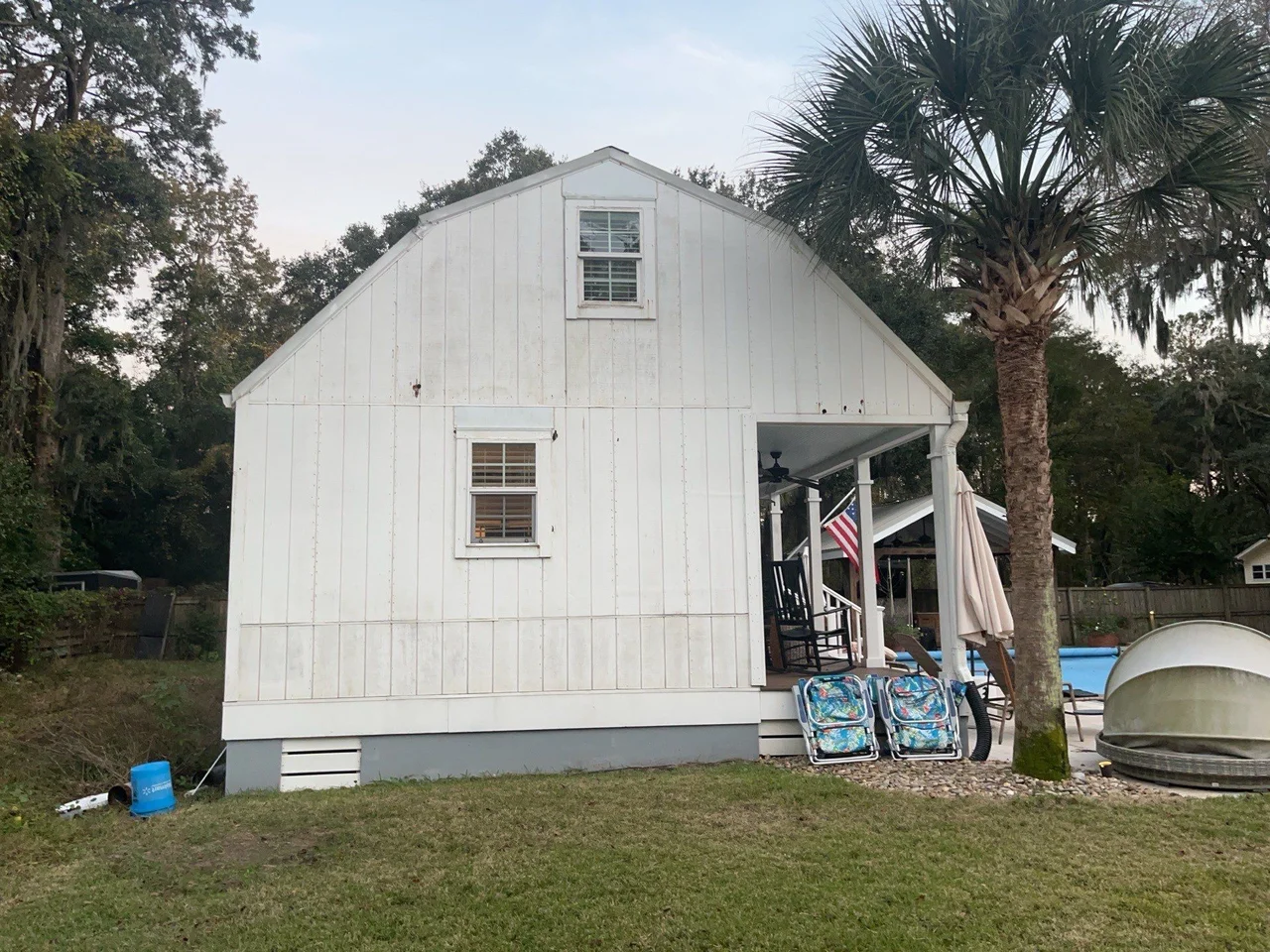
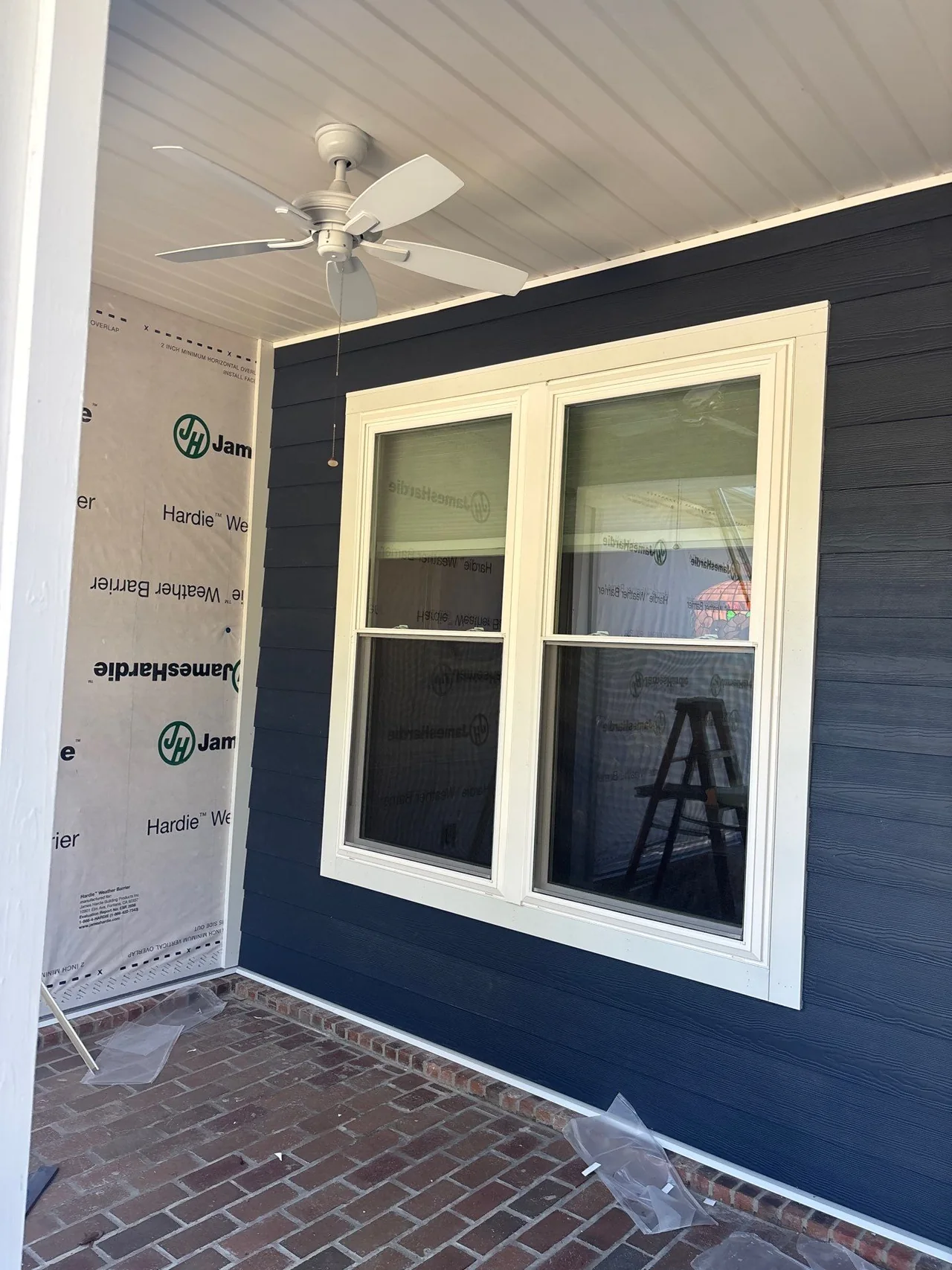
At one Myrtle Beach home, the owners reported deterioration near the bottom of their older T-111 siding. They also wanted less upkeep. Their replacement project used vinyl siding, bringing the condition of the old exterior and the care of the next one into the same conversation.
If that sounds familiar, begin there: what keeps coming back, and what would you like to stop doing? Take photographs safely from the ground and arrange an assessment. Leave pulling off boards or investigating behind them to the appropriate professional.
Less upkeep starts with understanding the old wall
Wanting less maintenance is a perfectly useful reason to compare materials. It doesn't answer every question about the wall underneath. In the Myrtle Beach project, the reported deterioration helps explain why replacement was being discussed; the records don't identify its cause.
For your home, ask the contractor to explain the existing condition before narrowing the siding choices. Which areas need work? Can any siding stay? What would a repair address, and what would replacement include?
Our cedar repair-or-replacement example follows another homeowner's version of that choice. The materials are different, but the starting point is useful: understand the work your walls need, then decide what you want to live with.
YOUR HOME. OUR EXPERIENCE.
Thinking about new siding for your home?
Talk with Contract Exteriors about siding options, trim and the work your exterior needs. Start with a free estimate.
Book Your Free EstimateOur team will call to discuss your project and confirm appointment details.
Tell the contractor what keeps coming back
A stain that returns after cleaning or painting is worth mentioning early. EPA's moisture guidance centers on fixing the water problem, rather than relying on cleanup alone. A mark on a wall can't tell you the whole cause, but its timing can help the assessment.
Does it appear after rain? Have you noticed wetness indoors? Has the area been patched before? Share those details, including anything that has changed outside the wall. They're more useful than trying to name a concealed defect yourself.
Don't assume cooler weather will give the wall a dry season. South Carolina's climate overview describes rainfall throughout the year. And resist the temptation to seal every opening: the contractor needs to identify the right treatment for the actual siding and wall system.
Sources: EPA: A Brief Guide to Mold, Moisture and Your Home · South Carolina State Climatology Office: Climate of South Carolina
Know which work the price includes
Once the contractor has explained the condition, ask them to show you the proposed work on the house. Which walls are included? What gets removed? What happens around windows, corners and trim? You should be able to picture the finish before comparing totals.
Talk about surprises, too. If removal reveals more work, how will you see the finding, understand the price and approve a change? Knowing that process now makes an uncertain part of the job easier to discuss.
Use our siding-and-trim quote guide to check the finishing details. If windows are also part of your plans, bring them into the conversation so the work around each opening is clear.
Make the next step manageable
Winter preparation doesn't have to mean committing to a whole new exterior. It can begin with getting a recurring concern explained and deciding what to do next. Ask the contractor which weather conditions the selected materials and finishes need for the proposed work.
Then use our siding resources to compare the options that fit. Bring the history of that troublesome area to Contract Exteriors along with your preferred look. You'll have a much better starting point than choosing a new color and hoping it answers every question about the wall.
Another Angle
Give each retained edge a deliberate role
Damage low on a wall directs attention downward, toward the place where materials meet the ground, a porch or another finish. Once work becomes necessary, the discussion can quickly expand to the entire exterior. Our editorial perspective is to slow that expansion long enough to understand the building's existing composition. Which materials establish its character? Which edges organize the elevation? A repair or replacement should have a clear relationship to those retained elements, even when the practical trigger is deterioration.
Imagine a modest house with a brick base, simple lap siding and a sheltered entry. These elements already form a hierarchy: a lower band, the main wall and a point of arrival. Introducing a new horizontal break simply to match the height of a patch may make the repair more conspicuous than the original concern. That does not mean extensive replacement is automatically justified. It means the proposed boundary deserves to be drawn and considered before the material order makes it difficult to change.
A small patch can have a large visual footprint
A corner, a projecting wall or the edge of a porch can give a phase a legible stopping point. A line floating across an otherwise continuous wall may be harder to resolve visually. This is a composition judgment, not an instruction for constructing a joint. The contractor still needs to determine the appropriate technical detail for the selected system. The homeowner's useful contribution is to ask how the finished boundary will read from the approach to the house and from the places used every day.
Trim can be equally consequential. Its width and projection affect whether a window appears settled into the wall or applied to its surface. Retaining existing trim may preserve familiar proportions and limit disruption; replacing it may allow a more unified finish but enlarge the scope. Neither choice is merely an accessory to the siding purchase. Our trim-quote guide helps make the responsibility explicit. A clear proposal should let the homeowner understand the intended finished relationship, including what will remain visible after the main cladding work is complete.
Make a first phase look resolved
Phasing becomes more convincing when the first stage can stand on its own. In a hypothetical two-stage project, completing one coherent elevation may be visually calmer than scattering new material around several isolated spots. The alternative may still be appropriate when condition, access or budget dictates it. What matters is that the compromise is chosen knowingly. Do not let a temporary arrangement quietly become the final appearance because the second phase had no defined extent or practical trigger.
The deeper design question is how much of the house needs to change to make the necessary work feel resolved. Preserving a sound, valued feature can be a positive decision rather than a reluctant concession. Changing a troublesome edge can also be worthwhile when its consequences are understood. Start with the assessment of the actual wall, then ask for a simple view of the proposed material boundaries, retained finishes and phase sequence. This keeps winter preparation connected to a coherent exterior without turning every maintenance concern into a full redesign or treating visual continuity as evidence that the underlying condition has been corrected.
A FEW MORE ANSWERS
Questions homeowners ask
Does damaged siding near the ground prove there is rot behind the wall?
No. Visible deterioration warrants assessment but does not establish all concealed conditions. Keep the observed damage separate from findings that require access or investigation.
Can repainting solve a damp spot that keeps returning?
Repainting does not establish that the source has been addressed. Record the recurrence and ask for an appropriate assessment before relying on another cosmetic fix.
Should every visible siding gap be caulked before winter?
No blanket rule fits every siding system. Have the actual joints and transitions checked against applicable requirements rather than sealing all openings indiscriminately.
Do I need to replace every elevation?
The appropriate extent depends on the assessment, retained materials and project goals. Ask for the reasoning and finish boundaries rather than assuming either a small patch or a whole-house replacement is always correct.
What should the quote say about concealed findings?
Ask how findings will be documented, what work is already included, and how additional scope and price will be approved before proceeding. The proposal should distinguish known work from unresolved conditions.
Does new siding guarantee that a moisture problem is fixed?
No. The visible material alone does not prove that an unidentified moisture source has been resolved. Ask what was found and which parts of the proposed work address it.
Sources and review
Contract Exteriors project evidence: Internal project records and original CompanyCam photographs support the project examples described in this article. Customer records and identifying details remain private. Project examples are separate from the manufacturer guidance and other published references below.
One Myrtle Beach siding project provides the recorded starting concern, maintenance priority and replacement selection. Photographs distinguish the earlier exterior from later siding details. No concealed cause, mold identification or measured moisture result is inferred.
- EPA: A Brief Guide to Mold, Moisture and Your Home — Moisture-source control and the limits of cleanup alone; read October 30, 2026. General principle, not a diagnosis of the pictured wall.
- South Carolina State Climatology Office: Climate of South Carolina — Year-round precipitation context; read October 30, 2026. No seasonal rainfall total, local forecast or property-specific exposure claimed.
Editorial review details
Reviewed for Contract Exteriors by Bill Schum, Marketing Director, Contract Exteriors, on October 30, 2026. Scope: Editorial oversight, cited-source and project-record checks, photo-originality review, and mobile/desktop presentation checks. Research and editing were supported by AI tools. Design commentary is an editorial perspective, not professional architectural or engineering advice or a property-specific assessment.
Our sourcing and corrections standards · Report a correction
Related planning resources
siding · vinyl siding · planning · myrtle beach · charleston