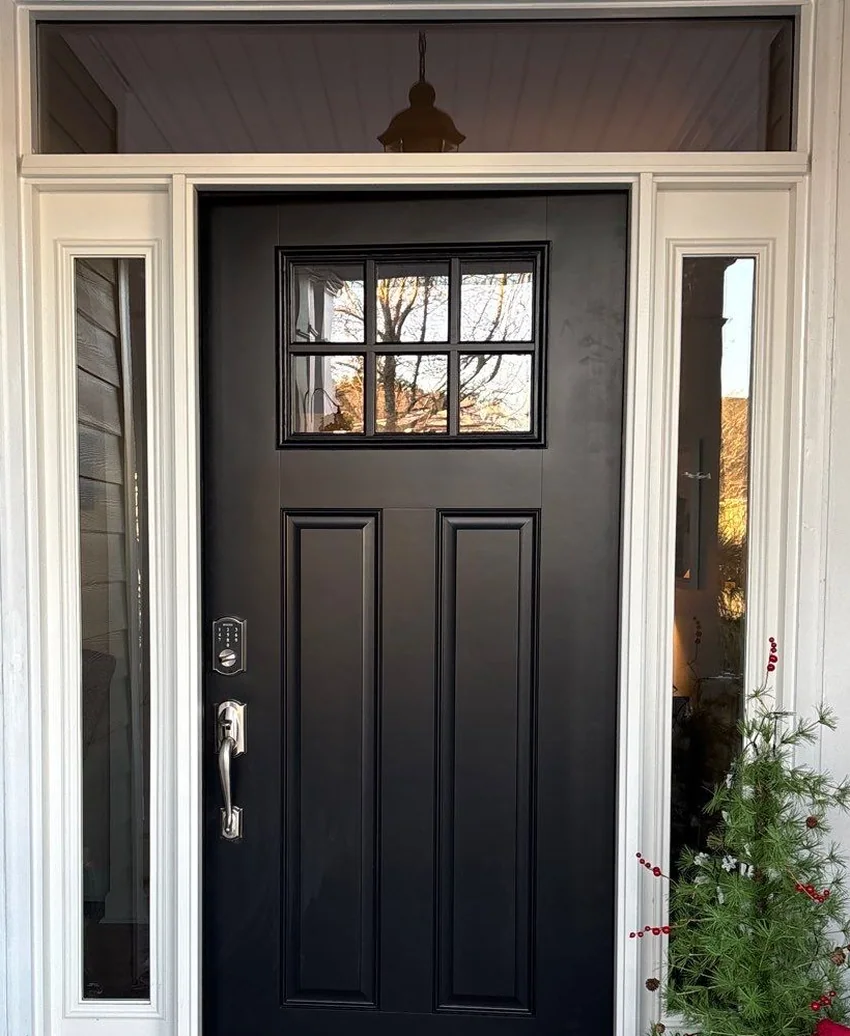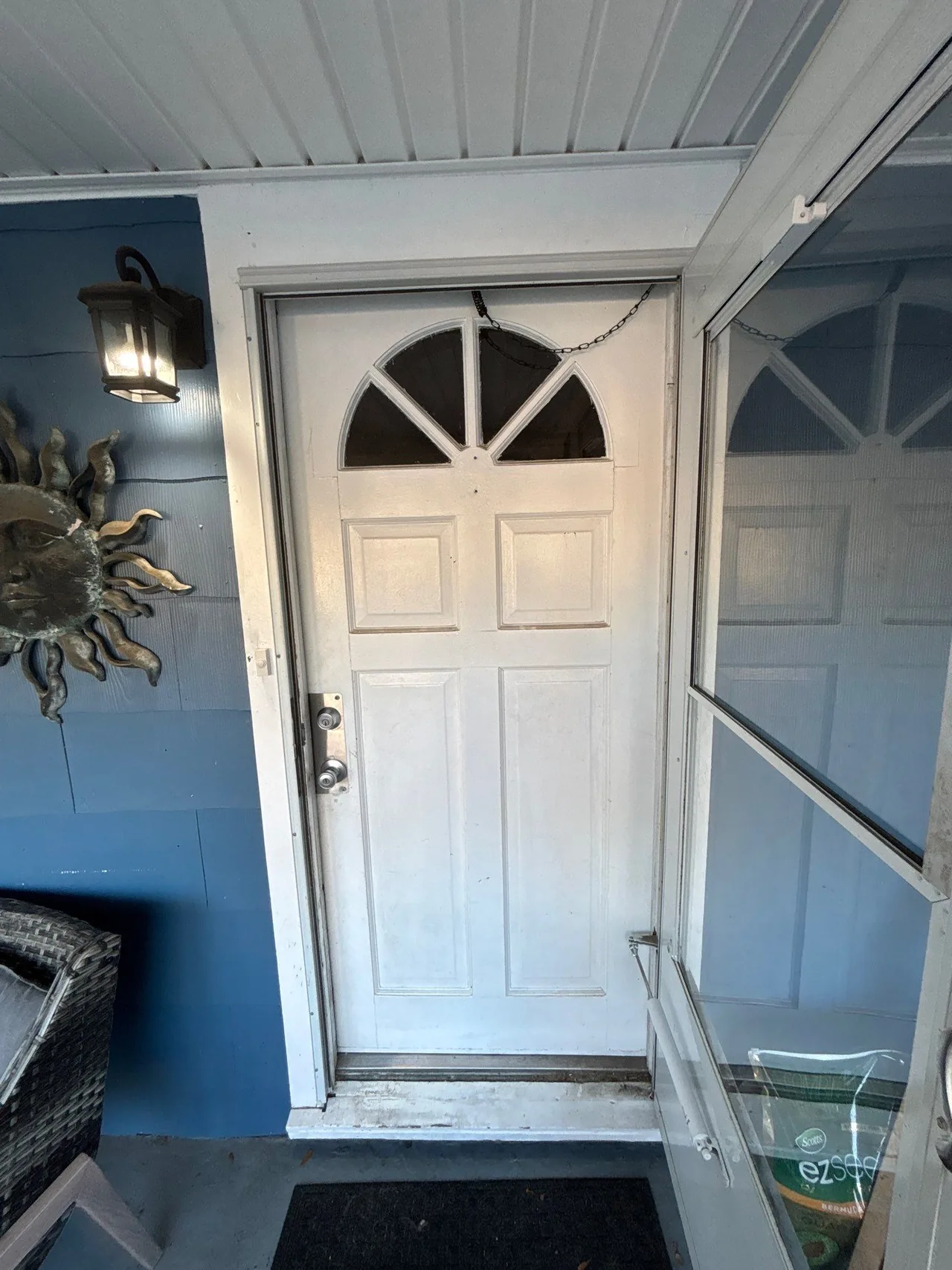
That cold spot is a starting point
Project at a glance
- Local example
- Johns Island, South Carolina
- Reported concern
- An upstairs balcony door did not seem properly sealed
- Recorded selection
- ProVia door
- Photo stages
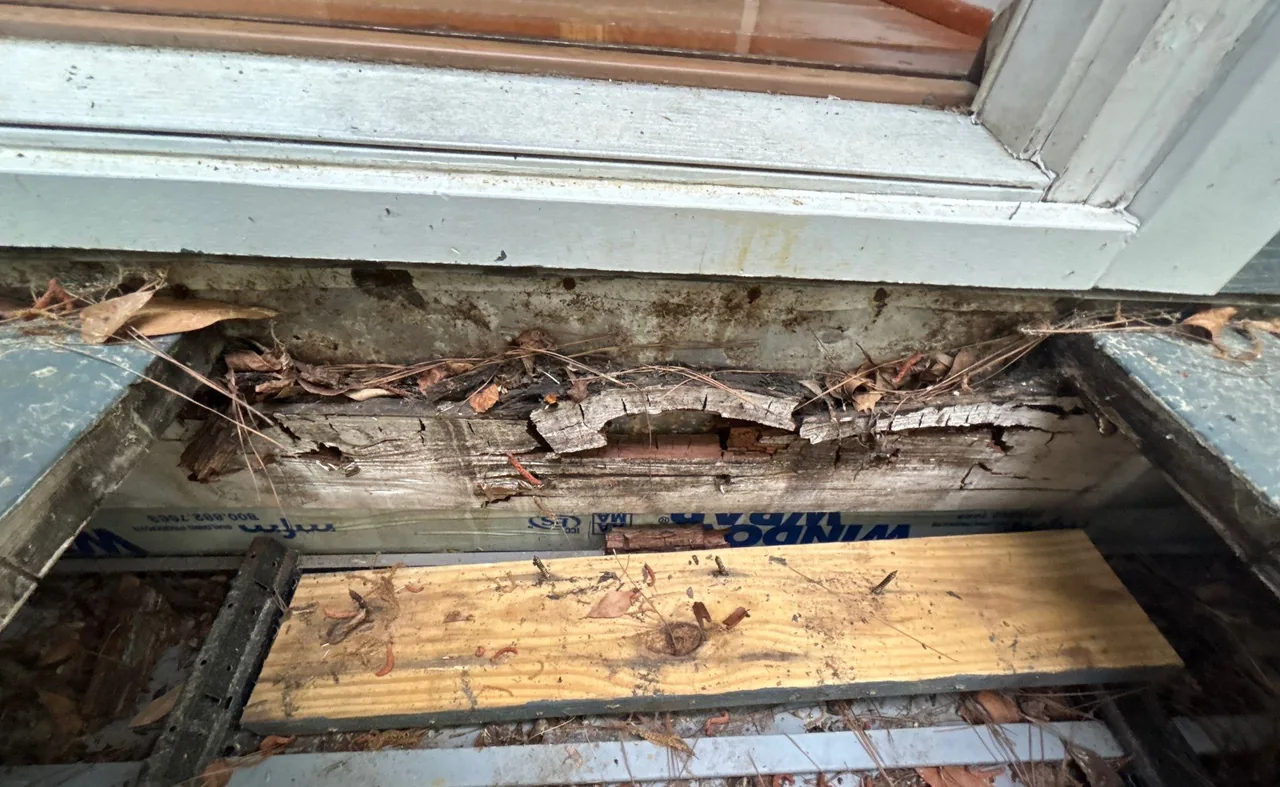
- Original door area and work at the opening
You walk past an exterior door on a cool Charleston-area evening and notice a chill. It's tempting to jump straight to a new door, especially if the old one has been bothering you for a while. First, give the contractor a better description of what you're noticing.
Is it near the bottom, the latch side or the trim? Does the door catch when you close it? Have you also seen water after rain? You don't need to diagnose it yourself. Those observations help separate questions that can otherwise get bundled into ‘the door leaks.’
A balcony door makes the opening part of the story
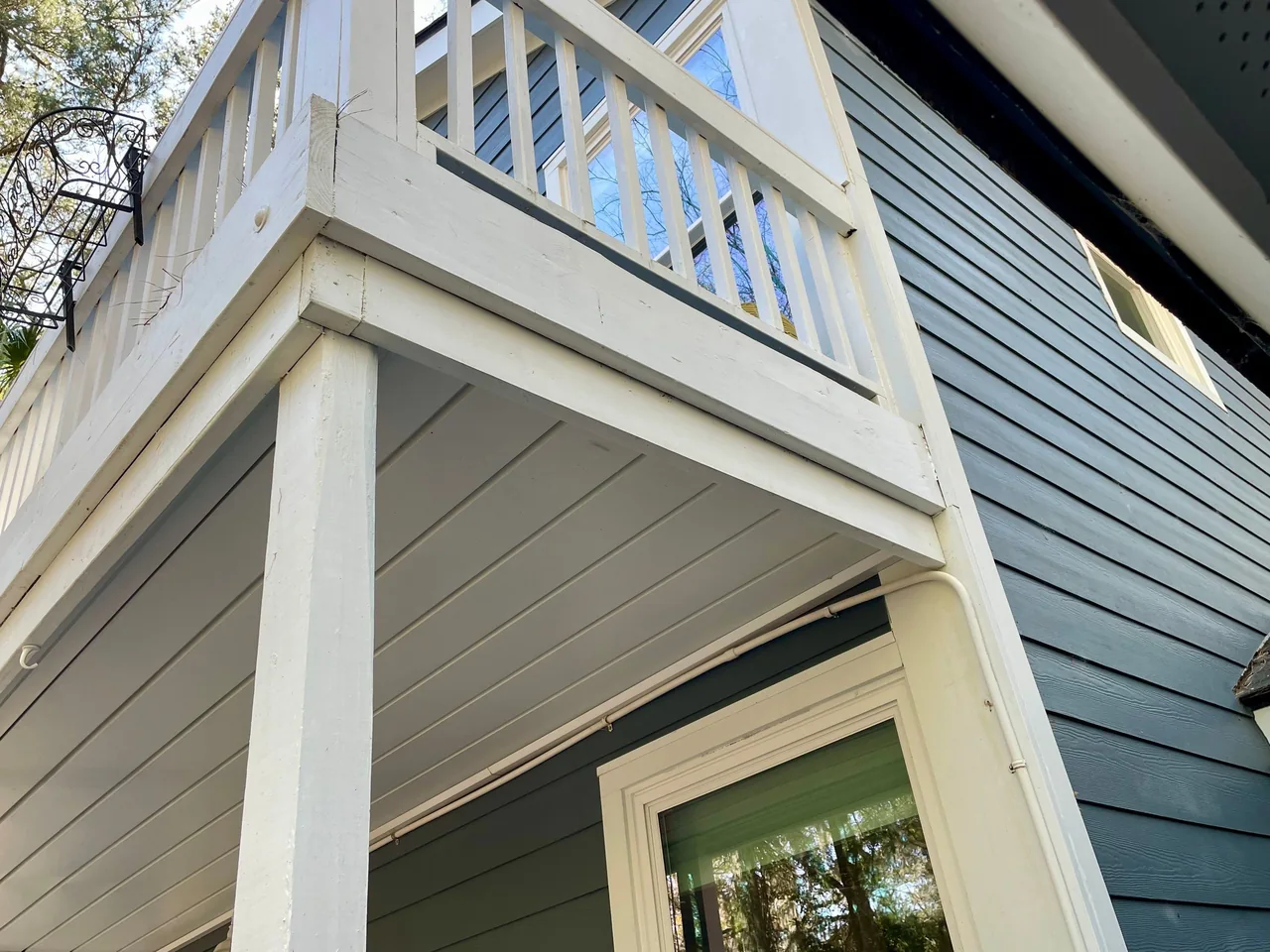
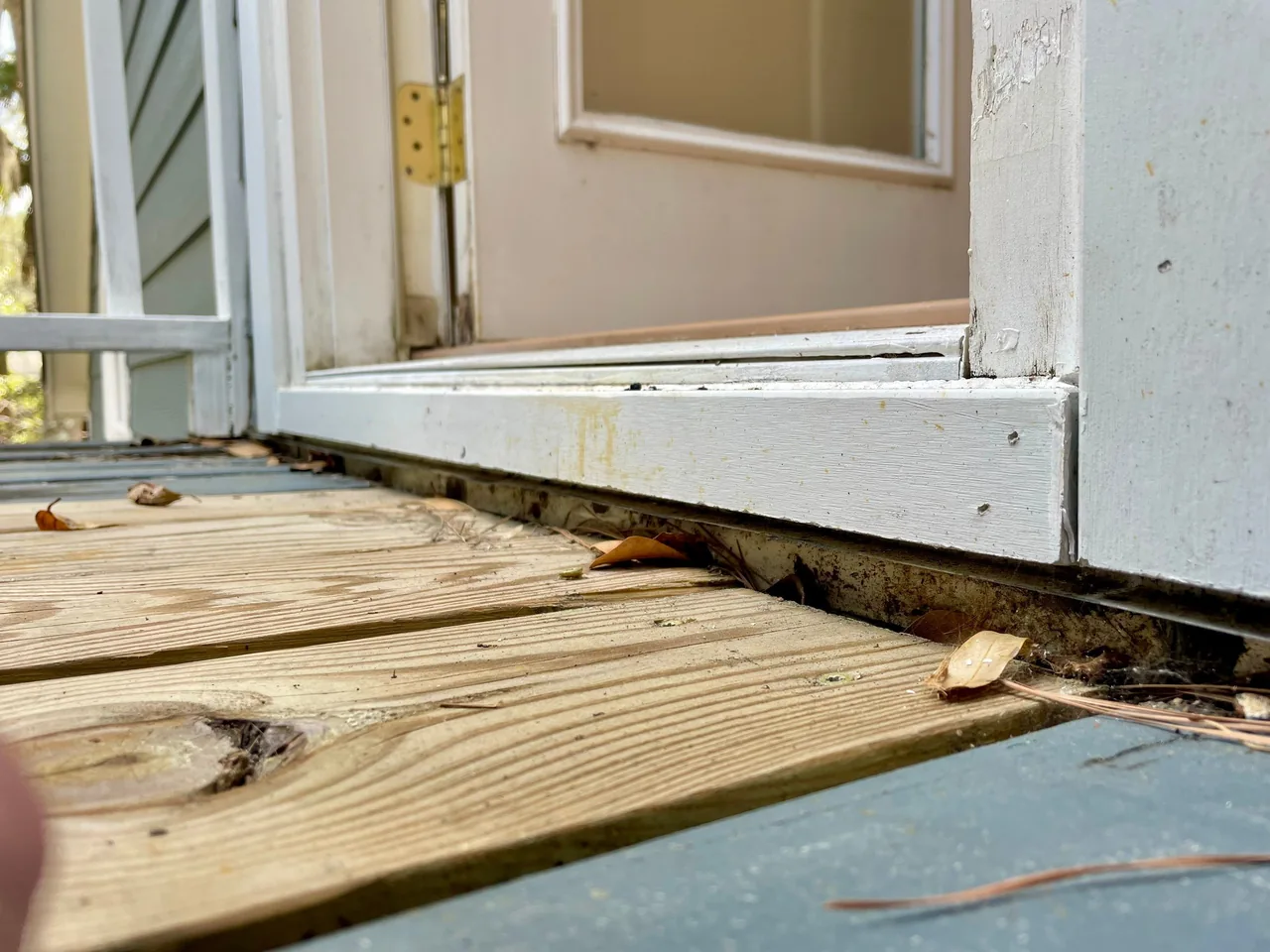
At a Johns Island home, the homeowner reported that an upstairs door leading to a balcony did not feel properly sealed and requested replacement. The recorded selection was ProVia. The doorway sits beside a narrow exterior landing, where the house and outdoor walking surface meet.
That setting is a useful reminder for your own project. Before choosing a style, talk through the whole doorway: the door and frame, surrounding trim, the bottom of the opening and the adjoining surface. Ask which parts the proposed work keeps, repairs or replaces.
Have the contractor connect the recommendation to what they find. A concern about sealing starts the conversation; it doesn't tell you on its own whether a new seal will be enough.
When a seal or adjustment may be the right conversation
The Department of Energy's exterior-door weatherstripping guidance treats the fit and operation of the door as part of the work. It identifies visible daylight and loose fit as possible signs of air leakage, and calls for smooth operation after the sealing work.
Ask whether the door and frame are in a condition that makes a compatible repair worthwhile. Have the contractor explain any proposed adjustment, replacement seal or sweep, and how the result will be checked. Adding a thicker strip without understanding the fit isn't a useful plan.
If the concern is at the stationary joint between the frame and wall, that is a different location from the seal the moving door closes against. Ask the assessor to show you which part needs attention. Keep rain entry on the list too; an air-sealing product isn't a diagnosis of a water problem.
Sources: U.S. Department of Energy: Install Weatherstripping on an Exterior Door
YOUR HOME. OUR EXPERIENCE.
Thinking about updating your entrance?
Talk with Contract Exteriors about your door, glass and the surrounding opening. Start with a free estimate for your project.
Book Your Free EstimateOur team will call to discuss your project and confirm appointment details.
When to compare a fuller replacement scope
Have a wider assessment when the door won't operate reliably, there is visible deterioration, or earlier repairs haven't settled the concern. Those are reasons to investigate, not proof that every part of the assembly must be replaced.
If replacement is recommended, ask why and what it includes. Does the scope cover the unit and frame, work at the opening, interior and exterior trim, hardware and painting? How will additional findings be shown to you and approved? Our door-quote guide can help you compare those boundaries.
For a glazed door, compare the ratings for the actual proposed configuration. ENERGY STAR's U-factor and air-leakage definitions describe different performance measures. A brand name or an appealing glass pattern does not substitute for that specification, and no household savings estimate follows from the Johns Island example.
Make the next visit useful
Take a photo of the entire door from inside and outside, then note where and when you notice the problem. Stay on a safe walking surface; don't remove trim or climb outside to collect evidence. If water is entering or the door cannot close and lock, arrange prompt professional assessment.
Bring those observations to Contract Exteriors and ask for the reason behind the proposed scope. If a repair is suitable, understand its limits. If replacement is the better recommendation, know what work connects the new door to the house. Our planning center gives you a place to collect those questions.
Cooler weather may be what brings the doorway to your attention. Let the actual condition decide what happens next.
Another Angle
The quieter door can be the better design
An exterior door is often selected as a statement, yet many of the most useful doors are secondary openings. They connect a bedroom to a balcony, a kitchen to the yard or a hall to a small landing. Our editorial view is that their design should be judged by how well they belong to both sides of that connection. Replacing a troublesome door is an opportunity to improve that relationship, but the opportunity does not require a more elaborate glass pattern, a wider opening or a conspicuous new color.
The Johns Island example places the doorway within a narrow exterior landing and an established pattern of siding, white trim and railings. That setting gives a future design discussion useful boundaries. The door is one element in a composition already present; the landing is also a place people must move through. The practical repair-or-replacement assessment comes first. If replacement is warranted, the design can then be evaluated for its effect on this retained setting rather than selected as an isolated catalog image.
Look at the door from the room as well as the landing
From inside, a door may be part of an otherwise quiet wall. Its glass, rails and hardware can draw attention even when no one is using it. A hypothetical replacement with a more strongly divided glass pattern might create a deliberate focal point, or it might compete with nearby windows and furnishings. Neither outcome is inherently better. Compare the proposed door with what will remain in the room, including the sightline from the place where the household spends time. That view often reveals more than a close-up of the new handle.
From outside, the frame and surrounding trim establish the edge of the opening. Preserving a restrained relationship with adjacent railings and siding may produce a more coherent result than adding ornament to mark the replacement. This is especially relevant when the project changes only one opening. The retained exterior continues to set the visual context. Ask for the proposed unit and finish to be shown within that context, with a truthful indication of which surrounding surfaces the work will disturb and which will remain.
Keep the threshold in the design conversation
The threshold is also a visual meeting point between the house and the exterior walking surface. A proposal may be clear about the door's finish while leaving that junction difficult to imagine. Request a simple explanation of the finished appearance at the bottom, sides and interior return. This does not mean prescribing a construction detail from an editorial drawing. It means asking the contractor to reconcile the chosen appearance with the assessed opening, necessary water management and the actual installation scope. The design should not depend on hiding an unresolved practical question beneath new trim.
Finally, decide what you want the room to notice after the work is finished. Perhaps it is the view through the glass, perhaps the doorway itself, or perhaps simply an opening that no longer interrupts the room's use. That choice gives finish and glass selections a clear purpose. Keep the functional assessment, actual product specification and relevant technical reviews distinct from this aesthetic judgment. When those pieces are resolved together, the strongest design may be a door that feels entirely at home in the existing composition, without needing to announce how much attention went into it.
A FEW MORE ANSWERS
Questions homeowners ask
Is a draft proof the door has failed?
No. It is a reason to assess the opening. Fit, seals, the door and frame, and surrounding joints can require different work; the feeling of cold alone doesn't establish which one is responsible.
Can weatherstripping help without replacing the door?
It may be an appropriate repair when it suits the door and the underlying condition. Have the fit and operation checked so the chosen seal works with the assembly and the door still closes properly.
What should I mention if the door also leaks when it rains?
Describe the location and timing of the water separately from the draft. Ask for the water-entry concern to be assessed before treating an air-seal repair as the complete solution.
Does a new door include new trim and painting?
Only when the proposal says so. Ask which interior and exterior finishes are retained or replaced, who paints them, and how work at the surrounding opening is handled.
Would adding a storm door answer the problem?
A storm door is a separate product and compatibility decision. Have the primary door and opening assessed first; an extra layer does not identify the cause of an existing draft or water concern.
Should I expect a specific heating-bill saving?
Not from this example. Actual energy use depends on the home and its systems. Compare documented product ratings and the assessed scope without treating a replacement as a guaranteed household saving.
Sources and review
Contract Exteriors project evidence: Internal project records and original CompanyCam photographs support the project examples described in this article. Customer records and identifying details remain private. Project examples are separate from the manufacturer guidance and other published references below.
One documented Johns Island balcony-door request supports the reported sealing concern and whole-opening planning lesson. Original and work-stage photographs remain distinct; no diagnosed cause, measured leakage or household saving is inferred.
- U.S. Department of Energy: Install Weatherstripping on an Exterior Door — June 2024 job aid, read November 1, 2026. Bounded fit, weatherstripping and operation guidance; no DIY installation prescription or diagnosis transferred to the pictured door.
- ENERGY STAR: Energy Performance Ratings — Read November 1, 2026. Product rating definitions; no measured performance or energy savings assigned to the project.
Editorial review details
Reviewed for Contract Exteriors by Bill Schum, Marketing Director, Contract Exteriors, on November 1, 2026. Scope: Editorial oversight, cited-source and project-record checks, photo-originality review, and mobile/desktop presentation checks. Research and editing were supported by AI tools. Design commentary is an editorial perspective, not professional architectural or engineering advice or a property-specific assessment.
Our sourcing and corrections standards · Report a correction
Related planning resources
doors · planning · charleston