Why a door price and a project price are different
Project at a glance
- Location
- Conway, South Carolina
- Documented concern
- Older front door reported as not locking correctly
- Starting point
- Existing single entry door, surrounding trim and storm door
- Stage
- Replacement inquiry; existing-condition photographs
You find a front door you like, see a price beside it and think you have a reasonable idea of the project budget. Then an installed replacement proposal comes back with a much bigger number. Before deciding it's too much, find out what each figure actually includes. One may be a product price; the other may cover a complete opening and the work needed to finish it.
For homeowners in Conway and the Grand Strand, that distinction is the place to start. A front entry is a working part of the house, with a frame, threshold, hinges, lock, seals and surrounding finishes. Replacing it can involve more than removing one panel and hanging another in its place. The important question is which of those parts your proposed project includes.
This guide explains the cost drivers so you can ask better questions; it doesn't establish an installed local price range. Private customer amounts aren't used as public benchmarks. Our entry-door planning hub covers the broader choices. Here, the goal is to understand what you're paying for and where a cheaper-looking total may describe a different job.
A Conway entry puts function ahead of decoration
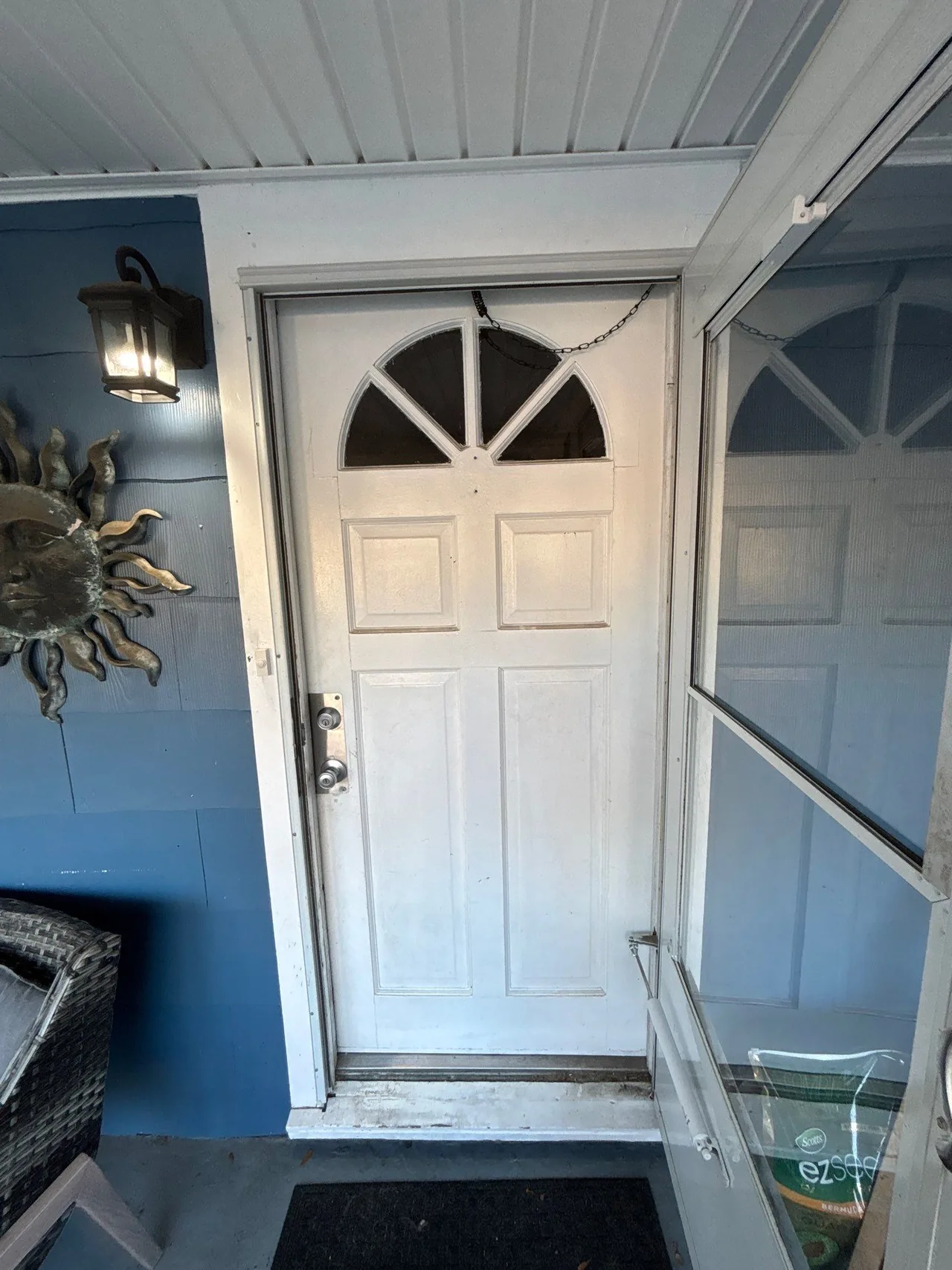
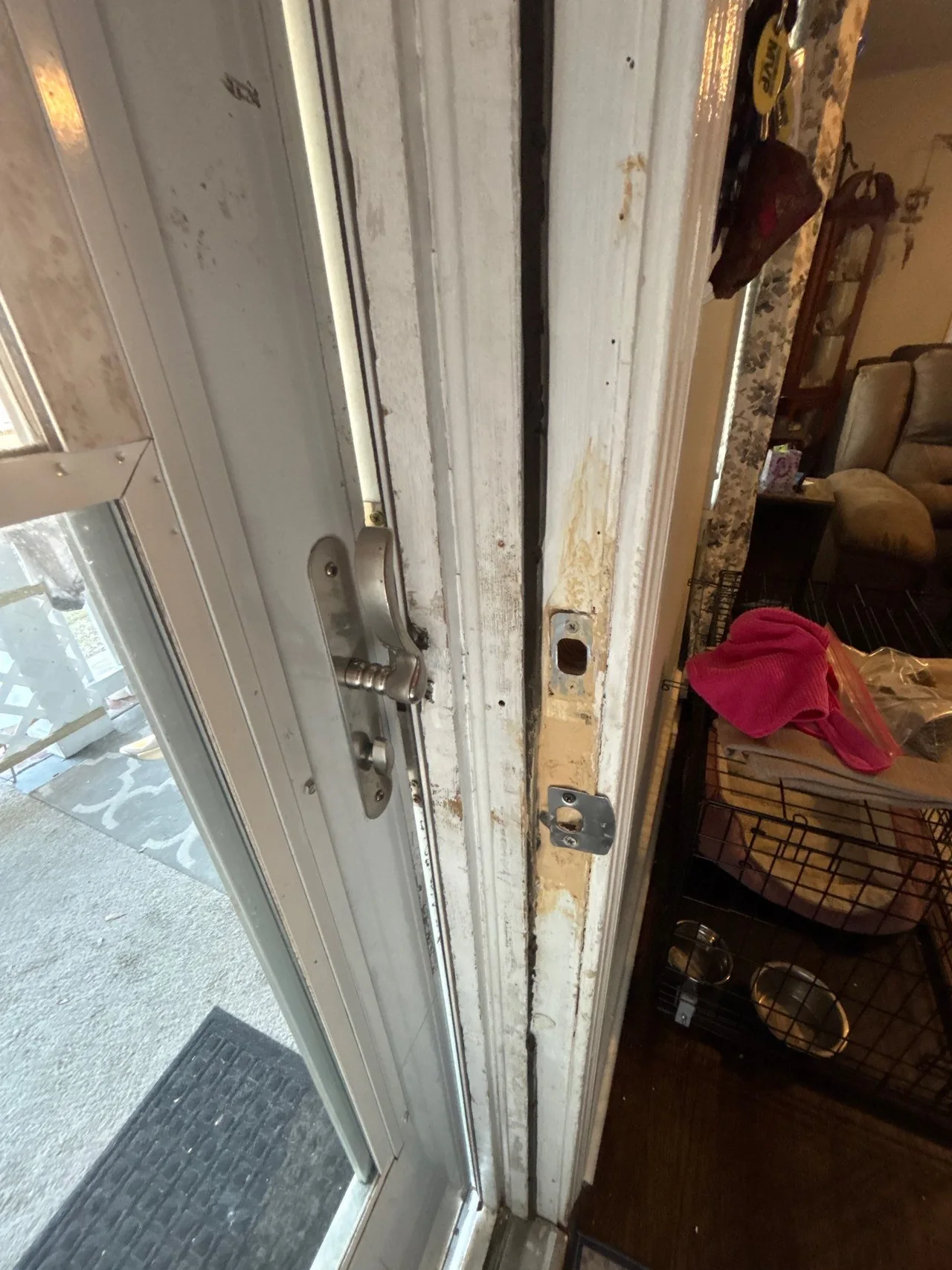
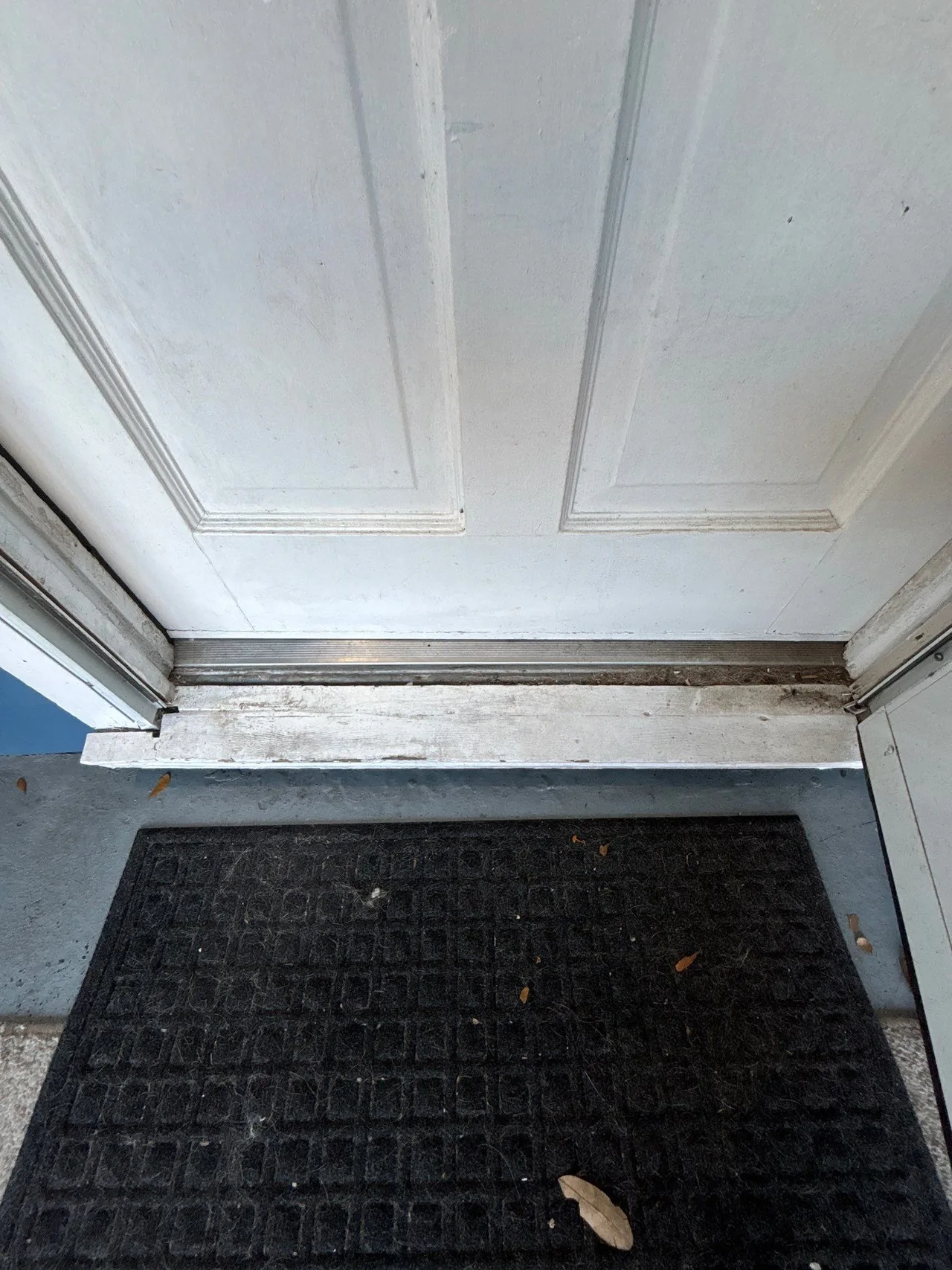
A Conway homeowner contacted Contract Exteriors about an older front door that wasn't locking correctly. The existing-condition photographs show a single white entry door, an outer storm door, the threshold and the latch-side jamb. The reviewed record is a replacement inquiry, rather than evidence of a completed installation or a final product selection.
That starting point is useful because the purchase isn't simply about choosing a new color. The reported lock problem needs assessment alongside the existing opening. A replacement proposal should explain the intended result and the system being supplied. A photograph of worn finishes doesn't tell us the hidden condition of the framing or establish what caused the operating concern.
For your own estimate, separate the reason you called from the appearance you'd also like to change. If reliable closing and locking is the priority, say so first. Then list the optional preferences: more daylight, a different finish, a new handle style or another look from the street. Keeping those goals separate makes the budget conversation much easier to follow.
Know what the word door includes
The door slab is the moving panel. A prehung system includes a door already assembled within its frame, with components determined by the selected order. ProVia's prehung-door information describes frame, threshold, casing, finish and hardware options. That helps explain why two estimates using the same broad product name may still cover different packages.
Ask the estimator to identify the exact system and the included components. Is the frame being replaced? Which threshold and weatherstripping are supplied? What trim is part of the package, and what additional work is included to finish it at your house? The manufacturer package and the installation agreement are related, but they aren't interchangeable documents.
Contract Exteriors describes its door service as complete replacements and new additions rather than component repairs. If you are comparing that with a slab-only or hardware repair offer from another provider, recognize the difference before judging the totals. A small repair may be appropriate after assessment, but it isn't a like-for-like price for a complete installed entry system.
Sources: ProVia: Components of prehung exterior doors · Contract Exteriors: Exterior door replacement
YOUR HOME. OUR EXPERIENCE.
Thinking about updating your entrance?
Talk with Contract Exteriors about your door, glass and the surrounding opening. Start with a free estimate for your project.
Book Your Free EstimateOur team will call to discuss your project and confirm appointment details.
Material and glass change the choice you are buying
Fiberglass and steel are different product choices, and each category contains multiple designs and packages. Ask for the actual line and configuration instead of comparing broad labels. Our fiberglass-versus-steel guide addresses the material tradeoffs. For budgeting, the important step is to keep the rest of the specification consistent while considering those alternatives.
Glass deserves its own decision. A small glazed area, a larger decorative insert and sidelights create different packages and different relationships with the entry hall. Choose daylight and privacy deliberately rather than adding every attractive feature on a sample. Ask which exact glass design is priced and how an alternative would change the total without changing the rest of the proposal.
If a particular performance requirement applies to your property, identify it before selecting the decorative features. The exact unit and configuration need appropriate verification; a brand name or coastal address doesn't establish a rating. Don't compare an ordinary package with a differently specified assembly and assume the price difference is all markup or all appearance.
The frame and surrounding finishes belong in the budget
The new door meets existing surfaces on both sides of the wall. Interior casing, exterior trim, siding or masonry edges, flooring and the threshold can all affect the finishing discussion. Ask what will be retained, what will be replaced and where the agreed work stops. A neat product photograph can't answer those questions for an existing house.
The Conway entry makes that boundary easy to picture. There is a working doorway inside a covered porch, with an outer storm door and surrounding trim. Those elements need consideration even if the homeowner wants another simple single-door layout. Their presence doesn't mean they all need replacement, but their treatment should be clear before the price is accepted.
Ask how a change in trim size or threshold detail would be handled, and who is responsible for any agreed painting or adjacent finish work. If a storm door is staying, confirm compatibility with the proposed entry system rather than assuming it transfers automatically. Our storm-door planning article discusses that separate choice without implying the existing Conway storm door will be reused.
Keep necessary work separate from chosen upgrades
A good proposal helps you distinguish the core replacement from optional changes. The core should describe the selected system and agreed installation and finish responsibilities. Optional changes might include another glass design, a different finish, a hardware selection or an altered entry configuration. Ask for those alternatives clearly enough that you can see what each one contributes.
Changing the opening is a different conversation from replacing within the existing arrangement. Adding or removing sidelights, changing door size or changing the operating layout may introduce additional design and surrounding work. Don't treat those as simple accessories to a product order. Review the actual scope and any required property-specific approvals before settling on a total.
If the budget needs to come down, first ask which discretionary choices can change while preserving the intended function and complete installation. Reducing a decorative upgrade is different from quietly omitting necessary opening work. You should be able to understand the tradeoff in ordinary language before choosing the lower-priced version.
YOUR HOME. OUR EXPERIENCE.
Ready to talk through your entry-door plans?
Bring your questions about privacy, finishes and the work included to Contract Exteriors. Get help comparing the options for your entrance.
Book Your Free EstimateOur team will call to discuss your project and confirm appointment details.
Ask what happens if removal reveals more work
Some conditions can be assessed during the estimate; others may only become visible when the old unit comes out. Ask how the proposal handles that uncertainty. Does it include a defined amount of surrounding repair, or would additional work require a separately approved change? Neither approach is useful if you only discover it after the opening is exposed.
Request a clear process for documenting a newly uncovered condition, explaining the proposed remedy and obtaining your agreement before additional chargeable work proceeds. That doesn't mean assuming hidden damage exists. It means understanding the decision process if the actual opening differs from what could be seen at the visit. An honest allowance is more useful than an unsupported promise that nothing unexpected can happen.
Also clarify the practical responsibilities: removing the original unit, protecting the work area, disposing of materials and leaving the agreed finishes complete. The Federal Trade Commission recommends written estimates that describe the work, materials, completion date and price. Use that principle to make competing front-door proposals understandable, rather than choosing from a headline total alone.
Sources: Federal Trade Commission: Written home-improvement estimates
Compare a clear base proposal with a meaningful alternative
When you receive estimates, put the door specifications and installation responsibilities side by side. Check the material, glass, frame, hardware, finishes and work around the opening. Then check exclusions and the treatment of additional work. If two totals differ, ask the companies to explain which items differ before asking either to reduce the price.
For a useful alternative, change one important preference while keeping the essential scope visible. You might compare two glass designs or a simpler finish, for example. The purpose isn't to strip the project to the cheapest possible door; it's to see which choices you value enough to buy. Get the applicable product and installation warranty information for the exact proposal as part of that comparison. Confirm who handles a future product concern and who handles an installation concern.
Bring photographs, your main operating concern and the features you want to retain to the consultation. Ask Contract Exteriors to explain the complete replacement scope and any alternatives appropriate to the opening. Judge the price against a clearly described finished entry, with the essential work included and the optional choices understood. That's a much firmer starting point than a product price found online.
Another Angle
Establish the essential result
An entry-door budget is also a statement about priorities. The door, glass, hardware and surrounding trim are encountered together, even when they appear as separate choices on an estimate. A more expensive individual element does not necessarily produce a more coherent entrance. The design question is how the selected elements relate to the house and to the experience of arriving, rather than how many premium options can be assembled within a particular total.
The Conway starting point has a recognizable hierarchy: a single door beneath a covered porch, an outer storm door and a modest glazed area within the entry panel. The reported locking concern gives the project an immediate practical purpose. That purpose should remain legible as appearance choices are added. It would be easy to let a new color or decorative glass dominate the conversation while the scope at the frame, sill and latch remains vague. A strong proposal makes the essential result clear before inviting the homeowner to choose among visual refinements.
Choose a coherent set of details
Glass is especially consequential because it belongs to both the outside elevation and the interior room. A larger glazed area may change the balance of solid and transparent surfaces at the porch, while also altering the sense of privacy inside. The most elaborate glass pattern is not automatically the most appropriate one. Its scale, the surrounding trim and the view from the approach all deserve consideration. This is a compositional judgment rather than a claim about this homeowner's preferences or the performance of an unspecified product.
Hardware occupies less area but can be visually insistent because it is both touched and seen at close range. A handle that looks proportionate on a large sample door may feel different on a smaller or more restrained entry. Coordinating the visible hardware, hinges and any retained storm-door components can create a more settled result than selecting each piece independently. Coordination need not mean everything has to be new. It means understanding which elements will remain visible together and deciding deliberately whether their differences are agreeable.
Make the scope match the whole entry
The surrounding finish is where the product becomes part of the house. Casing, exterior trim and the threshold mediate between the manufactured unit and existing walls and floors. When those boundaries are omitted from the budget discussion, the homeowner may imagine a complete entrance while the proposal describes only the center of it. Asking where the work ends is therefore a design question as much as a financial one. It allows the finished appearance to be judged at the same scale as the promised scope, without assuming that all adjacent surfaces need replacement.
Viewed this way, simplifying an entry can be a confident choice rather than a compromise. A straightforward panel and carefully chosen glass may fit the porch better than a busier design, while leaving room in the budget for complete installation and agreed finishing work. Another homeowner may place real value on a more distinctive configuration. The useful distinction is between an intentional preference and an unexplained omission. An informed budget protects the essential function, establishes a coherent whole and then directs discretionary spending toward the features the homeowner will continue to appreciate after the novelty has passed.
A FEW MORE ANSWERS
Questions homeowners ask
Why is an installed price higher than a door at the store?
The installed scope may include a complete frame and threshold system, removal, fitting, sealing, trim and other agreed work. Compare the exact product and installation responsibilities rather than treating a panel price as the whole project.
Does every front-door replacement need new framing?
That depends on what you mean by framing and on the assessed scope. A new prehung door frame is different from repairing the house's surrounding rough opening. Ask which is included and what additional conditions still need checking.
Does glass make every door more expensive?
The price depends on the exact door and glass package being compared. Ask for clearly specified alternatives rather than assuming a fixed premium for any glazed design.
Can I keep my storm door?
Possibly, but its condition and compatibility with the selected entry system need confirmation. State early that you would like to retain it and ask whether any associated work is included.
Should the quote include painting and trim?
It should state what finish and trim work is included, what will be retained and which adjacent finishes remain your responsibility. Don't infer those details from the manufacturer's product package.
What is the best way to reduce the project budget?
Ask about simpler optional glass, finish or hardware choices while keeping necessary installation and opening work clear. Compare the revised complete scope and confirm what changes, rather than accepting an unexplained lower total.
Sources and review
Contract Exteriors project evidence: Internal project records and original CompanyCam photographs support the project examples described in this article. Customer records and identifying details remain private. Project examples are separate from the manufacturer guidance and other published references below.
Conway inquiry for an older door reported not locking correctly; three original entry/jamb/threshold views. No selected product, concealed condition, customer price or completion inferred.
- Contract Exteriors project evidence — Original company project records and same-property photographs privately matched. Public link opens the portfolio; private customer records remain private.
- ProVia: Components of prehung exterior doors — Door/frame/threshold/trim/finish/hardware distinctions and configurable package; no retail installed price or project-specific product identified.
- Contract Exteriors: Exterior door replacement — Replacement service scope; not a component repair offer.
- Federal Trade Commission: Written home-improvement estimates — Written scope, materials, completion and price guidance; not a local cost benchmark.
Editorial review details
Reviewed for Contract Exteriors by Bill Schum, Marketing Director, Contract Exteriors, on November 17, 2026. Scope: Editorial oversight, with AI-assisted research, source and project-record checks, photo review and page-presentation review under the publication quality process. Design commentary is an editorial perspective.
Our sourcing and corrections standards · Report a correction