Tell the window company what you want to keep
Project at a glance
- Local example
- Pawleys Island, South Carolina
- Recorded request
- Replacement of nine windows
- Existing setting
- Windows beneath top-hinged exterior louvered shutters
- Project stage
- Replacement inquiry; existing-condition photographs
You might be ready to replace the windows and still like the shutters exactly where they are. They are part of the house's appearance, and perhaps part of the shade you enjoy inside. That is worth bringing up at the first visit, before the conversation settles on a window style or frame.
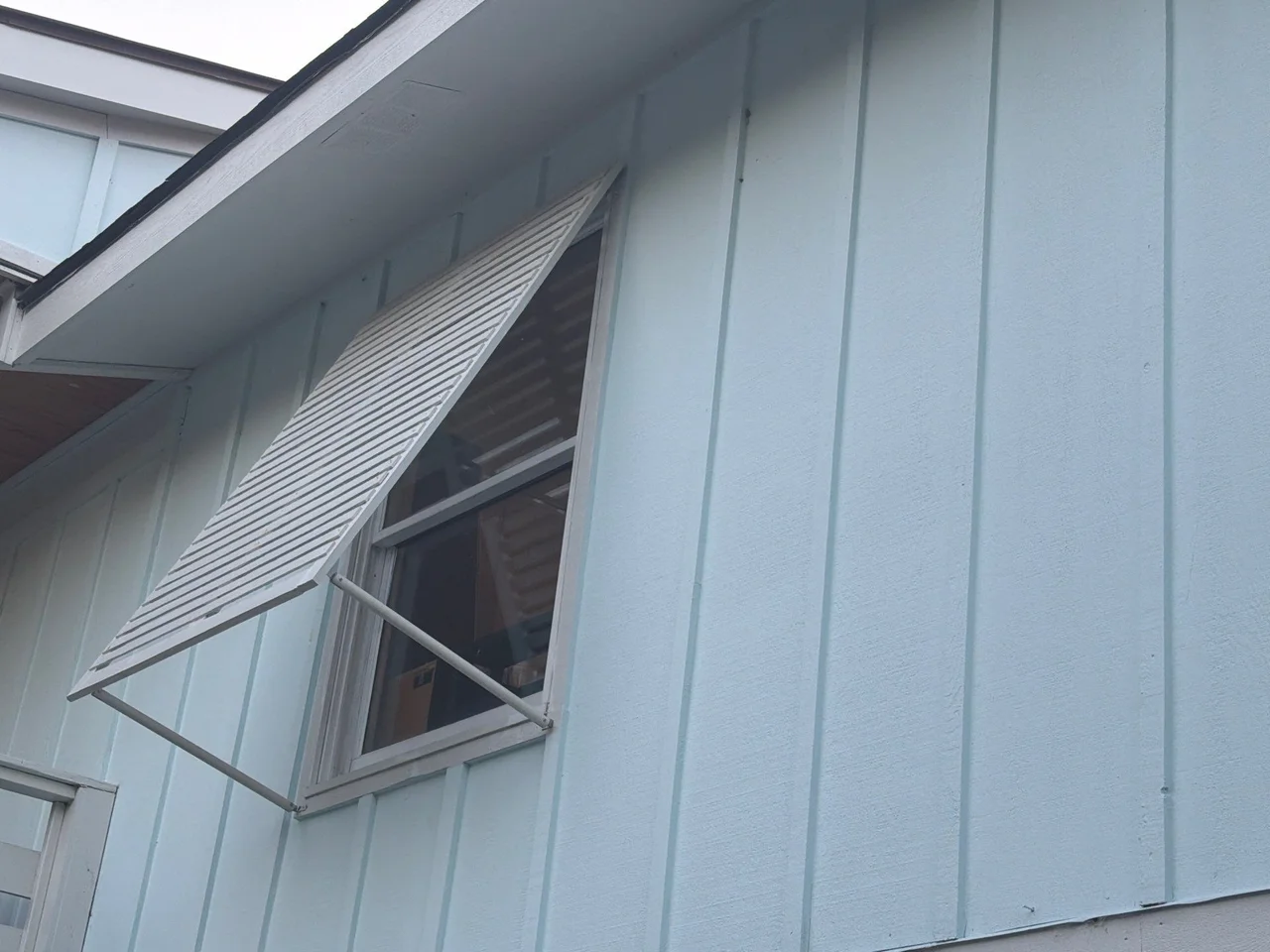
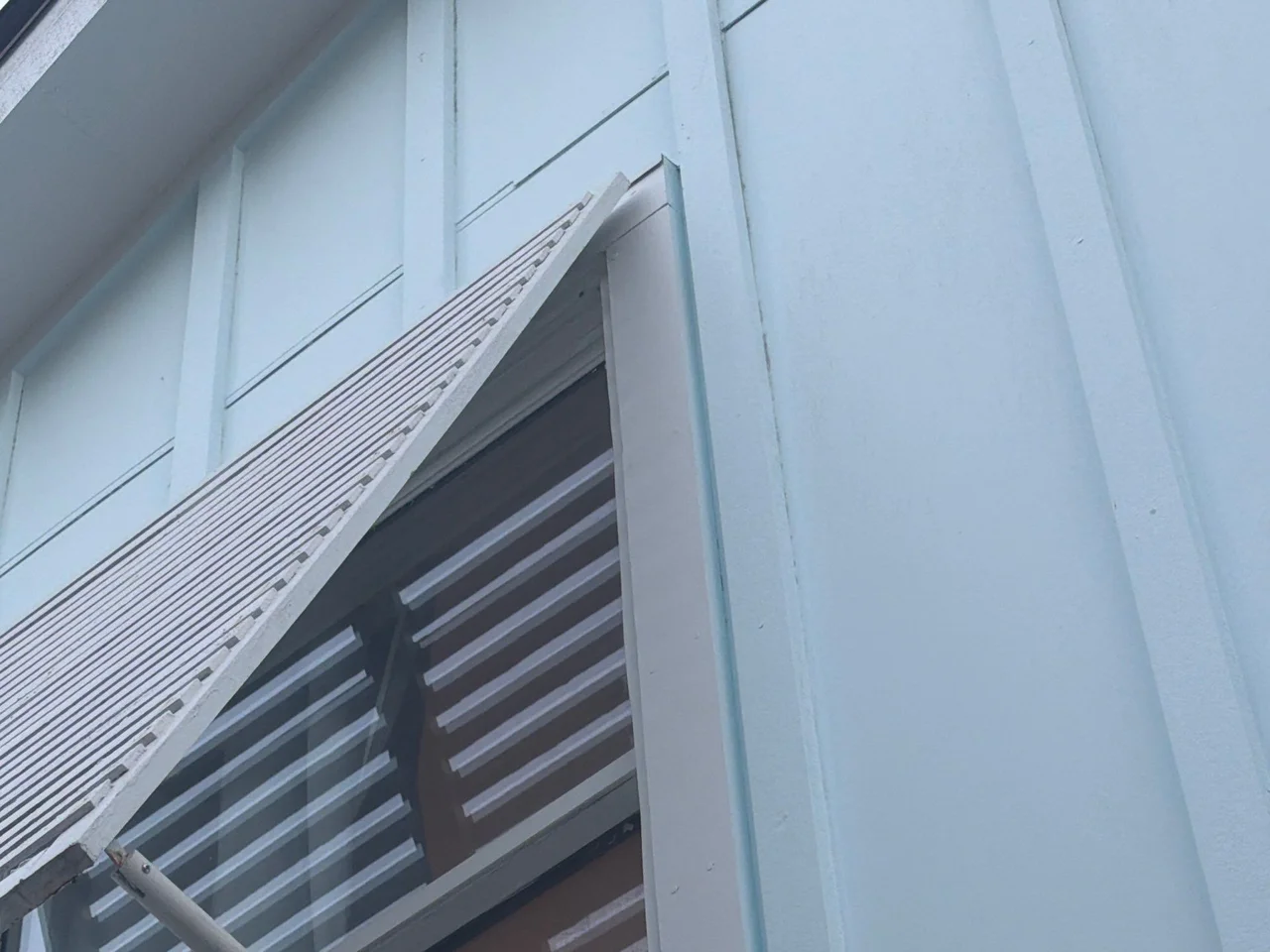
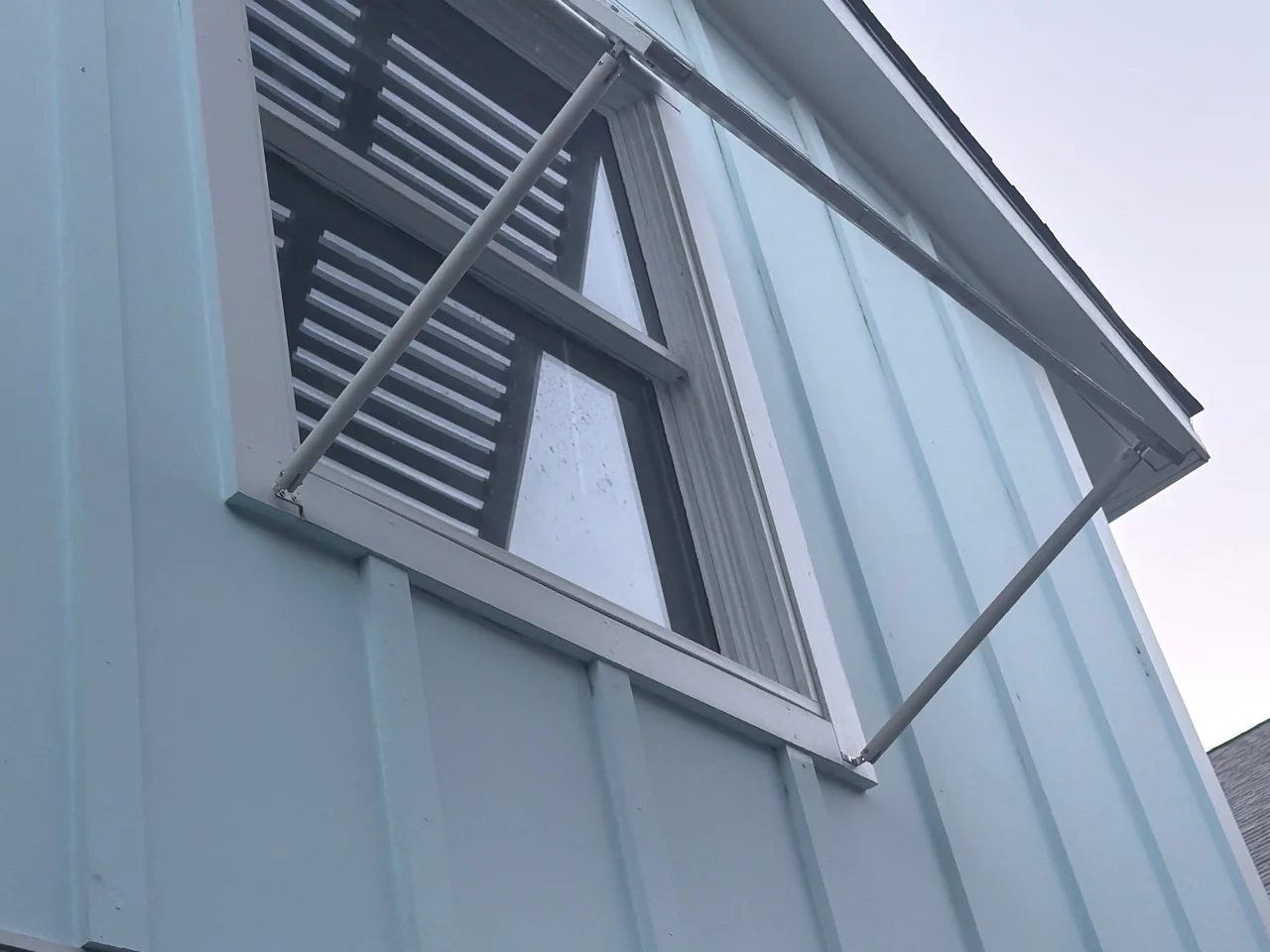
A Pawleys Island homeowner recently asked Contract Exteriors about replacing nine windows. The original photographs show existing windows beneath top-hinged louvered exterior shutters. Those shutters make this a useful local example of a small detail that belongs in the larger window plan. The request doesn't establish that the homeowner asked to retain them or that compatibility has been approved.
For your own home, be clear about your preference: keep them if suitable, price an alternative if necessary, or discuss removal. That gives the representative a question to investigate rather than leaving the shutters as something everyone assumes someone else has considered.
Start with how the shutters are used
Shutters can have different jobs. Some are fixed decorative pieces. Others open and close, provide shade or belong to a documented opening-protection system. Don't sort yours into a category solely by their style. Tell the representative how you use them and bring any manufacturer labels, installation information or records you already have.
Sunbelt Shutters' general measuring guidance notes that a top-hinged Bahama-style shutter needs room for its hinge and supporting arms. That is a useful reminder that retaining a shutter is about the surrounding space and hardware as well as the panel. It doesn't identify the manufacturer or specifications of the Pawleys Island shutters.
If yours never move, say so rather than assuming they are designed to be fixed. If you normally lower them, show the operation from a safe position. Stiff, damaged or inaccessible hardware is a reason to get an appropriate assessment, not a reason to force it during a window consultation.
Sources: Sunbelt Shutters: measuring and Bahama hardware space
Check the window and shutter as one arrangement
A replacement window can fit the existing opening while changing details around it. The frame profile, exterior trim and installation approach need to be considered alongside nearby shutter hardware. Ask how the proposed work affects the mounting area and whether the shutter can remain in place during the installation.
Window operation matters too. A sash that moves outward uses space beyond the frame. A different screen arrangement or a changed trim profile may also affect access. Rather than assuming that any window of roughly the same size will work, ask the representative to explain the proposed combination at each affected opening.
This is especially useful in a whole-home replacement where windows aren't all identical. One opening may have a different shutter position or surrounding finish. Our guide to mixing window styles can help with the house-wide selection, but the retained accessories still deserve an opening-by-opening check before the order is approved.
Make removal and reinstatement part of the written scope
Keeping a shutter doesn't necessarily mean leaving it untouched throughout the work. Access to the window, trim or mounting area may require temporary removal. Ask who decides, who performs that work, where the shutter is stored and what happens if the existing hardware can't be reused as planned.
Have the proposal distinguish removal, storage, reinstallation and replacement. Those are different responsibilities. Also ask whether a shutter specialist or another qualified professional needs to be involved. Contract Exteriors' window estimate shouldn't be read as a promise of every possible shutter service unless that work is actually included.
Think about finish work as well. Will any exposed area need attention if a mounting position changes? Is a retained piece of trim compatible with the new work? The useful answer isn't a universal promise that nothing changes. It is a specific description of the expected result and a clear approval process if an existing condition changes the plan.
YOUR HOME. OUR EXPERIENCE.
Planning a whole-home window replacement?
Talk with Contract Exteriors about your rooms, window options and the work around each opening. Start with a free estimate.
Book Your Free EstimateOur team will call to discuss your project and confirm appointment details.
Treat storm protection as a separate verification
A louvered shutter can look substantial without being verified as an impact-protection system. Its appearance isn't a product approval, and closing over the opening doesn't establish that the complete installation meets the requirements for that property. Keep this distinction clear if protection is one reason you want to retain it.
The Building America Solution Center's opening-protection guidance emphasizes suitable products, manufacturer instructions and applicable requirements. Use that as a reason to ask for the actual system information and appropriate review. Don't transfer a rating from a different shutter, assume new glass makes an old shutter compliant or use a general coastal label as a property-specific answer.
For a Pawleys Island-area project, have the responsible professional confirm the actual address, opening and applicable requirements. This article doesn't assign a wind rating, certify an installation or prescribe a modification. If the existing system's identity or suitability is unresolved, resolve that question before relying on it for protection after the window work.
Sources: Building America Solution Center: documented opening protection
Look through the sample with the shutter in mind
Once the fit and responsibilities are understood, return to what you will see every day. Frame color, glass, grids and the retained shutter all share the same opening. A new window can look different beneath an older shutter even when each choice is attractive on its own.
Compare the proposed frame sample with the shutter and nearby siding in outdoor light. Then look from inside with the shutter in its usual position. Ask whether the new window operation and screen arrangement fit your habits. Keeping an existing source of shade should be a deliberate choice rather than an accessory that disappears from the selection conversation.
You may decide the shutters help preserve the house's character. You may prefer a simpler exterior. Neither preference proves better performance. If your window decision also includes screens, our screen-selection guide covers that accessory separately so you can compare both layers without expecting the shutter to perform the screen's job.
Finish with an opening-by-opening agreement
Before signing off on the window order, identify which shutters remain, which need assessment and which are being removed. Ask the proposal to show the relevant trim and mounting responsibilities. Where a specialist is needed, clarify whether that person is included in the price or is someone you must arrange separately.
Bring existing documents rather than trying to recreate a product history from memory. Photographs can help identify the arrangement, but labels, instructions and installation records may answer different questions. Avoid taking down shutters or disturbing hardware yourself to gather information; ask how the assessment should be handled safely.
For your project brief, note whole-home window replacement and add retained exterior shutters as a specific coordination item. Show the representative the openings that matter most to you. The best time to discover a conflict is while choices are still being evaluated, with enough information to compare a compatible window plan and any necessary alternative.
Another Angle
Preserve depth and rhythm
An exterior shutter is more than an item beside or above a window. It changes the apparent depth of the opening and the way a wall meets sunlight. Top-hinged shutters add a projecting edge, so the window is experienced within a small shaded recess rather than as a flat rectangle. Retaining that relationship can preserve a home's visual character through a window replacement.
The Pawleys Island photographs show this clearly. The louvered shutters project from the pale blue exterior, while the windows sit behind them. The facade has a rhythm of openings and repeated angled panels. That rhythm is part of the existing composition regardless of the shutters' unverified manufacturer or rating. A design reading can acknowledge it without claiming technical performance.
Replacing the windows creates an opportunity to decide which part of that composition should remain dominant. A more conspicuous frame color may compete with the shutter. A quieter frame may let the projecting element continue to define the opening. Neither is automatically the better choice. The effect depends on whether the homeowner wants to emphasize the new window itself or preserve the familiar layered appearance.
Choose a deliberate relationship
Color samples are most useful when read in that relationship. A frame viewed alone in a showroom does not include the shadow cast by the shutter, the adjacent siding or the old trim. Outdoors, a small difference can become more apparent where the two finishes sit together. That does not demand an exact match. It calls for an intentional relationship rather than an accidental near-match.
The same judgment applies from inside. A shutter's louvers and supporting arms become part of the outward view. Keeping them may preserve a sense of privacy or shade that the homeowner values, but those preferences should be discussed as personal priorities rather than assumed benefits for every room. An opening used mainly for a view may invite a different choice from one beside a frequently occupied seat.
Consistency across the house also has limits. Repeating the same treatment everywhere can create a coherent exterior, yet individual windows may have different surroundings or access. A deliberate exception can be more convincing than forcing uniformity where it conflicts with everyday use. The reason for that exception should be clear in the plan, especially when a whole-home order includes several operations or frame arrangements.
Retention still needs a decision
This is why keeping an accessory is still a design decision. Retention should not mean that nobody reviews it. Nor should a new window automatically trigger replacement of every older surrounding element. The useful middle ground is to identify what the shutter contributes, check whether it can remain appropriately, and judge the new window in the complete opening rather than in isolation.
There is a final discipline in separating visual continuity from protection. A retained silhouette can preserve character even while its technical suitability remains unresolved. The latter needs the actual documentation and appropriate assessment described in the main guide. Keeping those questions distinct makes the design conversation more honest: preserve the qualities you value, but give fit, function and any claimed protective role their own evidence before treating the arrangement as complete.
A FEW MORE ANSWERS
Questions homeowners ask
Does keeping the same window size guarantee the shutters will fit?
No. The frame, trim, mounting position and operation still need comparison with the retained shutter and hardware. Check the complete proposed arrangement.
Can exterior shutters stay installed while the windows are replaced?
Sometimes, but access and the proposed installation approach determine that. Ask whether temporary removal is needed and who is responsible for it.
Do Bahama-style shutters automatically provide hurricane protection?
No. Style and appearance do not establish a rating. Protection claims require the actual product and installation documentation plus appropriate review for the property and opening.
Should I choose a window style before discussing the shutters?
Discuss both together. Outward-moving windows and nearby shutter hardware can use the same space, so compatibility should be checked before ordering.
Is shutter reinstallation included in the window price?
Only if the proposal includes it. Ask for removal, storage, reinstatement, replacement hardware and any specialist responsibilities to be described clearly.
What should I bring to the consultation?
Bring available shutter labels, instructions or installation records, photographs and a list of which shutters you want to retain. Do not disturb or remove hardware yourself to prepare.
Sources and review
Contract Exteriors project evidence: Internal project records and original CompanyCam photographs support the project examples described in this article. Customer records and identifying details remain private. Project examples are separate from the manufacturer guidance and other published references below.
An actual Contract Exteriors inquiry and original existing-condition photographs illustrate the planning question. No completed replacement, selected final product, technical diagnosis or measured benefit is claimed. Private customer details are withheld.
- Contract Exteriors project evidence — Private inquiry and original CompanyCam photographs matched to the same property; public link opens the company portfolio.
- Sunbelt Shutters: measuring and Bahama hardware space
- Building America Solution Center: documented opening protection
Editorial review details
Reviewed for Contract Exteriors by Bill Schum, Marketing Director, Contract Exteriors, on November 16, 2026. Scope: Editorial oversight, source and project-record checks, photo-originality review, and mobile/desktop presentation checks. Research and editing were supported by AI tools. Design commentary reflects an editorial perspective and does not constitute professional architectural or engineering advice or a property-specific site assessment.
Our sourcing and corrections standards · Report a correction