What would make you spend more time outside?
Local examples at a glance
- Conway
- Planning inquiry for an existing concrete patio beside covered seating
- Surfside Beach
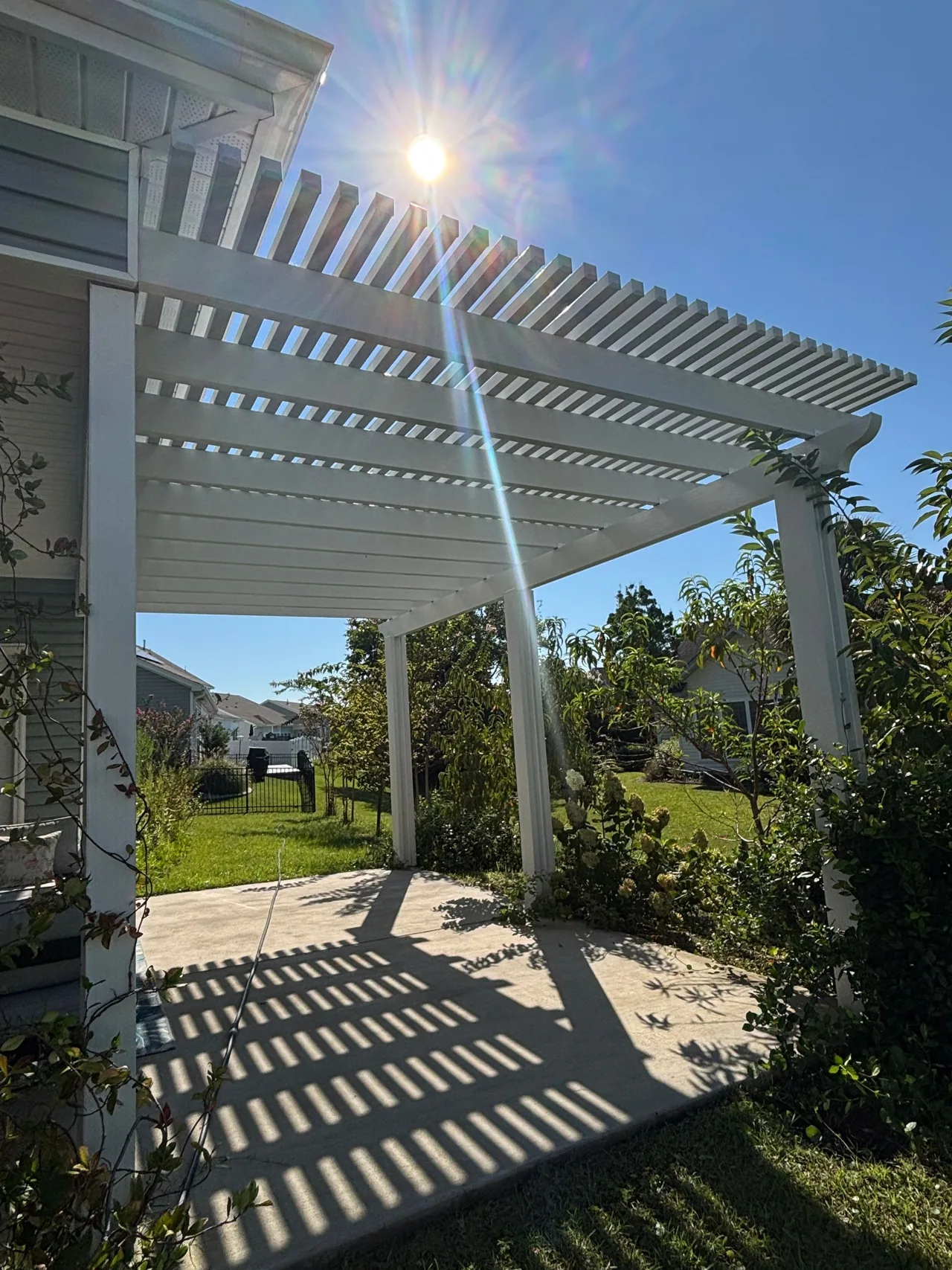
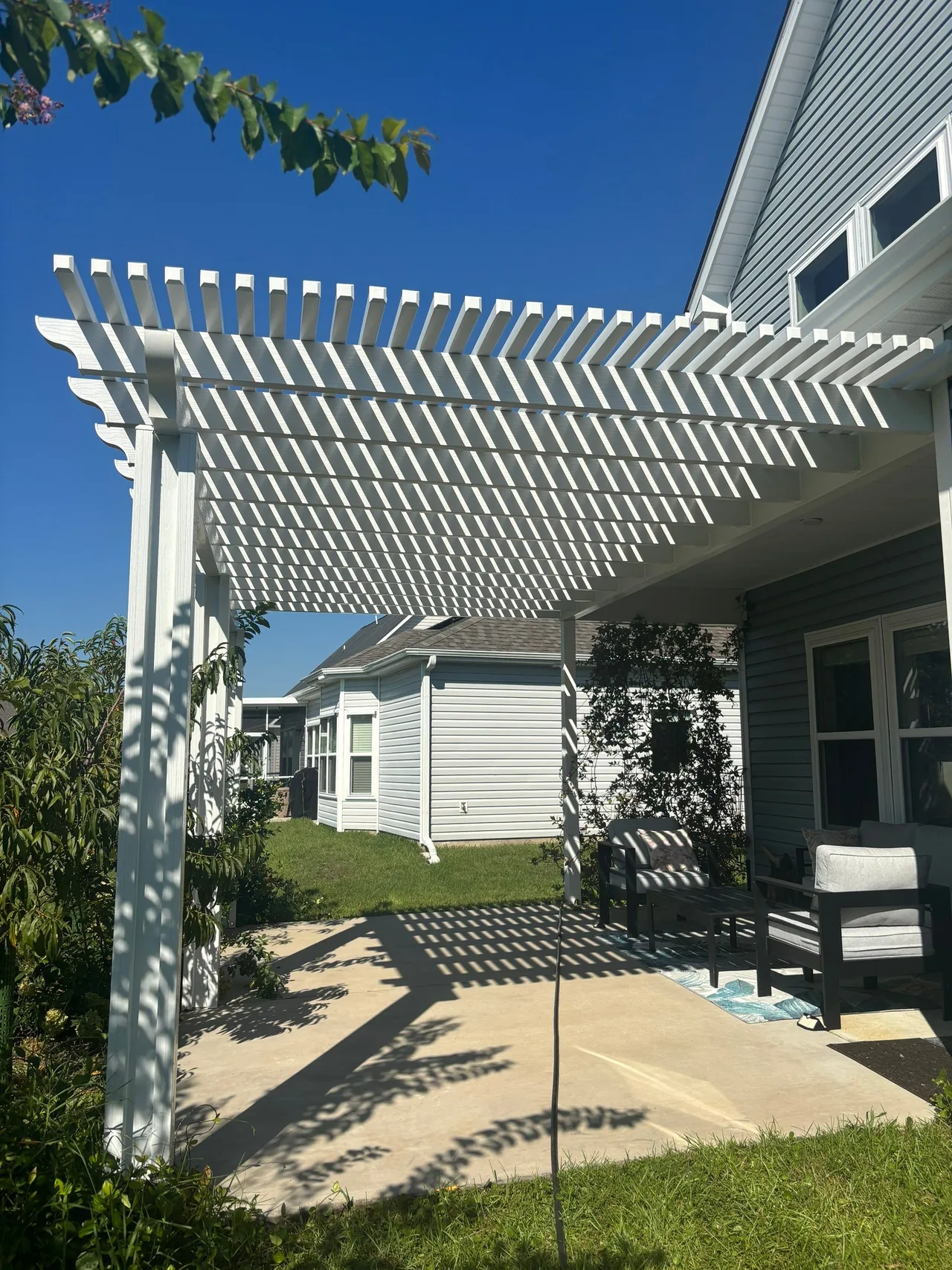
- Completed attached pergola extending over the open patio beside existing sheltered seating
A beautiful backyard picture can get you thinking about a pergola. The better reason to build one is much less complicated: there's a spot outside you'd actually use if it worked a little better. Maybe the chairs sit in afternoon sun. Maybe the patio feels exposed. Maybe the covered porch fits two people, and everyone else ends up standing at the edge.
For homeowners around Conway and the Grand Strand, that everyday frustration is a useful starting point. Ask yourself when you want to sit outside, who will be there and what usually sends you back indoors. A pergola earns its place when its particular benefits match those answers. Buying a structure first and inventing a use for it later is an expensive way to furnish the yard.
Our pergola planning guide explains the broader options. Here, we're looking at the decision before product selection: whether this kind of addition deserves a place in your project budget. You don't need a finished design to answer that. You need an honest picture of the space you have and the routine you'd like to change.
At a completed Contract Exteriors project in Surfside Beach, a white pergola extends the patio’s seating area beyond the covered porch. You can see where the open slats filter the light and where the porch roof provides deeper cover. Before paying to extend your own patio, choose what you would do in that second space and where you would put the table or chairs.
A Conway patio shows why the existing space matters
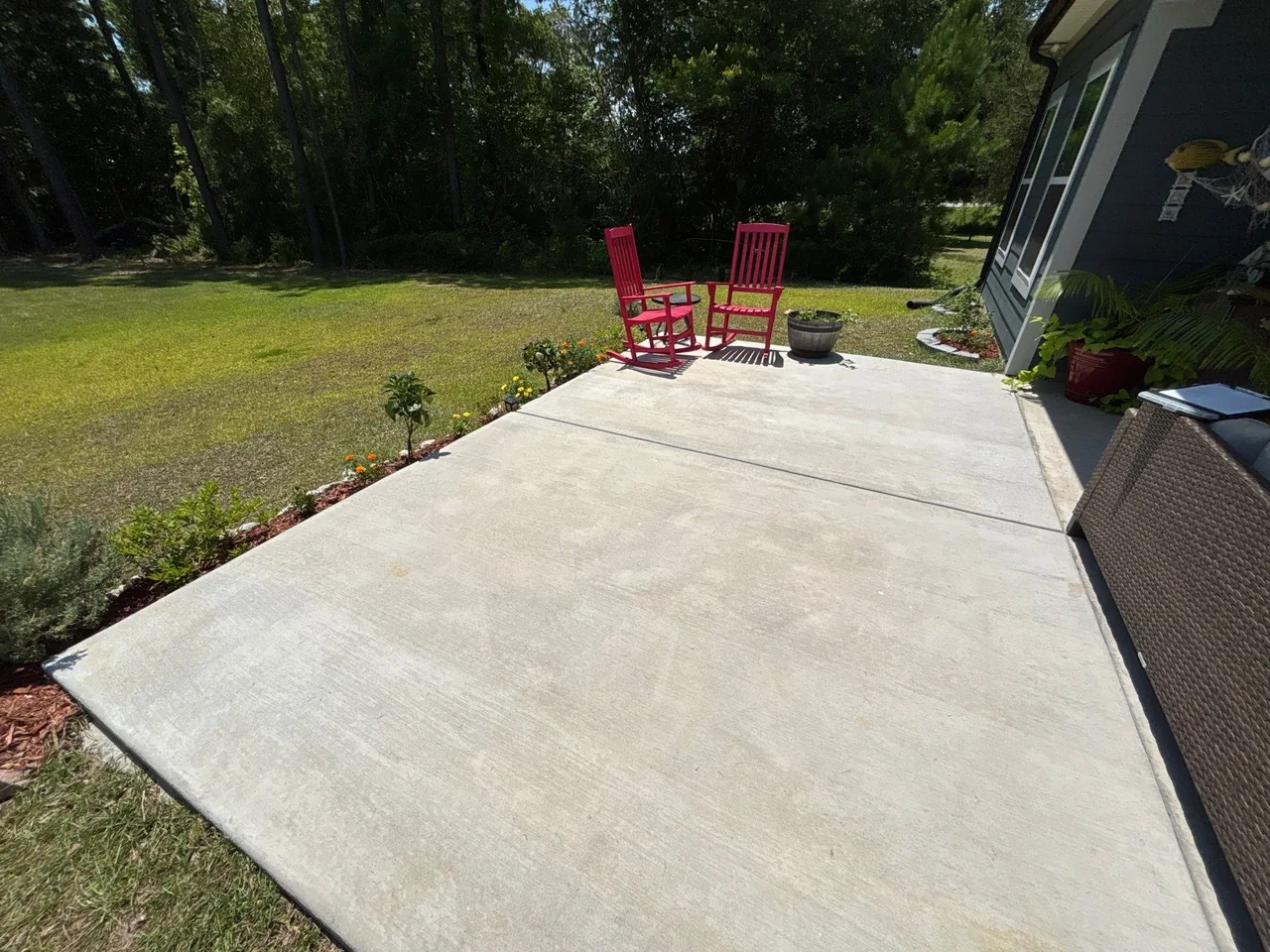
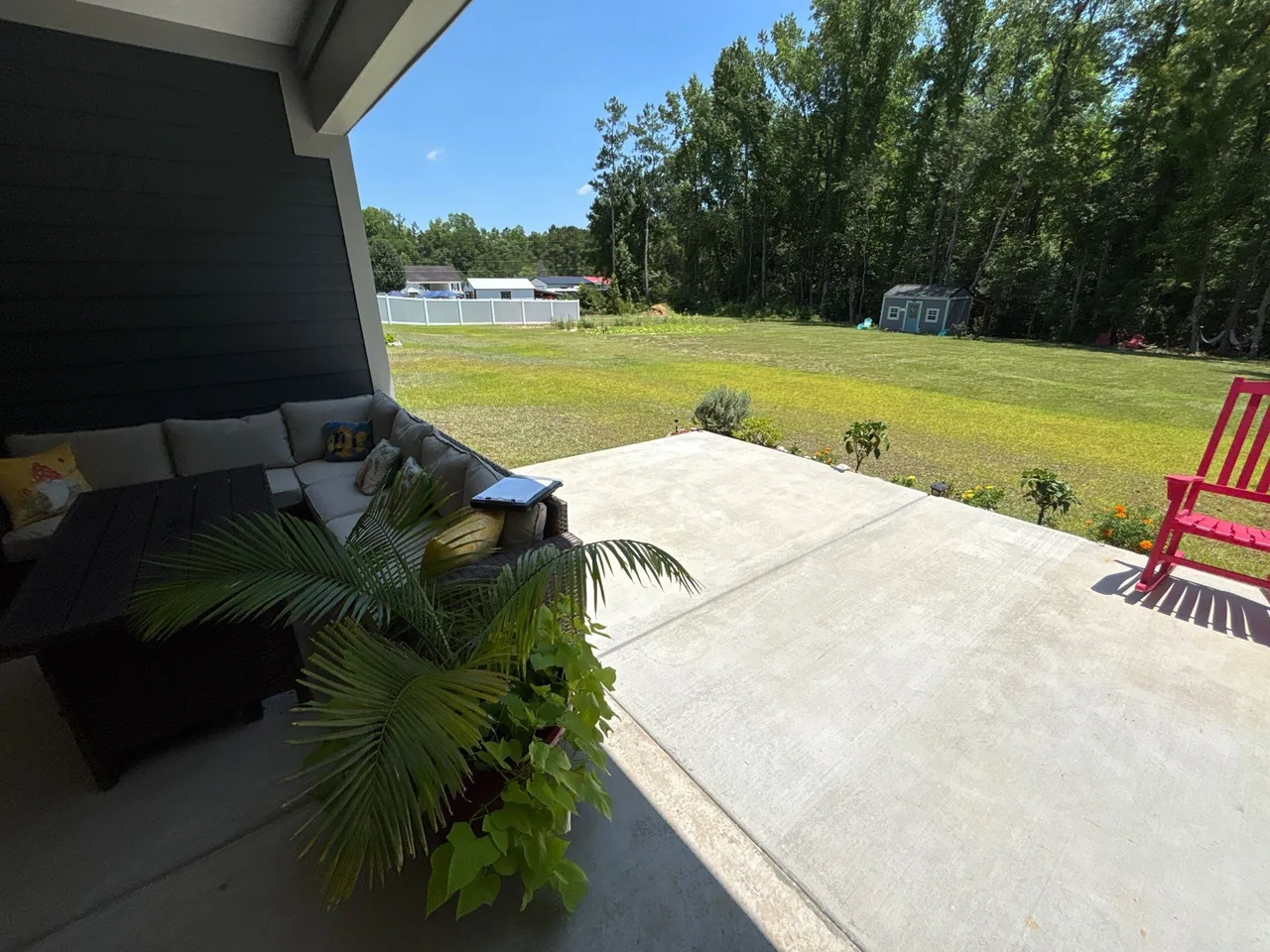
One Conway homeowner contacted Contract Exteriors about a pergola over an existing concrete patio. The consultation photographs show outdoor seating beneath an existing porch roof, with an uncovered section of concrete extending toward the lawn. The project was still a planning inquiry in the records reviewed for this guide; the photographs show the starting point, not an installed pergola.
That arrangement makes the value question more useful. The house already has a covered place to sit. An additional structure would need to contribute something beyond another overhead feature. A homeowner in that situation might want room for a dining table, a more intentional connection to the yard or a different balance of sun and openness. Those are planning possibilities, rather than motives we're attributing to this customer.
The lesson transfers to plenty of Grand Strand patios: look at what the existing porch already does well before paying to add more. Keep the comfortable seating if it works. Identify where the next activity would happen. Then judge whether a pergola improves that second area enough to justify the complete project.
YOUR HOME. OUR EXPERIENCE.
Thinking about a pergola for your patio?
Talk with Contract Exteriors about placement, shade and the outdoor space you want to create. Start with a free estimate.
Book Your Free EstimateOur team will call to discuss your project and confirm appointment details.
Buy the kind of shade you will actually use
An open lattice pergola can break up sunlight while keeping a view of the sky. Four Seasons Building Products describes its EliteWood pergolas as lattice shade structures. That is a different starting point from a solid overhead cover. The word pergola alone doesn't tell you how much protection a particular design will provide, so ask to see the exact configuration being proposed.
Visit your intended seating spot during the hours you expect to use it. Notice where direct sun reaches your face, the table and the chair arms. Overhead shade at noon may not address low afternoon sun coming through the side. Our guide to how much shade a pergola provides goes into that question; for this decision, the point is to test the proposed benefit against your actual seat and time of day.
South Carolina's State Climatology Office describes the warm, moist air that influences summer conditions. Shade doesn't remove that humidity or turn the patio into an air-conditioned room. It may still make a chosen spot more appealing, but keep the expectation realistic. Compare the type and placement of shade, rather than accepting a promise that any pergola will make any backyard comfortable.
Sources: Four Seasons Building Products: EliteWood pergolas · South Carolina State Climatology Office: South Carolina Climate
Know when a different option fits better
If staying dry is the reason you aren't using the patio, start by comparing the actual overhead weather protection. Open slats leave gaps for rain. A solid cover or another properly specified system may fit that goal better. Our open-pergola rain guide explains the distinction. Don't add curtains, panels or an improvised covering later and assume the original structure was designed for them.
If insects are the real deal breaker, an open structure doesn't address that either. A screened room is a different conversation, with its own layout and scope. If you only need occasional shade for a small table, a suitable movable umbrella may be enough to test the location before you commit to a permanent addition. It offers a different level of permanence and needs appropriate use and storage.
There isn't a prize for choosing the largest project. The right comparison is the smallest complete solution that fits your priorities. Tell the estimator which problem matters most and which benefits would merely be nice. That makes it easier to explain why one option earns its price while another buys features you don't really need.
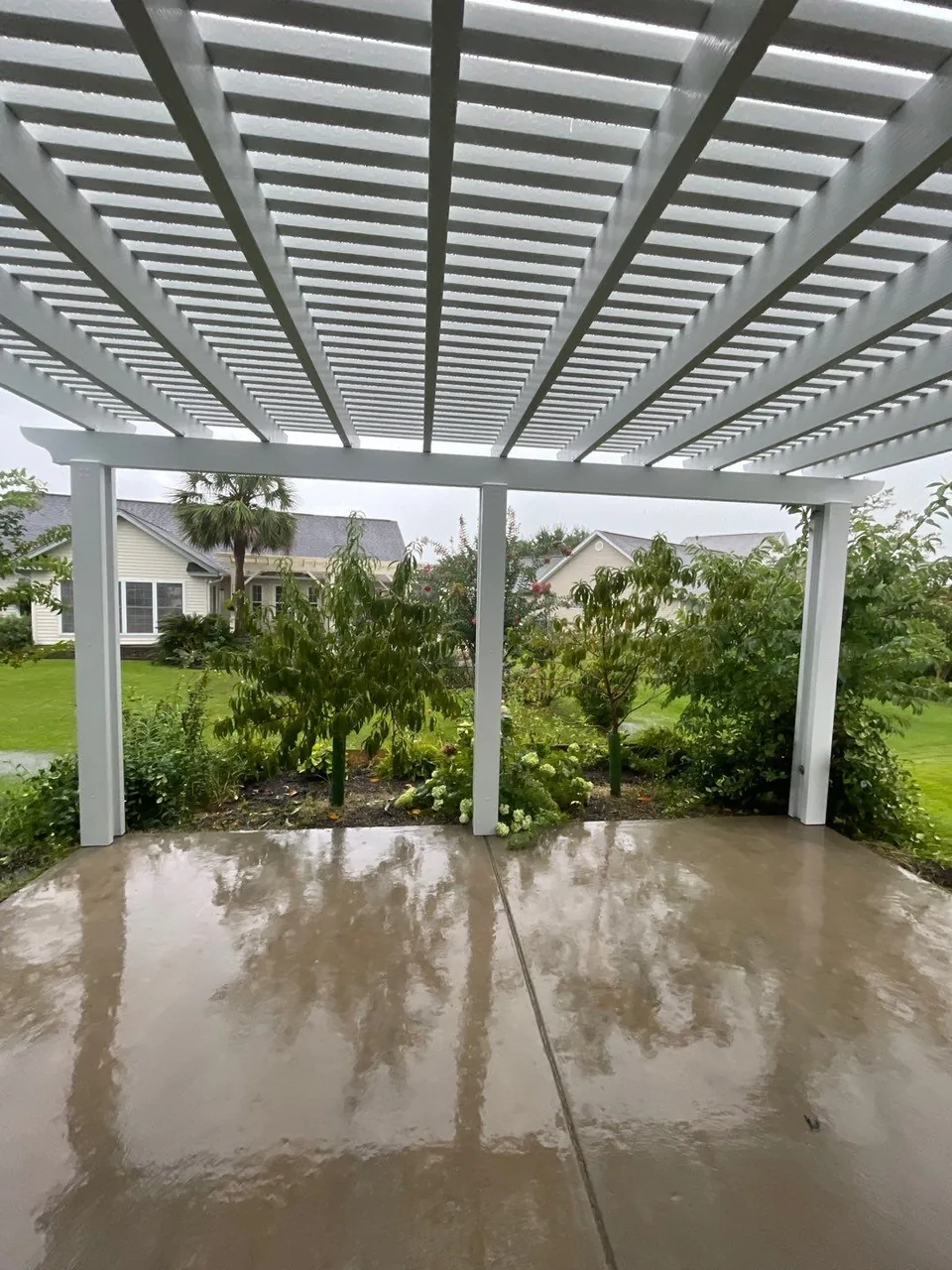
Look up from beneath the finished Surfside Beach pergola and you can see the gaps between the slats. If your main goal is somewhere to sit outside when it rains, compare a solid cover before settling on an open design.
Include the ground, the furniture and the way through
A pergola footprint and a usable seating area are different things. Posts occupy space. Chairs need room to move away from the table. People still need to get from the door to the yard without squeezing around furniture. Before settling on dimensions, place the furniture you intend to keep and walk through the area as if guests were already seated.
The Conway example makes that especially easy to understand. Existing lounge seating and the open concrete area have different jobs. A sensible plan would consider both, rather than centering an overhead structure over the whole rectangle and hoping the activities fit beneath it. Draw where people will sit, where they'll walk and which views you want to retain from inside the house.
The existing slab also needs assessment. Its appearance doesn't establish whether it can support the proposed posts or attachment details. Ask what the installer needs to verify, what new support work is included and how any required approvals will be handled for your property. Keep that investigation in the estimate; a seemingly convenient concrete pad isn't a substitute for a suitable design.
Compare the full investment, not the structure alone
For a useful budget comparison, ask each company to describe the same project. Identify the structure and finish, its footprint, the work at the house if attached, the support work, and what happens to the existing patio or landscaping. Clarify delivery, access and cleanup. A lower total may describe a smaller scope rather than a better price for the same result.
Separate necessary work from optional additions. Lighting, fans, screens, electrical work or a different surface may change the proposal, and their suitability needs confirmation. Don't assume an attractive accessory in an inspiration photograph is included or even available with the selected system. Ask for alternatives to be priced clearly so you can choose them without losing track of the core project.
Get the care instructions and warranty for the exact materials, too. Four Seasons markets its lattice products as needing little maintenance, but that isn't a promise that every pergola material or installation needs no attention. Consider whether you'll want to clean, inspect or refinish the proposed components over time. The affordable option should fit both the purchase and the ownership routine.
YOUR HOME. OUR EXPERIENCE.
Ready to talk through your pergola ideas?
Bring your questions about layout, everyday use and project scope to Contract Exteriors. Get help planning the next step for your yard.
Book Your Free EstimateOur team will call to discuss your project and confirm appointment details.
Separate personal value from a resale prediction
It's reasonable to hope an outdoor improvement will appeal to a future buyer. It isn't reasonable to treat an unverified percentage or a national remodeling headline as the amount your house will gain. This guide doesn't establish a local resale return for pergolas. A real estate professional familiar with your property and neighborhood can discuss market appeal without promising a sale price.
You can still make a sound decision without a resale figure. Think about whether the addition supports a routine you already enjoy and expect to keep. A comfortable place for everyday coffee may mean more to you than a larger entertaining area you rarely use. Conversely, a permanent structure may be hard to justify if you haven't settled on how the backyard should function.
Try the layout before you build. Move the chairs, use the proposed spot at different times and notice what remains inconvenient. This small exercise won't predict the finished design, but it can reveal whether you're trying to solve sun, circulation, shelter or something else. Spend on the problem you've identified, rather than on the most impressive photograph.
Bring a clear question to the consultation
Take a few photographs from the house, the seating area and the yard. Bring the furniture sizes and a short list of the times you want to use the space. Explain what you want to retain, what currently frustrates you and whether filtered shade, rain cover or enclosure matters most. These details help turn a broad wish into a project someone can evaluate.
Ask the proposal to identify the exact system, the work included around it and any assumptions that still need checking. If you have association requirements, share them early; property-specific permitting and design responsibilities need confirmation separately. Don't order around an assumed approval or a promised installation date that hasn't been agreed for the actual scope.
A pergola is worth considering when it makes your existing outdoor life work better. Start with the activity, confirm what the proposed structure can deliver, then compare the complete investment. Contract Exteriors can discuss pergola options and the existing conditions at your home so the design serves the way you want to use the yard.
Another Angle
Give the addition a separate purpose
The most convincing outdoor addition is often the one that gives an existing place a clearer purpose. A pergola introduces an overhead plane and a set of vertical edges; even an open structure changes how the patio is read from the house. Its value therefore involves more than the amount of ground it covers. It can make one part of the garden feel like a destination, but it can also divide a space that previously worked as a generous, continuous opening to the lawn.
The Conway starting point is instructive because the covered sitting area already has a strong identity. Its roof, post and furnished corner establish a sheltered edge. The uncovered concrete beyond it offers a different quality: openness. Adding another structure should be considered in relation to that contrast. Extending the same sense of enclosure across the whole patio might produce consistency, but it could also reduce the distinction between resting beneath the porch and stepping out toward the garden. Neither result is automatically preferable.
Read the layout from more than one position
An alternative is to give the new area a separate activity, then allow the structure to mark that activity. A dining place may benefit from a more definite boundary than an informal route to the lawn. A pair of chairs might need a quieter edge rather than a large central feature. These are interpretations to test in a design discussion, not conclusions that the photographs establish for this property. The relevant question is whether the proposed addition makes the sequence of spaces more understandable to the people who will use them.
Post placement deserves particular attention in that discussion because a post is both a support and a visual marker. Viewed from an interior window, it can interrupt the garden or frame it. On the ground, it can help define a seating corner or become an obstacle between a door and a chair. A drawing that looks balanced from above may feel different at seated eye level. Reviewing the arrangement from the room, the table and the approach through the yard gives a more complete impression than judging a symmetrical footprint alone.
Let restraint count as value
There is also a useful tension between completeness and restraint. A homeowner may want the patio to look finished immediately, with matching furniture, accessories and a structure occupying the full available area. Leaving some room uncommitted can preserve flexibility for another season, a larger gathering or a different view. An open stretch of patio is not necessarily wasted space. It may be the element that lets the furnished portions work comfortably. The more permanent the addition, the more valuable it becomes to distinguish an intentional pause from an unfinished idea.
From this perspective, a pergola is worth its place when it strengthens the relationship between the house, the activity and the garden. The design need not maximize coverage or repeat every line of the existing porch to achieve that. It should make the intended use easier to understand while preserving the qualities the homeowner already enjoys. That is a more durable test of value than whether the new structure fills the empty part of a photograph, and a useful judgment to bring into the estimate before selecting the final system.
A FEW MORE ANSWERS
Questions homeowners ask
Does a pergola automatically increase home value?
No specific resale increase is established here. Treat enjoyment and usability as personal benefits, and discuss local market appeal with a real estate professional familiar with the property.
Is a pergola worthwhile if I already have a covered porch?
It can be, if it supports a different useful activity or extends the area you can comfortably use. First identify what the existing porch already provides and what the addition would improve.
Should I choose a pergola mainly to keep furniture dry?
An open lattice pergola allows rain through. If rain protection is the priority, compare the exact proposed system with an appropriately specified cover rather than assuming all pergolas provide shelter.
Can the posts go on my existing concrete patio?
The slab and proposed support details need assessment. A finished surface doesn't establish its suitability for the structure; ask what checks and any additional work are included.
How can I judge whether the layout is worth the space?
Position the furniture you intend to use and walk between the house, chairs and yard. Account for posts and chair movement, then review the layout with the estimator.
What should I bring to a pergola estimate?
Bring photographs, approximate furniture sizes, your intended hours of use and any association documents. Explain whether shade, shelter, enclosure or a more defined seating area matters most.
Sources and review
Contract Exteriors project evidence: Internal project records and original CompanyCam photographs support the project examples described in this article. Customer records and identifying details remain private. Project examples are separate from the manufacturer guidance and other published references below.
This guide uses two separate Contract Exteriors properties: a Conway planning inquiry and an installed attached pergola in Surfside Beach.
- Contract Exteriors project evidence — Original company project records and same-property photographs privately matched. Public link opens the portfolio; private customer records remain private.
- Four Seasons Building Products: EliteWood pergolas — Lattice shade structure and available configuration/maintenance descriptions; no site-specific shade, support or performance outcome inferred.
- South Carolina State Climatology Office: South Carolina Climate — Regional summer warm/moist-air context only; no property temperature or cooling claim.
Editorial review details
Reviewed for Contract Exteriors by Bill Schum, Marketing Director, Contract Exteriors, on November 17, 2026. Scope: Editorial oversight, with AI-assisted research, source and project-record checks, photo review and page-presentation review under the publication quality process. Design commentary is an editorial perspective.
Our sourcing and corrections standards · Report a correction