You might like the porch and still want it renewed
Project at a glance
- Local example
- Little River, South Carolina
- Starting request
- Rescreen the porch and address screws and lower panels
- Other request
- Door options raised during the initial inquiry
- Documented stage
- Completion recorded August 2026
- Article focus
- Choosing a defined renewal scope for an existing porch
A porch can have the right size, a comfortable view and furniture that fits, yet still need attention. The screen looks tired, a few fasteners stand out, and the door has become part of the daily discussion. In that situation, replacing the entire enclosure may feel like a big jump. The useful first question is what can reasonably stay and what actually needs work.
One Little River homeowner brought our Contract Exteriors team a request to rescreen an existing porch, replace screws and add a lower kick plate. A possible door change was also raised. That is already a more helpful description than simply asking for new screen. It identifies several parts of the porch that deserve their own decisions and a written place in the scope.
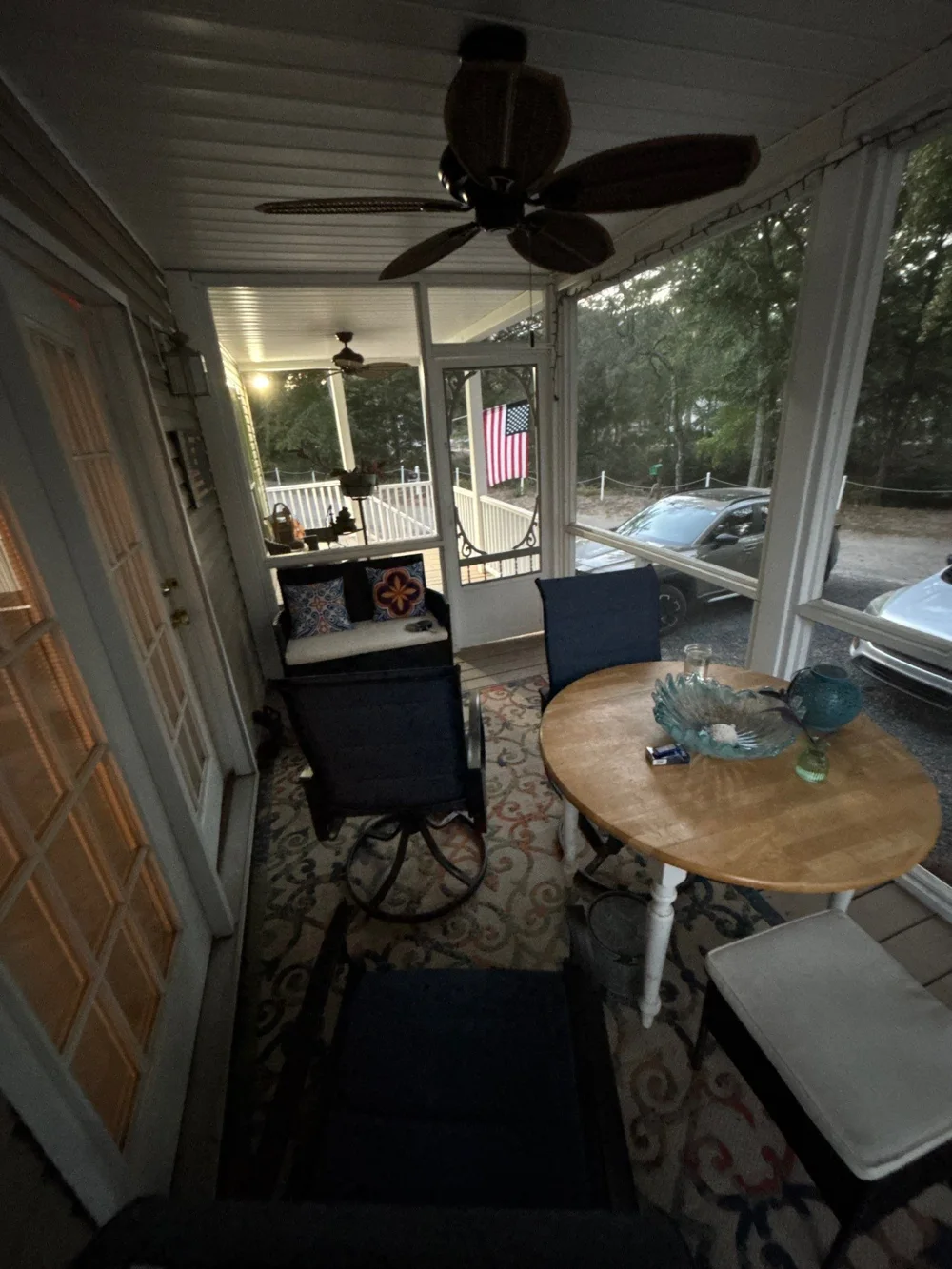
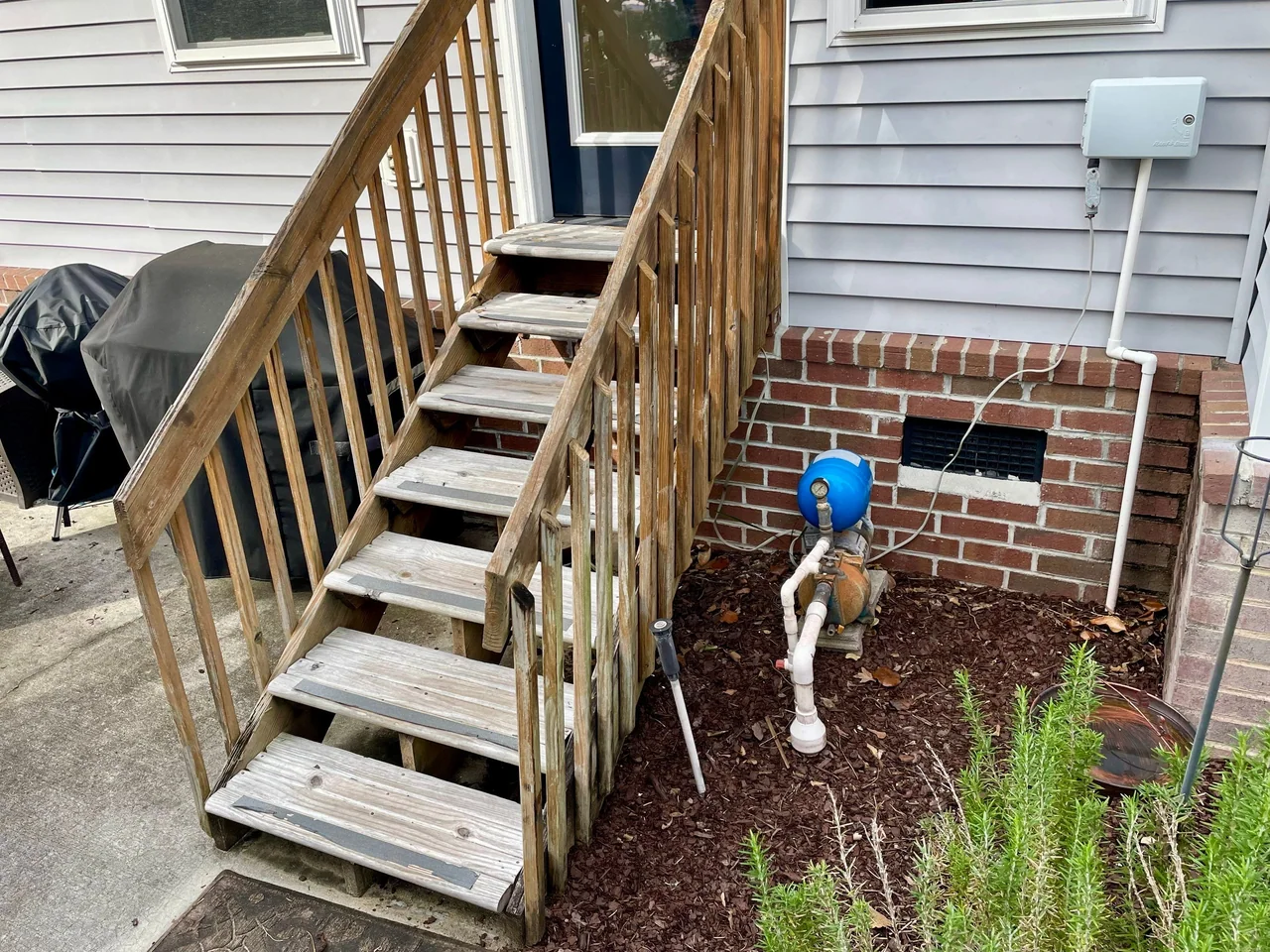
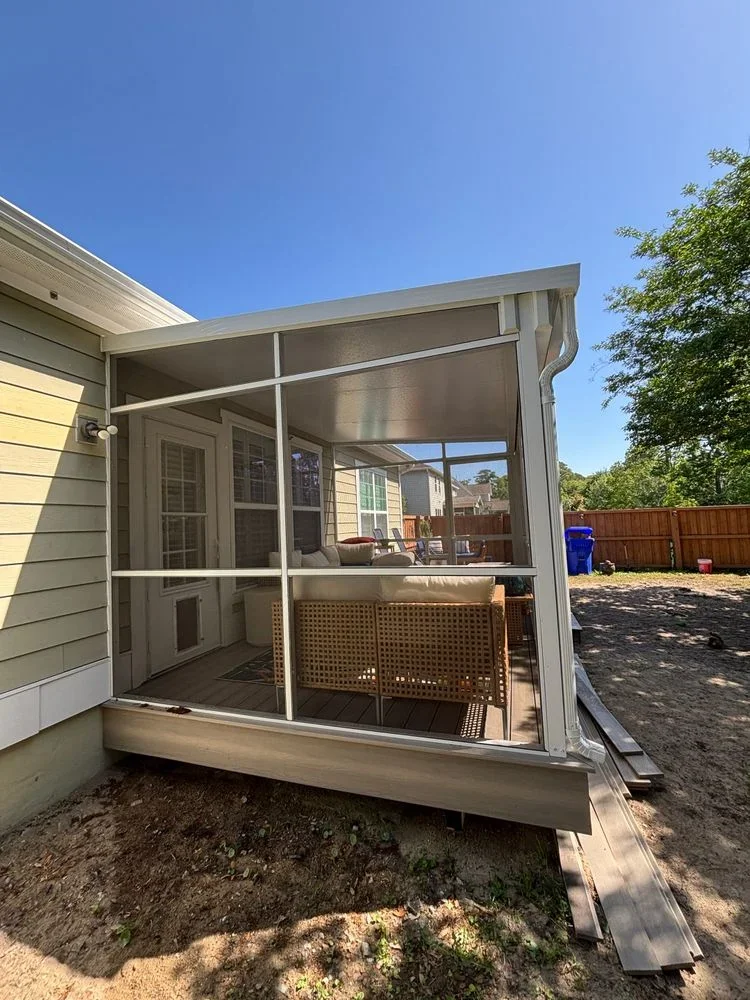
The project's completion was recorded in August 2026. Its photographs show the porch layout and details of the surrounding assembly at different stages. We're using those visible features and the original request to explain how to prepare a renewal scope. We aren't treating the pictures as a structural assessment or claiming that every option raised in the inquiry became installed work.
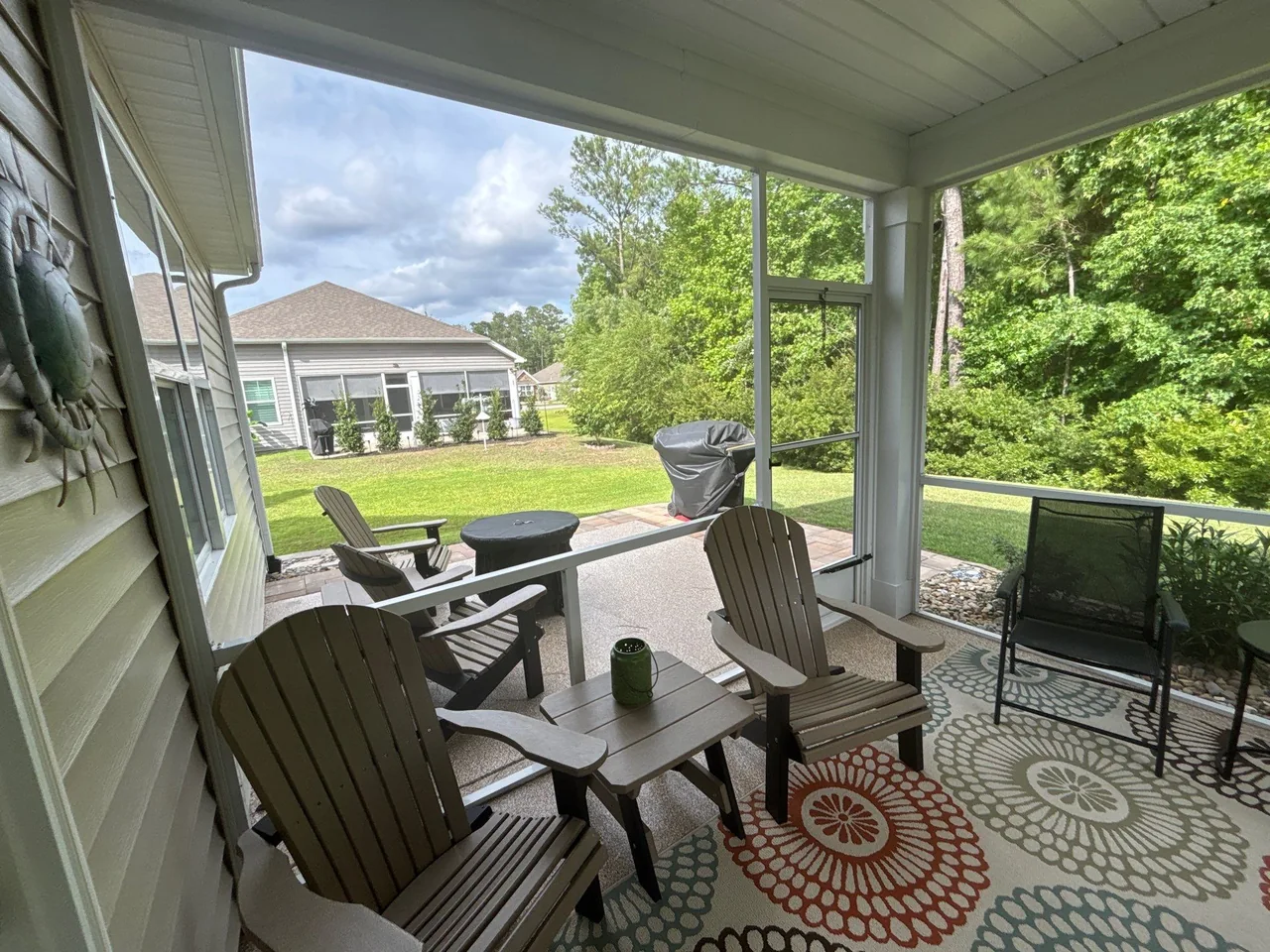
Find out which parts of the existing porch are serviceable
Start with an assessment of the assembly that will hold the new screen. The contractor should explain the condition and suitability of the retained frames, attachments and screen-retention parts, along with any areas needing further investigation. A clean-looking post isn't a complete assessment. Equally, an isolated worn component doesn't tell you that every frame must be replaced. The recommendation needs to connect the actual condition to the proposed work.
Ask to have the parts identified while you're standing at the porch. The visible frame, the components holding the mesh, the attachments and the door hardware may have different service needs. You should be able to understand which part the contractor is discussing without learning a whole catalog of trade terms. A few labeled photographs or a clearly marked proposal can help keep the conversation organized.
If you're comparing retaining the frames with a larger replacement, request a reason for each approach. What can be serviced as part of a rescreen? What would remain unresolved? Which conditions require another assessment? Those answers let you compare the scope on its merits rather than assuming the smaller option is always sensible or the larger one automatically buys a better porch.
Make sure the screening approach fits the retained system
Porch screens aren't held in place in just one way. Different systems have their own components and compatible materials. Screen Tight's documentation, for example, describes a base-and-cap system with replaceable mesh and specific retention parts. That supports the general point that some screening systems are designed to be serviced; it doesn't identify the system at the Little River house or establish which parts belong in your porch.
Have the contractor identify the retained system and the proposed mesh, then explain their compatibility. Ask whether the quote includes the necessary retention components or assumes the old ones can be reused. If the system cannot be identified or suitable parts are unavailable, that uncertainty should be resolved before a mesh-only promise is made. A roll of new screen is only part of an assembled result.
Choose the mesh after the purpose is clear. If tiny insects are the concern, our small-bug screen guide addresses that separate selection question. If the original mesh mostly needs renewal, explain that too. Product names and samples should help define the choice, without implying every mesh will fit every frame or give the same openness and view.
Sources: Screen Tight: original base-and-cap screening system documentation
YOUR HOME. OUR EXPERIENCE.
Thinking about a better screened porch?
Talk with Contract Exteriors about your existing porch, screen choices and the way you want to use the space. Start with a free estimate.
Book Your Free EstimateOur team will call to discuss your project and confirm appointment details.
Give screws, attachments and lower panels their own line items
The Little River request included screws and a lower kick plate, which is exactly why a rescreen proposal needs some detail. Those items can disappear from the conversation if the entire job is summarized as replace screens. Ask what hardware work is included, which components are being retained and how the lower portion of each opening will be treated. A written description helps both sides picture the same finished porch.
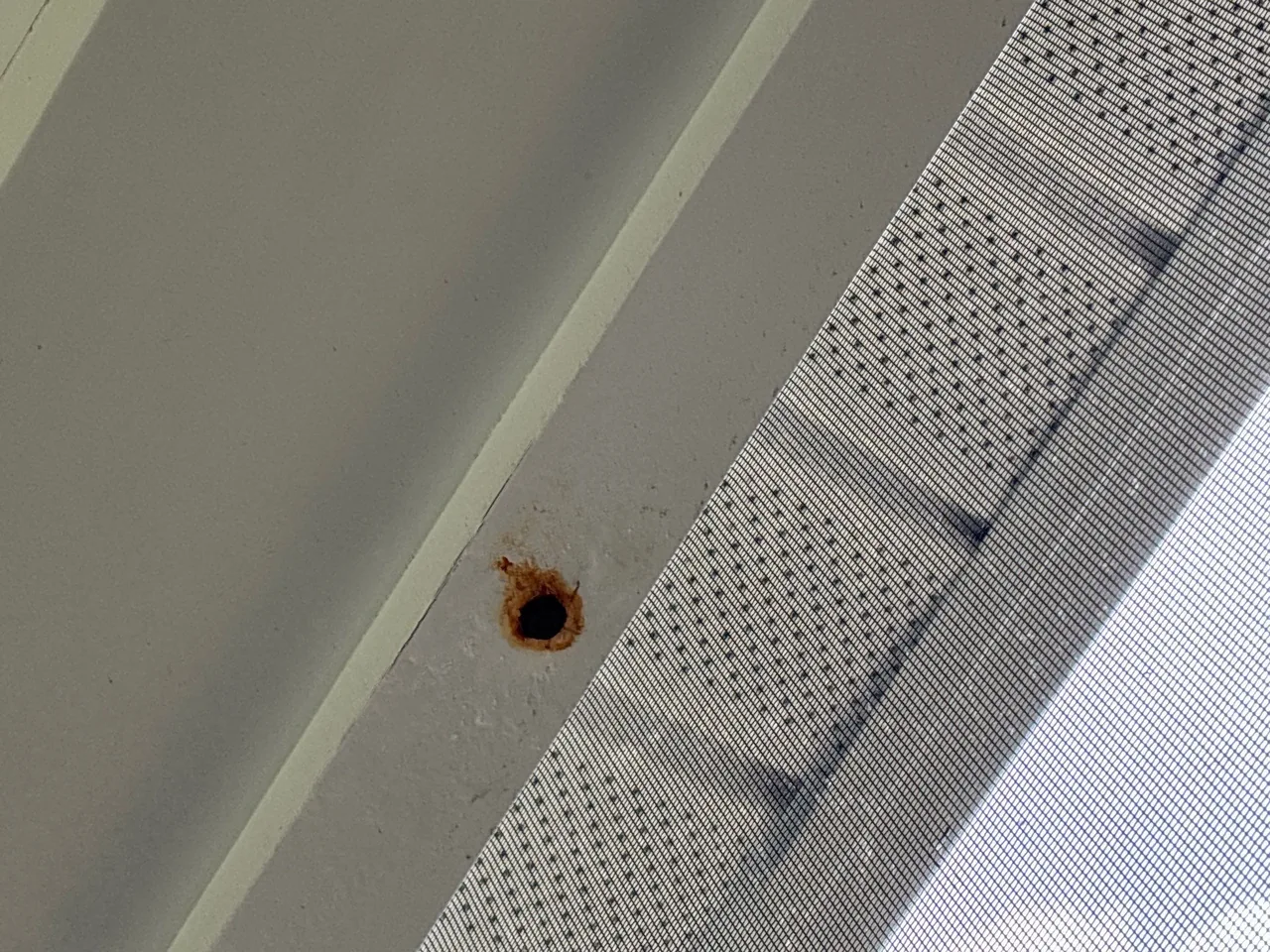
Visible discoloration around an attachment is something to have assessed; it doesn't tell a homeowner which replacement fastener or repair is appropriate. Let the responsible contractor choose compatible components for the actual assembly. Your role in the purchase is to understand whether the proposed work addresses the identified concern, whether it applies throughout the porch and what remains excluded.
A lower solid panel also changes the enclosure's appearance and the view from a chair. Ask to see its proposed height and placement on the actual openings before deciding. It may be a useful component, but don't treat a kick plate or ordinary screen as proof of pet containment or fall protection. Any required guarding needs its own applicable assembly and qualified assessment.
Include the door in the renewal conversation
A porch can have fresh screen throughout and still feel unfinished if the door is difficult to use. Open it, close it and look at the route between the house, seating and yard. Describe the concern in everyday terms: the latch, the way it swings, the opening or the space furniture needs. Have the contractor explain what adjustment, component work or replacement is appropriate rather than assuming new mesh will change the door's operation.
Door options were part of the Little River homeowner's initial inquiry. That makes the door relevant to the planning discussion; it doesn't verify that a particular proposed door style was installed. In your own quote, have the final choice named, with its included hardware and surrounding work. If you decide to retain the door, write down what service is included and what condition is being accepted.
Our porch-door location guide addresses a larger layout decision for homeowners considering moving or adding an opening. A renewal project may not need that much change. Start with the existing route and decide whether servicing it meets your needs before allowing a simple rescreen discussion to grow into a different enclosure design.
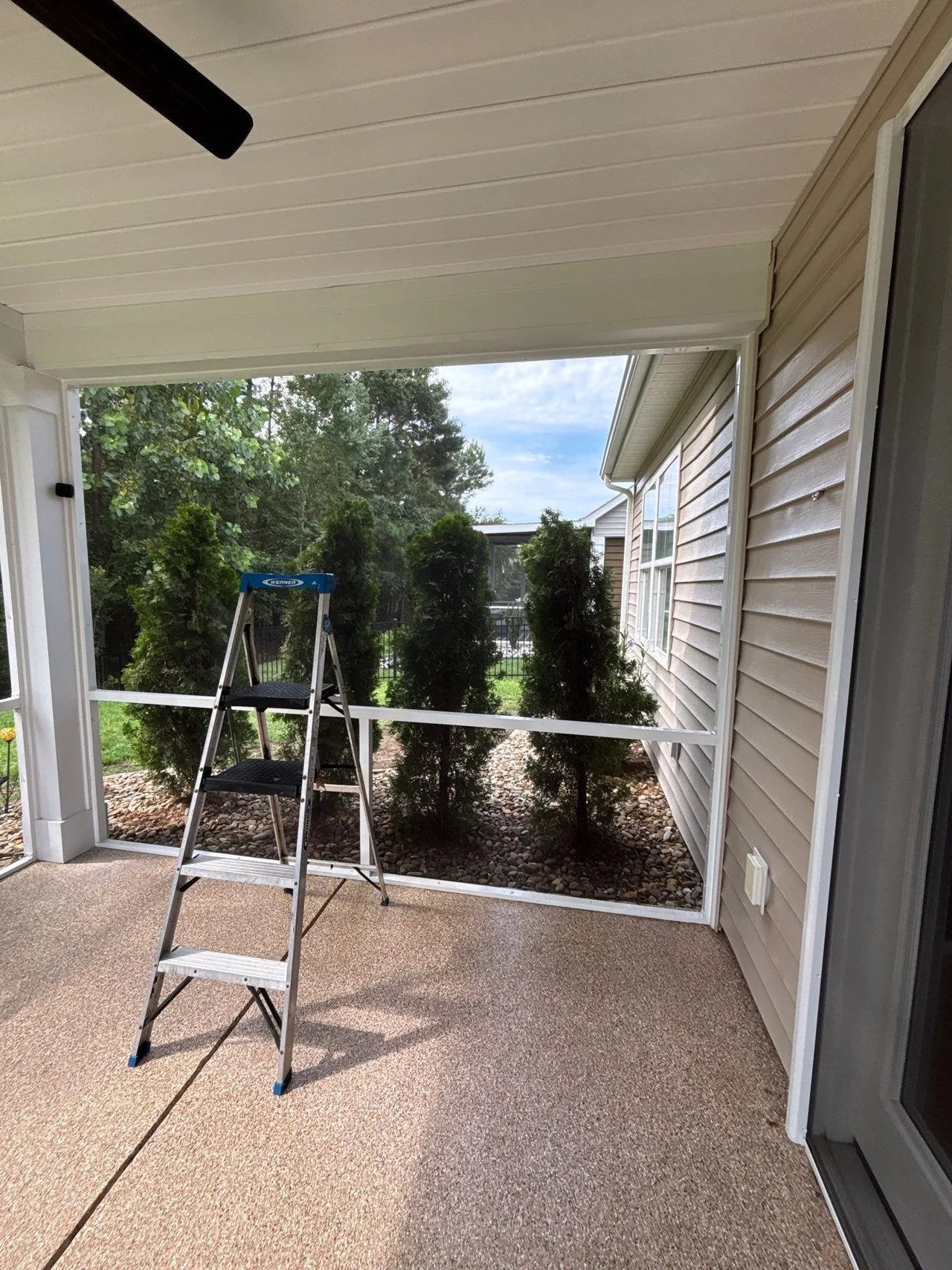
Compare a rescreen scope with a defined larger option
If the assessment supports both a limited renewal and a larger replacement, ask for a clear description of each. The limited scope should identify retained components, new mesh and any selected hardware or panel work. The larger scope should explain what additional components change and why. You'll then be comparing actual work instead of two loosely labeled prices for making the porch look better.
Put the unresolved items beside each option. A less extensive proposal may leave an appearance compromise you're comfortable accepting. Another may leave a condition that still needs assessment. Those are different kinds of compromise, and the contractor should help you distinguish them. Ask what would prompt a change once work begins and how you'll approve it before additional scope proceeds.
Include the costs of adjoining work only when they actually apply. Door changes, lower panels, frame work and finish restoration can affect the complete proposal, but this article doesn't assign them standard prices or a universal ranking. Use our project planner to record the choices you want priced together. That gives the appointment a useful purpose and keeps a reasonable renewal from turning into an undefined shopping list.
Mark up the rescreen quote opening by opening
- Label what stays Use a porch photo or sketch to mark the openings, frame parts and door you expect to keep.
- Mark what changes Note the proposed mesh, retention parts, lower panels and door work where each applies.
- Circle what is still open Ask how the contractor will document a frame or attachment concern and price it for your approval.
YOUR HOME. OUR EXPERIENCE.
Ready to talk through your screened-room plans?
Bring your questions about screens, doors and what can stay to Contract Exteriors. Get help comparing the next steps for your porch.
Book Your Free EstimateOur team will call to discuss your project and confirm appointment details.
Plan for the porch you will maintain afterward
Before you sign, ask how the proposed assembly can be serviced later. Can an individual screen section be renewed? Which product information should you keep? Who handles a concern with a door or attachment? These are practical ownership questions. They can help you judge the value of retaining a system just as much as a color sample or a view through new mesh.
During the handoff, review the agreed work with the contractor and keep the applicable care instructions. Discuss how to report a loose screen, a door concern or another change you notice. Follow the instructions for the exact materials rather than transferring a cleaner or technique from a different porch. A little clarity now is more useful than trying to identify the assembly years after the paperwork has disappeared.
For Little River homeowners, our screened-room resources are a starting point for discussing the porch as a whole. Bring photographs, the concerns you want addressed and the features you already like. The right renewal scope should explain what is staying, why it is suitable to stay and what work makes the enclosure ready for the way you intend to use it.
Confirm the renewal boundaries before work starts
Have the final agreement identify which openings and sides of the porch are included. A photograph or marked layout can prevent confusion when some sections are retained and others change. Include the selected door work and lower panels on that same record. Then decide who moves furniture and what access the crew needs, so the work area is ready without leaving those practical details to the morning of the job.
For any larger change, establish who confirms the appropriate property-specific approvals. Horry County describes its permitting and inspection role within the unincorporated county; a Little River mailing address alone doesn't settle every jurisdiction or requirement. Have the actual location and proposed work checked rather than assuming a frame change has the same approval needs as renewing mesh. This guide does not determine which approvals applied to the example porch.
Sources: Horry County Code Enforcement: jurisdiction and permit resources
Another Angle
Preserve the qualities that already work
Renewing an existing porch is partly a decision about continuity. The household may already have a useful arrangement: a comfortable seating group, a door that leads naturally to the patio and an outlook framed by familiar posts. The desire for fresh screen does not necessarily imply a desire for a different space. A good design conversation identifies which qualities are worth preserving before deciding how much of the enclosure changes.
The Little River example shows a compact porch with seating, a house connection and openings facing the yard. Its value as a planning example lies in those relationships. Mesh, lower panels and door details can influence the experience without changing the entire footprint. Their effect should be considered at the scale of a seated person as well as in an exterior photograph of the whole enclosure.
Begin with the view from the chair used most often. A lower panel that appears modest from the yard may occupy a larger share of that seated view. Conversely, a visible lower edge might help the enclosure feel more settled. These are design preferences to test with an actual proposed layout, rather than reasons to prescribe one universal panel height or claim that openness is always the better choice.
Read the pattern of the enclosure
The rhythm of the retained frames also matters. Repeating posts and horizontal divisions give a screened wall its pattern. Replacing mesh can refresh that pattern while keeping the porch's proportions familiar. Larger changes to doors or panels may alter it. A simple marked photograph can help the homeowner compare those choices without confusing a visual preference with an assessment of the assembly's condition.
That visual comparison is most useful after the contractor has explained what is suitable to retain. Preservation should be a considered choice supported by assessment, rather than a rule that every old component must stay. Replacement should likewise have an identifiable purpose. The design can then focus on the opportunities within the agreed scope instead of using a desired appearance to bypass unresolved condition questions.
There is a practical relationship between circulation and furniture, too. A door is experienced through repeated movement: carrying a tray, moving a chair or stepping into the yard. A renewal project offers a chance to check whether the existing arrangement still works for the household. Sometimes servicing the existing door is the relevant discussion. Sometimes a larger layout change deserves a separate option, with its additional work clearly stated.
Include serviceability in the design
The material selection should also be viewed through the life of the porch. Homeowners will eventually need to clean surfaces, report wear or renew a damaged section. Understanding the retained system and keeping its product information makes those future conversations easier. Serviceability is an ownership quality worth discussing alongside the immediate appearance, even though it cannot be judged from a sample of mesh alone.
A restrained renewal can be a well-defined design outcome. It can preserve the arrangement that already suits the house while addressing the components that need work. The measure of completeness is the clarity of that decision: what stays, what changes and how the porch is intended to function afterward. That gives the homeowner a coherent scope to buy and a familiar space to continue using.
A FEW MORE ANSWERS
Questions homeowners ask
Can only one damaged screen section be replaced?
It may be possible if the existing system and surrounding components are suitable for that service. Have the contractor assess compatibility and condition, then identify exactly which openings the proposal includes.
Does rescreening include new screws and door hardware?
Not automatically. List attachments, visible hardware, door service and any replacement components separately in the agreement. A mesh replacement description alone may leave those items outside the scope.
Should I add a kick plate while the screens are being renewed?
Discuss it as a separate option. Review its location, appearance, compatibility and effect on the seated view. A lower panel is not automatically a pet-containment system or a qualified fall-protection guard.
Can I change to a different mesh while keeping the frames?
Possibly, but the mesh must suit the retained system and intended opening. Have the contractor identify the proposed material and compatible retention parts instead of assuming all screen products are interchangeable.
Will new screen fix a door that will not latch?
Do not assume it will. Have the door, frame and hardware assessed and include the proposed service or replacement explicitly. Operate the door during the quote visit so the concern is clearly understood.
What should I ask before choosing full frame replacement?
Ask which assessed conditions or desired changes justify the larger scope, what a limited renewal would leave in place and what still needs investigation. Compare the written component lists and exclusions before comparing totals.
Sources and review
Contract Exteriors project evidence: Internal project records and original CompanyCam photographs support the project examples described in this article. Customer records and identifying details remain private. Project examples are separate from the manufacturer guidance and other published references below.
A matched Little River porch-renewal request included rescreening, screws and lower-panel work, with door options also raised. Completion recorded August 2026. Original and later work photographs are distinguished; no exact mesh/frame brand, installed door option or structural/guard approval is inferred.
- Screen Tight: original base-and-cap screening system documentation
- Horry County Code Enforcement: jurisdiction and permit resources
- Contract Exteriors project records — This article uses matched internal project records and original CompanyCam photographs, reviewed November 9, 2026. Private records are not publicly linked; this link opens the company project portfolio.
Editorial review details
Reviewed for Contract Exteriors by Bill Schum, Marketing Director, Contract Exteriors, on November 9, 2026. Scope: Editorial oversight, source and project-record checks, photo-originality review, and mobile/desktop presentation checks. Research and editing were supported by AI tools. Design commentary reflects an editorial perspective and does not constitute professional architectural or engineering advice or a property-specific site assessment.
Our sourcing and corrections standards · Report a correction