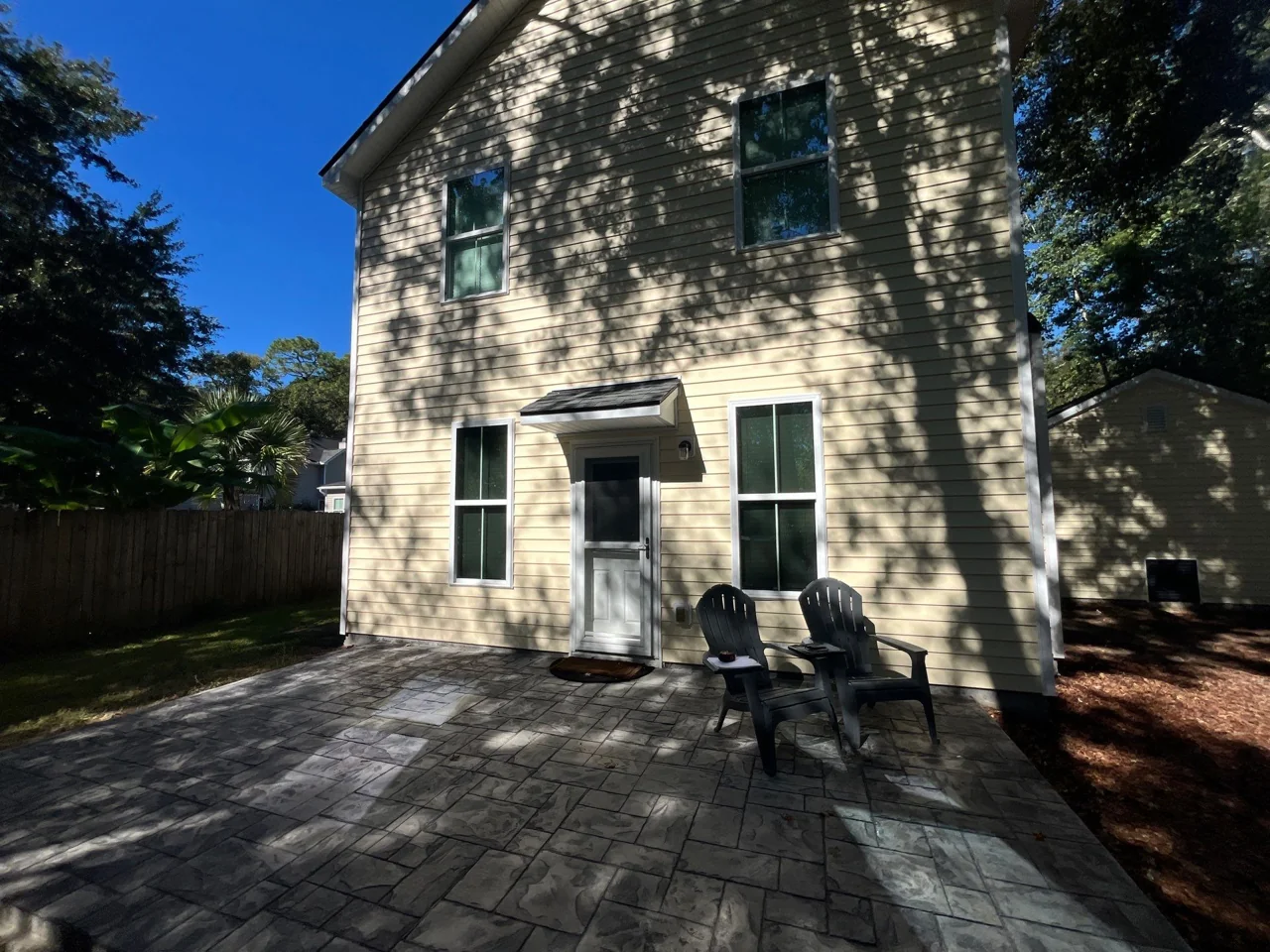
A screened porch should earn its place in your evening
Project at a glance
- Location
- Myrtle Beach, South Carolina
- Local example
- Fixed screen enclosure on a covered rear patio
- Details shown
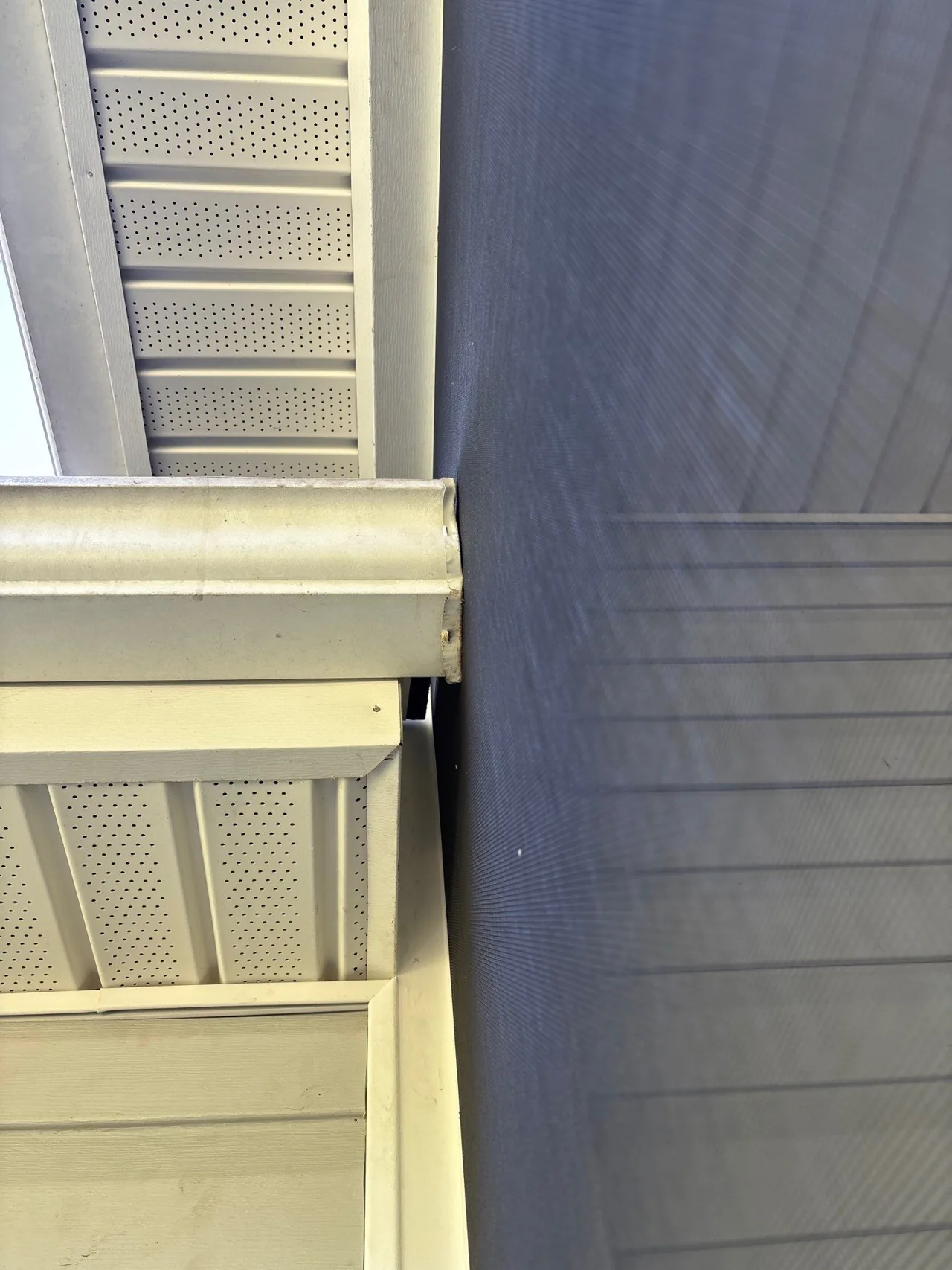
- Wall framing, upper connection and screen panels during construction
- Stage
- Installation photographs from August 2026; completion recorded afterward
You carry a drink outside, settle into a chair and start swatting. If that sounds familiar, “replace the screen” can feel like an obvious answer. First, it helps to find out what is getting in—and where.
For homeowners around Myrtle Beach, the useful decision is whether the existing enclosure needs a localized repair, a different mesh, or a more complete update. A finer material addresses the openings within the fabric. It leaves the door, damaged edges and other entry routes to be dealt with separately.
Our screened-room planning guide covers the larger project. This guide focuses on choosing and checking the insect barrier before you spend money on it.
Could the insects be coming through intact mesh?
Yes. University of Florida IFAS explains that ordinary window screening does not exclude biting midges, commonly called no-see-ums. The openings in screening intended for those insects are smaller. An intact screen can therefore be the wrong screen for the insect you want to keep outside.
The habitat question matters around coastal waterways and damp yards. The same university publication describes biting-midge larvae using habitats that include stream edges, marshes, ponds and tree holes, with different species using different settings. That makes small-insect protection worth discussing when those conditions are relevant to your Grand Strand home; it does not identify the insects at your property.
Try to obtain a clear photograph or specimen and ask an Extension office or qualified pest professional for identification. “Tiny bugs” is a useful description of the nuisance, but it is not a product specification. If the insect is developing inside the enclosure, changing the outside mesh may not address its source.
Sources: University of Florida IFAS: Biting Midges, No-See-Ums
What does no-see-um mesh actually change?
No-see-um screening is made for smaller flying insects. Phifer’s fiberglass No-See-Um product, for example, has a tightly woven 20 × 20 mesh and is described for porch and patio enclosures. The manufacturer says it keeps out most smaller flying insects while allowing ventilation and visibility.
Treat that as a product to compare, with its own specifications. “20 × 20” describes the mesh count, not a guarantee that every tiny insect will stay outside or that every product with that number performs identically. Ask for the actual manufacturer and product name.
Take a sample outside. Look through it toward the part of the yard you enjoy, then look from your usual chair. Compare the proposed products’ published airflow and visibility information where available. Without comparable data, there is no honest percentage to attach to how much breeze or view you would give up.
If scratching is another concern, bring it up at the same time. Phifer also makes a TuffScreen No-See-Um product that combines a stronger mesh with small-insect protection. Product examples do not establish what Contract Exteriors will specify for your porch; compatibility and availability belong in the proposal.
Sources: Phifer: No-See-Um screening · Phifer: TuffScreen No-See-Um
YOUR HOME. OUR EXPERIENCE.
Thinking about a better screened porch?
Talk with Contract Exteriors about your existing porch, screen choices and the way you want to use the space. Start with a free estimate.
Book Your Free EstimateOur team will call to discuss your project and confirm appointment details.
Follow the screen all the way around the porch
Before approving a mesh upgrade, have the contractor check how the enclosure meets the floor, posts, house and upper framing. Include tears, loose material, panel edges and the screen door. A small-insect screen across a wall cannot close a separate opening beside it.
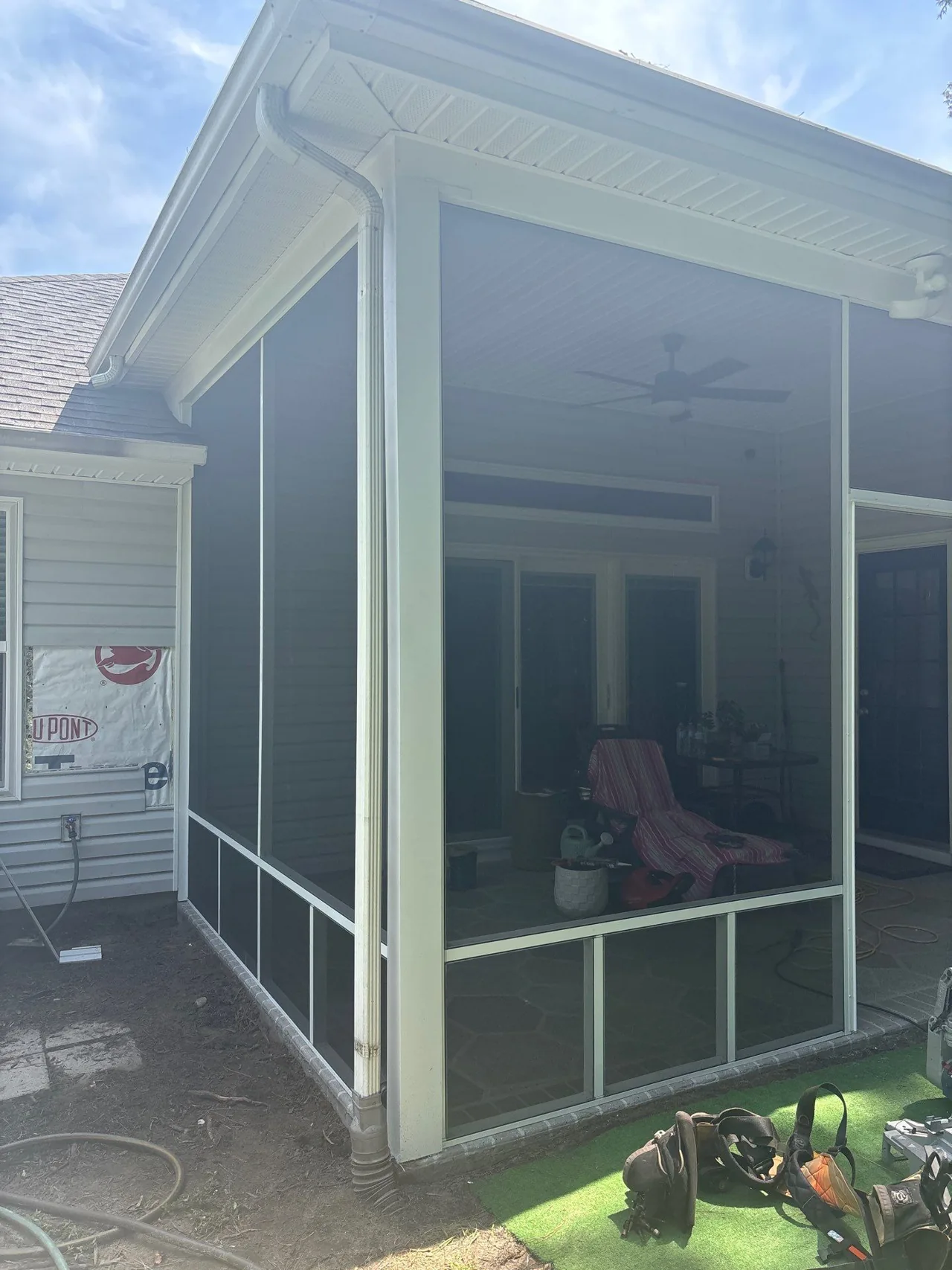
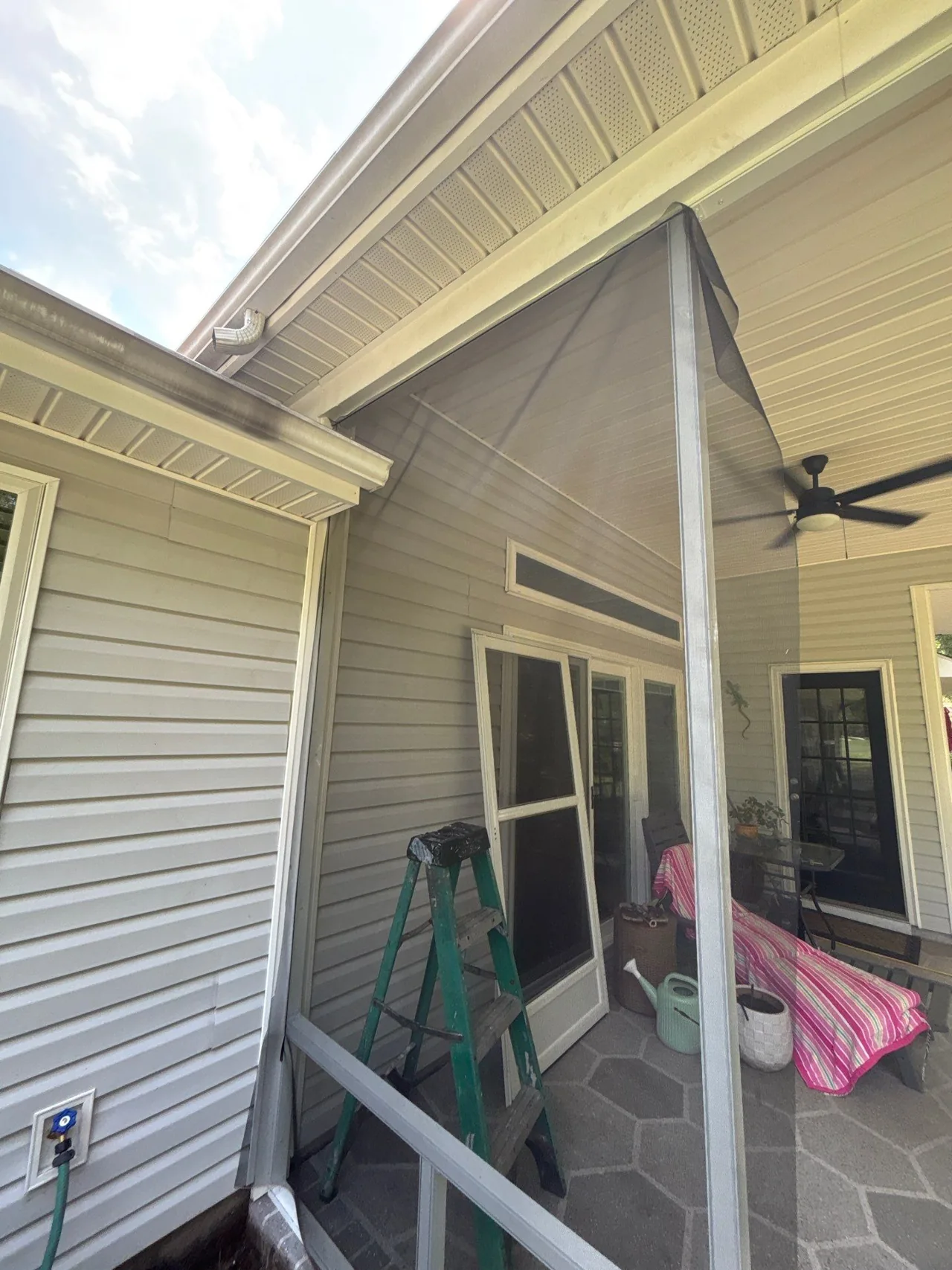
At one Myrtle Beach Contract Exteriors enclosure, panels wrap a corner beneath the existing cover and a separate screen door opens to the yard. When you walk through your own porch with the contractor, follow that whole route: across the panels, around the corner and through the door.
The local project illustrates the enclosure layout, not a tested no-see-um remedy. For your nuisance, identify the insect and ask which mesh and any perimeter repairs would address it together.
Have any proposed gap repair assessed for the actual system. Avoid a blanket instruction to caulk every opening: the correct detail must preserve required drainage, ventilation and the manufacturer’s installation requirements. Structural or water-entry concerns need their own assessment.
Repair the screen, change the mesh, or update the enclosure?
Start with the condition and the problem, then compare scopes. Screen Tight identifies existing framing, opening size and mesh material among the factors in selecting a porch screening system. Those details can limit what a simple rescreen can accomplish.
A localized tear in otherwise suitable screening is a different project from replacing all the mesh for smaller insects. Damaged framing, an ill-fitting door or deteriorated connections can make the scope larger. An assessment should explain which condition is actually present at your home.
Give the door its own line in the quote
The door is the part you open every time someone carries dinner outside or lets the dog through. Check that it closes and latches as intended, and have its perimeter and lower edge assessed along with the walls. Specify whether its mesh is being replaced with the same product.
Ask what happens if the door is left open, the closer needs adjustment, or a panel is damaged later. You want a practical maintenance and repair plan as well as a material name.
Our pet-screen and lower-panel guide explores the separate durability and layout choices for households with dogs. Pet-resistant fabric, a horizontal rail and a solid lower panel do not by themselves establish safe pet containment or fall protection.
What should you bring to a Myrtle Beach porch consultation?
Bring photographs of the whole enclosure and close views of any damaged areas. Describe when you notice the insects, whether the door was closed and whether the nuisance is concentrated in one area. Share an insect identification if you have one. Those observations help frame the assessment without assuming a cause.
Request a written scope naming the mesh on every wall and door, the frame or attachment work included, and how existing connections will be assessed. Have the contractor distinguish routine adjustments from replacement parts, and explain how the proposed screen can be repaired later.
For price comparisons, keep that scope consistent. Replacing fabric alone is a different purchase from replacing frames and a door. Size, access, existing condition, compatible mesh and the amount of surrounding work all belong in the discussion.
If the project changes the enclosure rather than simply addressing the fabric, confirm the responsible permitting authority for your actual property and any applicable association review. A Myrtle Beach mailing address or ZIP does not settle jurisdiction.
If you are still deciding whether an open covered patio can become a screen room, start with our covered-porch feasibility guide. When you are ready to compare an enclosure repair or replacement scope, get a free expert opinion from Contract Exteriors.
Another Angle
Compare the enclosure from the occupied room
A screened porch mediates between a room and a landscape. Its boundary is visibly present, yet the household may value the sense of connection beyond it. When insect concerns prompt a new selection, give that relationship its own design review. The practical assessment in the main article establishes the problem to address; this perspective asks what character of the outdoor room the proposed response should preserve.
Begin from a normal seat rather than a close inspection of the mesh. Include the frame, door and garden in one view. Which element attracts attention, and which would you prefer to remain secondary? A screen sample studied on a counter supplies only part of that experience. The complete boundary belongs within the composition through which the yard is ordinarily seen.
Then examine the view from inside the house. You may be looking through a door opening and the enclosure together. Their frame lines can form a combined pattern, even though each belongs to a different assembly. Identify the important relationships in that layered view. A panel arrangement that feels orderly from the lawn deserves another comparison from the room that faces it.
Keep the outdoor connection in the brief
The lower boundary can have a different visual role from the upper area. From a low chair, a horizontal division may become prominent; from a standing position, the garden may dominate. Compare the actual suitable alternatives at both positions. This is an appearance judgment, not a proposed rail dimension, a safety rating or permission to alter the required system.
Now identify what the household wants the enclosure to feel like during its usual period of use. A defined outdoor room and a visually quieter edge are different possible preferences. Neither establishes insect exclusion or substitutes for the assessment. Naming the preference prevents the concern about insects from becoming an unexamined instruction to add more framing, more lower coverage or another enclosure type.
Where options differ, compare the complete proposed configuration with its product information. Ask what a display represents and which details remain to be confirmed. Do not infer a quantified change in daylight, airflow or visibility from the appearance of a sample. The useful design comparison concerns the actual view you prefer, while material-performance questions require the applicable documented explanation.
Resolve the competing priorities openly
The local covered-patio example illustrates an enclosure taking shape within an existing house-and-yard setting. Its relevance here is that retained context. Another porch may have different framing, a raised floor or a different relationship with the garden. Keep those distinctions visible rather than assuming the same visual treatment also addresses a different insect route or construction condition.
A conflict between priorities should remain explicit. If a proposed response to the supported insect concern changes the view or room character you value, identify the change and ask which suitable alternatives deserve assessment. The answer may involve accepting the tradeoff, revising the selection or clarifying the underlying requirement. An attractive picture alone cannot reconcile an undefined performance expectation with an unstated aesthetic preference.
The final brief should contain both parts: the specific concern requiring a justified response and the outdoor connection the household wants to retain. The main guide's evidence and assessment checks then test the proposed work. This additional reading gives the selection a clear design intention, so the porch is considered as an occupied place within the landscape as well as a collection of screening components.
A FEW MORE ANSWERS
Questions homeowners ask
Does no-see-um mesh guarantee a bug-free porch?
No. Choose a product suited to the identified insect and assess the complete enclosure. Tears, gaps, an open door or an insect source inside the porch can require a different response.
Do the walls and door need the same mesh?
Have the contractor specify each separately. If small-insect protection is the goal, leaving unsuitable mesh in the door can leave that part of the enclosure unaddressed.
Can I keep my existing screen frames?
Possibly. Their condition, opening sizes and compatibility with the proposed material need assessment. A rescreen quote should say what is retained, repaired and replaced.
Should I identify the insects before choosing replacement mesh?
Yes. A clear photograph or specimen can help an Extension office or qualified pest professional identify the nuisance. Mesh chosen for small flying insects may not address an insect source inside the porch. Check the door, edges and damaged sections as well as the fabric before deciding on the work.
What should a small-insect rescreening quote include?
Name the exact mesh and identify which wall panels and doors receive it. List retained frames, repairs, damaged edges and other work needed around the screen, along with finish and cleanup responsibilities. Compare samples and available visibility and airflow information before approving the selection.
Sources and review
Contract Exteriors project evidence: Internal project records and original CompanyCam photographs support the project examples described in this article. Customer records and identifying details remain private. Project examples are separate from the manufacturer guidance and other published references below.
Anonymized Contract Exteriors project records and same-project construction photographs support the Myrtle Beach enclosure example. Completion was recorded after the installation photographs. The example illustrates enclosure layout and work stages; no insect identification, small-insect mesh specification or tested exclusion result is attributed to this property. General screening guidance comes from the separately linked primary sources.
- University of Florida IFAS: Biting Midges, No-See-Ums — EENY 349, 2025 revision; pages 1, 3 and 5: insect size, varied larval habitats and the limits of ordinary screening. General biological guidance, not a South Carolina prevalence survey or identification of this property’s insects. Read October 28, 2026.
- Phifer: No-See-Um screening — Exact 20 × 20 fiberglass product description, intended applications and qualified small-insect protection. Read October 28, 2026; not identified as the photographed project’s mesh.
- Phifer: TuffScreen No-See-Um — Manufacturer’s stronger small-insect mesh example. Read October 28, 2026; no storm rating or installed-product claim adopted.
- Screen Tight: Choosing a porch screening system — Framing, opening size and mesh selection as system-planning considerations. Read October 28, 2026; no installation specification or guard-compliance claim adopted.
Editorial review details
Reviewed for Contract Exteriors by Bill Schum, Marketing Director, Contract Exteriors, on October 30, 2026. Scope: Editorial oversight, source and project-record checks, photo-originality review, and mobile/desktop presentation checks. Research and editing were supported by AI tools. Design commentary reflects an editorial perspective and does not constitute professional architectural or engineering advice or a property-specific site assessment.
Our sourcing and corrections standards · Report a correction