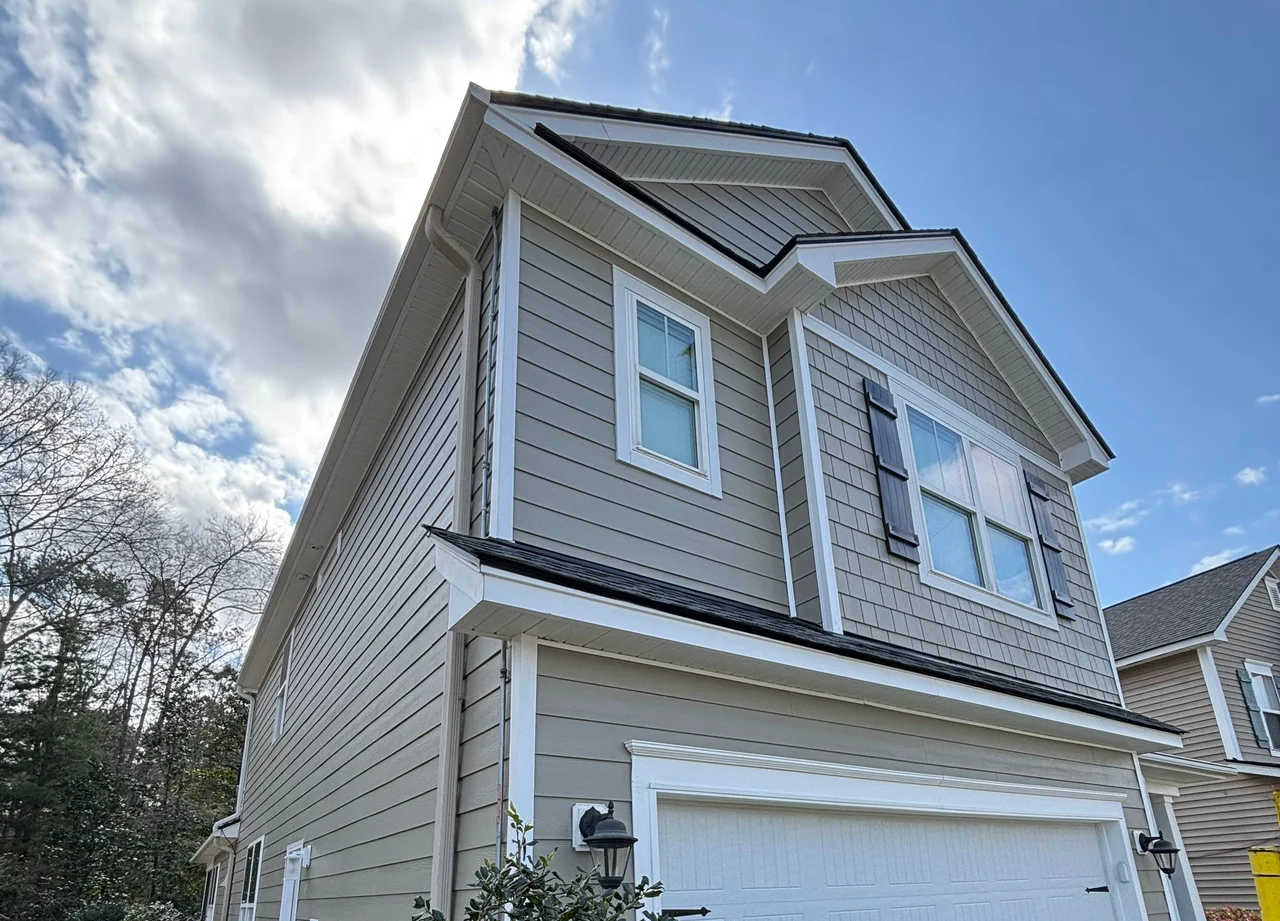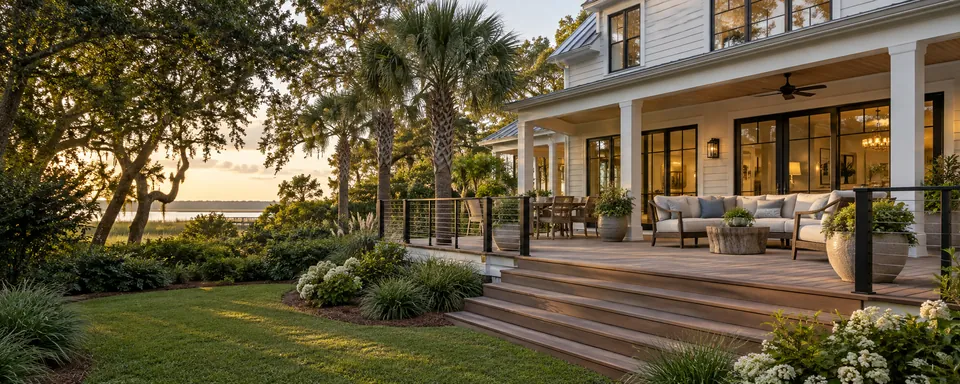
A little siding can change the front of the house
Project at a glance
- Local example
- Murrells Inlet, South Carolina
- Recorded request
- Scalloped siding at the front peaks near the garage and entry
- Existing exterior
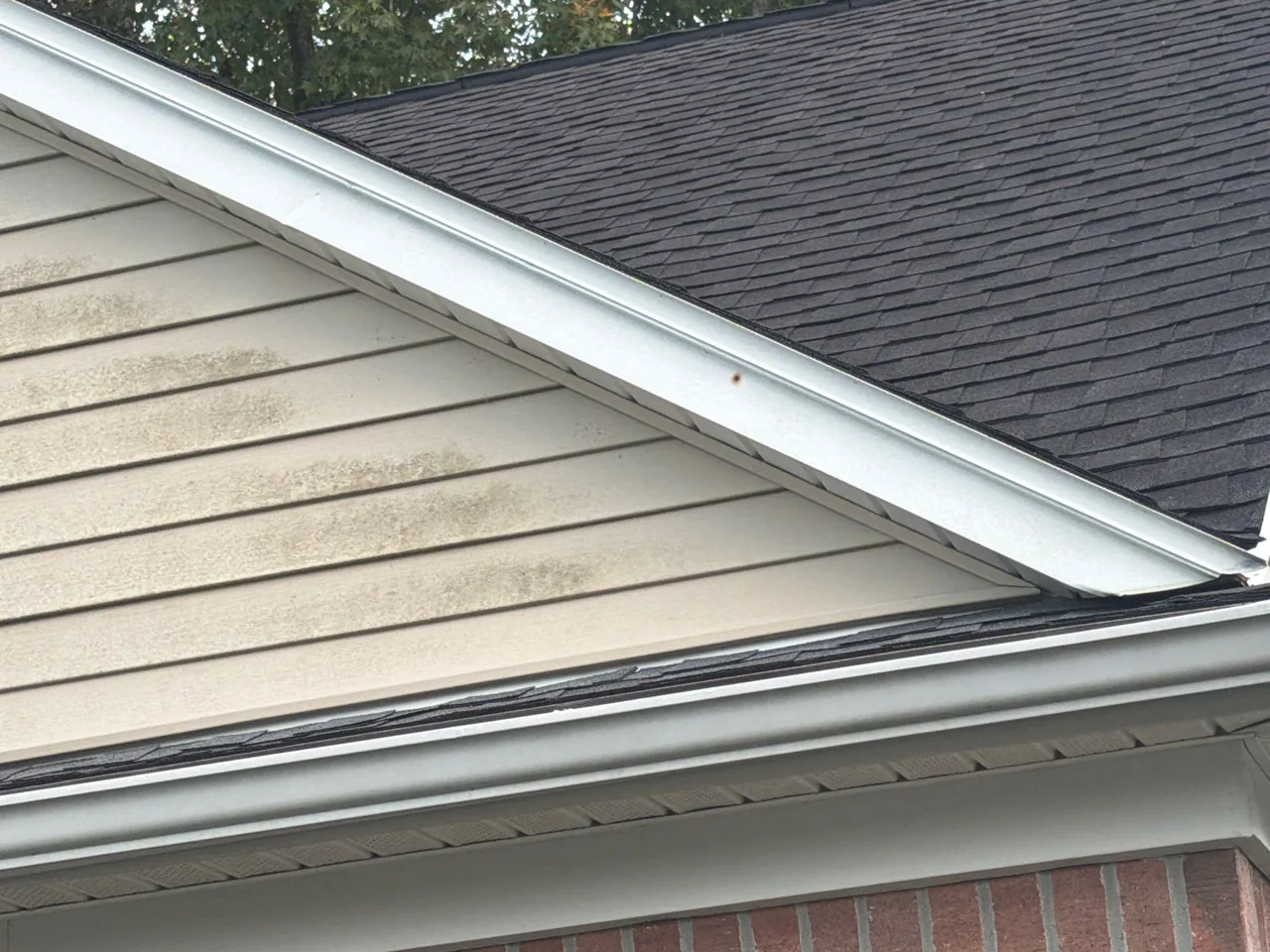
- Horizontal gable siding, brick, light trim and a decorative vent
- Project stage
- Accent-siding inquiry; existing-condition photographs
You may like most of your exterior and still feel that the front peaks need something. The brick can stay. The roof can stay. You're looking for a bit of character above the garage or entry, not a completely different house. That's where scallop and shake-style siding often enter the conversation—and where the names can make the choice sound simpler than it is.
A Murrells Inlet homeowner asked Contract Exteriors about scalloped siding at the front peaks, identifying the garage and front-door areas. The existing photographs show horizontal siding in the gables, brick below, light trim and a rounded decorative vent. This is an accent request at the planning stage, not a completed scallop installation. It gives us a concrete starting point for comparing what the shapes would contribute.
The useful question isn't just whether scallops are attractive. It's whether their rounded pattern improves the parts of this house the homeowner wants to emphasize. Start with our siding planning resources if you're still deciding the overall scope. Here, we'll stay with the narrower choice between two different kinds of gable texture.
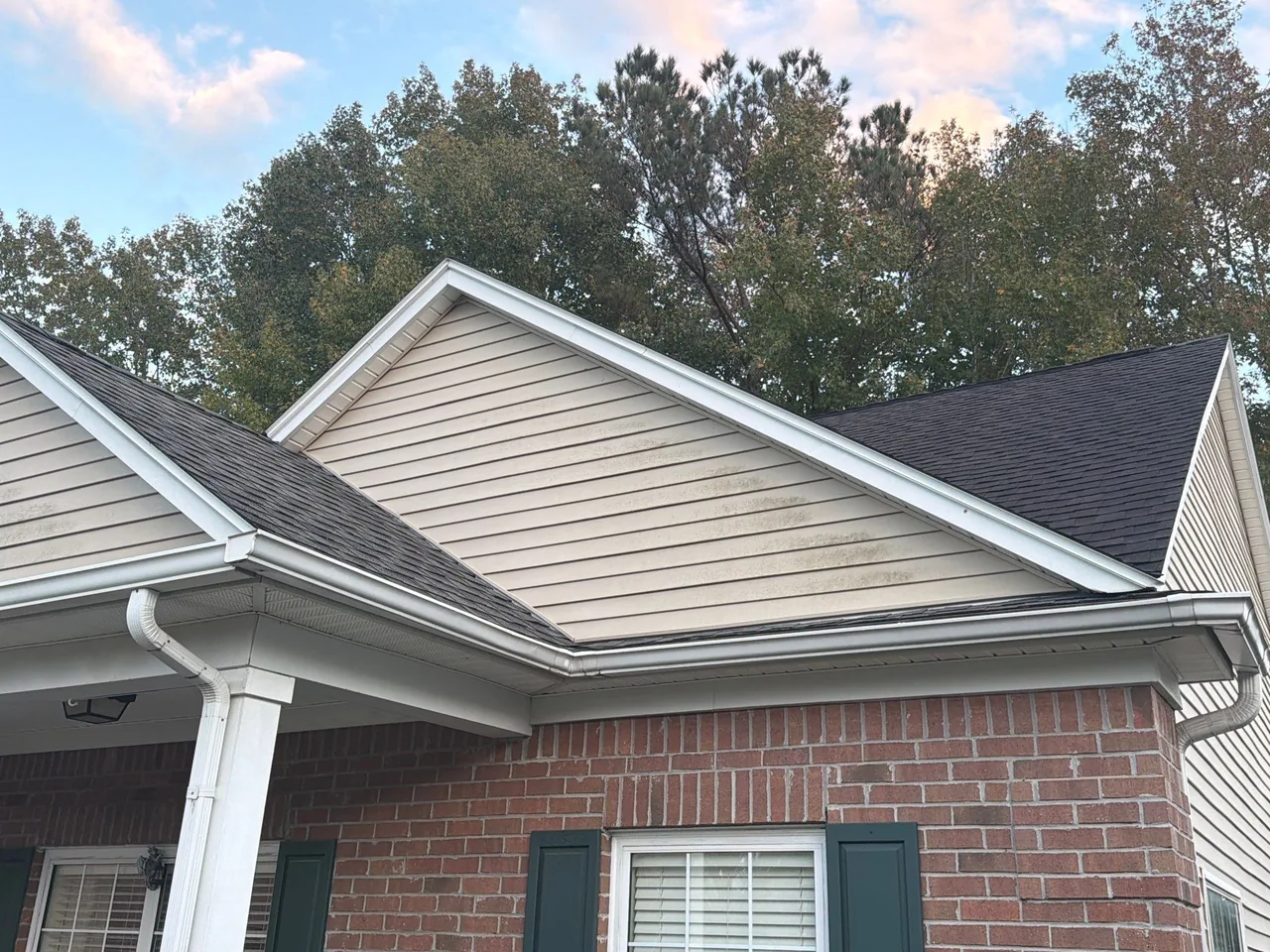
Sources: Contract Exteriors project records
Know which difference you're comparing
Scalloped siding uses repeating rounded lower edges. Shake-style siding generally aims for the textured appearance associated with split cedar. Manufacturer Alside distinguishes those effects in its profile guide, describing scallops as a decorative option for areas such as gables and dormers. Those descriptions help explain the look; they don't establish that a particular Alside product will be proposed for this project.
The distinction matters because color can distract from shape. Put a pale scallop sample beside a dark shake sample and you may be judging contrast more than profile. Ask to see comparable colors where available, then compare the rounded rhythm with the more textured alternative. You can settle the color after you're confident about which pattern you actually want.
Also ask what the sample is made from. Scallop and shake are descriptions of appearance, not complete material specifications. Don't assume a shape shown in one manufacturer's line is available in the material, finish or color you prefer from another. The proposal needs the actual manufacturer, collection and profile—not simply decorative siding.
Sources: Alside profile definitions: shake, scallop and shingle
Let the materials staying on the house have a vote
In the Murrells Inlet example, the gables sit above brick and alongside light-colored trim. Those retained materials provide much of the home's existing character. A new accent has to work with them, even though they aren't being ordered as part of the siding selection.
Take samples outside and look at them beside the real brick, roof and trim. A color that looks calm on a small display can appear more pronounced when repeated across a triangular area. Check the sample in the light you can actually observe rather than relying on a screen rendering as the final color decision.
Our siding-and-trim color guide covers the broader palette discussion. For this profile choice, ask a simpler question: would the pattern still appeal to you if it matched the existing wall color? If yes, texture may be doing the work you want. If no, you may be looking primarily for a color change rather than a new shape.
Sources: Contract Exteriors project records
YOUR HOME. OUR EXPERIENCE.
Thinking about new siding for your home?
Talk with Contract Exteriors about siding options, trim and the work your exterior needs. Start with a free estimate.
Book Your Free EstimateOur team will call to discuss your project and confirm appointment details.
Compare the two peaks as one front elevation
An accent over the entry and an accent over the garage will be seen together from some viewpoints. Walk to the driveway or another normal approach and look at both. Notice which peak already feels more prominent. Then ask whether you want to reinforce that emphasis or bring attention toward the entrance.
You don't have to use a different pattern to make each gable special. Repeating one profile may create a more settled result. A contrasting color can make even a small area assertive, while a similar color can let the profile read more quietly. These are design tradeoffs, not rules that every coastal house must follow.
If you're considering more than the front peaks, pause and define the boundary. Our accent-placement guide discusses where an accent should begin and end. This article asks a different question: once you've chosen the gables, does a rounded decorative pattern or a shake-like texture suit the composition better?
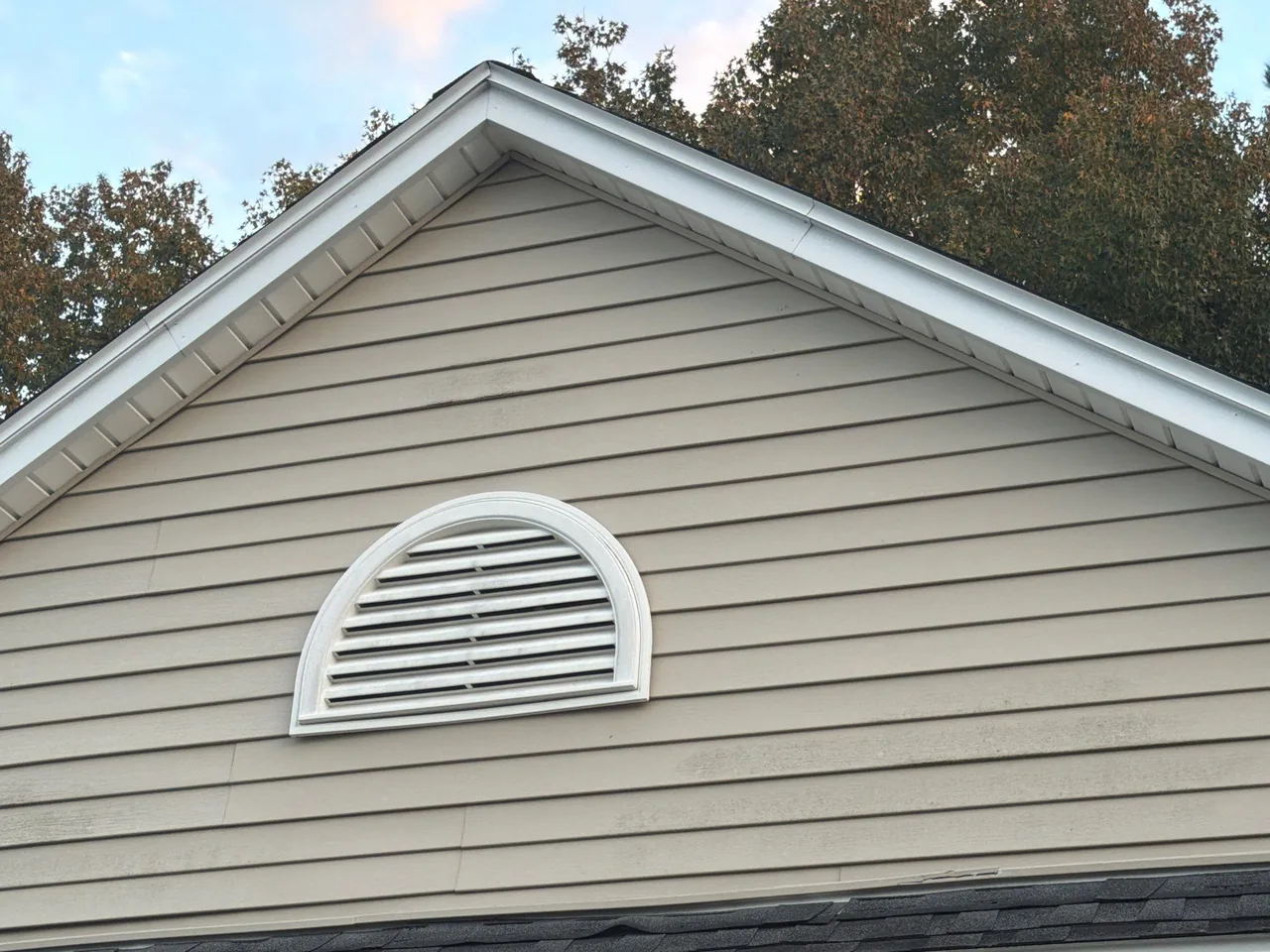
Include the vent and edges in the sample conversation
A gable isn't an empty triangle. It has edges, trim and sometimes a vent or other feature in the middle. The rounded vent in the local example is a good reminder to discuss what remains within the new pattern. Ask whether it stays, changes or needs related work, and have that answer included in the scope.
Look at the proposed profile beside the vent shape and trim width. Repeated curves can feel connected, or they can feel busy. A textured profile can provide a different backdrop without repeating the same curve. There is no need to invent a technical advantage for either appearance; this part of the choice is about how the elements look together.
The installation details are a separate assessment. Ask how the selected siding meets the retained materials and which removal, preparation, transition and finishing work is included. Don't ask a sample board to answer questions about the existing wall behind it. The actual product instructions and site conditions govern the work, with applicable professional and authority review where needed.
Sources: Contract Exteriors project records
Price the complete accent rather than the panel alone
A small front-gable area isn't automatically a small job. Access, removal, preparation, trim and the selected profile can all affect the proposed scope. Ask for an installed comparison of the options you're genuinely considering. A material-only number won't tell you whether two proposals include the same surrounding work.
Keep the comparison specific. If one option retains the vent and trim while another replaces them, ask why and have the difference explained. If an allowance remains for something that can't be assessed yet, ask how it will be confirmed and approved. You can compare a defined uncertainty more fairly than a vague promise that everything is included.
There is no verified local price premium or resale return attached to this inquiry. The homeowner's request establishes an interest in scallops, not an installed cost, final product or measured outcome. For your own home, the useful number is the proposal for the exact areas and selections you're considering, with clear inclusions and exclusions.
Make the final choice from the real approach
Before ordering, return to the view that prompted the project. Look from the driveway, the path to the entry and any other normal approach. Check whether your preferred sample adds the character you wanted without competing with the brick, trim or entry. The close-up matters, but you won't usually experience the whole gable from a foot away.
Then confirm the actual profile and finish, the boundaries of the work, treatment of the vent and trim, and any required association or address-specific approval. An attractive product illustration isn't approval for a particular home. Keep the design decision and the required checks moving together so neither is left until after an order.
Bring those choices to a Contract Exteriors consultation. A marked front-elevation photograph and two or three honest preferences are enough to start. You may choose scallops, shake-style siding or a quieter version of the existing look. The goal is a deliberate change to the front of your home, with a proposal that explains exactly what will make it happen.
Another Angle
Give the accent a clear role
A gable accent is most successful when it clarifies the hierarchy of the front elevation. It can mark an entrance, balance a garage or give a plain upper wall a more intentional finish. Its value comes from that relationship. Decorative detail added without considering the whole elevation can attract attention to an area that did not need to become the focus.
Scallops and shakes create different kinds of visual activity. Rounded edges establish a recognizable repeated motif. A shake-like surface introduces texture that can read more diffusely at a distance. The choice is therefore partly about how explicitly the accent should announce itself. A homeowner seeking a small ornamental gesture may welcome the first effect; one seeking depth without another strong motif may prefer the second.
Scale changes that judgment. A shape that looks delicate in the hand can form a persistent pattern across a full gable. At street distance, some of the fine surface texture may recede while larger edges remain legible. The useful design review moves between those distances. Neither a close-up sample nor a distant rendering alone explains the entire effect.
Texture beside retained materials
The retained brick is an active part of the composition. Its joints already provide repetition and texture. Adding a new siding pattern above it establishes a relationship between two kinds of rhythm. They may complement one another, but more texture is not automatically more character. A quieter color can allow a more decorative profile to coexist with the masonry without asking both surfaces to compete equally.
The vent introduces another decision. Its rounded outline can echo scallops, producing a deliberate family resemblance. It can also become one curved element among many, losing the distinction it had against horizontal siding. A shake-like backdrop offers a different balance. This is a visual interpretation of the elements shown, not a recommendation to alter the vent's function or a technical finding about the existing wall.
Across two front peaks, restraint can strengthen continuity. Repeating one carefully selected profile may connect the garage and entry more convincingly than assigning a separate decorative treatment to each. Yet matching them should not erase the entrance's role. Relative size, placement and the materials below may already create enough distinction. The accent can support that existing order instead of trying to redesign it through contrast alone.
Judge the ordinary approach
An accent-only project also brings a useful discipline: most of the house remains. The new work must negotiate with the roof, trim and masonry as they are, rather than as a product rendering imagines them. That constraint often leads to a more thoughtful selection because it asks a precise question—what should change here, and what should continue to provide the background?
The strongest final choice is the one that still seems convincing when the excitement of a new sample has worn off. Viewed from the ordinary approach, the front should feel more resolved, not simply more decorated. That is the distinction worth testing before the order: whether the new pattern strengthens the house's existing composition enough to justify the attention it asks from the eye.
A FEW MORE ANSWERS
Questions homeowners ask
Is scalloped siding a material or a shape?
Scallop describes a rounded-edge profile. Confirm the actual manufacturer, material, collection and finish because the shape name is not a complete product specification.
Are shakes and scallops interchangeable in an estimate?
No. They create different appearances and may require different products and surrounding work. Ask for the exact profile and complete installed scope for each option.
Can I keep the brick below the gable?
Discuss an accent-only scope that identifies retained brick and the transition to the proposed siding. The existing wall and installation details still need assessment.
Does the decorative vent have to be replaced?
Not automatically. Ask whether it stays or changes, and have any related trim, preparation and finishing work specified.
Should both front peaks match?
Matching can create continuity, while a deliberate difference can emphasize an area. Review the peaks together from normal approach distances before deciding.
Will this improve resale value by a certain amount?
No measured resale result is documented for this inquiry. Choose the profile for the intended appearance and compare the actual installed proposals without assuming a guaranteed financial return.
Sources and review
Contract Exteriors project evidence: Internal project records and original CompanyCam photographs support the project examples described in this article. Customer records and identifying details remain private. Project examples are separate from the manufacturer guidance and other published references below.
Anonymous Contract Exteriors replacement inquiry and original existing-condition photographs privately matched to the same property. Requested work is distinguished from selected products, assessed conditions and completed results. Customer identity and private details withheld.
- Contract Exteriors project records — Anonymous request and original existing-condition photographs privately matched to the same property. Public link opens the company portfolio; private records are not published.
- Alside profile definitions: shake, scallop and shingle
- Contract Exteriors siding styles
Editorial review details
Reviewed for Contract Exteriors by Bill Schum, Marketing Director, Contract Exteriors, on November 14, 2026. Scope: Editorial oversight, source and project-record checks, photo-originality review, and mobile/desktop presentation checks. Research and editing were supported by AI tools. Design commentary reflects an editorial perspective and does not constitute professional architectural or engineering advice or a property-specific site assessment.
Our sourcing and corrections standards · Report a correction