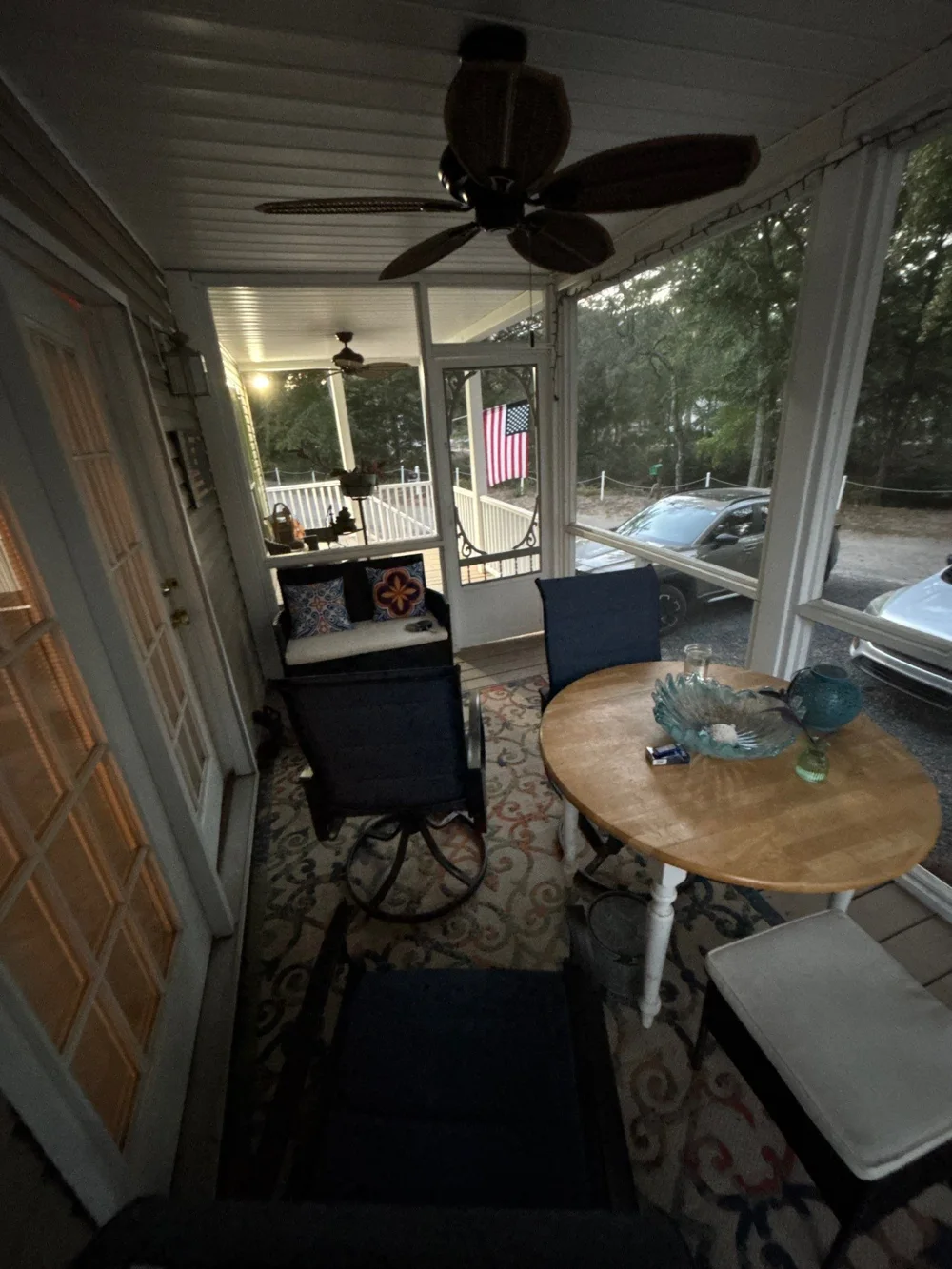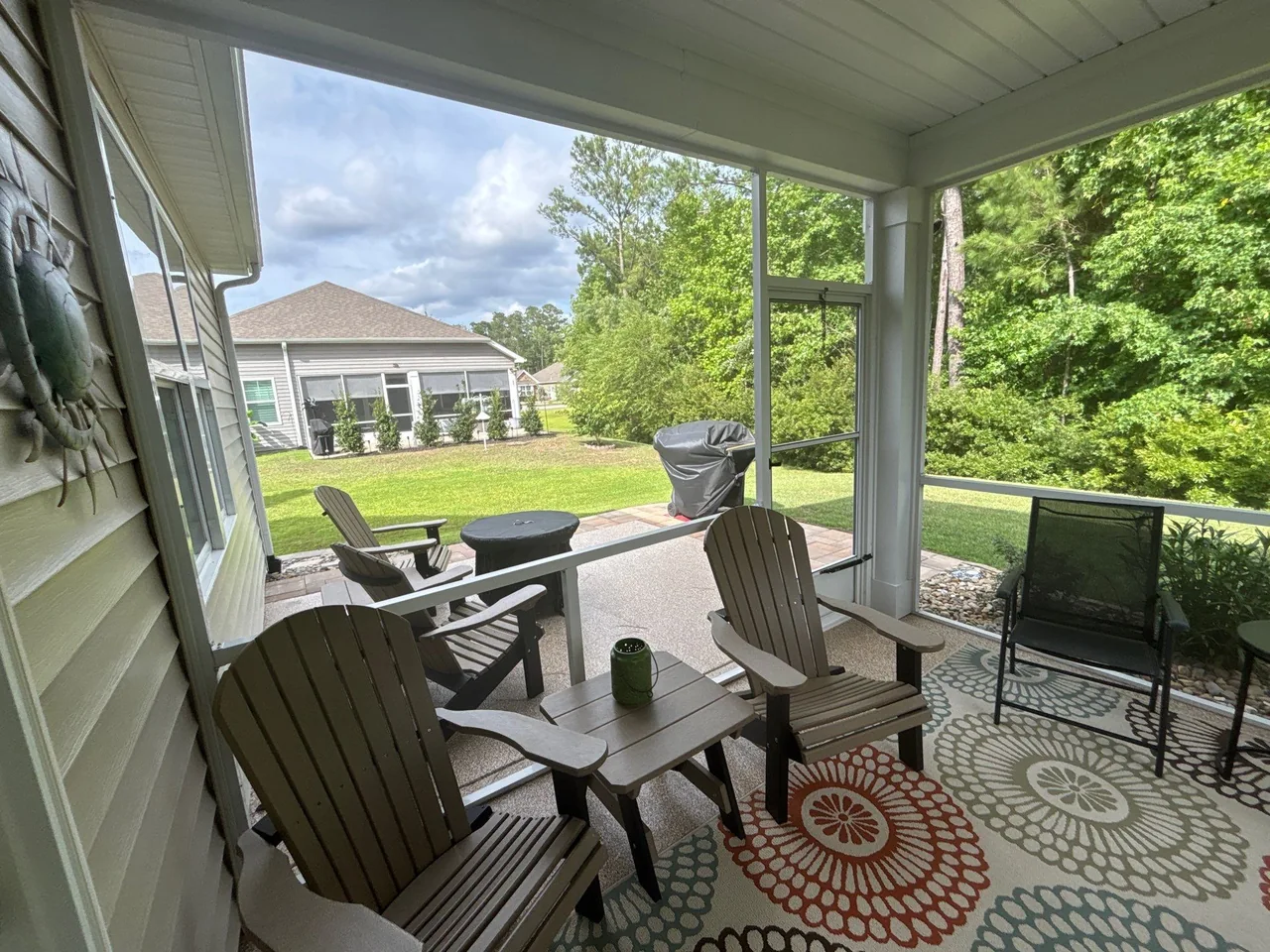
Start with the fan that's already there
Project at a glance
- Location
- Murrells Inlet, South Carolina
- Project stage
- Consultation and existing-condition documentation
- Existing layout
- Screened dining space and adjoining open covered porch
- Estimate decision
- Keep, assess, replace or exclude each fixture
It's easy to remember the mesh, the screen door and the view from the seating area. An existing fan can go unnoticed because it has been there for years. During the walk-through, stand near the table and write down the location of each fan in plain words. “Over dining table” or “above open seating” is more useful than “existing fan,” especially when there are several fixtures or a screen wall will move.
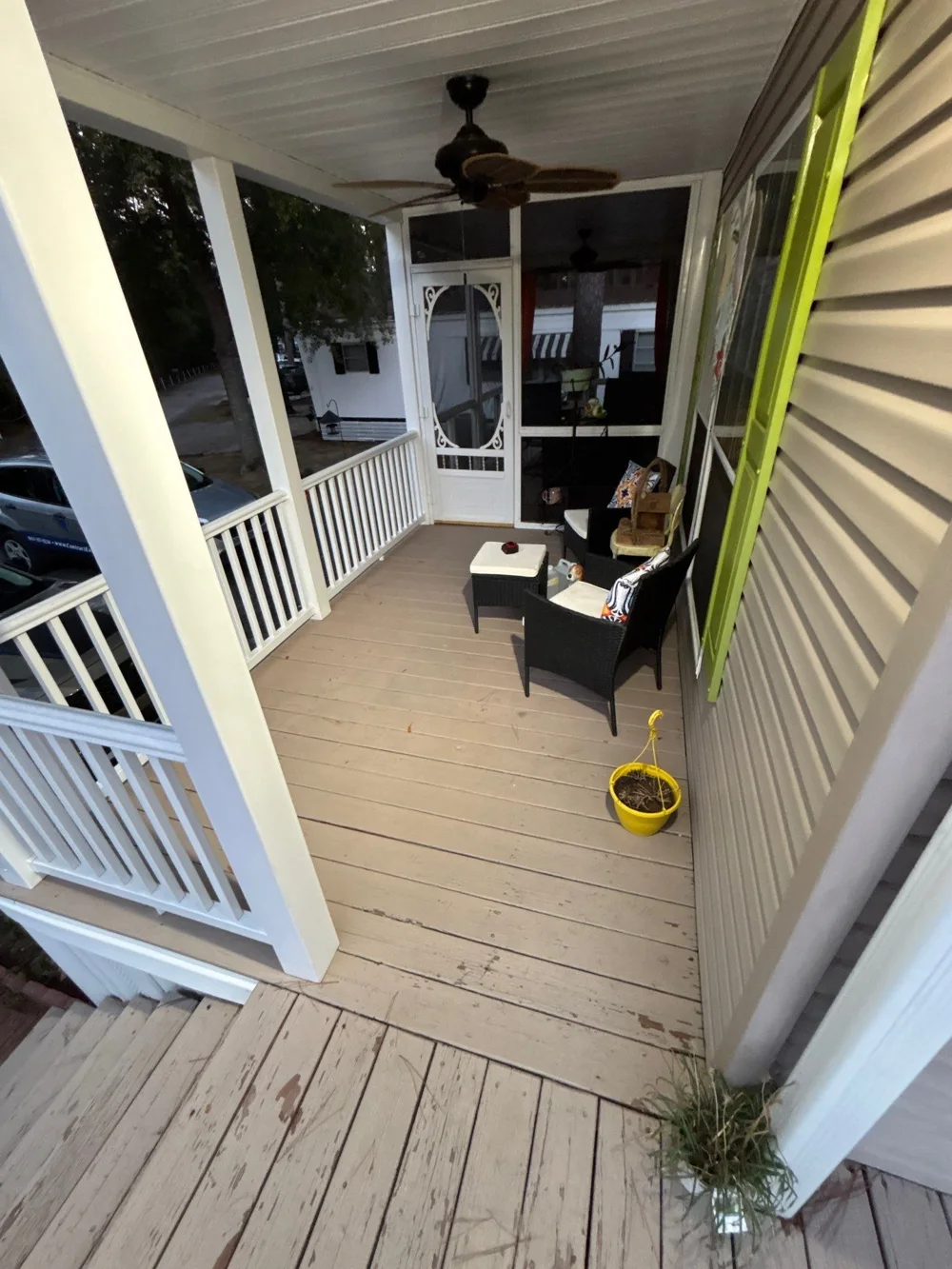
On the Murrells Inlet porch, the furnished enclosed area and the adjoining covered space had a shared roof but served different purposes. That's the difference worth carrying into a quote. A fan above a dining table and a fixture near an open side can need different decisions even if they appear on the same ceiling. The existing-roof guide covers where the screen enclosure could stop. Here the decision is what each fixture line in the proposal actually buys.
A quote should say whether the contractor's base price assumes the fixture stays in place throughout, or whether some part of the work depends on removing it. Ask how that assumption affects the start of finish work. If the quote leaves the answer open, jot it beside the corresponding line so it doesn't disappear into a general discussion about the ceiling.
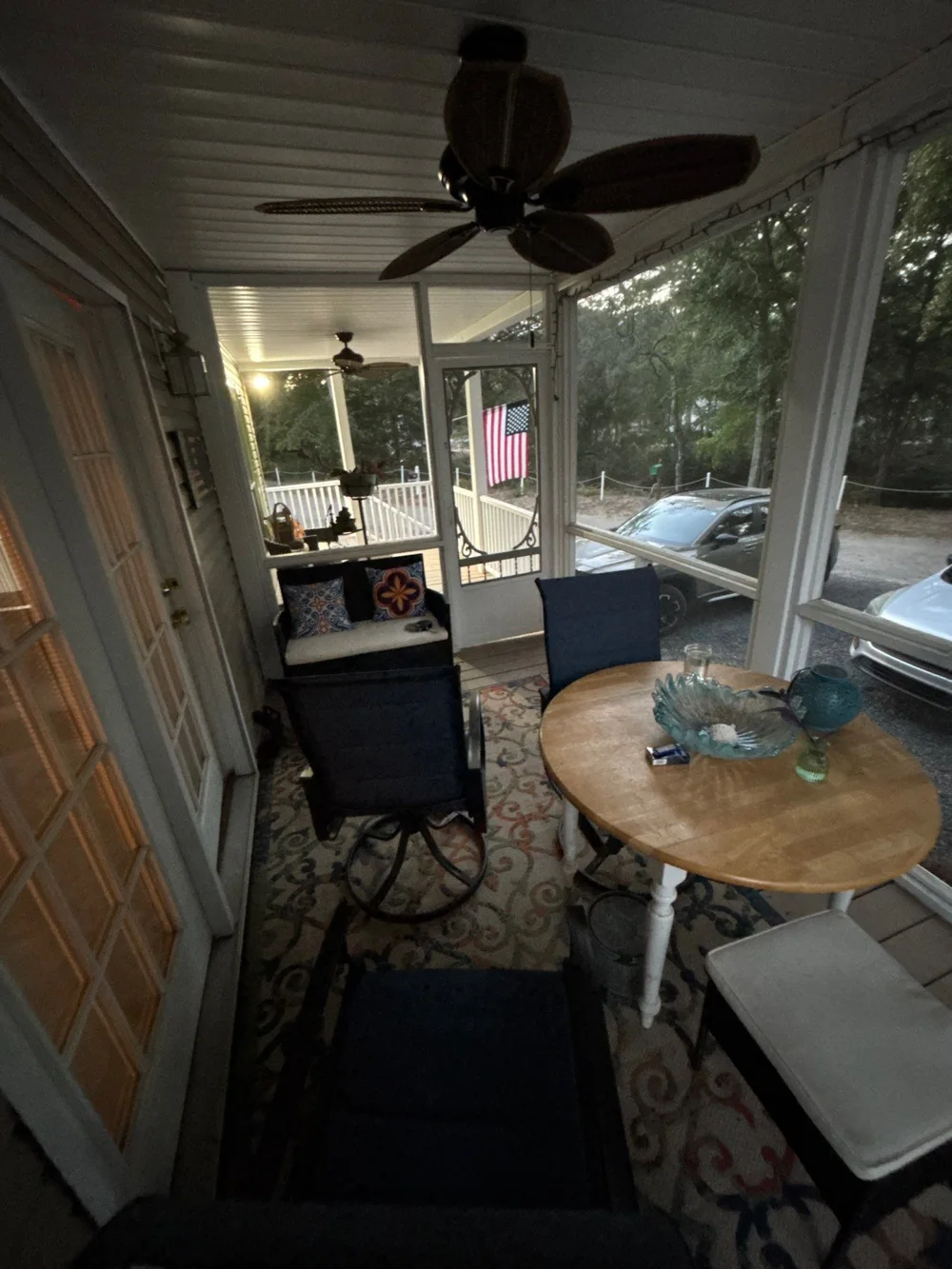
Compare four ways a quote can describe the same location
Retain. Have the quote name the fan and say which work is planned around it. Ask if it stays in place throughout or if the proposal depends on a separate trade visit. Retaining the fixture is a budget assumption that belongs in writing. Its suitability for changed conditions is a separate question to resolve if the renovation affects it.
Assess. When the scope depends on whether the existing fan can remain, ask who coordinates the assessment and when it will happen. A useful bid lists the base assumption and what happens if the assessment leads to a different scope. Ask who will send the revised price for your approval.
Replace or add. Separate the selected fixture or fixture allowance from the work needed to put it in service. Identify who supplies it, who coordinates the qualified trade and which ceiling touchups are part of the price. Ask for a written alternate if the new location is a separate decision from replacing a fan where it already sits.
Exclude. If the fan is outside the contract, get that in the quote and ask what the excluded work can delay. A homeowner who plans to coordinate it separately should know whether the trade needs access before the finish is complete. Ask the porch contractor and the trade to agree on the sequence before accepting either proposal.
YOUR HOME. OUR EXPERIENCE.
Thinking about a better screened porch?
Talk with Contract Exteriors about your existing porch, screen choices and the way you want to use the space. Start with a free estimate.
Book Your Free EstimateOur team will call to discuss your project and confirm appointment details.
Ask one question about the new location
Describe what happens to the porch during wind and rain and ask the appropriate professional to confirm the model's suitability at the actual proposed spot. Coastal South Carolina homeowners may recognize the difference between the center of a deep covered porch and its open edge on a windy day. A screen wall changes the enclosure layout. It does not, by itself, answer what exposure a particular fixture will face.
Hunter's guidance on damp and wet ratings distinguishes covered, damp locations protected from direct water from outdoor locations that can receive direct water. Read the selected model's instructions and have its suitability confirmed for that spot. An old fixture's appearance or the fact that it has been on the porch for years won't identify its rating.
If the decision is whether to preserve the finish across the entire porch, the covered-porch ceiling guide explains the bigger keep-or-replace decision. This question is narrower. Who checks the fixture, who supplies it, who owns the opening after removal and when do those steps happen?
Sources: Hunter Fan — What is the difference between damp and wet-rated fans?
Three questions to settle before the ceiling work starts
First, ask who makes the final call on retaining the fixture. If that choice is still open, put a decision point in the project sequence. “Confirm existing dining fan before closing the ceiling” is more useful than a note that reads “fan TBD.” It connects the decision to a point everyone on the job can recognize.
Second, talk through how the price changes if the assumption changes. Ask whether the price includes an assessment visit, whether the contractor can quote two complete options, and what approval is needed before any extra work starts. A replace option that includes the fixture but omits the old opening can leave you comparing two partial prices. Ask each bidder to identify that opening on the sketch and state which quote covers the patch.
Third, name the person coordinating the handoff between trades. If you are arranging a separate electrical visit, ask the porch contractor what needs to happen before the finish crew arrives and how they want to communicate any timing change. If coordination is part of the porch contract, ask for that to be written in as well. Those small details make it easier to tell whether otherwise similar estimates cover the same job.
Put the same assumption in each quote
Imagine one written estimate says “reuse existing fan” and a second says “new fan allowance.” Compare the plans location by location. Ask the first contractor how any temporary removal, trade visit or ceiling repair would be handled. Ask the second what the allowance covers and which work would have a separate price. Both bids can be sensible. They represent different work until the contractor spells out the assumptions.
If you are considering changes to the layout as well, mark the screen door, furniture and fan positions on the same porch sketch. The screen-door placement guide can help with the route through the room. That sketch gives the person pricing the fixture a better starting point than a description such as “add a fan somewhere in the new section.”
Before signing, read back the proposal the way you would explain it to someone else. You should be able to say which fans stay, which need a decision, who takes care of the finish and which costs are still unknown. If you can't, ask for an updated line item. For a local porch project, request a free estimate from Contract Exteriors and bring your marked-up sketch and the fixtures you want the quote to address.
Another Angle
Give the fan a place in the room
A fan quite often becomes the strongest object on the ceiling. Its movement draws the eye in a way that a row of recessed lights does not. This is especially noticeable on a screened porch, where the frame of the enclosure sets up a series of vertical lines and the roof or ceiling forms one long horizontal plane. A fixture can signal where the room is meant to be occupied. In the Murrells Inlet photographs, the dining table gives that observation context. The open covered section alongside it is also part of the composition, but it reads differently from the table area behind the screen.
The habit of centering a fixture on the overall ceiling can be visually persuasive on an empty plan. With furniture in place, the same point may fall in the path from the house to the steps. From the doorway, a fixture placed over the gathering spot can make the porch feel like a room with a purpose. A central fixture can also look excellent when there is one stable seating group and the two centers coincide. Draw the furniture first to see which situation applies. The drawing is a way to discuss the arrangement before a qualified professional assesses the location.
Consider how the porch will change over time
There is a tradeoff between aligning a fixture with today's dining table and leaving the porch flexible. A table that is likely to stay in the same spot for years gives the ceiling a fixed reference. A room that alternates between dinner, children playing and extra seating during a visit is different. If the furniture is going to move, a strongly defined ceiling arrangement can make those later layouts feel improvised. A quieter overhead composition can suit that kind of room.
There is also a cost to moving a perfectly useful fixture merely to line it up with a new drawing. The old opening can affect the appearance of an otherwise continuous ceiling, especially if the porch looks directly into an adjoining room. A careful patch might be entirely acceptable. A conspicuous change in panel pattern may be a poor exchange for a small gain in alignment. Ask how the existing and proposed views would differ from both sides of the door. The answer may justify retaining the existing point, or make the case for pricing the move with the finish repair included.
Compare what the two layouts ask of the ceiling
Put the retained-fixture sketch and the proposed-location sketch beside each other. Pay attention to the relationship between the table, the open route, the window or door from the house and the repeated lines of the ceiling. You can often see what each arrangement does before discussing the fixture's style. A change that serves the everyday gathering spot and leaves a clear route has a good design reason. One that improves an empty ceiling drawing but forgets the furniture is harder to justify. That comparison gives the written quote a purpose beyond naming a fixture. It lets you decide whether the visual gain is worth the added trade coordination and finish work.
A FEW MORE ANSWERS
Questions homeowners ask
Does a screen porch quote automatically include keeping the old ceiling fan?
Ask the contractor to specify the location and the assumption. A quote can describe the screen and framing accurately while leaving the existing fixture outside the scope.
Should a new fan be part of the base quote or an alternate?
If you know you want it, ask for a base quote that names the model or defines the allowance and the related work. If you're deciding whether to keep the existing unit, a separate alternate makes the added scope easier to compare.
What if I want to buy the fan myself?
Confirm the model with the appropriate professional before ordering, and document who handles delivery and any compatibility issue or return. Ask whether installation and ceiling finish are included when the owner supplies the unit.
What does a fixture allowance usually tell me?
It tells you the amount the estimate has set aside for the item described. Ask whether that amount covers the fan alone or other work, and how the final price changes if you choose a different model.
Can the new screen layout change the fan decision?
It can change where people sit and how the space is exposed. Have the proposed spot, selected model and actual porch conditions assessed rather than assuming the old location and fixture still suit the plan.
Who should repair the ceiling if a fan is removed?
Have the proposal say which trade handles the finish, what area is covered and how the existing panel or finish will be matched. If it is excluded, coordinate that handoff before the affected ceiling work is finished.
Sources and review
Contract Exteriors project evidence: Internal project records and original CompanyCam photographs support the project examples described in this article. Customer records and identifying details remain private. Project examples are separate from the manufacturer guidance and other published references below.
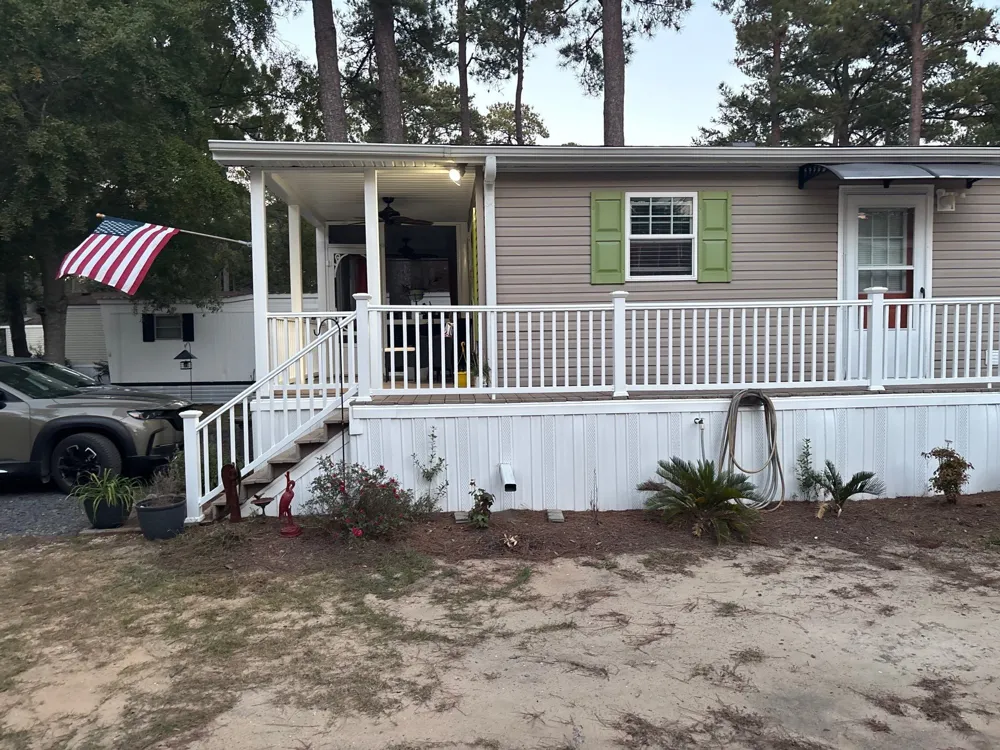
A Contract Exteriors porch consultation in Murrells Inlet documented a furnished screened area beside an open covered section. The screened seating photograph shows fans already in place. The consultation gives us an example of why existing fixtures belong on the walk-through. It establishes neither a selected fan nor electrical work, a completed enclosure change or a recommendation about the existing units.
- Hunter Fan — What is the difference between damp and wet-rated fans? — Reviewed November 23, 2026. Hunter distinguishes covered locations protected from direct water from locations that may receive direct water. Check the selected model and actual location separately.
Editorial review details
Reviewed for Contract Exteriors by Bill Schum, Marketing Director, Contract Exteriors, on November 23, 2026. Scope: Bill Schum provides editorial oversight. Source and project records, photo use and mobile and desktop presentation were checked. AI tools supported research, drafting and editing. This homeowner guide covers quote scope and design considerations.
Our sourcing and corrections standards · Report a correction