The useful question is when your house becomes a worksite
Project at a glance
- Local example
- Charleston, South Carolina
- Recorded request
- Whole-house replacement with Hardie siding
- Starting point
- Existing siding, windows, trim and porch areas
- Stage
- Planning; existing-condition photographs
You can picture the new siding. The less exciting part is figuring out what happens between the old exterior and the finished one. Will the driveway be blocked? Can you take a work call? Does a two-week estimate mean two weeks after you sign, or two weeks with ladders outside the bedroom? Those are reasonable questions to ask before committing to a date.
Start by separating the calendar into stages: decisions and ordering, preparation and approvals, active work, then the final review. Ask which stage the contractor's estimate describes. A short installation window doesn't tell you when the selected materials will arrive, and a delivery date doesn't automatically mean the crew begins that morning. Put those distinctions in ordinary language so everyone is talking about the same thing.
This guide is for Charleston and Grand Strand homeowners planning a full siding replacement while the house remains in everyday use. It explains the conversations that make the disruption easier to manage. Your written project schedule should come from the contractor assessing your particular house, materials and scope, rather than a generic calendar borrowed from another home.
What does the usual installation estimate actually cover?
James Hardie's homeowner guide gives 7–14 days as a general tear-off and installation estimate. It identifies house size, finishing, repairs, weather and inspection waits as reasons the period can extend. Treat that as an early planning reference, not a booked start date or a promise for your address.
Ask whether a proposed duration means working days or elapsed days. Also ask what counts as completion: siding attached, finishing completed, fixtures restored, debris removed, or the final walkthrough. Those milestones can fall at different points. It is easier to understand a schedule when the contractor names the work behind each milestone instead of offering one number that sounds reassuring but leaves the details open.
Compare the dates with your own commitments. If you have visitors arriving, a trip planned or a room that must remain quiet, mention it before the schedule is set. A contractor can explain whether the requested timing fits the actual scope. Avoid arranging an important event immediately after the earliest possible finish, especially when the estimate already lists conditions that could move it.
Sources: James Hardie: What to Expect During Your Siding Project
A Charleston whole-house request brings the scale into focus
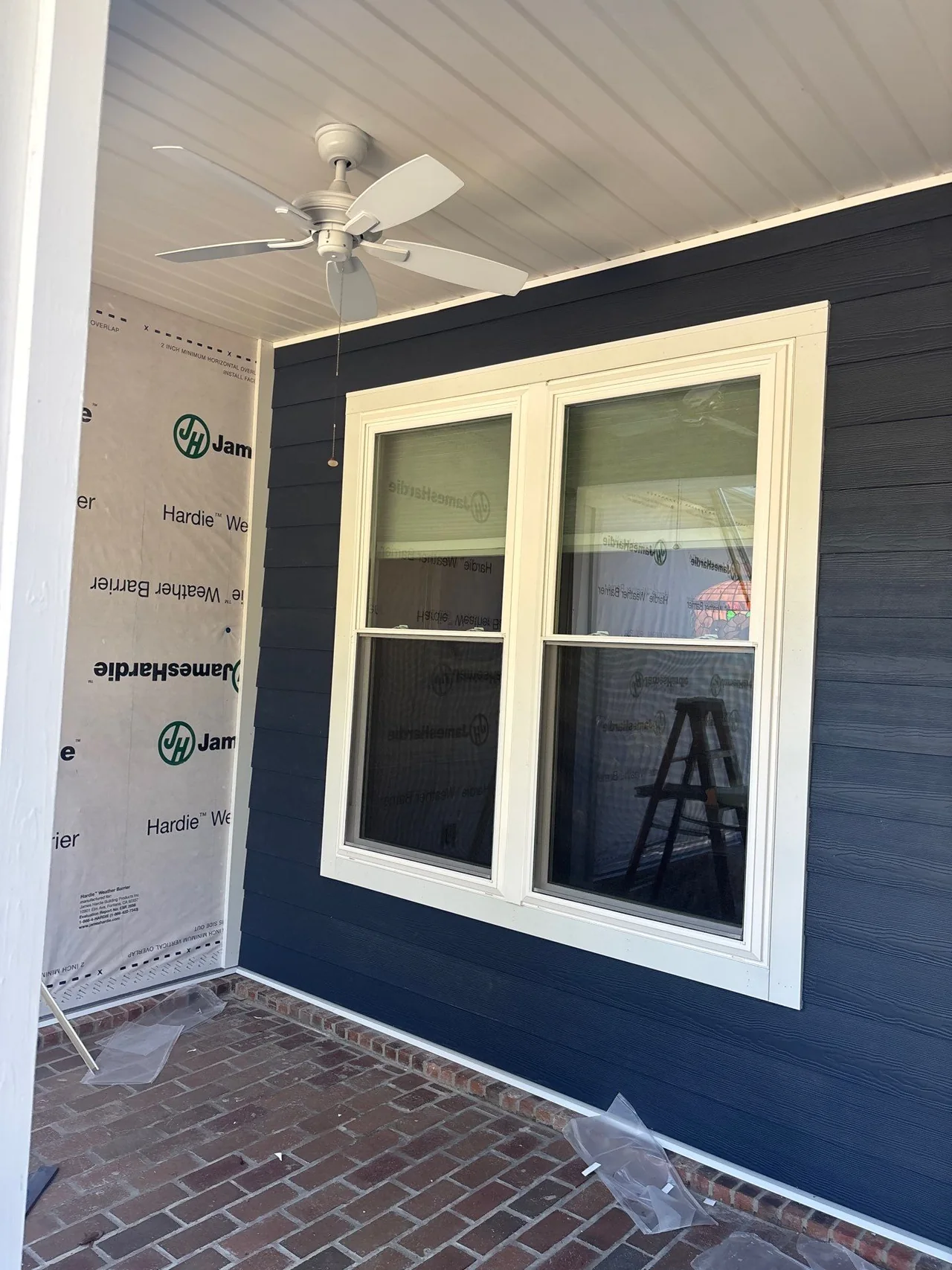
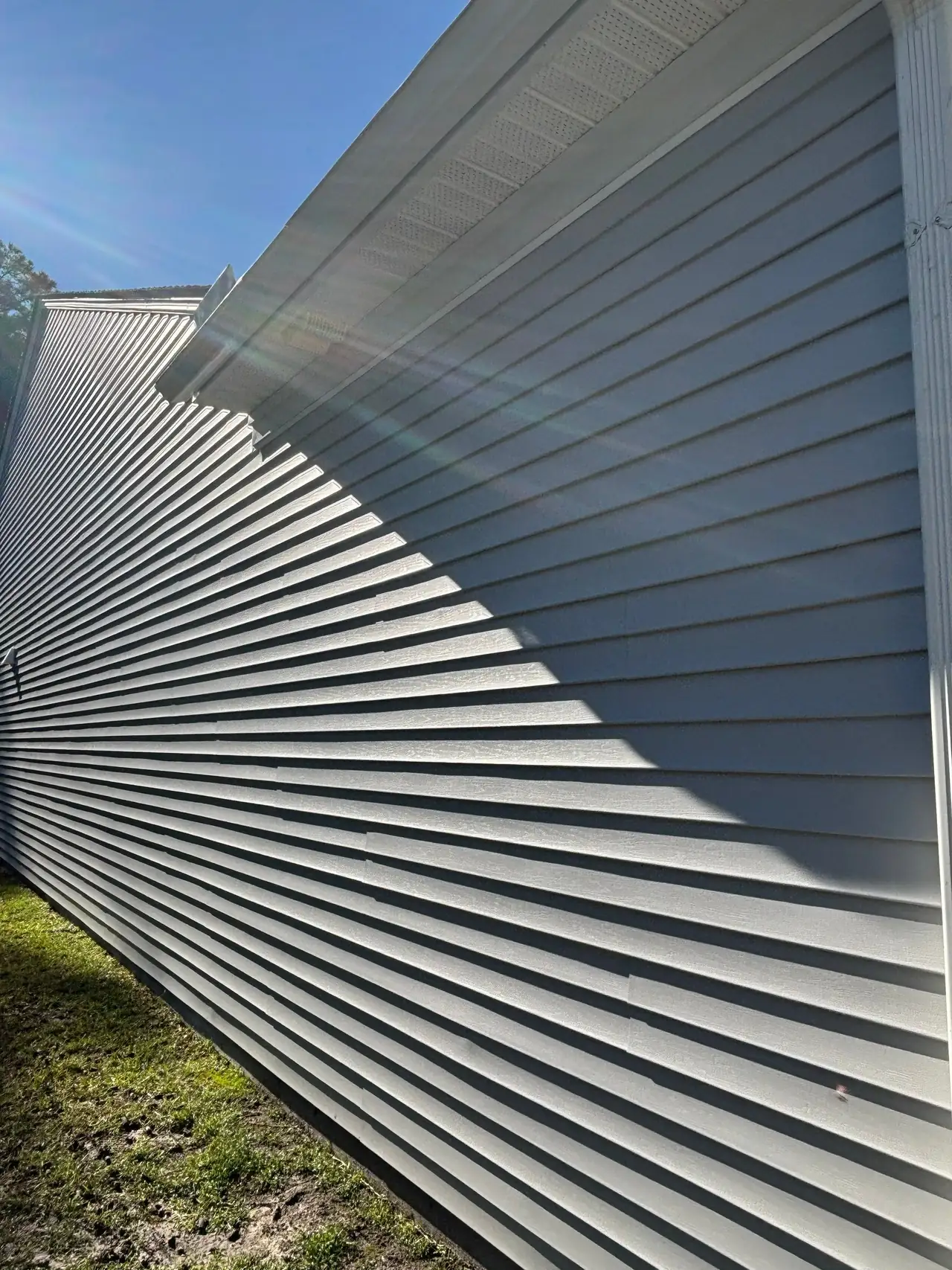
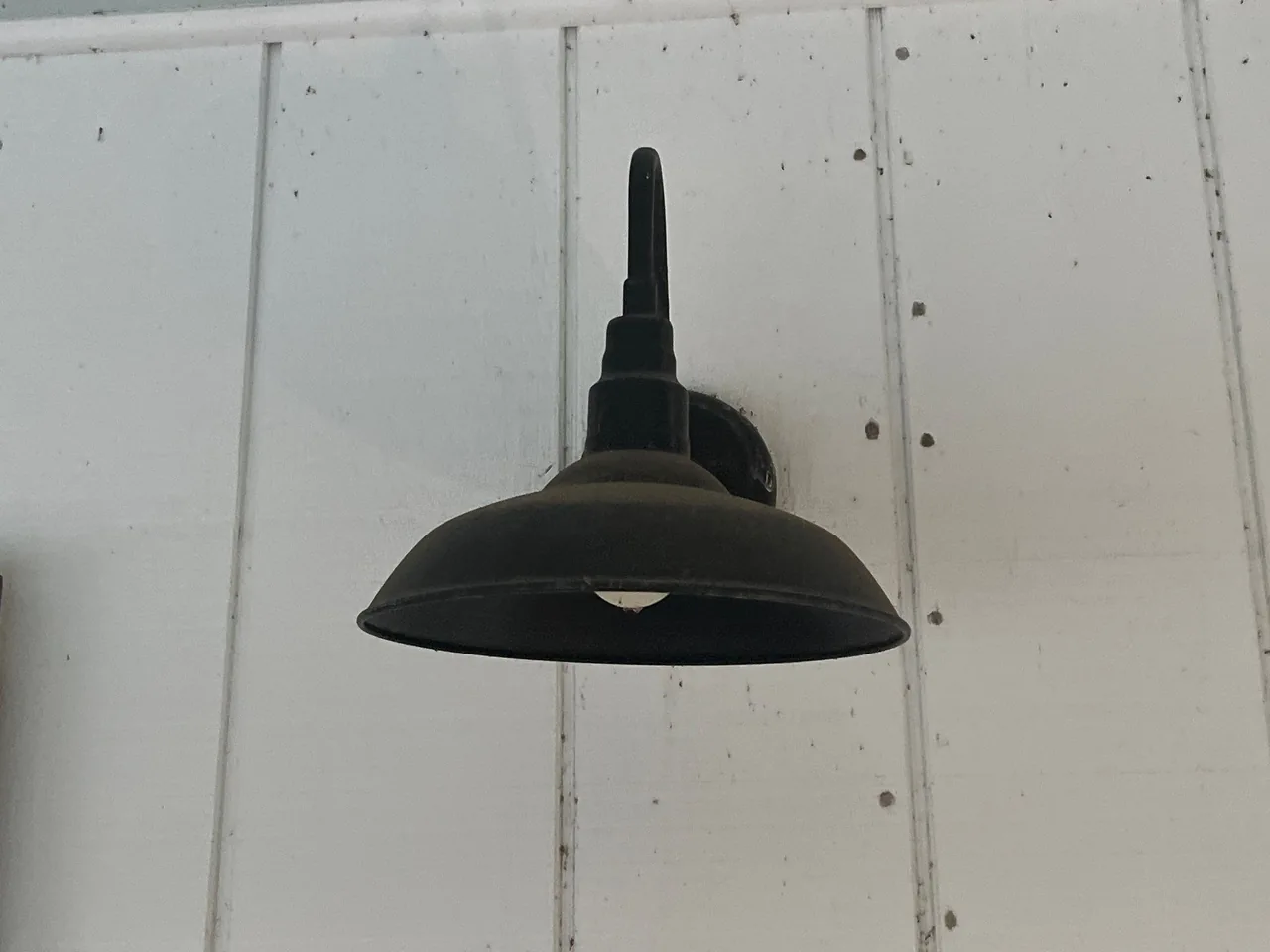
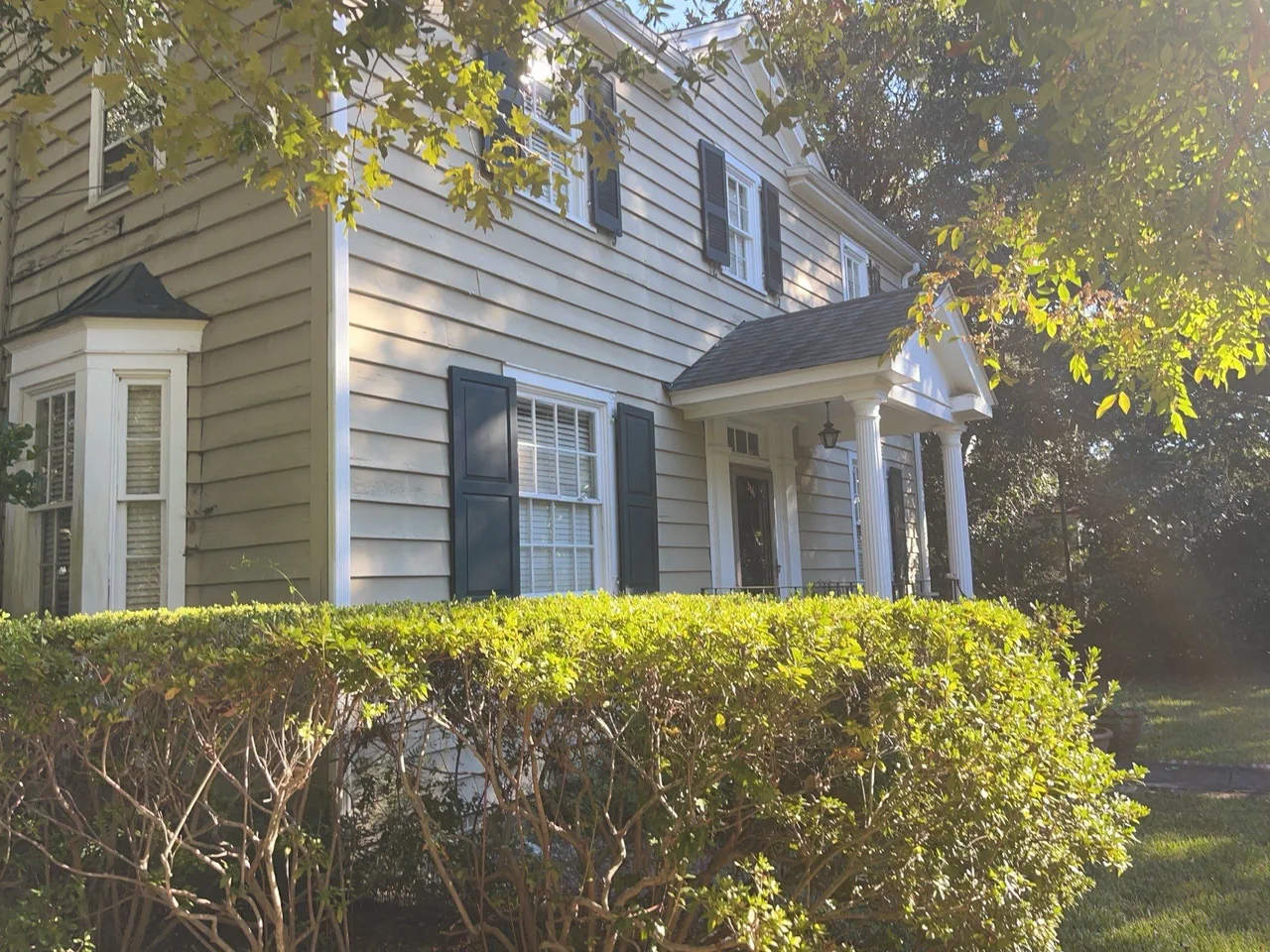
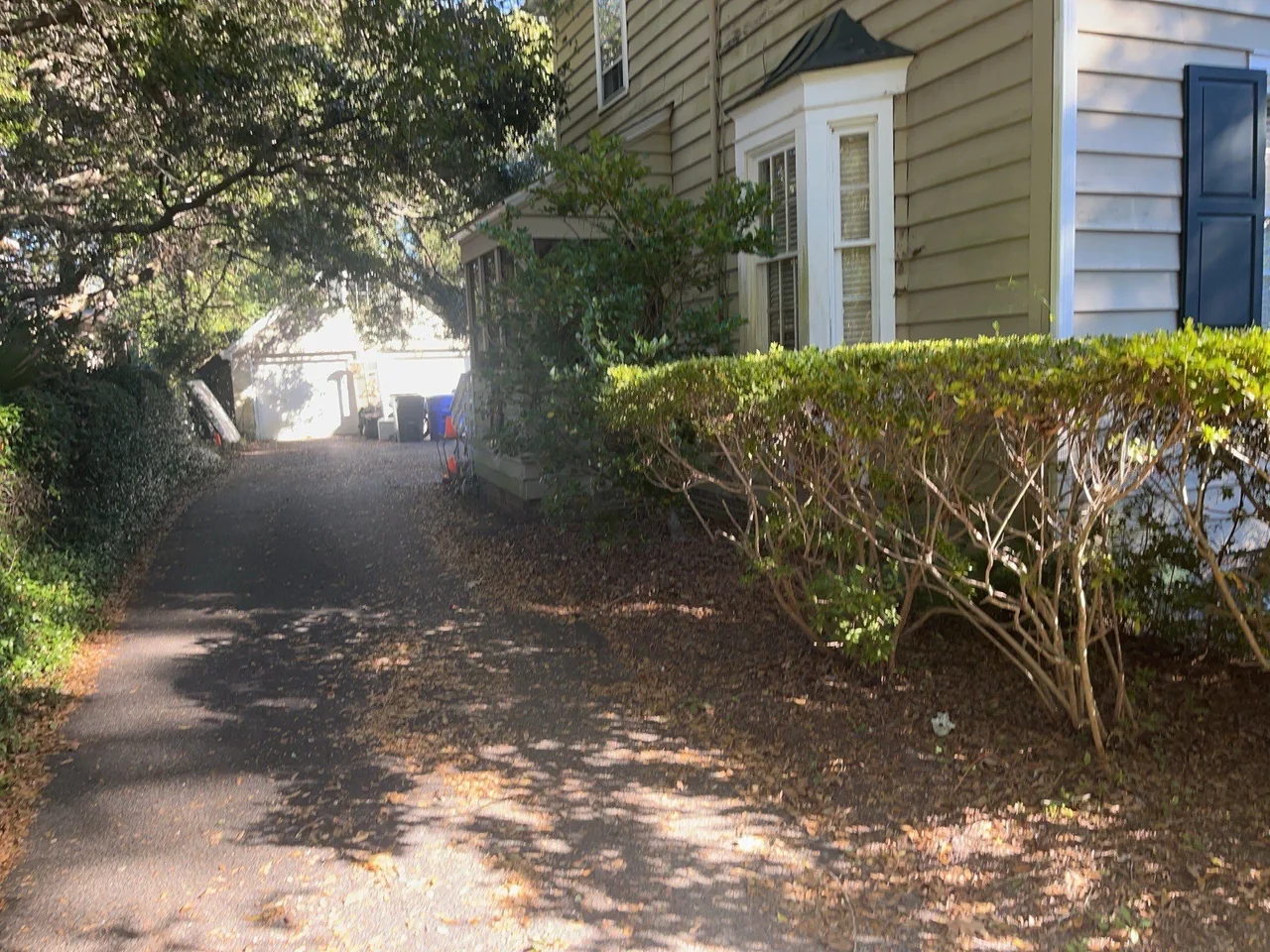
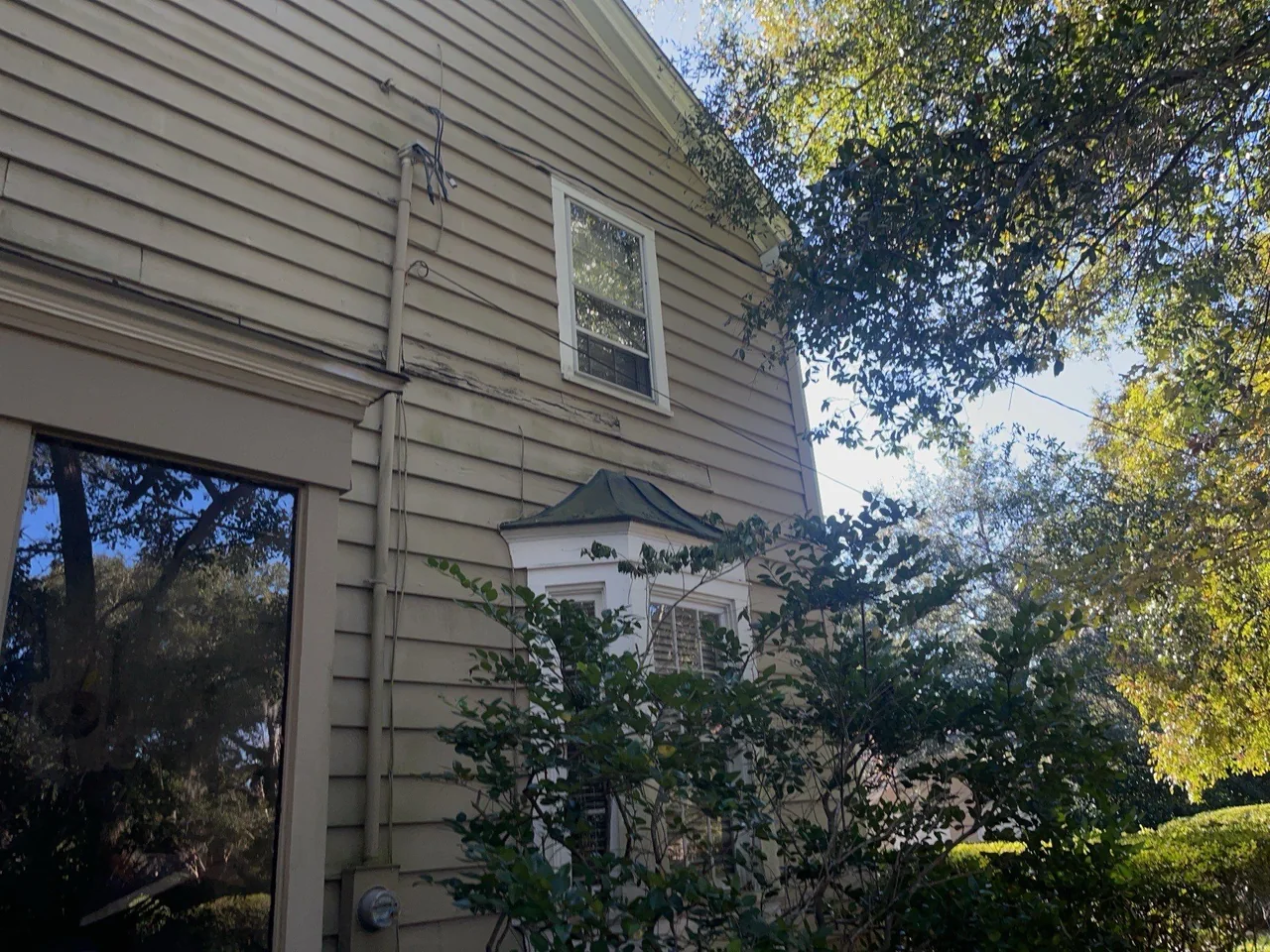
A Charleston homeowner asked Contract Exteriors about replacing the siding on the whole house with Hardie. The existing-condition photographs show several parts of the exterior rather than a single isolated patch. The request is still a planning example; it is not a completed installation with a measured turnaround time.
The whole-house scope is what makes it useful here. There are different sides to reach, openings to work around and everyday routes to preserve. During your own consultation, walk around the property and point out the entrance you normally use, where vehicles need to go and which outdoor areas connect to the rest of your day. Explain those needs before deciding that a particular week will be convenient.
You don't need to design the crew's sequence. Ask the contractor to explain it. Which area is expected to be active first? Will work move between sides? What changes when a delivery or weather forecast shifts? Those answers help you plan life around the work without assuming that every wall will be under construction at once. Our siding planning hub explains the broader material and scope decisions.
YOUR HOME. OUR EXPERIENCE.
Thinking about new siding for your home?
Talk with Contract Exteriors about siding options, trim and the work your exterior needs. Start with a free estimate.
Book Your Free EstimateOur team will call to discuss your project and confirm appointment details.
Decide whether staying home will work for your household
The important distinction is between being able to occupy the house and being able to use it normally. You may have a workable entrance and indoor rooms available while finding that the noise makes focused work difficult. Tell the contractor which activities need a quiet setting, and ask about likely working hours rather than hoping the loudest work will happen during your lunch break.
Consider who needs access throughout the day. A school pickup, a dog that needs the yard or a family member using a particular entrance can make the same construction setup feel very different from one household to another. Discuss a suitable route and separation from the work area. If your needs cannot be accommodated safely, make alternative arrangements for the affected period.
Ask who will contact you before a route is changed and how much notice they can reasonably give. Keep one person available to answer project questions even if you work elsewhere for part of the day. Staying home should be a considered arrangement with the contractor, not an assumption based solely on the fact that siding is installed outside.
Prepare the property without turning it into a moving project
Before delivery day, agree on where materials and waste containers may go. Draw attention to the garage, vehicles and paths you need to keep available. Check any applicable street-placement or association requirements with the responsible party. A Charleston mailing address alone does not establish the permitting authority for a particular property, so those details need address-specific confirmation.
Make a simple plan for the items beside the walls. Patio furniture, planters and decorations are easier to handle when you know which area needs clearing and who is responsible. Indoors, discuss delicate wall-hung items and shelves that might be affected by vibration. James Hardie's preparation guidance highlights both exterior access and belongings inside the house; ask your contractor to tailor the instructions to your work.
Don't move heavy objects, disconnect equipment or remove wall-mounted fixtures on an assumption. Ask what should be left for the appropriate professional and whether that work is included. Our guide to lights and exterior fixtures explains the scope questions. A useful preparation list tells you what to move, what to leave and whom to call when an item needs more than ordinary handling.
Sources: James Hardie: What to Expect During Your Siding Project
Agree on the next step when something changes
An estimate can describe the expected work without revealing everything behind the existing siding. Before removal begins, agree on how an unexpected condition will be documented, explained and priced. Ask who can authorize added work and what information you will receive before making that decision. It is much harder to resolve those responsibilities while an opening is already waiting for attention.
The same clarity helps with the calendar. If additional work is proposed, ask which milestone it affects and whether other parts of the project can proceed. A revised finish should come with an explanation you can follow. You should understand the proposed repair and its effect on the agreed scope without being expected to diagnose the wall yourself.
Our hidden-damage quote guide covers the financial and scope side in more detail. Here, the planning lesson is straightforward: decide how a change gets approved and communicated before you need that process. Keep the current written scope and any accepted changes together, so a later conversation about completion refers to the same work both parties agreed to.
YOUR HOME. OUR EXPERIENCE.
Ready to put your siding plan together?
Bring your questions about materials, finishes and scope to Contract Exteriors. Get help comparing the next steps for your home.
Book Your Free EstimateOur team will call to discuss your project and confirm appointment details.
Leave room for South Carolina weather
The South Carolina State Climatology Office describes precipitation across the year, rather than a true dry season. For a homeowner planning exterior work, the practical implication is to discuss weather flexibility in every season. That is a planning inference from regional guidance, not a forecast for your construction week or a count of days your project will lose.
Ask how you will learn about a postponed start, a paused day or a revised sequence. Also ask the contractor to explain how work in progress will be managed if conditions change. You are looking for a communication plan and a responsible assessment of the actual work, not a promise that the weather will cooperate or a set of installation instructions to supervise yourself.
Keep your own preparations flexible where you can. Moving every outdoor possession weeks ahead of an unconfirmed start may create avoidable disruption. Equally, waiting until the delivery truck arrives can be awkward. Agree on the point at which you should clear the work area, confirm access and make any temporary household arrangements. A clear trigger is often more useful than an optimistic date.
Sources: South Carolina State Climatology Office: South Carolina Climate
Finish with a walkthrough and a usable handoff
Reserve time to review the finished scope with the contractor. Bring the opening list of concerns and the written changes, and walk the areas that were included. Ask how remaining items will be recorded, who handles them and how you will be told when they are resolved. A quick look from the driveway is unlikely to answer every question about a whole-house project.
Discuss the care information, product documents and warranty responsibilities that apply to what was actually installed. Confirm who to contact if you have a later concern. If a separate painter, electrician or other professional has work remaining, identify that responsibility before treating the entire exterior project as finished. The point is a handoff that leaves you able to use and look after the house confidently.
When you speak with Contract Exteriors, bring both your siding goals and your household priorities. You can use Build your project to organize the scope, then ask for a schedule tied to that scope. The best answer to 'how long?' explains what happens, what could change and how you will stay informed—not simply the smallest number of days.
Put four handoff points on your calendar
Have your contractor fill in the dates or tell you when each one can be confirmed.
- Before delivery Confirm where materials and waste containers go and which driveway or garage access you need.
- Before the first workday Agree on daily entry routes, parking, working hours and arrangements for pets or quiet time.
- During the work Save the name of the person who will tell you about a change to access, weather timing or repair approvals.
- At the walkthrough Set aside time to review the work and learn who owns any items still open.
Another Angle
Read the worksite through daily routes
The quality of a construction schedule is partly a question of space. Before the first board is removed, a house already has an established pattern: the door people enter, the place deliveries arrive, the path to the garden and the side where a car is parked. A replacement project temporarily redraws that pattern. Judging the plan only by its duration misses how strongly those temporary changes can affect an occupied home.
The Charleston whole-house inquiry is a useful starting point because the work concerns an entire exterior. Each elevation belongs to the same house, but it does not necessarily have the same relationship to daily life. The wall beside the most-used entrance may deserve a different access conversation from a side boundary that the household rarely approaches. That is a spatial observation about planning, not a proposed construction sequence for this property.
A well-explained temporary arrangement can make a longer, properly scoped project easier to live with than a shorter estimate with unclear access. Consider a hypothetical household whose only convenient route to the car crosses the proposed material-storage area. Moving the storage location, where feasible and agreed by the contractor, changes the household experience without changing the siding. The value lies in identifying the conflict while the plan can still be discussed.
Define practical completion
There is a similar distinction between visual completion and practical completion. New siding can dominate the view of a house while small remaining responsibilities still prevent an ordinary routine from returning. A fixture awaiting reconnection, an unfinished paint responsibility or an unresolved access area may matter more to the resident than another broad photograph of the facade. These are planning examples, not reported conditions or unfinished items at the featured home.
This suggests a more useful way to read the proposal: treat the exterior as a collection of connected places, rather than a continuous surface measured only in area. The entry, porch, driveway edge and garden-facing wall each serve a different purpose. Ask where the proposed work meets retained elements and how those interfaces will be handed back. The aim is to recognize relationships early, without asking a homeowner to prescribe technical details.
Keep the initial design clear
Restraint also has a role. A siding replacement may invite thoughts of changing every trim detail, light and outdoor furnishing at the same time. Some coordinated changes are worthwhile, but each should earn its place in the scope. Adding undecided items after work begins can blur both the intended appearance and the meaning of the finish date. A clear initial design gives later decisions something definite to be measured against.
The important judgment is therefore not that the quickest project is best, or that an extended schedule demonstrates care. Neither follows from the number of days. A stronger plan explains how the necessary work and ordinary occupation can coexist, identifies the decisions that might interrupt progress and defines what returning the house to use actually means. The contractor must assess the safe work methods; the homeowner can contribute a precise account of how the property is lived in. That exchange turns a calendar into a workable agreement.
A FEW MORE ANSWERS
Questions homeowners ask
Does the 7–14-day estimate start when I sign?
No. James Hardie's general estimate describes tear-off and installation. Product ordering, approvals and the contractor's scheduling are separate; ask for the milestones that apply to your proposal.
Should I plan to work from home during siding replacement?
Discuss likely noise, work areas and hours first. If calls or focused work need quiet, arrange an alternative for the affected periods rather than assuming an indoor room will be undisturbed.
Will I still be able to use my driveway?
Agree on vehicle access and delivery or waste-container placement before work starts. The answer depends on the property and the contractor's setup; identify any access that must remain available.
Who decides whether unexpected repairs go ahead?
Your written agreement should explain documentation, pricing and authorization for added work. Confirm the decision-maker and communication process before removal begins.
Is there a season that guarantees no rain delays?
No season should be treated as a guaranteed dry construction window. Ask how forecast changes and revised dates will be communicated for your particular project.
What should the final walkthrough include?
Compare the completed work with the agreed scope and approved changes. Record remaining items and responsibilities, then review care information, applicable warranties and the contact for later concerns.
Sources and review
Contract Exteriors project evidence: Internal project records and original CompanyCam photographs support the project examples described in this article. Customer records and identifying details remain private. Project examples are separate from the manufacturer guidance and other published references below.
Original Contract Exteriors consultation photographs privately matched to the recorded local request. Existing conditions illustrate a buying decision; no completed installation, selected product or measured outcome is implied.
- Contract Exteriors project evidence — Private whole-house Hardie request matched to original Charleston consultation photographs. The public link opens the company portfolio, not private customer records.
- James Hardie: What to Expect During Your Siding Project — General installation-duration reference and preparation considerations, read November 17, 2026. Not an assessed Contract Exteriors schedule or property-specific work method.
- South Carolina State Climatology Office: South Carolina Climate — Statewide year-round precipitation context, read November 17, 2026. No detailed dated statistics or site-specific weather forecast used.
Editorial review details
Reviewed for Contract Exteriors by Bill Schum, Marketing Director, Contract Exteriors, on November 17, 2026. Scope: Editorial oversight, source and project-record checks, photo-originality review, and mobile/desktop presentation checks. Research and editing were supported by AI tools. Design commentary reflects an editorial perspective and does not constitute professional architectural or engineering advice or a property-specific site assessment.
Our sourcing and corrections standards · Report a correction
Related planning resources
siding · planning · james hardie · charleston