Ask to see the outside face of both sashes
Project at a glance
- Location
- Charleston, South Carolina
- Recorded scope
- 13 OKNA double-hung replacement windows
- Recorded models
- Four 600 Series and nine 800 Series
- Photos
- November 2025 exterior installation views and interior work
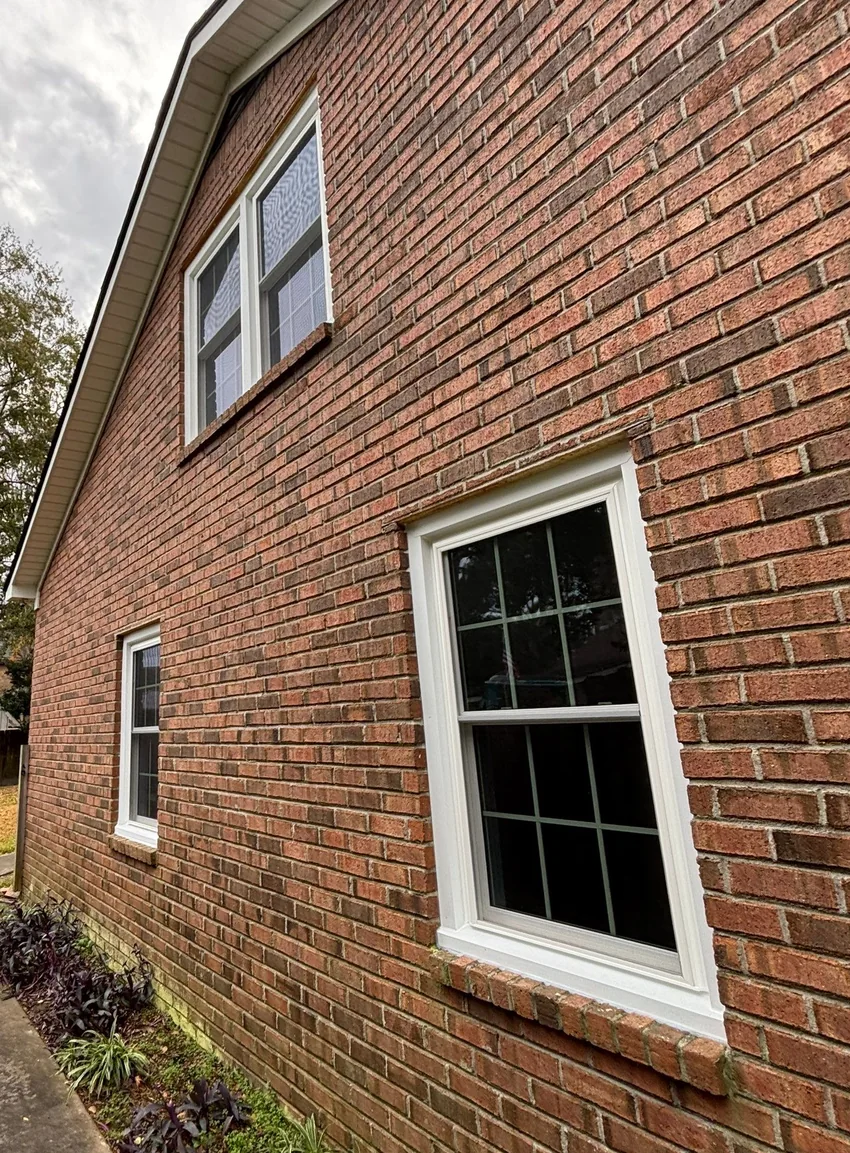
Stand where you would normally stand to open the window. Now think about the glass facing the yard. Can you get to the outside of the lower pane from there? What about the upper one? If the salesperson says the unit tilts in, ask them to show you those two surfaces on the model being quoted. That quick distinction can change which window you choose for a second-floor bedroom, a staircase landing or an opening over a deep kitchen counter. On the Charleston job below, the upper and lower windows sit on the same brick wall, but reaching them from the yard is a different proposition.
A sash is the frame that holds the glass. In a single-hung window the bottom sash moves vertically and the top stays in place in normal use. In a double-hung window both sashes move vertically. Tilting inward for cleaning is a separate feature. Ask for the manufacturer’s care instructions for the exact model and the screen it comes with. Where the instructions show a different cleaning method for one sash, ask to see where you would stand and what you could reach.
In a whole-home replacement, start with the few windows you least want to service from outside. Sketch the house or use a copy of the installer’s room list. Circle the upstairs openings and spots where a porch roof, plant bed or HVAC equipment makes outside access awkward. Then ask what the same model would be like to use in each of those rooms. An answer that works at a showroom display can miss what happens above your own sink or behind a wide sill. If you are mixing window styles in a whole-home replacement, make this check for each style on the schedule.
If there are two windows next to each other, consider them separately. A nightstand or radiator may sit under one and leave the other open. You may be able to reach the operating lock from the same position at both, but ask whether you can reach the glass comfortably from inside. Ask the estimator to demonstrate with the size you expect to order, especially if the sample is much narrower.
Compare the model and the room together
Write down the model number while you’re looking at the demonstration. Even names within the same window family can describe very different units. OKNA lists a double-hung DH800, a slider SL820 and a picture window PW810 in its Enviro-Star line. Its DH800 page describes tilt latches. If another room gets a different opening style, ask how that specific unit is cleaned. The product family name alone won’t tell you what a homeowner can reach.
Check how the screen fits into the cleaning plan. Ask whether it stays in place for normal access to the glass and how the manufacturer expects it to be handled for screen cleaning. Have the representative demonstrate on the actual screen option. Ask where you would set a removed screen without blocking a walkway or risking damage. If the answer depends on which style or screen is on the order, write the difference down.
Now look around the opening. An opening may give you enough room to operate the sash every day and still be awkward to service. Look at the distance across a counter, the inside trim, the sill, and anything mounted close to the glass. A blind may lift clear during the demo or its brackets may take up the space the sash needs. Where you plan to keep existing treatments, bring a room photo and ask for the travel path to be checked during the measure. Include clearance for existing blinds and curtains in the same discussion.
Sources: OKNA Enviro-Star 800 Series · OKNA Enviro-Star DH800
YOUR HOME. OUR EXPERIENCE.
Planning a whole-home window replacement?
Talk with Contract Exteriors about your rooms, window options and the work around each opening. Start with a free estimate.
Book Your Free EstimateOur team will call to discuss your project and confirm appointment details.
Decide where easier cleaning earns its place
Suppose the den windows sit above a clear stretch of level yard and the second-floor windows sit over a planting bed. For each opening, compare which outside glass faces you could routinely clean from the room and which would still call for outside service. For someone who wants to take care of both panes indoors, a model demonstrated to provide access to both faces may be worth specifying in upstairs rooms. For an easily reached opening that will see regular professional cleaning anyway, match the opening style to how the room is used and confirm the approved care method.
You can compare a lower-only tilting option with a unit that provides access to both sashes. For the first, ask what method remains for the upper glass. For the second, see whether you have room to bring each sash inward within the manufacturer’s instructions. Some single-hung designs have their own hardware and cleaning arrangements for the top. Pella’s published Reserve Traditional specifications illustrate how wash-lock hardware and sash operation vary with the selected unit. Use that as a reason to verify your own model’s instructions.
If your final shortlist includes a fixed picture window, the steady view may be the reason you want it. Ask the installer how the outside face will be serviced once it’s in the actual opening. The location may make the service choice easy. A row of fixed panes above a sloping side yard calls for a different conversation from a picture window beside the front walk. Any access question above grade belongs in the estimate conversation with the installer or a qualified cleaning professional.
Think through who cleans the windows now and who you expect to do it after the project. Ask that person to join the product demo when possible. Their priorities might be different from yours. Someone who cleans both faces routinely may care about the upper sash more than someone whose main concern is removing the screen once a season. Put the requirements on the openings where they apply.
Sources: Pella Reserve Traditional Architectural Design Manual · OKNA Enviro-Star 800 Series
What stood out on a Charleston replacement
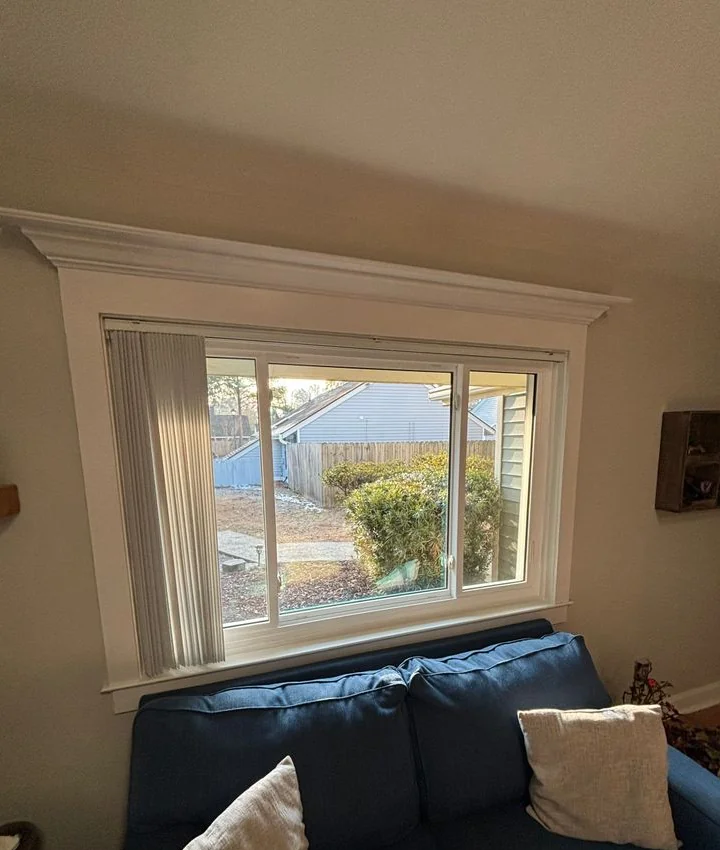
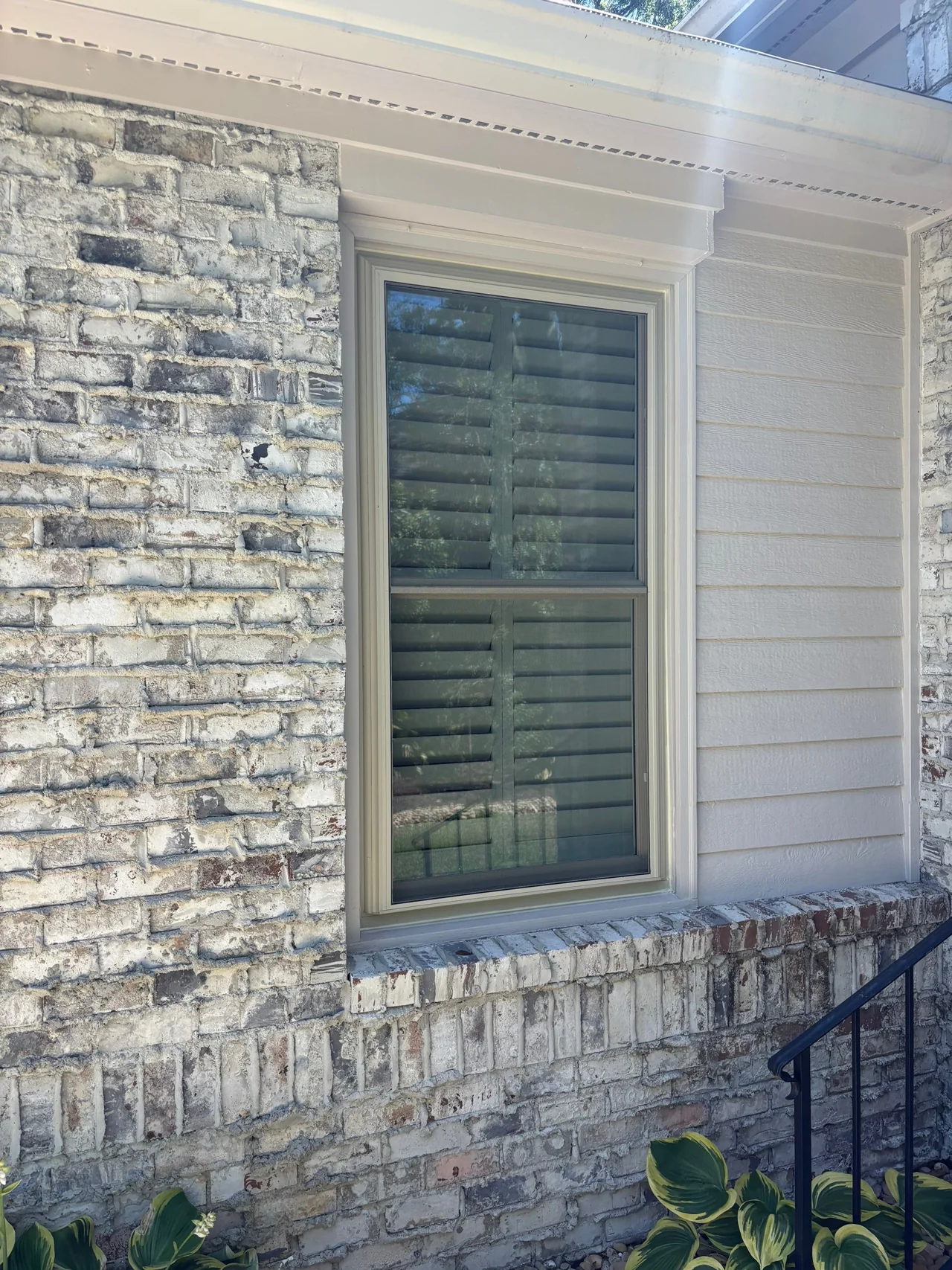
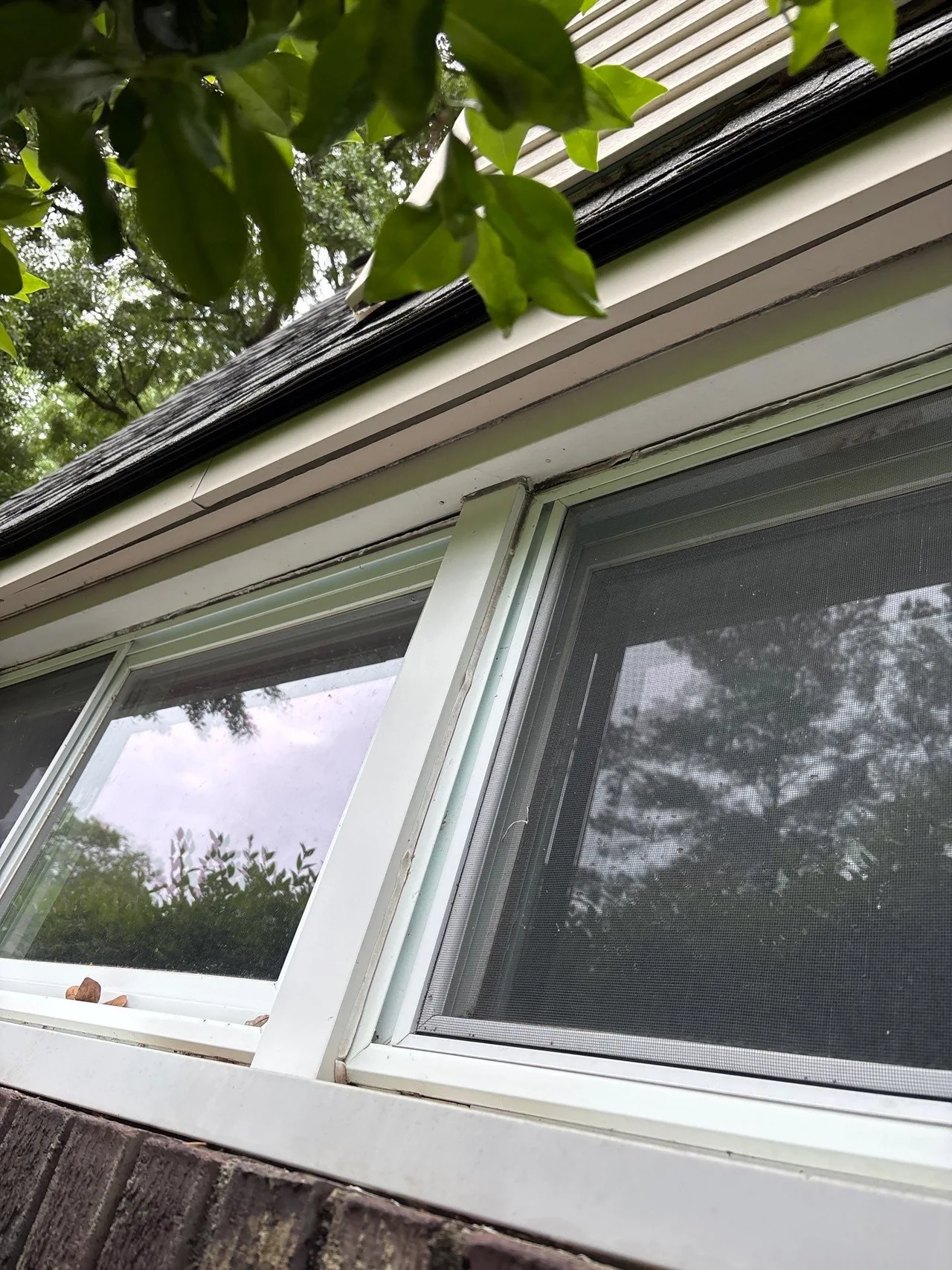
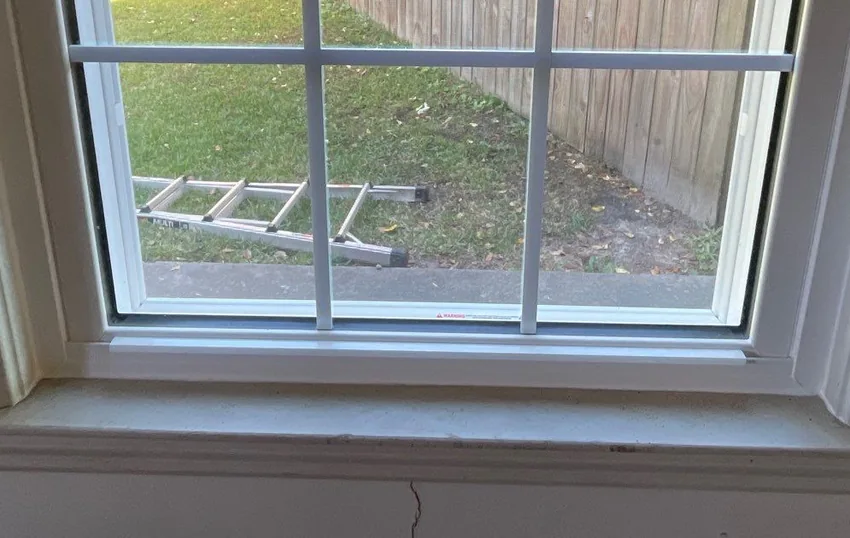
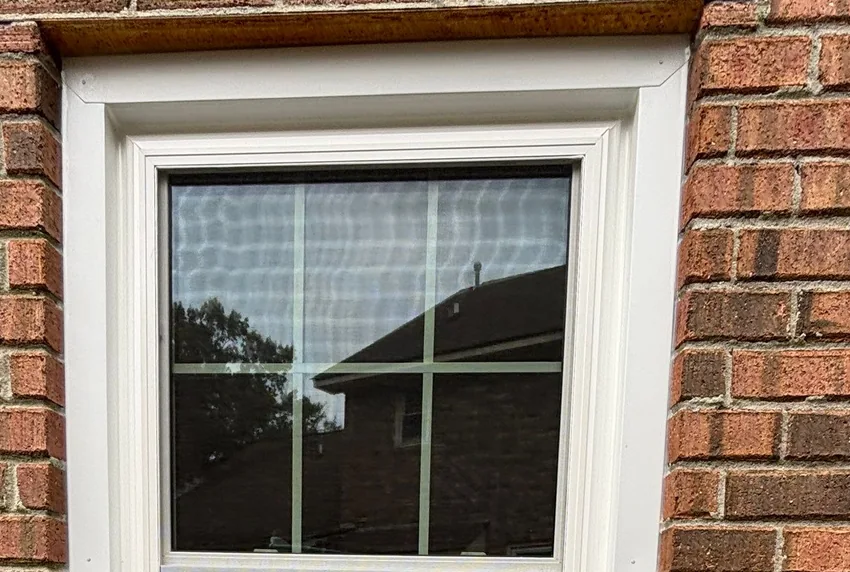
The Contract Exteriors job record for this Charleston project lists 13 OKNA double-hung replacements. Four were from the 600 Series and nine were from the 800 Series. The same-project photos show upper- and lower-level windows in a brick wall, plus an interior sill during the work. The model mix and the opening positions are the useful details for a homeowner planning a comparable job. Even with the same operating style specified throughout, cleaning from a room depends on where that particular opening sits and what’s in front of it.
From inside, the sill and reveal tell you about the space between the window and where you would stand. From outside, the photo of two levels tells you something the interior view can hide. A pair of windows can be difficult to approach from the yard simply because of their height. The detail photo shows the upper pane and the surrounding frame. During a demonstration, point to that upper pane when you ask how its outside face will be reached. The images record the installation, and the manufacturer’s materials and a model demonstration are the evidence for how each unit operates.
If your estimator says they plan to quote a familiar model throughout, ask where that model makes the most difference. Walk them through a harder-to-reach room and an easy one. Where the job mixes product series, ask for the model-specific cleaning notes on the schedule instead of relying on one description for the whole order. Seeing the operation before signing can help you decide whether a different style is a better fit at one or two openings.
Sources: OKNA Eco-Pro DH600 · OKNA Enviro-Star DH800
YOUR HOME. OUR EXPERIENCE.
Ready to compare your whole-home window options?
Bring your questions about styles, glass, finishes and installation scope to Contract Exteriors. Get help planning the next step for your home.
Book Your Free EstimateOur team will call to discuss your project and confirm appointment details.
Put the answers on the window schedule
Start with the room where an overlooked detail would be most inconvenient. List the bedroom or landing, the opening number from the proposal, the exact model and screen, the access for the upper and lower exterior glass, and anything that needs to move indoors. Ask the installer to note the manufacturer’s care document for each configuration. When two bids use similar style names, compare these same rows before comparing the final totals. That gives you a way to spot a cleaning feature that was demonstrated on one bid but remains unspecified on the other.
Ask the installer to walk through the final room list with you at measure. Point out deep stools, thick trim, furniture you leave in place and blinds you intend to reinstall. If you want one person to be able to manage normal cleaning, bring that up during the demonstration. Ask how the size of the sash changes what you’re evaluating. Have heavier or unusual units demonstrated with the installer’s help and use only the recommended method. If you are considering Contract Exteriors whole-home replacement windows, bring a photo of these openings to the consultation.
If the salesperson can show only a similar unit, write down what remains to be confirmed. The estimate can say that the upper exterior face for the landing window is pending a demonstration of the quoted model. Ask when the exact sample or its manufacturer care sheet will be available. That makes it clear which part of the comparison still needs an answer before you sign.
At handoff, ask for the user care information and another demonstration at the window you circled first. For anything that still requires access from outdoors, get the cleaning plan sorted before it’s needed. A clear answer about both glass faces in the rooms that matter gives you a better basis for signing than a single tilt-in line item for the entire house.
Another Angle
Define the service movement
Cleaning access is a relationship between the window, the opening and the space the homeowner can use. The factory supplies a sash with a documented range of movement. The installation establishes its position relative to the interior finish. The room determines the available working space. An estimator can record the first dimension at a desk, but the other two are easiest to confirm at the opening.
Separate the labels on the proposal into movement for ventilation and movement for service. A double-hung assembly describes the vertical operation of its sashes. A care document tells you what movement the manufacturer permits to clean the glazing. In a product comparison, confirm whether the demonstration uses the same model, configuration and relative sash size as the one in the proposal. Record the conditions that could change the result.
Use a side view or a photo of an interior reveal when the casing is deep. Identify where the sash would pass through the space between the frame and the room. Projects with a retained interior finish can have a different reveal from windows where new casing is installed. Even a small difference near a bracket may change whether it needs to be moved. The person taking final measurements can evaluate that clearance in context.
Treat reach as an opening condition
List the panes that remain outside-only for routine service. Some openings may need a different seating position, screen setup or professional plan even after a tilt feature has been specified. An elevated part of an exterior wall creates a service question separate from whether a sash has a latch. Mark it on the schedule so it doesn’t disappear when the quote is shortened to product names and quantities.
Compare the room photos with the care instructions during the estimate. The exterior of the house can show why access from the yard is limited. The interior angle shows the sill, a counter or the mounting line for hardware. The two views together help the installer understand the concern without inferring a technique from a static photo. Have that conversation before selecting a feature that will be difficult to judge after it is installed.
Pay attention to openings that sit behind a stair run or existing work surface. Record whether the window can be operated as demonstrated from a comfortable standing position. If you can’t tell from a showroom sample, ask for an opening-specific recommendation at measure. The presentation should account for the way the room will actually be used.
Carry the choice into handoff
A good proposal gives the field crew and homeowner a shared reference after the purchase. For each critical opening, retain the exact unit identifier and the manufacturer’s cleaning guidance. Confirm which procedures the installer can show in the walkthrough. Keep any separate professional service requirement visible on the record.
A well-documented schedule also makes later substitutions easier to evaluate. If a requested size or option changes, you can compare glass access and indoor clearance on that one opening without reconsidering the entire order. Treat the cleaning choice as one of the uses the window needs to support over its life, alongside the type of opening and the view it provides.
A FEW MORE ANSWERS
Questions homeowners ask
Do both sashes tilt on every double-hung replacement window?
Ask for the exact model’s care guide and a demonstration of both sashes. Double-hung describes vertical sash operation. Cleaning access depends on the design.
Can I clean the upper glass on a single-hung window from indoors?
That depends on the specific unit and its approved care method. Have the installer show how the upper exterior face is reached and clarify whether it will need outside service.
Do I have to move my blinds when cleaning tilt-in windows?
Check the location of the brackets and whether the lifted treatment clears the sash’s path. Evaluate that space at your opening during the measure.
Should I choose tilt-in windows throughout the house?
Start with windows that are hard to reach from outdoors. In rooms where you want a different opening style, ask how that configuration will be cleaned before making the choice.
Does the window screen come off for cleaning?
Screen handling varies by model and screen option. Ask the installer to demonstrate what the manufacturer calls for and include the care information at handoff.
What should my window quote say about tilt-in cleaning?
Ask for the room and opening number, the exact model, which exterior glass faces can be reached indoors and any location-specific restriction.
Sources and review
Contract Exteriors project evidence: Internal project records and original CompanyCam photographs support the project examples described in this article. Customer records and identifying details remain private. Project examples are separate from the manufacturer guidance and other published references below.
Authorized records match a completed and paid whole-home Charleston window replacement to its project gallery. The recorded scope was 13 OKNA double-hung units across two series. Images show actual exterior and interior conditions rather than a sash-operation demonstration.
- OKNA Enviro-Star 800 Series — Checked November 21, 2026. Lists distinct double-hung, slider and picture configurations within one product family.
- OKNA Enviro-Star DH800 — Checked November 21, 2026. The manufacturer describes the double-hung configuration and recessed tilt latches.
- OKNA Eco-Pro DH600 — Checked November 21, 2026. Confirms the 600 Series double-hung model in the documented project.
- Pella Reserve Traditional Architectural Design Manual — Checked November 21, 2026. Manufacturer specifications distinguish sash operation and wash-lock hardware on model variants.
Editorial review details
Reviewed for Contract Exteriors by Bill Schum, Marketing Director, Contract Exteriors, on November 21, 2026. Scope: Bill Schum provides editorial oversight. Project records, cited sources, photo use and article presentation were checked. AI tools supported research, drafting and editing. Cleaning considerations explain choices to discuss with an installer.
Our sourcing and corrections standards · Report a correction
Related planning resources
windows · planning · okna · charleston