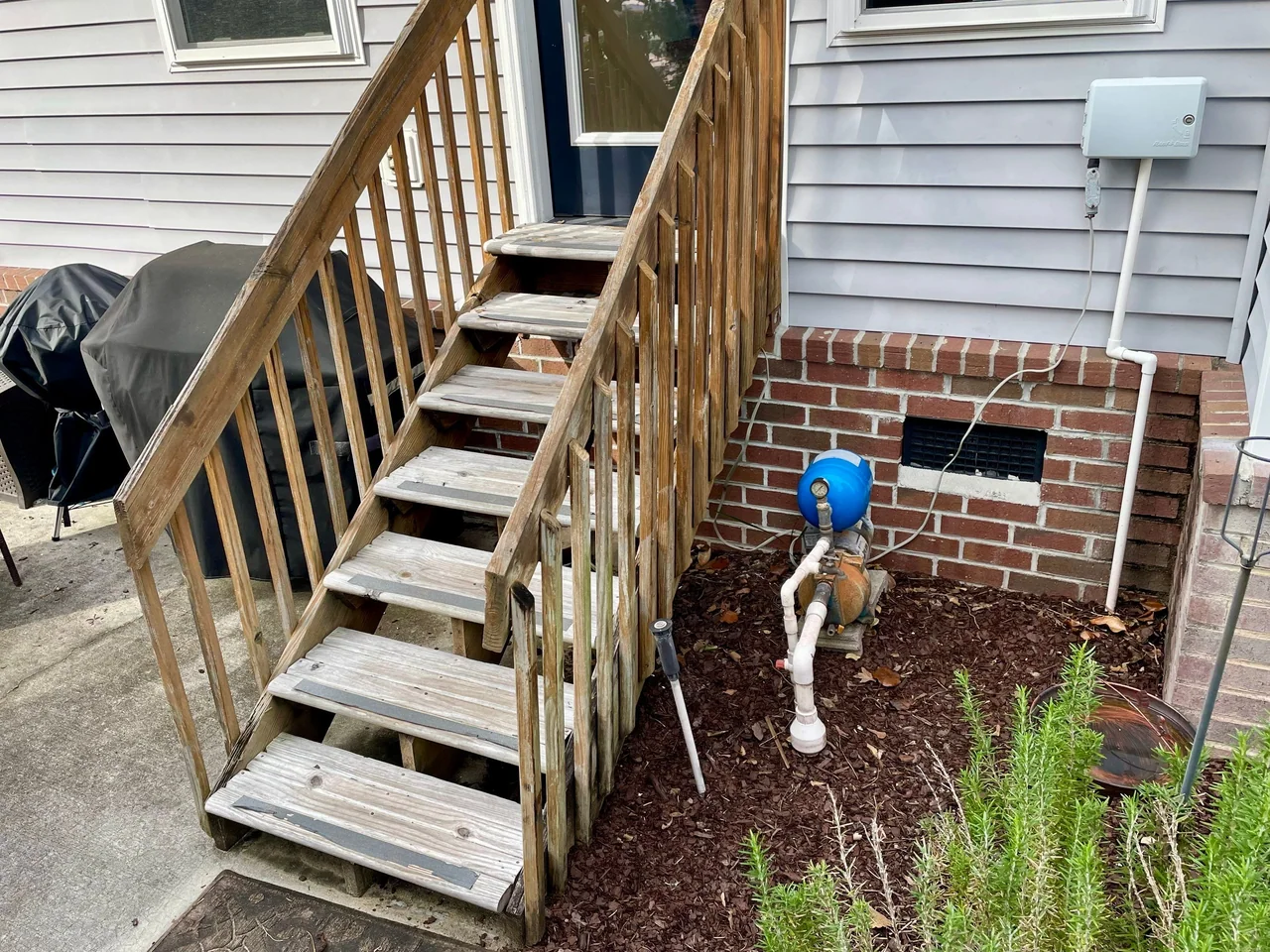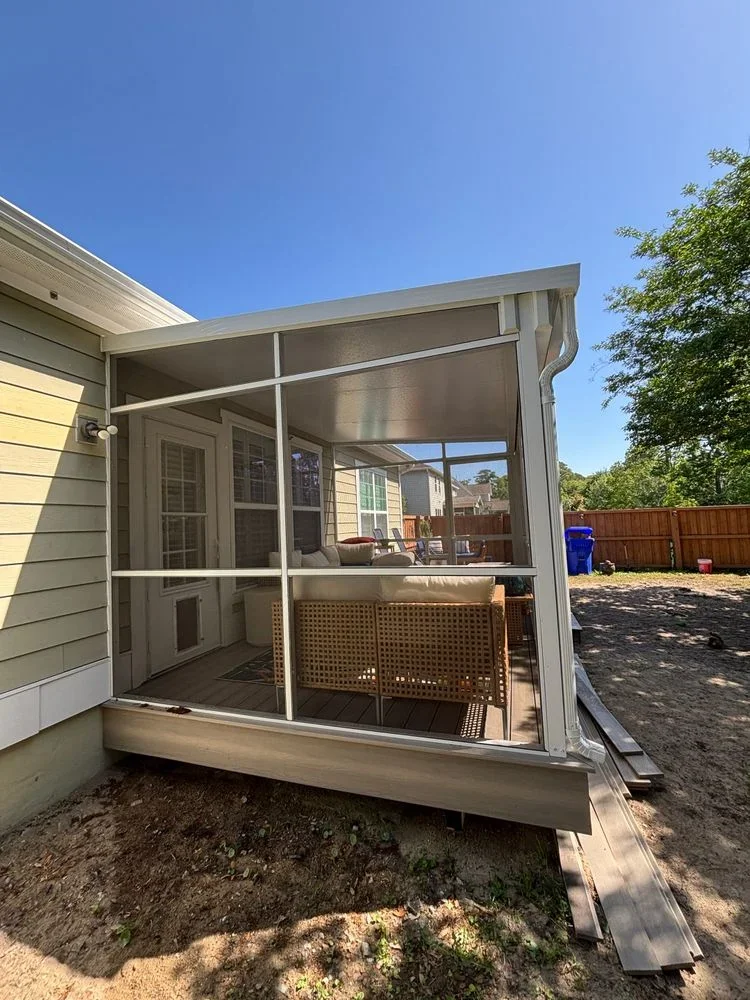
Start with two samples from the same mesh line
Project at a glance
- Location
- Myrtle Beach, South Carolina
- Recorded work
- Screen enclosure on an existing covered porch
- Photographs
- December 2025 installed views and a January 2026 corner detail
- What the example shows
- A seated view across the screen panels and the frame lines around it
Bring the choice down to what you’ll see over your coffee. Take the chair you like best and turn it toward the part of the yard you actually look at. A sample you liked on the porch table can look different when you hold it upright between you and that view.
Ask for charcoal and gray in the same product, if your contractor offers it. One example is Phifer’s 18 × 14 fiberglass pool and patio screening, which the manufacturer lists in charcoal and silver gray. The mesh count is part of that product’s weave specification. It helps you tell whether the supplier is showing you two finishes of one mesh or two different fabrics.
If you’re comparing samples from different lines, ask what else changes. How thick are the strands? Does the weave differ? Is either sample meant for a different use? A darker look in one sample could come with a different pattern or a heavier strand. Keep that information with the samples so you know what you’re choosing.
The mesh color is also a separate choice from the color of the aluminum or other framing around it. Lay the frame sample next to both meshes. If you’re still deciding whether to enclose the porch at all, the existing covered porch guide explains that larger decision first.
Compare the view you’ll see from the chair
Set both swatches upright against the same opening. Hold them at the same height and give both an equally sized patch of the view. Look through them at one fixed detail, such as a planter or the far edge of the lawn. Then swap the swatches left to right. If the preference moves with the sample, it’s easier to tell the effect from a brighter background on one side.
Repeat the comparison with the seat and the samples in the same places at another time you use the porch. The first look might favor the way the screen handles a bright patch of sky. Later, what you notice may be the strands in front of a shaded planting bed. Take a quick note of the time and the view you preferred instead of trying to decide from a phone photo later.
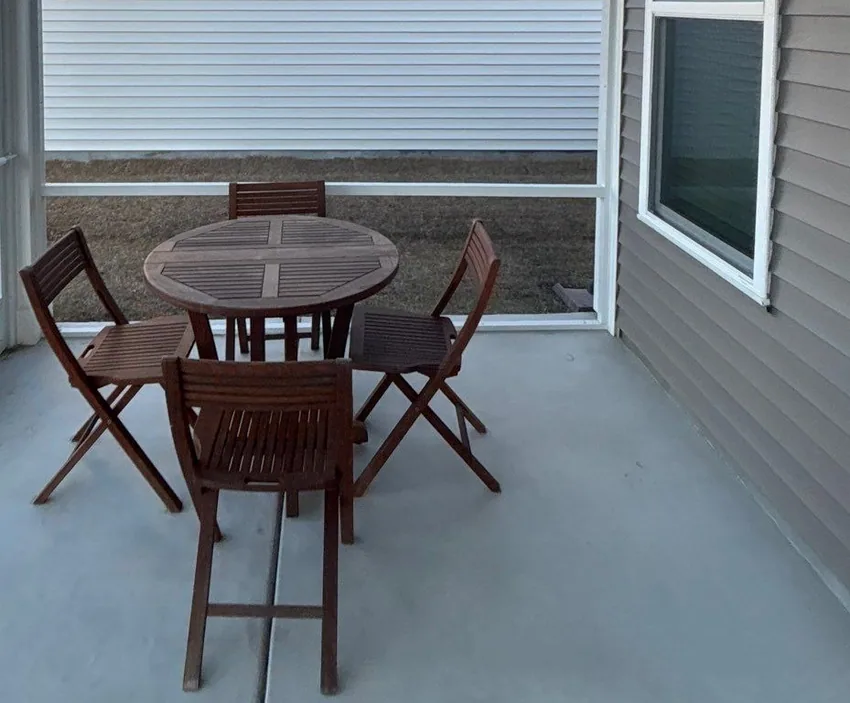
The installed views from one Myrtle Beach porch show a table near a screen wall and a horizontal frame member beside the seating. Use that arrangement to picture where you’ll make the comparison at your place. The project record does not identify the installed mesh’s exact material, weave or finish, so this is an example of where to look. It cannot settle which sample will suit your porch.
Phifer describes black and charcoal finishes in its standard aluminum screen range as offering high outward visibility. That’s useful context for that aluminum range. If your quote names fiberglass or another product, use the samples and the specification for the mesh you’re actually being offered.
Sources: Phifer — Aluminum Screening
YOUR HOME. OUR EXPERIENCE.
Thinking about a better screened porch?
Talk with Contract Exteriors about your existing porch, screen choices and the way you want to use the space. Start with a free estimate.
Book Your Free EstimateOur team will call to discuss your project and confirm appointment details.
Take the same samples out to the yard
Now stand where you usually see the porch from outside. Hold the two swatches against the frame choice you’re considering. Compare how each looks beside the siding and trim you plan to keep. A sample that recedes from your chair might read as a darker panel from the yard. Decide which viewpoint matters most if you prefer a different option from each side.
Keep the screen in the opening for both looks. If you move one sample against a bright wall and the other against a shaded interior, you’ve changed the background along with the color. If the screen choice is close, try a larger sample before deciding. A small swatch helps compare two surfaces, but it gives you less information about an entire run of panels.
If the larger sample changes your mind, look at what changed. A palm-sized piece makes it easy to look around the fabric, while a larger piece puts the mesh across more of the scene. Try the larger pieces against the same panel opening before comparing color. A supplier may be able to show a larger display when a full-size sample isn’t available.
Name your other priorities before you get attached to a look. If tiny insects usually cut the evening short, ask for an appropriate mesh first. Phifer’s selection guide distinguishes viewing clarity, insect protection and pet resistance across its products. The small-insect screen guide explains when a different weave or another part of the enclosure deserves attention.
Ask how the choice carries through to the door. If the door uses a different fabric or a lower panel, compare that section with the main screen wall, especially if it sits in the view you’ve been testing. A mismatched sample is a good reason to ask for the proposed door and enclosure details together.
Sources: Phifer — Screen Selection Guide
Put the winning sample on both quotes
Have the estimator write down the mesh manufacturer, product line, material and color. Ask for the frame finish on its own line and confirm which fabric is included at the door. Keep a photo of the labeled sample alongside the proposal so you can refer to the same selection later.
If two quotes both say charcoal, check the product names before comparing their price. Either one may be a good option, but the word charcoal alone doesn’t tell you the weave, strand size, intended use or what surrounds the panels. Ask what changes if the preferred option is unavailable and how a replacement would be approved.
If the estimator is pricing two colors, ask whether the same frame, door and fabric line are included in both totals. A difference that comes from a door upgrade or a change in panel scope tells you very little about what the color choice costs. Ask for those changes to be listed beside the appropriate option.
When the view looks close in the samples, give more weight to the performance you can verify for the product you’re ordering and the way you plan to use the porch. If pets regularly lean against the lower panels, ask about material and layout together. Our guide to screens and lower panels for dogs walks through that decision.
Bring the labeled swatches and a photo from your usual seat to a screened porch estimate. Mark which direction you look when you’re sitting and which section you see from the yard. Then ask the estimator to show those two views on the proposed panel layout. You’ll have a clear test for whether the quote describes the screen you want.
Another Angle
Start with the seated sightline
A screened wall is seen as both a surface and an opening. When looking out, the yard may be the subject and the mesh occupies the foreground. From the garden, the same screen reads as one part of the building’s exterior. The two viewpoints put different demands on a color choice, even when its weave stays the same.
Start with the view the room was arranged to serve. A chair parallel to a wall sees the screen at a different angle from a person facing it across a table. The important sightline may pass through the center of one panel, or at an angle across several. Compare those views by moving between the seats before changing the fabric specification.
The Myrtle Beach photographs make this distinction concrete. A pale horizontal member sits between the table and the ground beyond. Above it, the view includes the exterior wall across the opening. The mesh and that edge occupy different parts of the composition. A finish may change the impression of the fabric while leaving the position of the horizontal line exactly as it is.
The mesh and the opening read together
That separation is useful when a sample seems unsatisfactory. If a frame line crosses a view you want to keep, that is a question for the panel drawing. If the line sits where it belongs but the mesh itself draws attention, compare the finish and fabric under the same conditions. A well-chosen mesh can work with the geometry, and the geometry still deserves its own judgment.
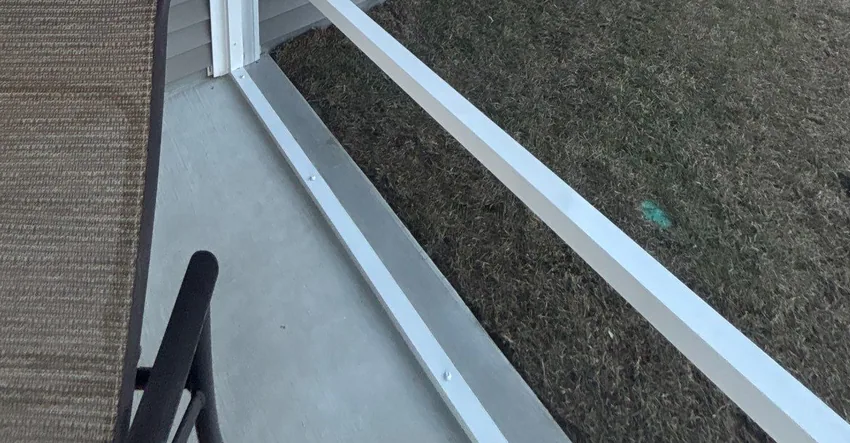
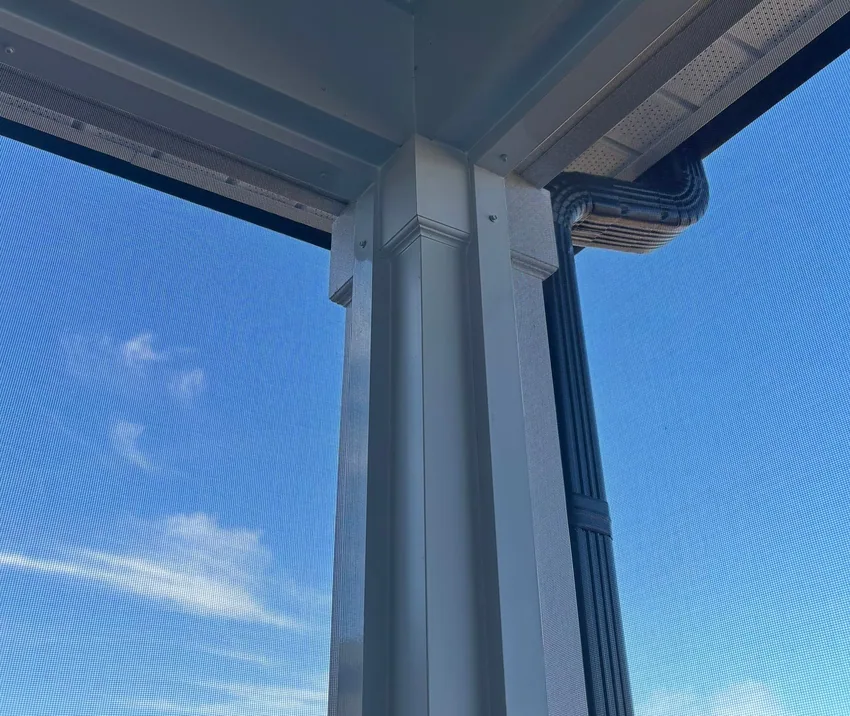
The corner photograph shows the reverse situation. Two fields of screen meet at an upright against sky. The post gives the view a clear break, and the fabric reads against a fairly simple backdrop. At the table, the same general enclosure has more competing elements. The difference explains why a sample compared against the sky should also be viewed across the actual ground or planting you expect to look at.
The panel drawing and the samples answer complementary questions. A straight view through the middle of an opening may preserve a long look across the yard. The oblique view from the next seat brings a vertical member into the composition. The place that needs the better result is the one the household actually uses most. Keep that place in mind when deciding how to judge a close comparison.
Choose the preferred side of the enclosure
From outside, consider how the finished screen will sit among larger surfaces. Trim, siding, roof overhang and the shadow behind the enclosure can make several panels read as a continuous group or as separate openings. A swatch held beside the proposed frame is a more useful first comparison than assigning a finish from a catalog name. The point is to see whether the proposed contrast helps the wall fit the house.
The best choice gives a deliberate role to both views, with priority given to the more important one. Favor the window-like opening from the everyday seat if the garden is where attention belongs. If the porch is also a prominent face of the house, compare that outside view before committing. A small difference in fabric color is worth choosing with care when it serves the view you will return to.
A FEW MORE ANSWERS
Questions homeowners ask
Is charcoal always easier to see through than gray?
Compare samples of the same mesh in the same opening. Material, strand size, weave and the light behind the screen can all affect what you notice, so the color name alone is a poor guide.
Can I compare an aluminum sample with a fiberglass sample?
Yes, if those are the actual choices in the quote. Treat that as a comparison of two complete products. Ask for their specifications so you can see what differs beyond color.
Where should I hold the samples?
Place them upright at the same height in the opening you look through most. Look from your usual chair and switch the samples left to right to check whether the background is driving your preference.
Will the frame and screen have to match?
Ask for separate frame and mesh samples. Compare the combination from the porch and the yard, then confirm which finishes the estimator can supply with the proposed enclosure.
Should the porch door have the same mesh as the walls?
Ask the estimator to specify both. If the door fabric differs, compare it alongside the wall option, especially when the door sits directly in your main view.
What should I save after picking a color?
Keep a photo of the sample label and the written proposal. The proposal should identify the product and mesh color, the frame finish and what is included at the door.
Sources and review
Contract Exteriors project evidence: Internal project records and original CompanyCam photographs support the project examples described in this article. Customer records and identifying details remain private. Project examples are separate from the manufacturer guidance and other published references below.
Approved Contract Exteriors photographs show seating beside installed fixed screens and visible frame and screen details at a Myrtle Beach porch. The job record establishes the enclosure scope and completion, and does not specify the exact mesh. Product sources describe available comparisons only.
- Phifer — 18x14 Fiberglass Pool & Patio Screening — Checked November 21, 2026. The same listed mesh comes in charcoal and silver gray. Product example, separate from the Myrtle Beach installation.
- Phifer — Aluminum Screening — Checked November 21, 2026. Manufacturer description of finish choices and outward visibility within its aluminum screen range.
- Phifer — Screen Selection Guide — Checked November 21, 2026. Manufacturer compares intended uses and priorities including viewing clarity, insect protection and pet resistance.
Editorial review details
Reviewed for Contract Exteriors by Bill Schum, Marketing Director, Contract Exteriors, on November 21, 2026. Scope: Bill Schum provides editorial oversight. Project records, cited sources, image originality and article presentation were checked. AI tools supported research, drafting and editing. Design commentary is an editorial perspective.
Our sourcing and corrections standards · Report a correction