Think about the afternoon you actually want to spend outside
Project at a glance
- Local example
- Murrells Inlet, South Carolina
- Initial request
- A low, roughly 14-by-14-foot deck with materials still undecided
- Existing setting
- Paved patio, seating, house walls, open yard and a screened structure
- Article evidence
- Initial deck inquiry and existing-condition photographs; no new deck shown
A deck can look perfect in a photograph and still feel very different when you step onto it on a sunny afternoon. If you're choosing boards for a Grand Strand home, heat deserves a place in the conversation before the color is ordered. It's an everyday-use question, right alongside where the chairs will go and how you will get from the back door to the yard.
That doesn't mean composite is a poor choice. It means low maintenance and a comfortable walking surface are separate things to think through. A board can spare you the refinishing routine you wanted to avoid without feeling cool whenever you want to take your shoes off. Decide which benefits matter to you, then check the limits of the product you're considering.
South Carolina's State Climatology Office describes the warm, moist ocean air that influences summer weather here. That is useful background for planning an outdoor space, but it doesn't give us a temperature for your future deck. A shaded backyard, an open patio and a narrow side yard can offer different experiences even within the same town. Your actual setting needs to lead.
Sources: South Carolina State Climatology Office: South Carolina climate · TimberTech: composite decking versus wood
A Murrells Inlet inquiry shows why the setting comes first
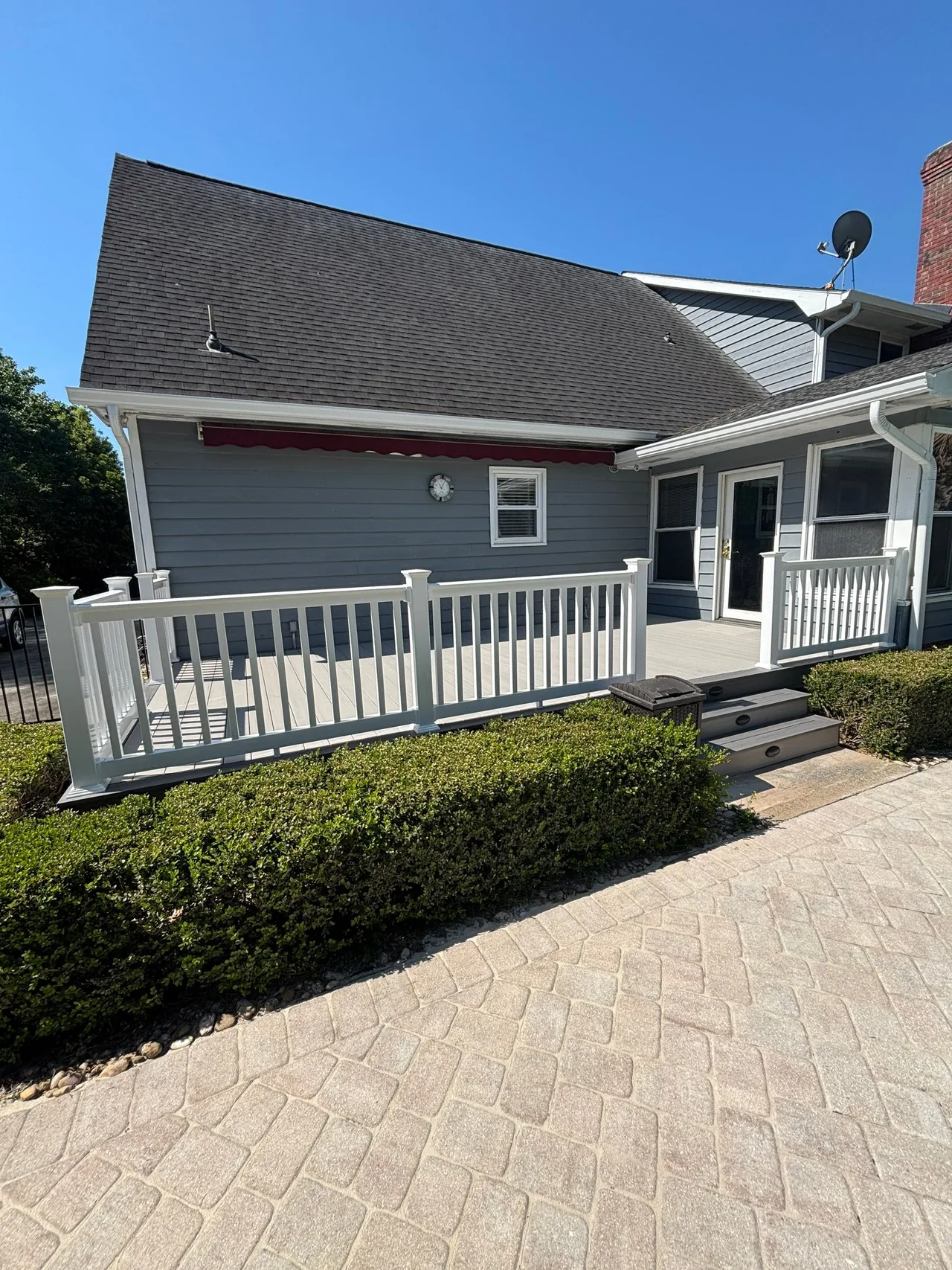
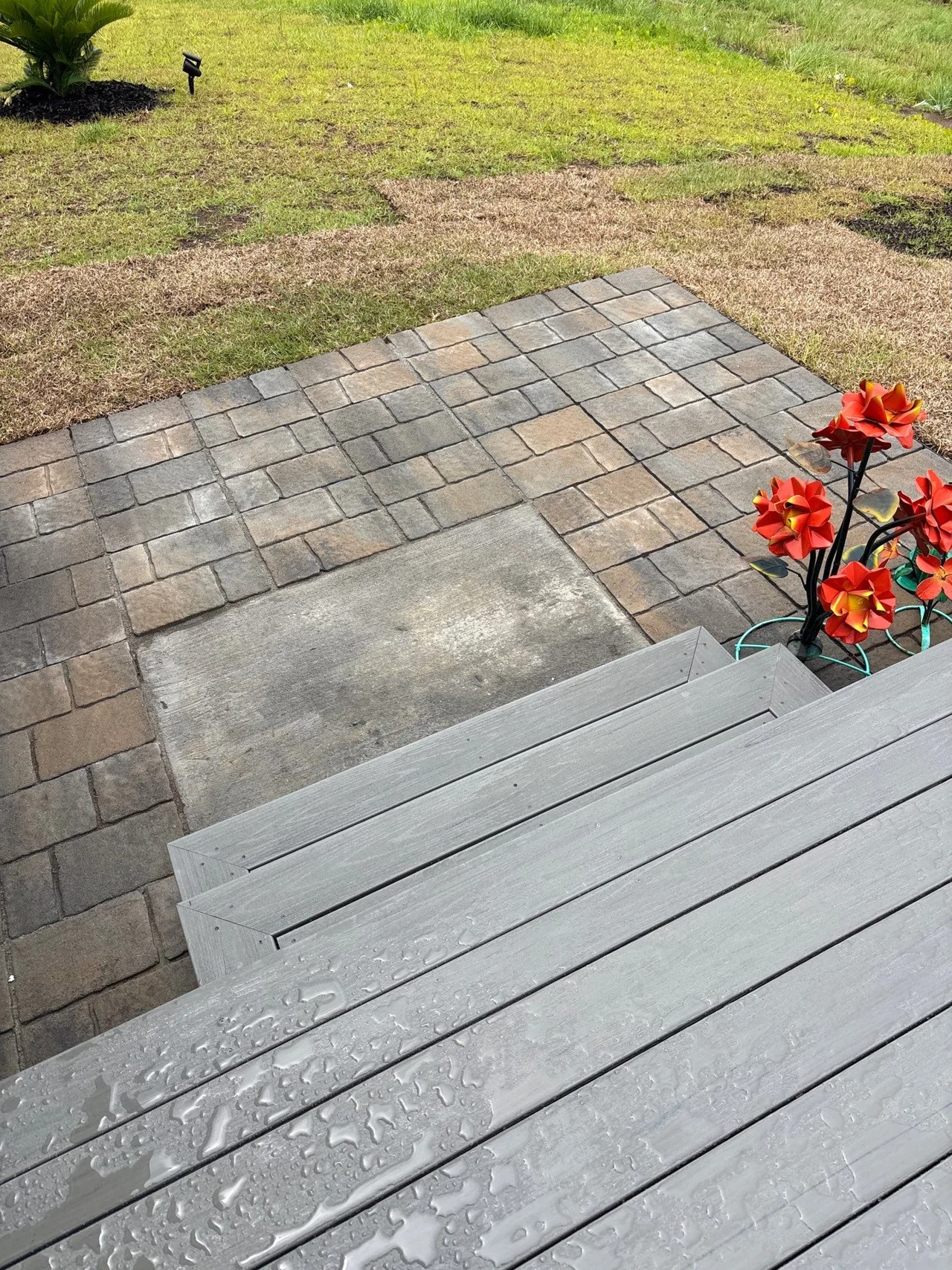
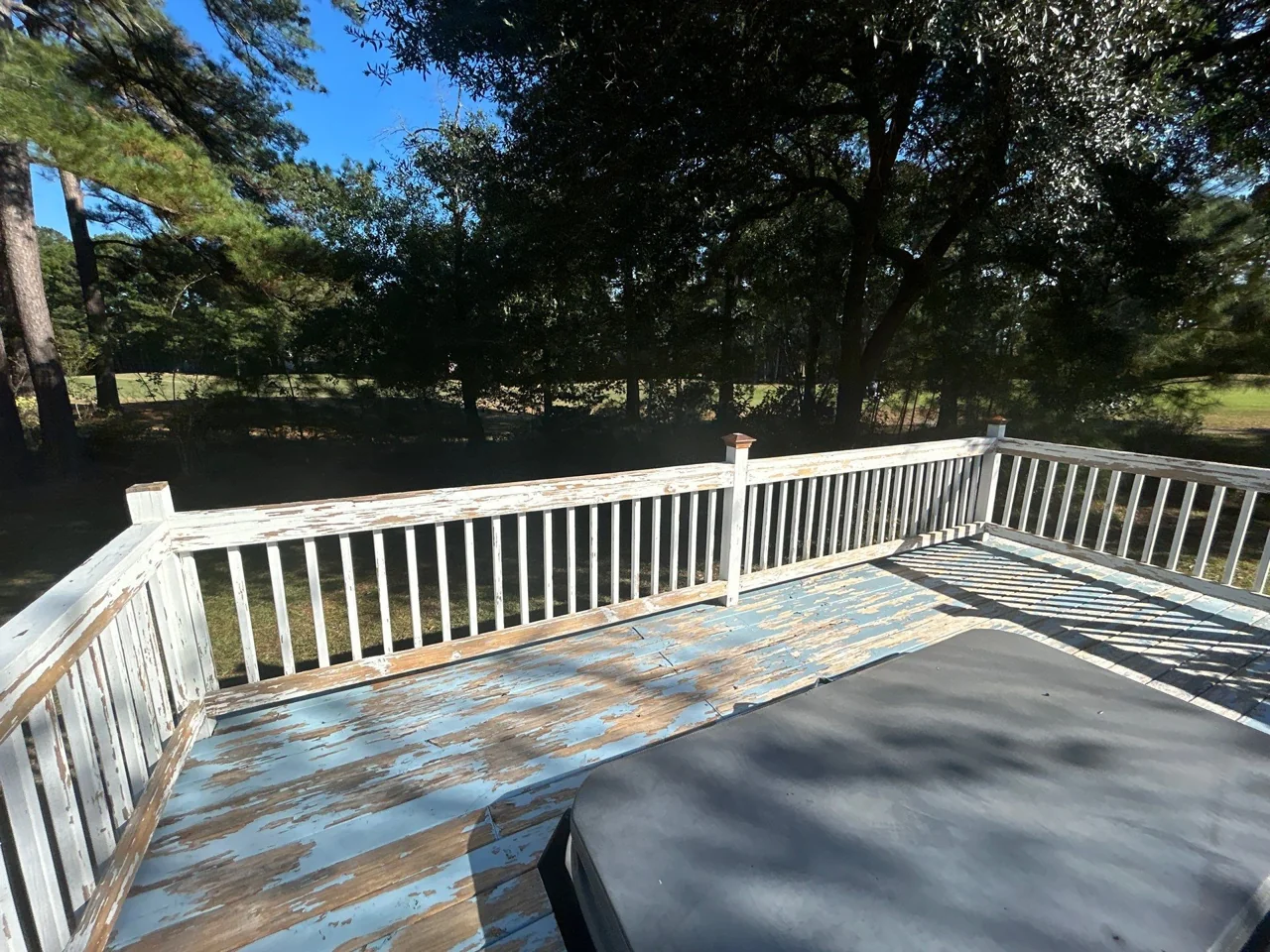
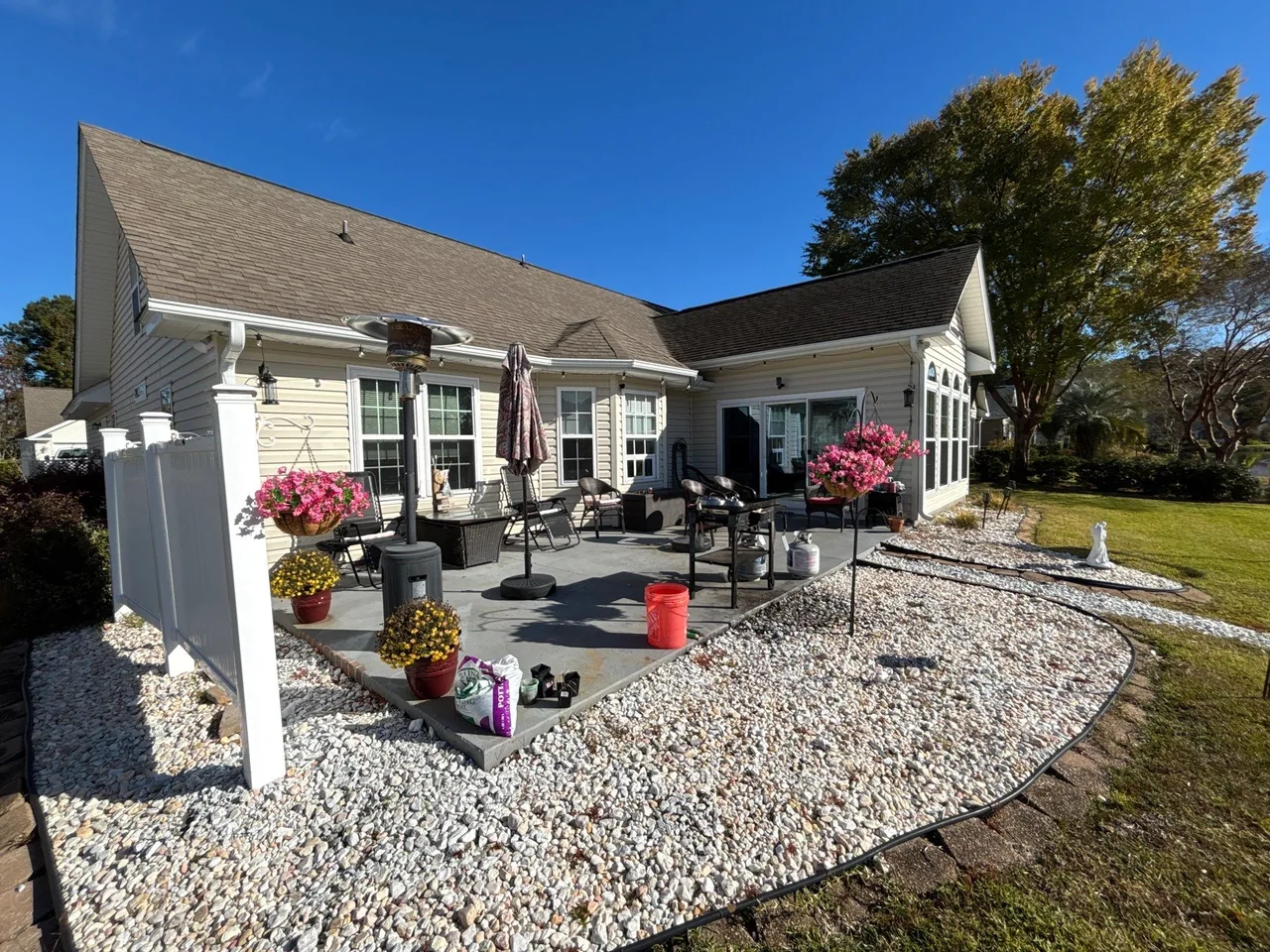
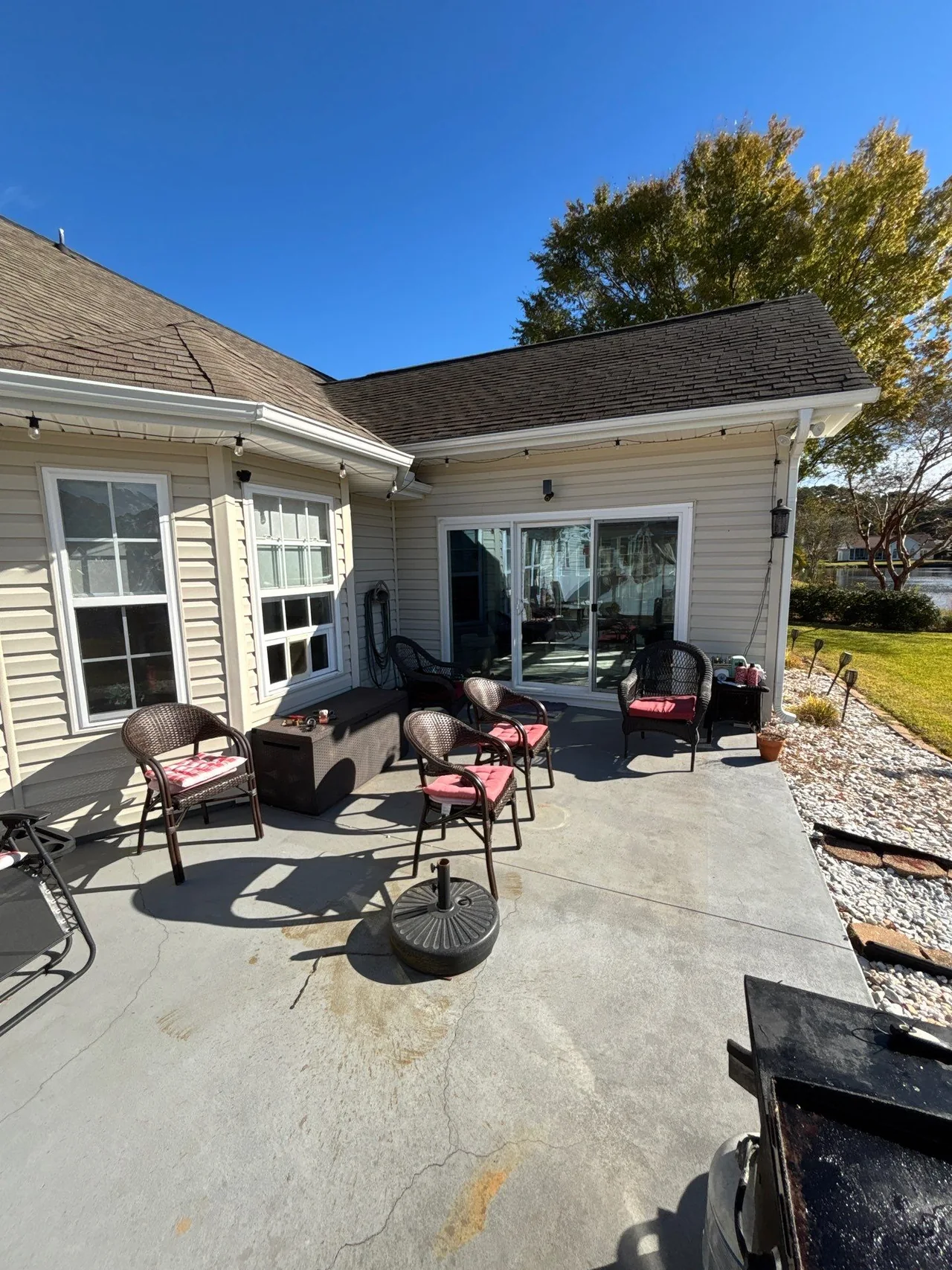
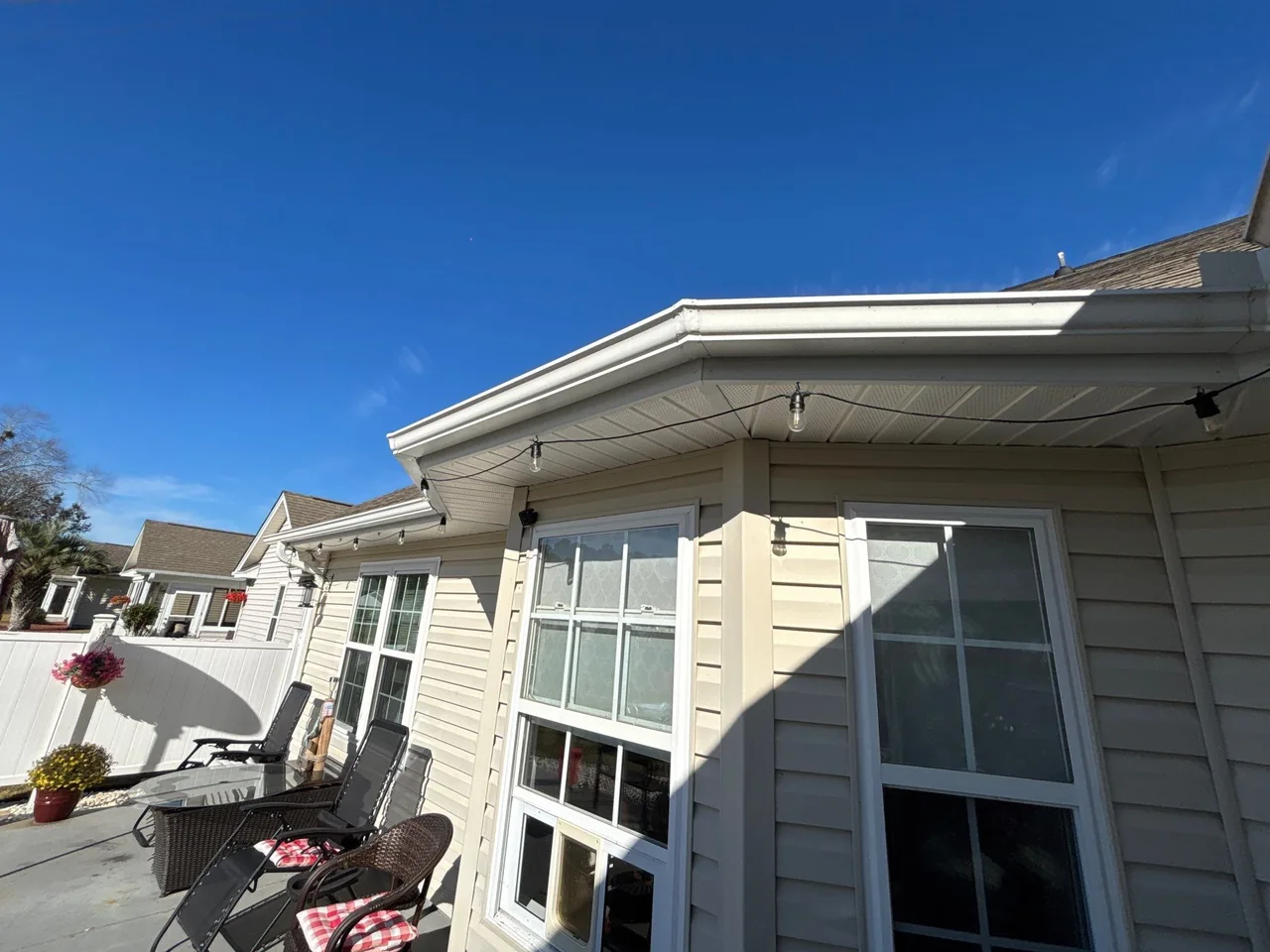
In an initial Murrells Inlet inquiry, a homeowner asked Contract Exteriors about a low, roughly 14-by-14-foot deck and was still considering wood, composite and other material options. The existing-condition photographs show a paved outdoor area with chairs, house walls, an open yard and a screened structure. It's a useful starting point because the board decision had not already been made.
That initial question was about material choices, not a complaint that an existing composite deck was too hot. These are photographs of the original outdoor setting. The example helps explain what to consider before selecting deck boards; it isn't a completed deck or a demonstration of one product's heat performance.
For someone planning a similar space, the useful next step is to picture a normal day there. Would you sit outside with morning coffee, eat lunch or head out later in the evening? Which route would you walk from the house? Where would a chair sit when someone pushes it back? Those answers help you decide where a sample needs to be tested and where shade might earn its place.
What the manufacturer actually says about heat
TimberTech's current disclaimer is direct: all decking products get hot in the sun. It also says darker colors feel hotter and suggests considering a lighter color in hotter climates. That's more helpful than a blanket promise that a material is cool, because it leaves room for the color and exposure you will actually have.
You may see a product described as cooler than competing boards. Read that as a comparison, with its applicable conditions, rather than a promise about bare feet. Cooler than another surface can still be too warm for you at a particular moment. Don't turn a comparative claim into an assurance about children, pets or anyone else's comfort.
Have the exact product and color written into the proposal. If a suggested alternative changes either, revisit the heat question instead of assuming the earlier comparison still applies. The TimberTech name covers different options, and the word composite is often used loosely in everyday conversations. Our composite-versus-PVC guide can help you separate that material decision before comparing the actual choices for your home.
YOUR HOME. OUR EXPERIENCE.
Thinking about updating your deck?
Talk with Contract Exteriors about your existing deck, material choices and how you want to use the space. Start with a free estimate.
Book Your Free EstimateOur team will call to discuss your project and confirm appointment details.
Put real samples in the yard before choosing a color
A sample viewed inside a showroom helps with texture and appearance. For this decision, take it outside too. TimberTech's full-sun guidance recommends placing samples in the sunny area where the future deck will be. That simple step brings the material conversation back to the space you intend to use.
Compare your actual shortlisted products together, rather than looking at a dark board one morning and a pale board on a different cloudy day. Visit the location during the hours you care about. Notice when the house shades it, when the open yard leaves it exposed and whether a planned seating area would be in a different condition from the main walking route.
Keep expectations sensible. Small loose samples are not a finished deck, and one afternoon cannot represent every season or weather pattern. They are a useful comparison aid, not a certified heat test. Don't ask anyone to prove a point by standing barefoot on a hot sample. If the options don't suit the way you hope to use the space, reconsider color or shade before treating the material order as settled.
Sources: TimberTech: decking for full sun
Choose a lighter board because it works, not because you feel forced to
If you love a dark finish, a lighter sample may not be your first instinct. Put both beside the house before deciding that the practical option will spoil the design. The siding, door, railing and furniture change how a deck color reads. A board that feels plain on its own may give the rest of the outdoor space a calmer background.
Likewise, a pale board isn't automatically the right answer for every home. You still have to like the appearance and confirm the exact product. Compare the samples in sun and shade, and look from inside the room that opens onto the deck. You'll see that large field from the house as well as while standing on it.
Ask for a simple alternative palette if your first choice creates a comfort concern. You might prefer one quieter color throughout instead of several contrasting areas. Keep the wider project comparable while reviewing those options so that a new railing, larger footprint or decorative border doesn't obscure the decision you're trying to make. Appearance and everyday use can support each other; they don't have to become opposing sides of the estimate.
Plan shade around people and routes
Shade deserves a place on the first layout, not just a note to add an umbrella someday. Mark where someone would sit, where they would walk and where a pulled-out chair would land. If the seating is shaded but the path from the door crosses an exposed part of the deck, those are two different experiences to consider.
Move that imagined afternoon forward a few hours. A useful patch of shade at lunchtime may not cover the same seat later. You don't need a complicated drawing to notice that change: take a few photographs from the same spot and compare them. Keep any proposed shade element separate from what is already present so you aren't planning around a feature that hasn't been included.
Discuss the placement, operation and suitability of any shade option with the responsible installer. An umbrella, pergola and covered structure are different proposals, with different practical responsibilities. Don't assume a decorative structure supplies continuous shade or that an added feature can attach anywhere. First agree on the comfort problem you want the plan to address; then ask which appropriate option can realistically help.
YOUR HOME. OUR EXPERIENCE.
Ready to turn your deck ideas into a plan?
Bring your questions about boards, layout, stairs and railings to Contract Exteriors. Get help comparing a clear scope for your home.
Book Your Free EstimateOur team will call to discuss your project and confirm appointment details.
Compare comfort without losing sight of the whole project
Once heat enters the conversation, it's tempting to choose whichever sample feels best at that moment and stop there. Keep the rest of the project in view. The layout, access, stairs, railings and assessment of the supporting structure still matter. A surface choice doesn't resolve those parts of the job, and they shouldn't disappear from the estimate because the board discussion became more interesting.
Ask for alternatives against the same agreed scope. If one option includes a shade feature and the other doesn't, have that difference identified. If you want a less expensive board to leave room for shade, say so directly. You'll get a more useful conversation than comparing two totals that describe different outdoor spaces.
It can also help to separate the reasons you're considering a manufactured board in the first place. Our wood-versus-composite value guide looks at the ownership and budget decision. Use that alongside the heat question rather than expecting one article or sample to settle everything. You may decide the reduced refinishing commitment matters a great deal, while also choosing a lighter finish and a different seating arrangement.
Leave the estimate meeting with choices you can explain
Bring photographs of the existing space and tell Contract Exteriors when you expect to use it. Say if walking outside without shoes is an important preference, while recognizing that no outdoor board comes with a promise of constant barefoot comfort. That gives the discussion a practical purpose beyond finding a color you like online.
Ask which exact TimberTech products are being compared, how the colors differ and what useful samples you can review at home. Then check whether the proposed seating and walking routes make sense for the sun and shade you observed. Keep a short note of the tradeoffs you accepted, especially if the final choice changes from the first proposal.
You don't need a guaranteed temperature to make a thoughtful decision. You need an identified product, an honest understanding of its limits and a layout that suits your habits. Our decking overview introduces the wider project options, and the planning tools can help you organize what you want to discuss. Aim for a space you can enjoy and look after with realistic expectations, rather than a surface described as comfortable under every possible condition.
Another Angle
Decide which outdoor activities deserve a new surface
A heat concern can reveal a more interesting design question: how much of the outdoor space needs to become deck in the first place? The usual drawing begins with an outline and fills it with boards. A more discerning approach begins with the activities that deserve a place, then asks how each surface will serve them. The best plan may involve a deliberate relationship between a deck, an existing patio and the yard rather than one dominant platform.
The Murrells Inlet starting point is useful here because it includes several existing elements: paving, chairs, walls, open ground and a screened structure. These form a setting before any new board color arrives. Their presence does not establish which should remain or how a future structure should connect. It does, however, offer an editorial reason to consider the new work as one part of an outdoor composition rather than a replacement for every existing function.
A modest deck can provide a clear place for sitting without absorbing the whole yard into a single material. Existing paving might retain another purpose if its condition and the agreed design allow. That is a planning possibility, not a recommendation for the particular property. The important distinction is between adding a useful place and merely extending a surface. More finished area brings little value when it does not improve the way the space can be occupied.
Spend on a useful place, not just a larger platform
This also changes how a budget is judged. A homeowner might prefer a smaller, carefully resolved deck with room in the proposal for an appropriate shade feature over a larger expanse of a more expensive board. Another may value an open gathering space and accept using it at different hours. The choice depends on priorities. Neither additional square footage nor the highest-priced finish proves that the design is more successful.
Consider the view from the house as well. A deck is present in the indoor room even when nobody is outside. A broad dark field may command attention; a quieter tone may let the garden or furniture lead. Those are compositional judgments, separate from any product's heat behavior. Looking at samples from the interior helps the color decision account for both the outdoor experience and the room that frames it.
Edges deserve similar restraint. A strong border can make a small platform feel clearly defined, but every contrasting line becomes part of the view. A simpler treatment may allow a chair grouping or the planting beyond it to provide the emphasis. The most considered option is not necessarily the most decorative one. It is the one whose boundaries, furnishings and surrounding surfaces feel intentional together.
Leave room for the way use changes
There is a practical benefit to leaving some choices flexible. Furniture that can be rearranged gives a homeowner a different relationship with the space from an arrangement organized around several fixed features. Before committing to those features, consider how the setting might be used for a quiet morning, a meal or visitors. These are design scenarios for discussion, not additional activities documented in the local inquiry.
Seen this way, the heat question is a useful prompt to edit the plan. Rather than asking one board to make every part of a backyard equally inviting at every hour, give the proposed deck a clear job within the wider setting. A well-chosen material then supports a coherent place to spend time. That is a stronger foundation for the investment than selecting a finish first and asking the layout to accommodate it afterward.
A FEW MORE ANSWERS
Questions homeowners ask
Does a cooler decking claim mean it is safe to walk on barefoot?
No. A comparison with another board does not guarantee a comfortable or safe surface in your yard. TimberTech states that all decking gets hot in sun. Consider current conditions and use appropriate footwear rather than relying on a comparative claim.
Should I rule out dark decking altogether?
Not automatically. Compare the exact darker and lighter options in the intended setting, consider the hours you use the space and review shade. TimberTech notes that darker colors feel hotter, so that tradeoff belongs in your decision before ordering.
Can a small sample tell me exactly how hot the finished deck will be?
No. Samples help compare products and appearance at your home, but loose pieces and one day's weather do not reproduce a complete installed deck across the year. Treat the comparison as a selection aid rather than a temperature guarantee.
Will a pergola keep the entire deck shaded?
Don't assume it will. The design, position and changing sun affect where shade falls. Discuss the intended seating and walking routes with the installer and distinguish an open decorative structure from a proposal for more continuous cover.
Should I choose the board or the shade plan first?
Develop them together. Identify how you want to use the space, compare actual board options and see whether the proposed layout and appropriate shade features address those priorities within the complete budget.
Should I choose wood just to avoid the heat question?
Don't assume a switch to wood settles comfort. Compare the actual materials you are considering in the same setting and think through exposure, shade and use. Make the wood-versus-manufactured decision alongside the whole project's upkeep and budget tradeoffs.
Sources and review
Contract Exteriors project evidence: Internal project records and original CompanyCam photographs support the project examples described in this article. Customer records and identifying details remain private. Project examples are separate from the manufacturer guidance and other published references below.
Original Contract Exteriors consultation photographs privately matched to the recorded local request. Existing conditions illustrate a buying decision; no completed installation, selected product or measured outcome is implied.
- Contract Exteriors project evidence — Initial deck request and original existing-condition photographs matched privately to the Murrells Inlet property. Public link opens the company portfolio, not private records.
- TimberTech: decking product disclaimers
- TimberTech: decking for full sun — Used for sample comparison guidance; older collection names and numerical performance comparisons are not applied to the local example.
- South Carolina State Climatology Office: South Carolina climate
- TimberTech: composite decking versus wood — Supports differences in refinishing requirements and the distinction between wood-fiber composite and Advanced PVC; no manufacturer cost or payback examples are applied to the local inquiry.
Editorial review details
Reviewed for Contract Exteriors by Bill Schum, Marketing Director, Contract Exteriors, on November 17, 2026. Scope: Editorial oversight, source and project-record checks, photo-originality review, and mobile/desktop presentation checks. Research and editing were supported by AI tools. Design commentary reflects an editorial perspective and does not constitute professional architectural or engineering advice or a property-specific site assessment.
Our sourcing and corrections standards · Report a correction