You don’t have to put the whole idea away until spring
Project at a glance
- Local example
- Mount Pleasant, South Carolina
- Recorded work
- Eight replacement windows; OKNA sliders listed in the project record
- Seasonal context
- Installation activity photographed in December and January
- Photo stages
- Window-perimeter work, later exterior trim and a later interior view
The first chilly morning can turn a window project from ‘someday’ into something you'd like to deal with soon. Then comes the obvious worry: are you really going to have an open hole in the living-room wall in January? It's a fair question, and it deserves a more useful answer than ‘we work all year.’
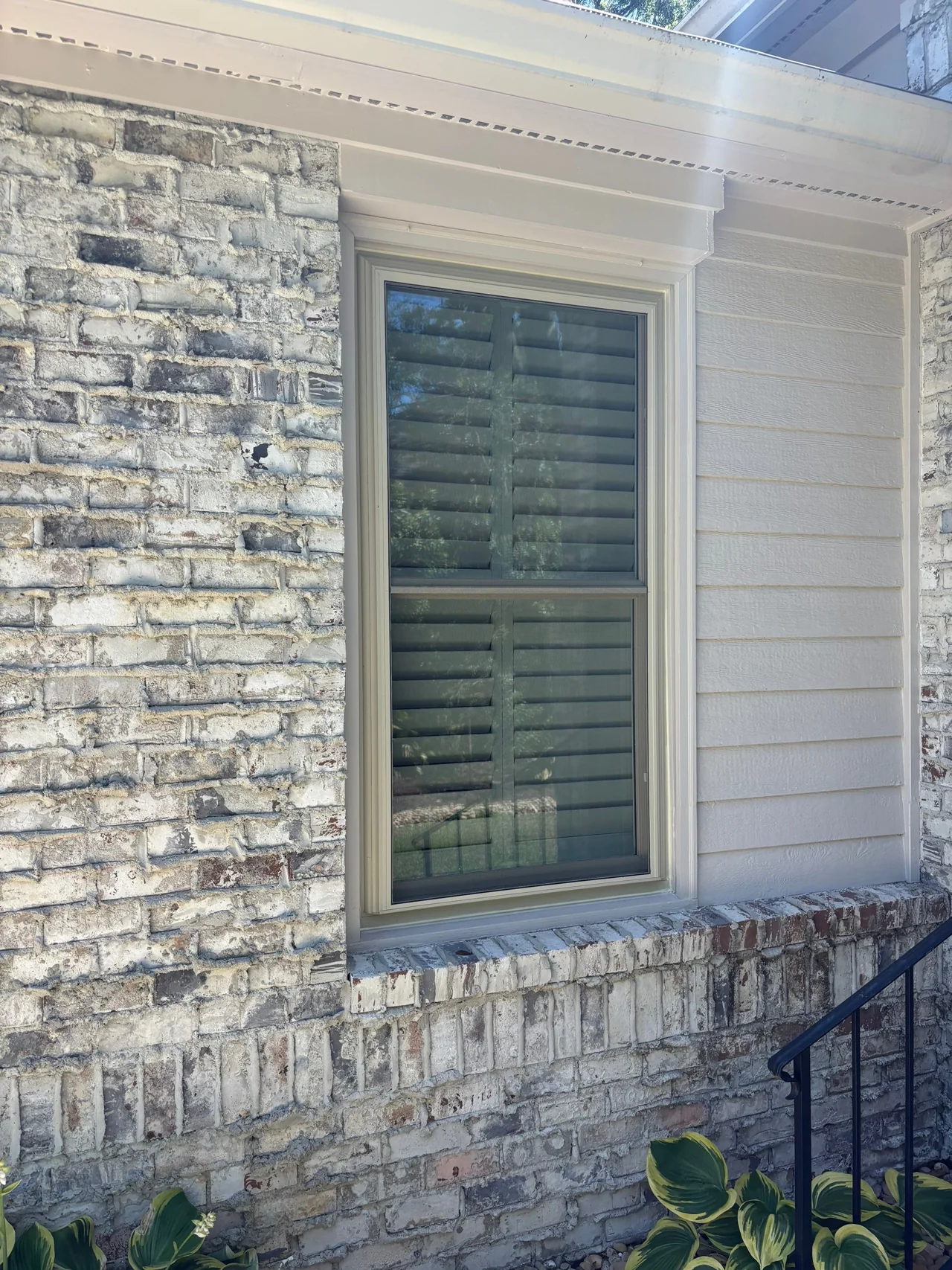
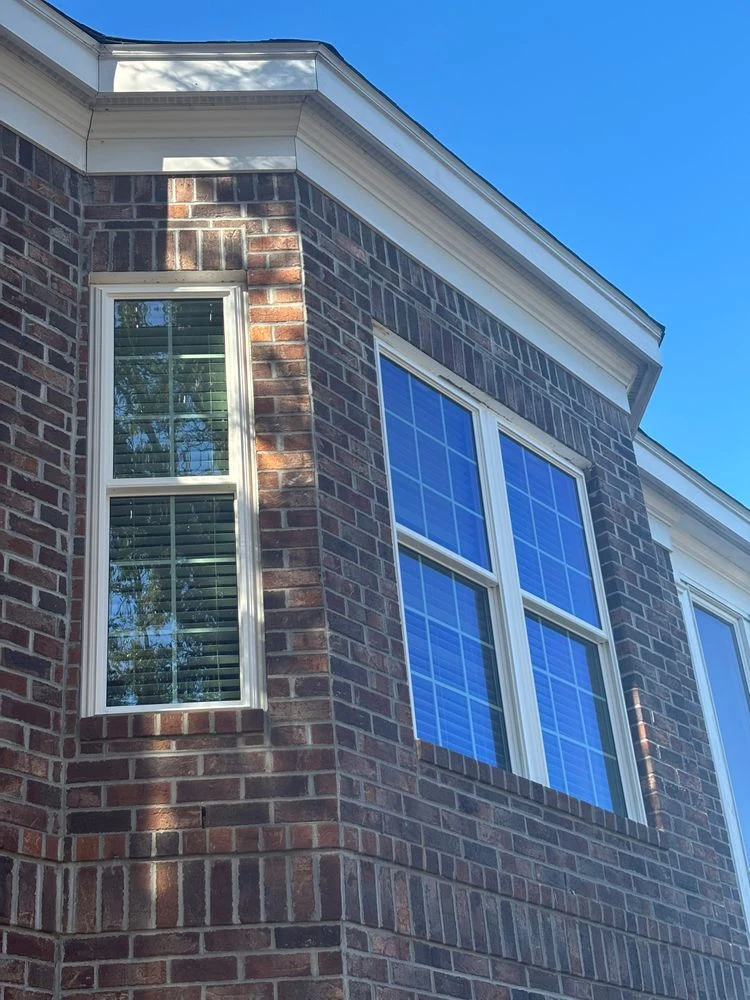
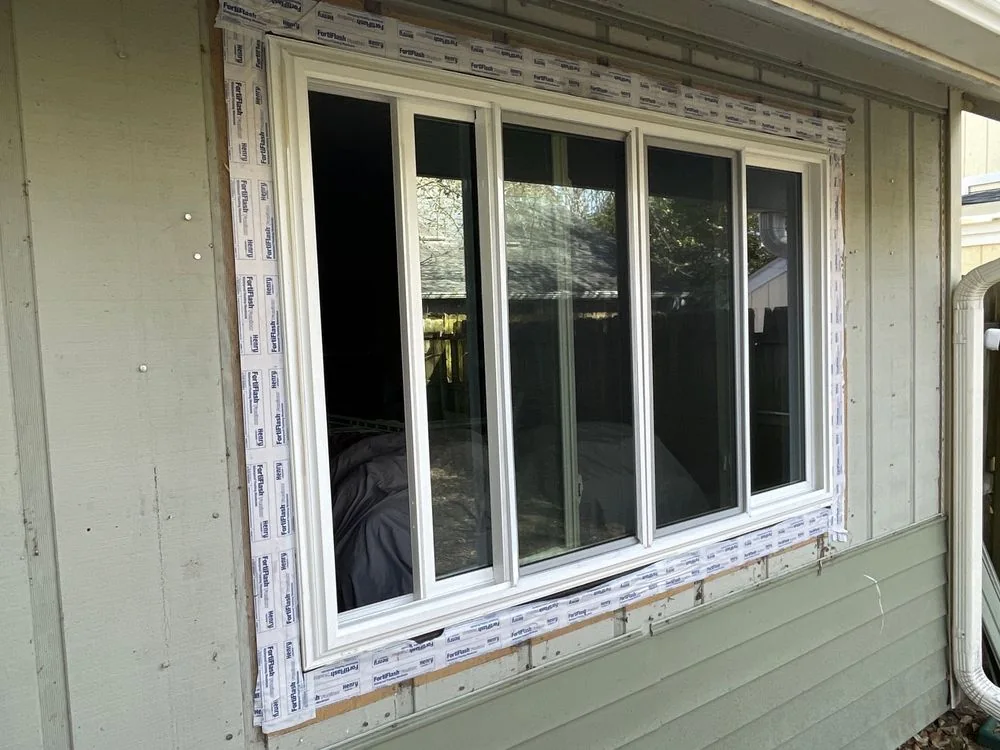
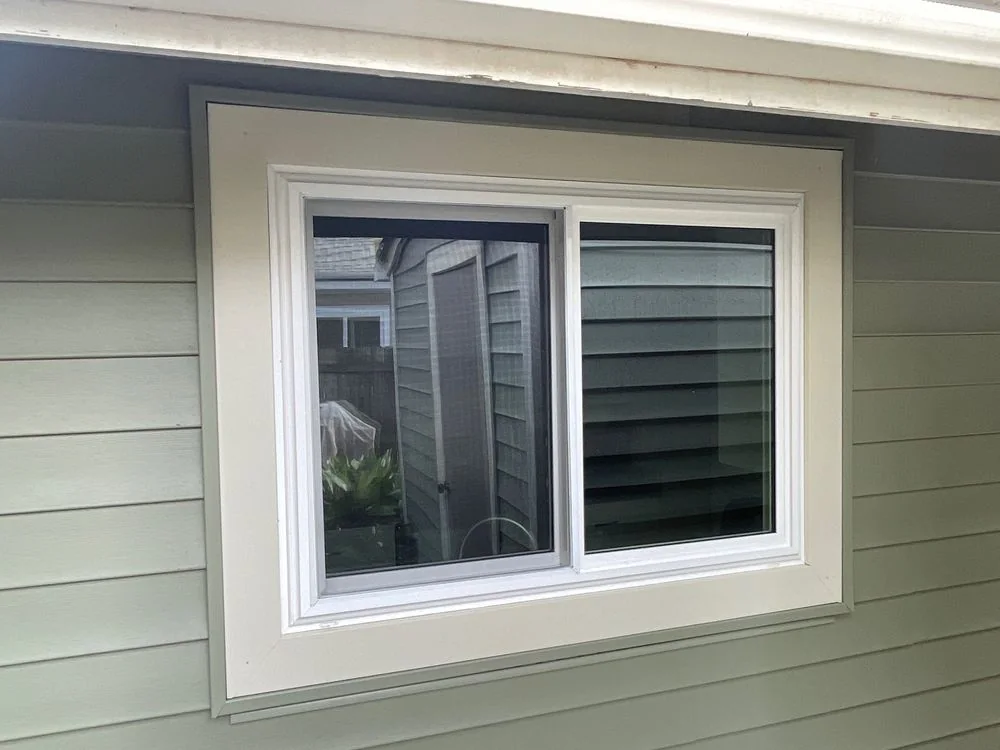
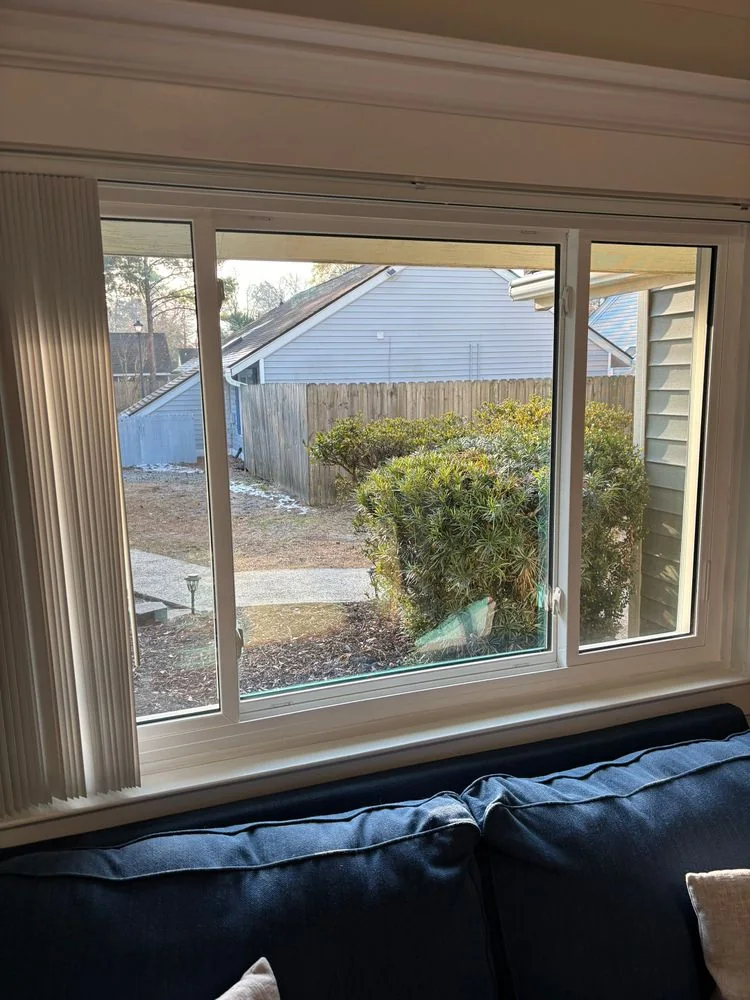
At a Mount Pleasant home, Contract Exteriors' replacement-window work crossed the cooler part of the calendar. The project record lists eight windows and an OKNA slider selection. December and January photographs show work around the openings and later installed windows with their exterior surrounds. A February interior view brings the conversation back to the space you actually live in: a wide window above a sofa.
That example shows winter work happening locally. It doesn't supply a temperature test or a promise about how long your rooms will be exposed. For your house, the worthwhile question is how the proposed work will be managed on the day. Our window planning resources can help you organize that conversation.
The forecast matters more than the month
Pella's general replacement guidance says both pocket and full-frame replacement can be carried out year-round by experienced professionals, including in winter. That supports the broad answer; the instructions for your actual window and installation materials still govern your job. It isn't an OKNA-specific installation approval.
For a Charleston-area project, look at the forecast for the property as the date approaches. The National Weather Service separates North Charleston and downtown climate records and publishes local frost and freeze information. A regional average can't tell a crew whether a particular wall is ready for work that morning.
Ask who makes the weather call, when you'll hear from them and what happens if rain, wind or cold changes the plan. The NWS Charleston weather briefing is a useful local reference. Your installer still has to assess the actual work area and the products being used.
Sources: Pella: replacement installation guidance · NWS Charleston climate resources · NWS Charleston weather briefing
One “cold-weather” label doesn’t cover the whole opening
There are several materials involved in finishing a window opening. Don't stop at asking whether the caulk works in the cold. Ask which sealant, flashing tape, insulation and finish products are proposed, and whether their instructions fit the expected conditions and surfaces.
For a concrete example, OSI's January 2025 QUAD MAX technical sheet lists an application range of 0°F to 140°F. It also requires removal of ice, snow and frost, addresses surface preparation, and explains that cure time varies with conditions. That is one product's guidance, not a recommended installation temperature for your windows. We haven't identified it as the sealant used at the Mount Pleasant house.
The useful takeaway is simple: ‘it sticks in winter’ leaves out too much. Ask the installer to explain the complete materials plan, including anything that has to wait for different conditions. You don't need to become a sealant expert to expect a clear answer.
Sources: OSI QUAD MAX technical data sheet
YOUR HOME. OUR EXPERIENCE.
Planning a whole-home window replacement?
Talk with Contract Exteriors about your rooms, window options and the work around each opening. Start with a free estimate.
Book Your Free EstimateOur team will call to discuss your project and confirm appointment details.
Ask how your house will be protected between steps
A practical plan should tell you how many openings will be exposed together and how rooms will be separated from the work. Ask which room comes first, where the crew needs access and what happens if the wall needs additional work after removal. Don't accept a universal number of minutes per window as a guarantee for your home.
The Mount Pleasant photographs make that last point useful. One stage shows a wide window with the surrounding perimeter still exposed; a later view shows the trim in place. Fitting the window and finishing its surroundings are different steps. Agree on what ‘finished for the day’ means before the old unit comes out.
If someone in your household needs a reliably warm, quiet space, raise that early. Discuss a room away from the work, the expected disruption and whether another arrangement would be more comfortable. Keep children and pets clear of the active work area. A room-by-room conversation is more helpful than a vague promise that you won't notice the work.
Decide the replacement method before you pick the date
A pocket replacement retains the existing frame; full-frame replacement removes it. Pella's guidance distinguishes those scopes because they involve different work. Have the existing conditions assessed and ask which approach is being quoted. Don't choose a method simply because it sounds faster in cold weather.
Our Mount Pleasant example is useful for seeing the work and finish stages, but we aren't assigning every opening a replacement method from a photograph. Your written scope should identify what stays, what comes out and who handles the adjoining interior and exterior finishes.
That is especially helpful if you want to keep existing wall finishes or blinds. Our interior-trim guide follows that separate decision. If you're also planning exterior work, the window-and-siding sequence guide explains what to coordinate before two projects meet at the same opening.
Get these answers before installation week
Ask for the weather decision process, the proposed room sequence, the materials being used and the plan for securing the home overnight. Include who will contact you about a delay. Those answers turn ‘yes, we can do winter work’ into a plan you can actually prepare for.
Then separate window installation, trim, painting and any return work in the proposal. Confirm how additional opening repairs would be discussed and approved. The dates in the Mount Pleasant project record span more than a single visit; they aren't a measurement of installation labor or a typical project duration.
If you're still deciding whether the old windows need replacement at all, start with our cold-window guide. It separates a cold surface, an air leak and condensation. Once replacement makes sense, you can judge the proposed winter plan on its details instead of waiting for a calendar page to turn.
Another Angle
Plan from the room outward
The disruption of replacing a window is temporary, but its position in the room is not. Winter planning tends to concentrate attention on the exposed opening and the installation date. The more durable design question is what kind of room will be waiting when the tools leave. Our editorial view is that the installation plan should protect everyday use without allowing urgency to make the permanent decisions by default.
The Mount Pleasant interior view is a useful starting point. A broad window sits directly above a sofa, with the blind gathered at one side. The arrangement makes the window part of an occupied edge rather than an isolated object on an elevation. Its lower frame, central divisions and surrounding trim are encountered from a seated position. A replacement choice belongs in that relationship. A sample on a showroom wall cannot show how the same frame will sit behind your shoulders or divide the view across the garden.
Give the perimeter a deliberate finish
Consider the proportions of the visible glass, not only the outside measurements of the unit. Ask to understand which frame and trim remain and where the new frame will sit. Retaining existing material may preserve a familiar interior boundary; replacing more of the opening may allow a different finish treatment while involving more disruption. Neither direction is inherently more refined. The stronger choice is the one that resolves the actual opening and the room together, with the consequences understood before work begins.
The exterior stages add another useful distinction. Before the broad surround is finished, the perimeter has its own work to receive. Later, the light trim gives the window a clear outline against the horizontal siding. The finish is visually simple because the junction reads as one deliberate border. That simplicity should be designed into the scope, rather than left to an unspecified final visit. The depth of a surround, its alignment with neighboring openings and the relationship to existing siding lines all deserve a decision.
Inside, keep the way you use the room in the discussion. A window above a sofa raises different practical questions from one above a desk or kitchen worktop. How will you reach the operating hardware? Where will the blind gather? Which furniture must move for cleaning or access? These are questions to review against the proposed configuration, not reasons to assume the photographed arrangement is right for another home. The most attractive drawing can still overlook the piece of furniture that makes the room useful.
Let the schedule serve the design
There is also a distinction between keeping a room usable during construction and preserving its character afterward. Temporary protection and a clear work sequence address the first. An agreed trim profile, finish extent and window configuration address the second. Compressing them into a single promise of a quick installation obscures the decisions that remain visible. A sensible schedule gives those decisions enough time before the opening is disturbed.
For that reason, we would settle the opening and finish details before negotiating the earliest available winter date. The schedule should serve a resolved project. When the room, frame and exterior border have been considered together, a change of installation day is an inconvenience rather than a design crisis. The final result can then belong to the house through every season, instead of carrying the compromises of the week in which it was ordered.
A FEW MORE ANSWERS
Questions homeowners ask
Will all my windows be removed at once?
Ask for the proposed sequence. Professional replacement commonly proceeds one opening at a time, but your installer should explain the actual plan, any room isolation and how the house will be secured if work continues another day.
Is there one minimum outdoor temperature for window replacement?
No single number applies to every installation system. The window, sealant, tape, insulation and finish instructions must be considered together, along with surface conditions. A low-temperature rating on one product doesn't approve the whole job.
Does winter replacement guarantee a lower price or faster appointment?
No. Request current pricing, product availability and a project-specific schedule. Seasonal capacity varies, and a workable forecast or finish requirement may affect the date. This guide doesn't establish a winter discount or local wait time.
Should I choose pocket replacement to keep the cold out during work?
Choose the replacement scope after the existing frame and opening are assessed. Retaining a suitable frame may involve less surrounding work, but speed isn't a reason to keep a frame that needs attention. Ask what each proposal retains and replaces.
Can trim and painting be finished on a different visit?
They may be separated in the agreed scope. Ask which finishes are included, whether their product instructions allow the expected conditions and what remains before final completion. Confirm the return arrangement rather than assuming everything happens the day the window is fitted.
What should I tell the installer before a cold-weather visit?
Mention rooms that need to remain usable, household members sensitive to disruption, pets, access restrictions, blinds and alarm sensors. Ask how the work area will be protected and how weather changes will be communicated. Keep people clear of active openings and tools.
Sources and review
Contract Exteriors project evidence: Internal project records and original CompanyCam photographs support the project examples described in this article. Customer records and identifying details remain private. Project examples are separate from the manufacturer guidance and other published references below.
A verified Contract Exteriors Mount Pleasant window project illustrates winter work and separate installation/finish stages. The record lists eight windows and OKNA sliders. No measured exposure time, indoor-temperature improvement or heating-bill result is claimed.
- Pella: replacement installation guidance — Updated August 4, 2026; general winter and scope guidance, not an OKNA installation approval. Read November 3, 2026.
- NWS Charleston climate resources — Distinct station records and first/last freeze resources; not a job-day forecast. Read November 3, 2026.
- NWS Charleston weather briefing — Local planning reference; forecasts change. Read November 3, 2026.
- OSI QUAD MAX technical data sheet — January 20, 2025 revision; application, surface preparation and curing conditions. Product example, not identified as installed. Read November 3, 2026.
Editorial review details
Reviewed for Contract Exteriors by Bill Schum, Marketing Director, Contract Exteriors, on November 3, 2026. Scope: Editorial oversight and publication approval under delegated quality checks, with AI-assisted research, project-record and primary-source checks, photo-originality review, drafting and editing, and phone/desktop presentation checks. Design commentary is an editorial perspective, not professional architectural or engineering advice or a property-specific assessment.
Our sourcing and corrections standards · Report a correction
Related planning resources
windows · planning · okna · charleston