Mark the sightline before you choose the glass
Project at a glance
- Location
- Charleston, South Carolina
- Work
- Whole-home replacement window order
- Bathroom choices
- Obscure glass in one opening and clear glass in the other
- Documented stage
- Signed scope, before-work photographs and one installation-stage photograph
Start in the bathroom you use most often. Stand by the places where you actually notice the window. That might be at the sink, beside a tub or near the doorway. Decide what you like seeing from those positions. Then go outside to the places someone would ordinarily pass, such as the walk to the back door, a gate or a patio. Look back at the window with the lights on. A window that feels sheltered indoors might be visible from a route you rarely think about.
Do the same check in the second bathroom. If one window looks onto a private patch of yard and the other sits where guests approach the house, use that difference in the quote. Ask about visual privacy for the exposed room first. Leave the option to keep clear glass in the other room if you want the view. If you already use both shades the same way, check whether that is because the sightlines are similar or because the windows happen to have matching treatments now.
A drawing helps once you have two rooms on the list. Write where the view in originates and where you would like a view out. An entry such as “view from the side walkway, want daylight above the sink” is more useful to an estimator than a check mark beside “privacy.” It also gives you a way to judge the specific glass sample.
Decide what you want to be able to change
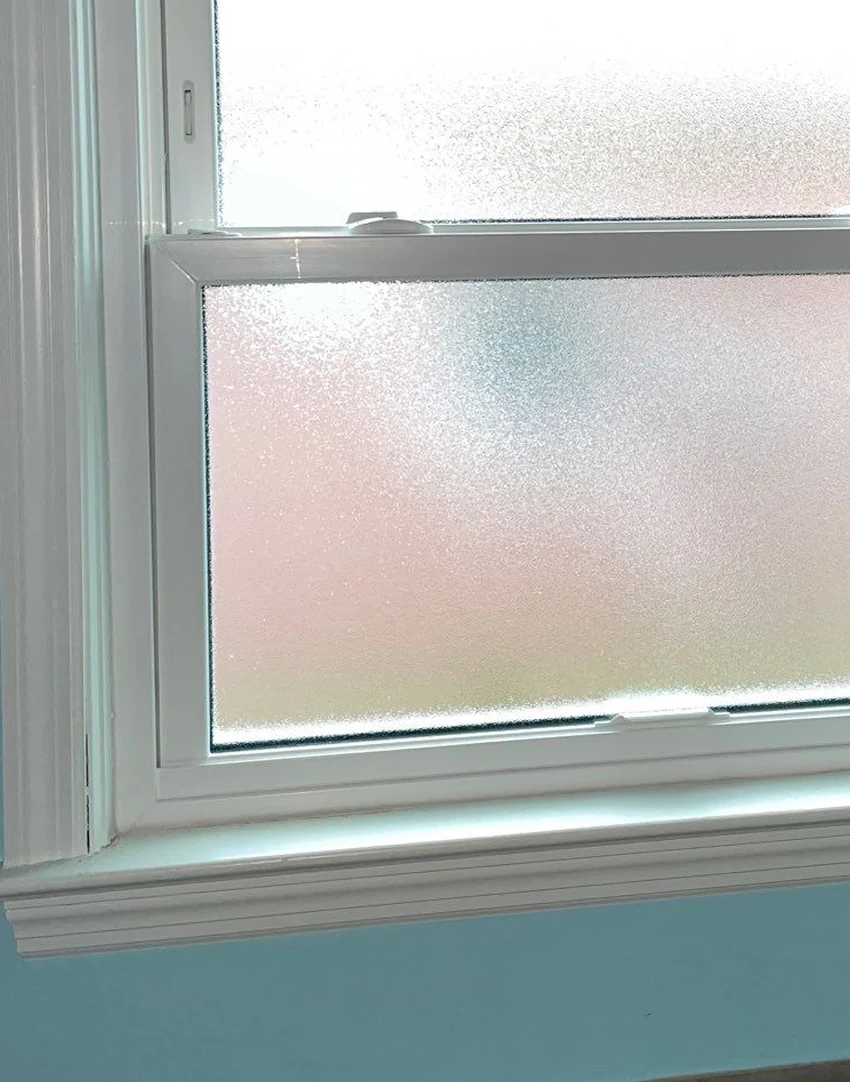
Obscure glass makes the view less distinct whenever you use the room. That can suit a window you rarely want to look through and would otherwise keep covered. Check the exact texture in person. Some samples allow more detail to be seen through them than others. Hold the sample upright and compare it close up and farther away. See it lit from both sides, including with a lamp behind it, before assuming you will like the result after dark.
Clear glass keeps the view available. It can make sense in a bathroom where people seldom pass by or where the view helps the room feel open. An adjustable covering gives you the option to screen the window when you need to. The tradeoff is that you have to use the covering and have a practical place to put it. If you are keeping a blind, check whether the proposed frame leaves enough room for it and who removes and reinstalls the hardware. Use the separate window treatment fit guide for that part of the quote.
You may want textured glass and a covering if the room has different privacy needs at different times. Judge those as two choices. The texture affects the view through the glass every day. The covering gives you another adjustment. Record what you expect from each so the quote includes the appropriate work.
Sources: Pilkington Texture Glass
YOUR HOME. OUR EXPERIENCE.
Planning a whole-home window replacement?
Talk with Contract Exteriors about your rooms, window options and the work around each opening. Start with a free estimate.
Book Your Free EstimateOur team will call to discuss your project and confirm appointment details.
What one Charleston window order specified
A signed Contract Exteriors window scope in Charleston listed two bathroom windows with the same 800 Series double-hung frame family. It ordered one with obscure glass and the other with clear glass. Both selections specified tempered SunSeal glass. This is a useful example because the window style and several specifications could stay consistent while the view through each window differed.
The project record does not establish why the homeowners chose each glass type or how private either room feels after dark. The project can still help you organize your own order. You can ask the estimator to show the frame, glass texture and any separate safety-glazing requirement on two distinct lines. You might choose the same look for both frames from outside even when one room needs more screening. Use the whole-home window styles guide for other choices you can coordinate without assuming every opening works the same way.
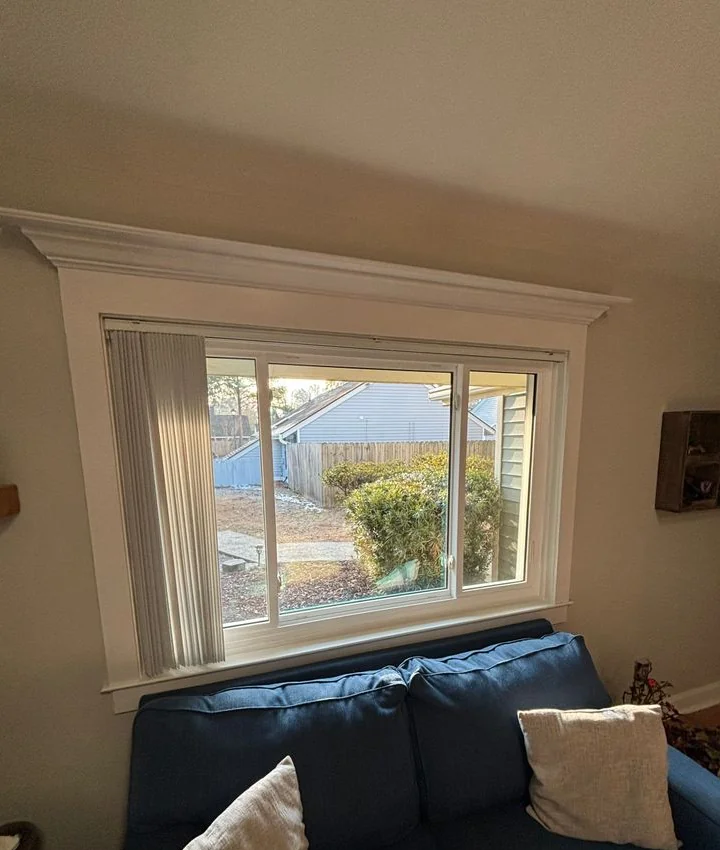
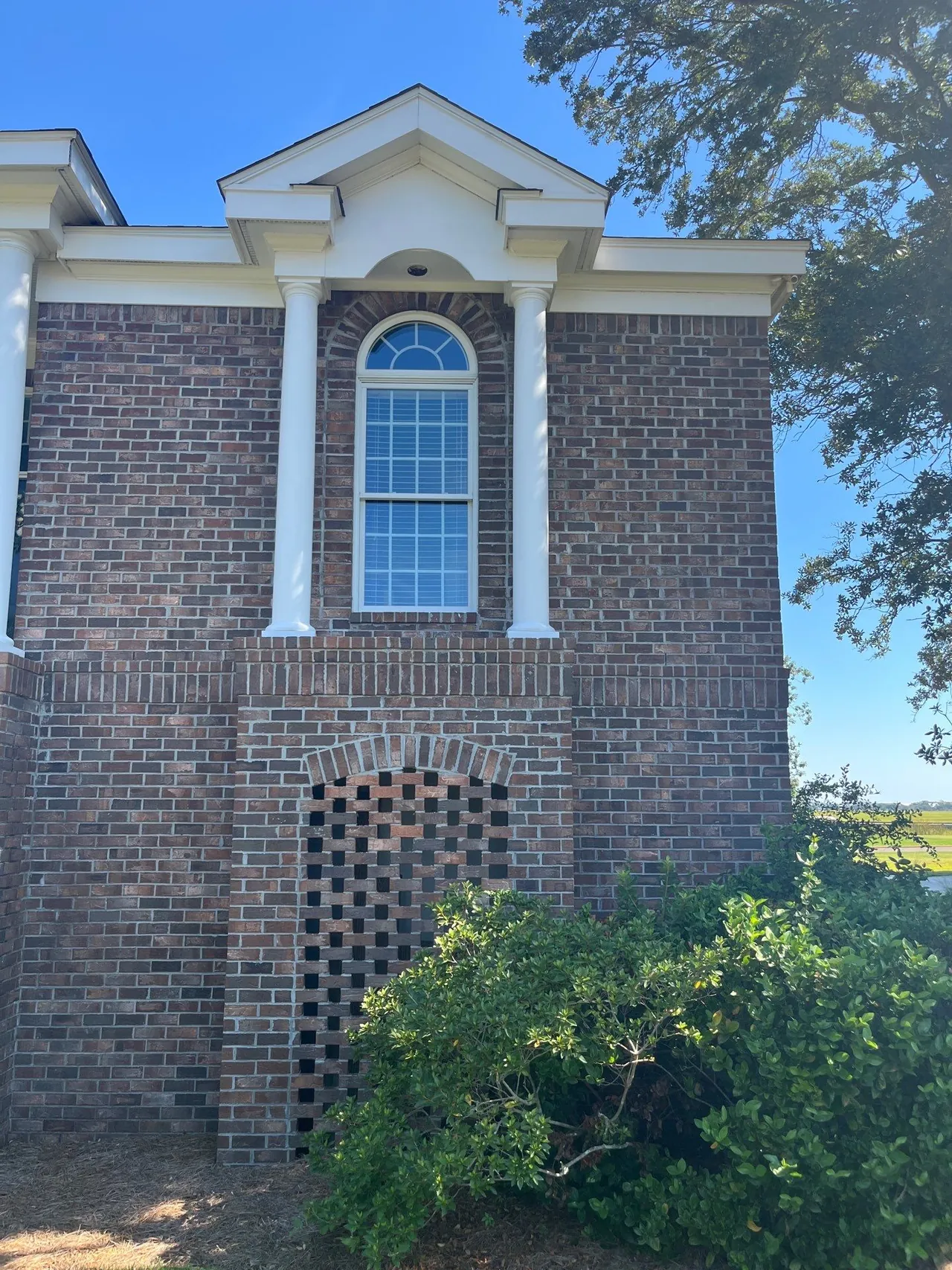
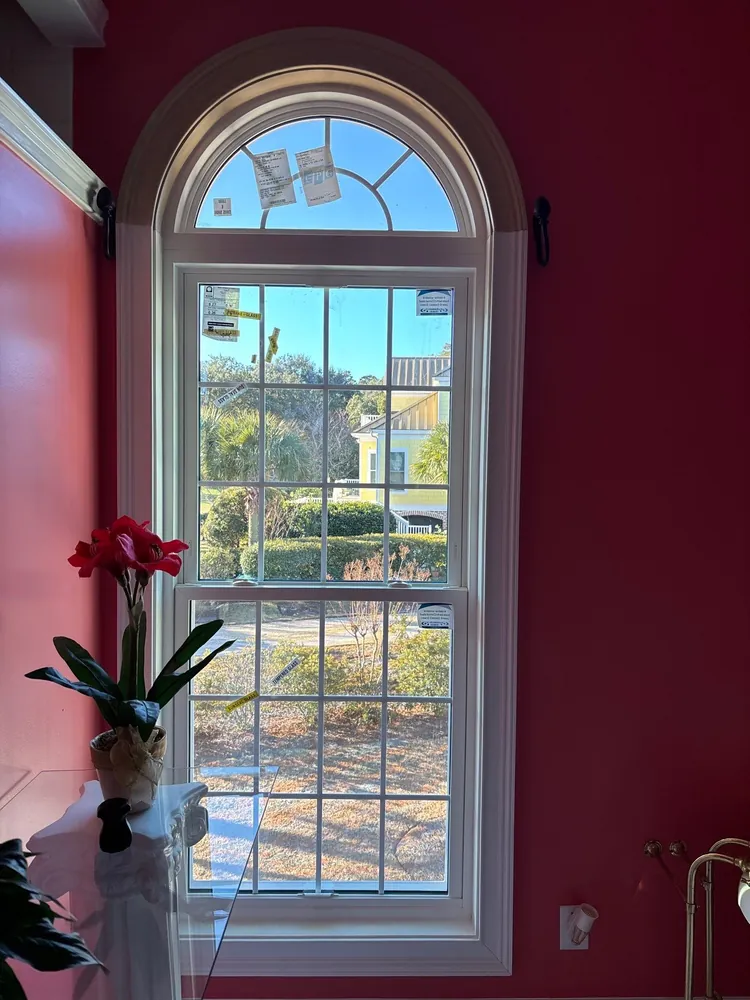
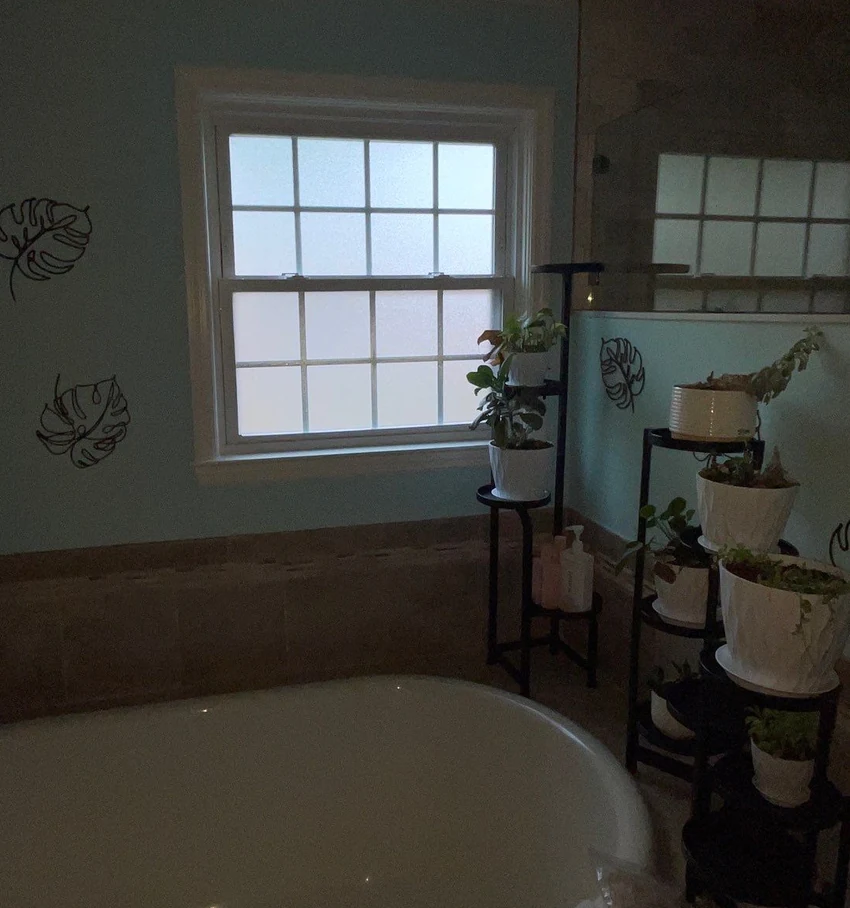
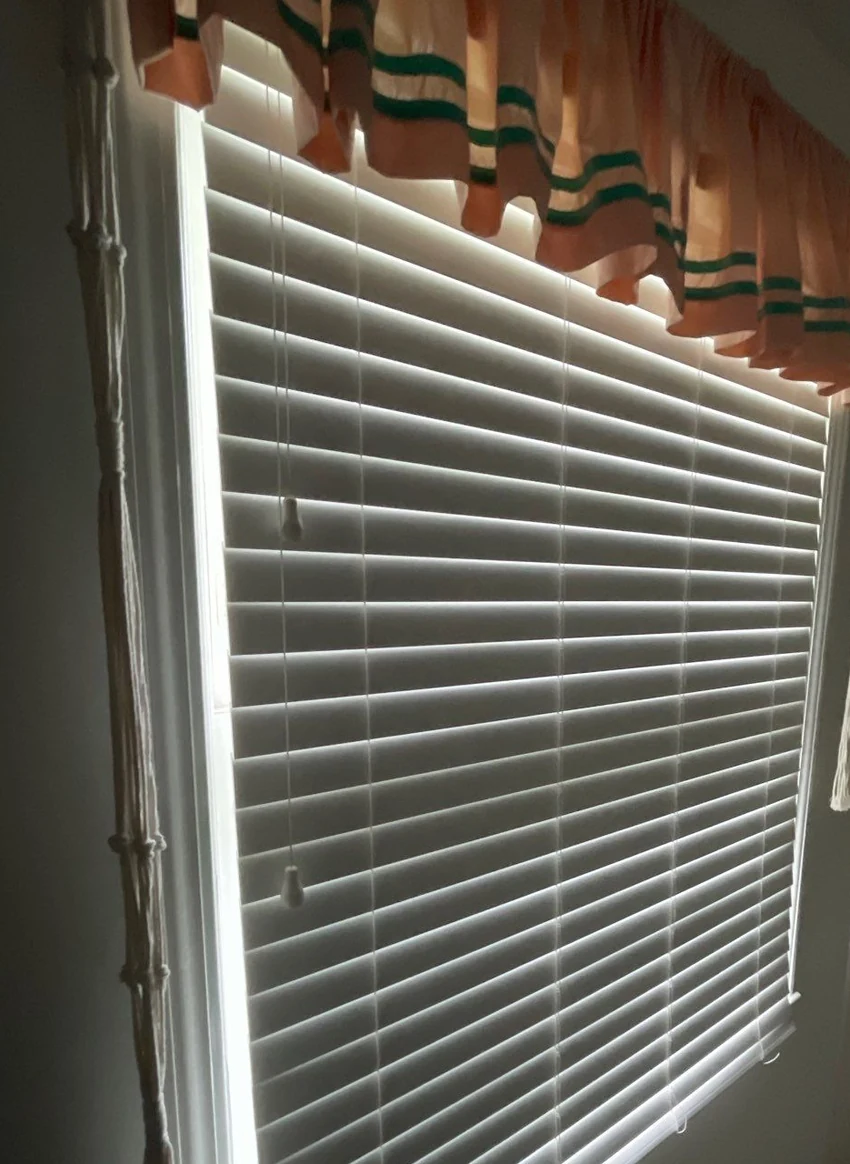
The site photographs show both openings before replacement. One room had a blind over its window. The installation-stage close-up shows the new textured sash in the other room, which had a gridded window before work. Read the written order to identify the glass selection. Use your own room lighting and sightlines to judge the sample.
Ask for two glass lines on the estimate
Give each bathroom a name that will still make sense to the installer. A room label such as “bathroom beside the rear guest room” works if there is only one such room. If it has two windows, add a wall or other fixed landmark and mark it on a photo. Separate the name of the opening from the name of the glass. “Side bath, window over vanity” identifies where the work goes. “Obscure texture, sample confirmed” identifies what you are buying. These details help even if one line is included in a package price. For other differences between proposals, read the window quote comparison guide.
Ask the estimator for the exact texture offered on the window you are considering. Ask what the price includes if the clear-glass option also needs a new shade. A shade may come from a separate supplier. Clarify who measures for it and whether the new frame, handle or sash would affect its fit. Compare those details for the two bathrooms on the same page before choosing which matters most to you.
If safety glazing applies, ask how that is identified on the estimate and on the final order. It is a separate question from the appearance of the glass. The manufacturer lists textured and tempered options separately on its DH800 product page. Ask your installer to verify the combination for the specific opening and product configuration before ordering.
Sources: OKNA DH800 double-hung window options
Compare the two bathroom lines before you sign
Have the estimator explain both selections with your two marked pictures in view.
- Name each opening Write the room, wall and the outside sightline next to the photo.
- Record glass and covering Name the exact glass texture or the covering you plan to use, and who handles any new hardware.
- Confirm the separate requirements Ask which safety-glazing specification applies and have it listed on the correct line.
Review the selection at the sample and again at the window
Take a photo of each opening the day you bring the glass sample home or visit a showroom. Write the sample designation beside the opening it belongs to. Look at how much of the view you still see, how the room feels when the covering is closed and whether the proposed glass helps with the sightline that started the discussion. Ask for a quote revision if the selection shown on the sample or written order differs from the one you meant to buy.
Put the two photos next to the latest estimate before signing. Read each line out loud and point to the matching picture. Have the estimator say which room has which glass. Confirm who handles any coverings and whether a finish or hardware selection differs by room. Put a date on the revised copy once those choices are clear. You can compare both lines even if the bathrooms are part of one whole-home bid.
Another Angle
See the same opening at two times
A bathroom window makes a different impression at different times of day. Early on, a bright sky can occupy almost the entire opening when you look up from the sink. Later the sky disappears and the light beside the mirror becomes the brightest thing near the window. When you decide how much of that opening you want to see through, account for both views. The window is a source of light, a place to look out and a surface someone outside can pass. Those roles need not carry the same weight in each bathroom.
Think about the changing state of a room as you use it. The path from the doorway to a sink may be comfortable in daylight with the shade raised. A covering that needs to be lowered every evening can still work well when the handle is easy to reach and the covering clears the fixtures. In a room where a shade is difficult to reach, a choice built into the glass might fit the routine better. Ask someone who uses the room at a different time of day to walk through it with you. They may be aware of a sightline you seldom see.
Notice what you still want to see
In two neighboring rooms, the strongest reason for matching glass could be the view from the yard. It could also be matching light or a common finish at the frames. Hold the clear and textured samples nearby at the same height before settling the decision. Walking past a single sample lying on a showroom table tells you little about a pane near eye level. Seeing the sample upright beside the room’s paint and trim helps you decide which qualities should match.
A small window beside a garden can give you a pleasant marker of the weather. You may notice changes in foliage or light from the same spot every morning. That view can be worth keeping even if the room needs occasional cover. A second bathroom can have an equally valuable source of daylight with a view you have little reason to preserve. Take some time to recognize which view you would miss before deciding that both rooms should use the same glass.
Turn a familiar view into a quote detail
One person may like a clear window because the tree beyond it makes the room feel open. Another might keep that same shade lowered most of the day. Give each person a chance to name the particular view or privacy concern before turning it into a product choice. If the answers differ, the question for the sample is whether it leaves enough of the view that somebody uses.
Compare the two bathrooms in the same afternoon if you can. Make a note for each while you are standing there. One note can name the view worth keeping. The other can name the spot from which the room needs screening. Take both to the meeting rather than trying to recall the differences from a list of products. The estimator then has an account of how the two rooms are used and a way to translate those observations into a glass choice you can review on paper.
A FEW MORE ANSWERS
Questions homeowners ask
Do both bathrooms have to use the same glass?
Ask whether your chosen series can be quoted with different glass by opening. The Charleston example used two selections within the same window family. Verify which finishes and glass combinations are available for your order.
Does obscure glass always provide enough privacy at night?
Inspect the actual sample with light behind it. Texture, viewing distance and the lighting on both sides affect what you can make out. If you require more coverage at certain times, ask about a compatible covering too.
Can I keep my existing shade if I choose clear glass?
Have its mounting space and the new sash or handle clearance checked. Confirm who removes and reinstalls it, and whether the trim or hardware needs to change.
Should I ask about textured glass and safety glazing separately?
Yes. Describe the appearance you want, then ask the installer to confirm the appropriate safety specification for the opening and list it separately on the order.
What should I ask to see before I agree to a texture?
Ask for the exact available sample. Compare it looking toward the light and with the light behind your viewing position. Look both up close and from a distance that resembles the exposure at home.
How should different bathroom glass appear in a package quote?
Give each window an identifier and ask for the glass selection to be listed beside the identifier. Ask what costs extra, including any separate covering or trim work.
Can I judge daylight from the project photos?
Photos can locate the window and illustrate the choice. Compare the actual sample and your own room rather than using the brightness of a photo as a prediction.
Sources and review
Contract Exteriors project evidence: Internal project records and original CompanyCam photographs support the project examples described in this article. Customer records and identifying details remain private. Project examples are separate from the manufacturer guidance and other published references below.
A signed Contract Exteriors order in Charleston documented two bathroom window lines in the same double-hung series. The original openings and one textured sash during installation illustrate separate choices on that order.
Editorial review details
Reviewed for Contract Exteriors by Bill Schum, Marketing Director, Contract Exteriors, on November 27, 2026. Scope: Bill Schum provides editorial oversight. AI-assisted research, drafting and review included cited sources, documented project details, project photographs and page presentation.
Our sourcing and corrections standards · Report a correction
Related planning resources
windows · planning · okna · charleston