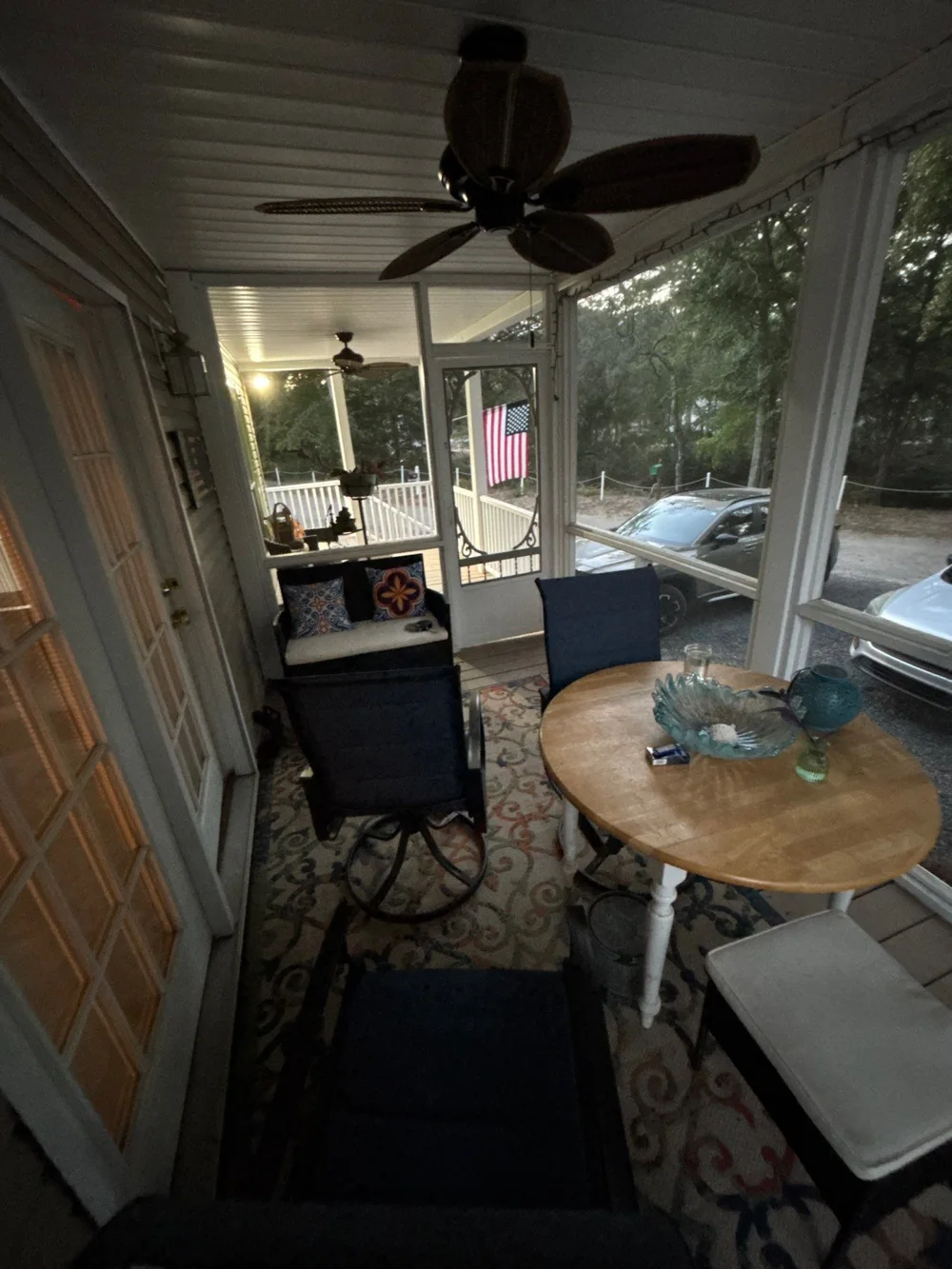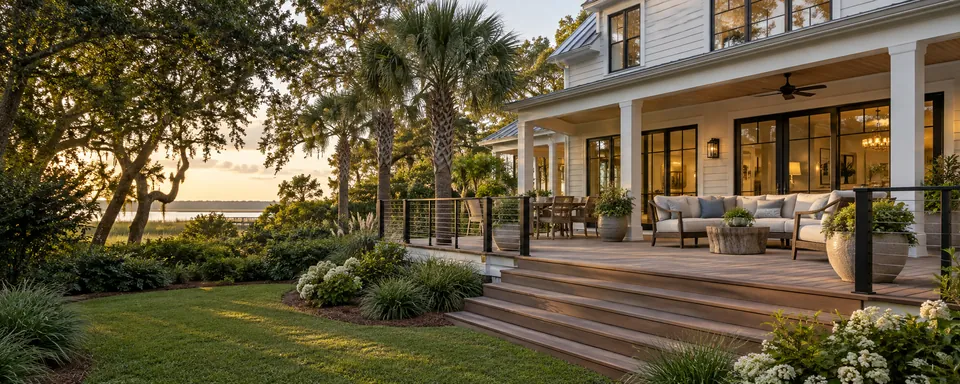
Would you actually spend more time outside?
Project at a glance
- Local example
- Johns Island, South Carolina
- Recorded request
- New back deck, with interest in screening part of it
- Existing setting
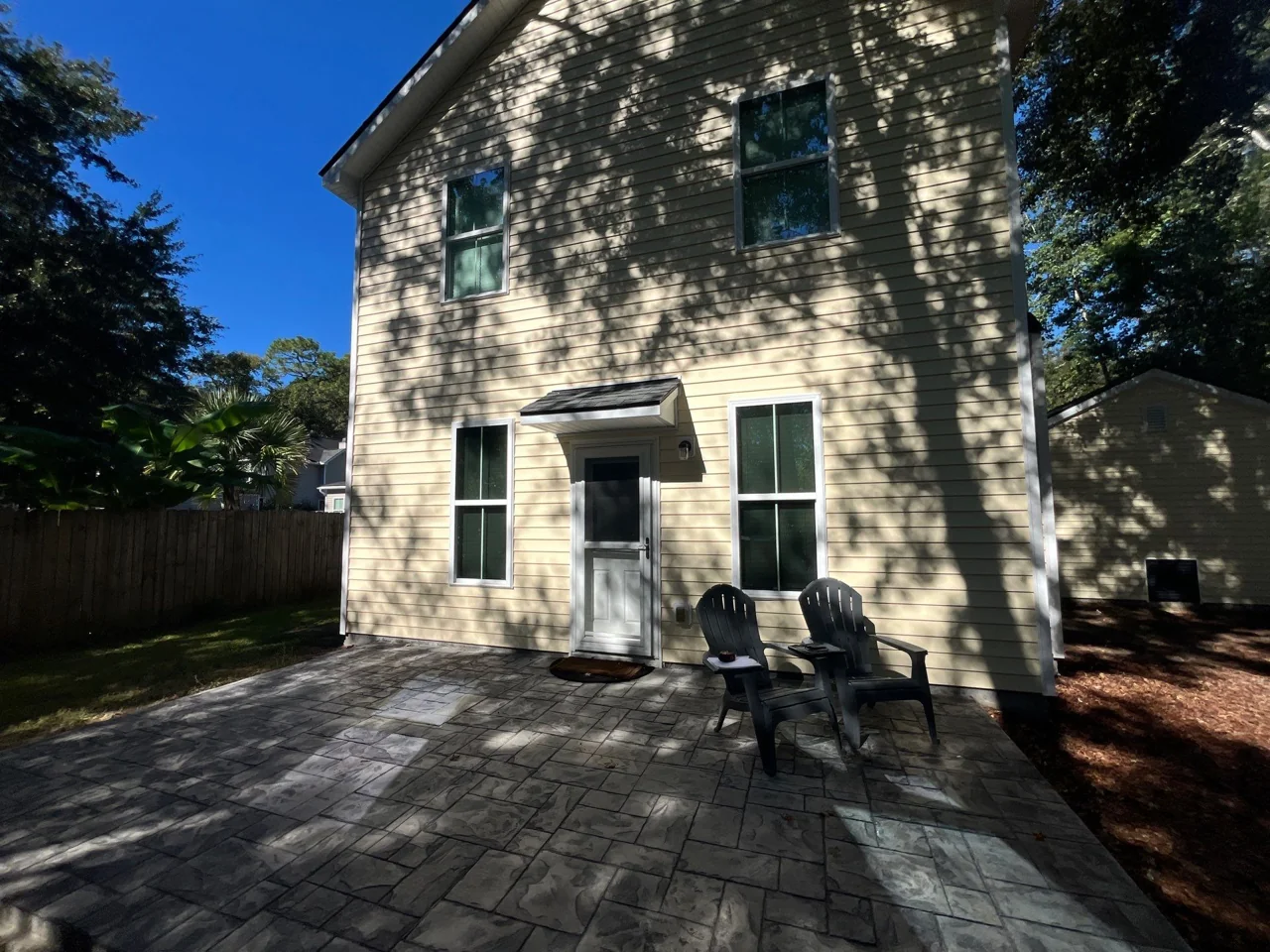
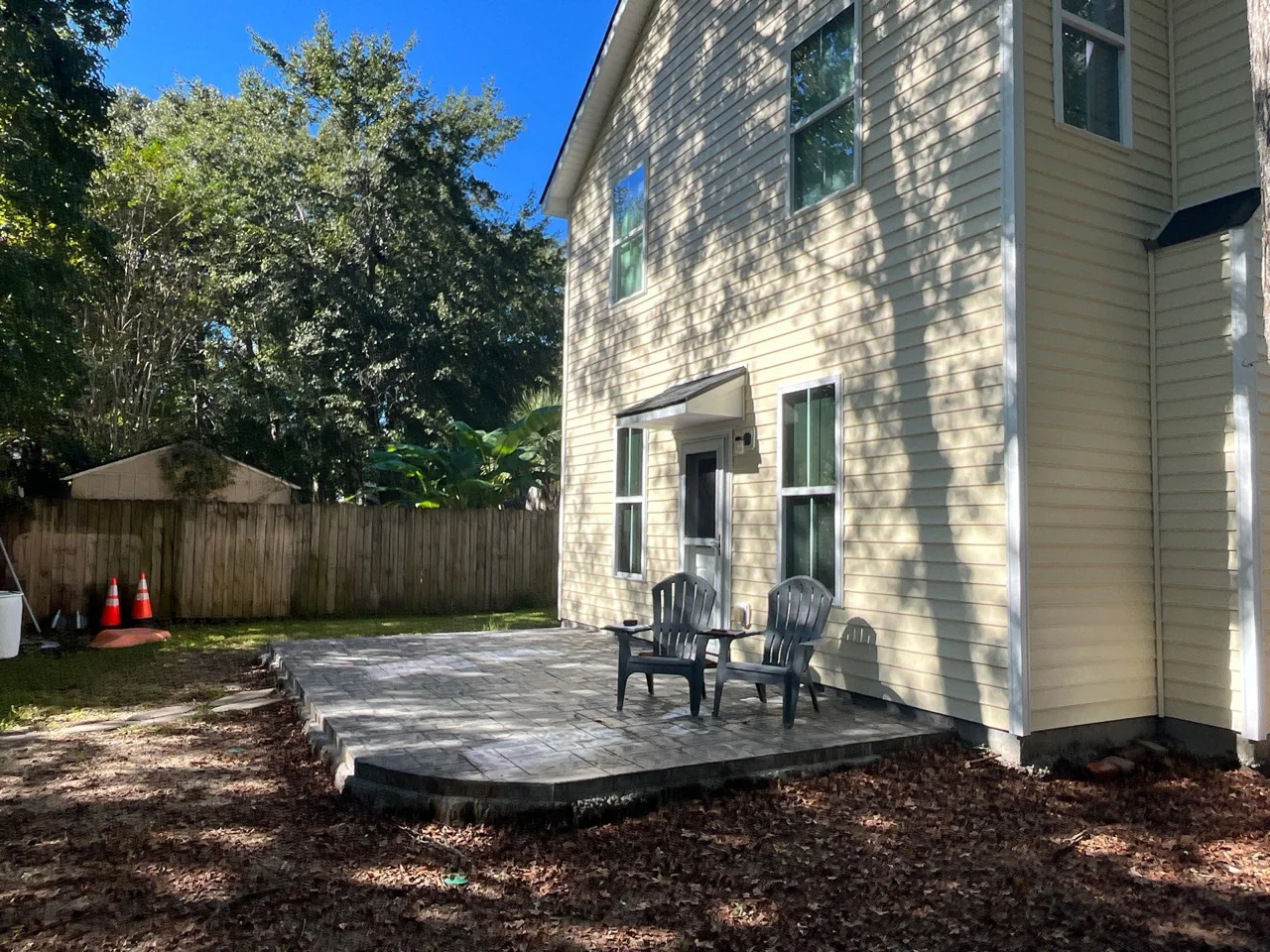
- Paved patio beside a two-story house and garden
- Stage
- Planning inquiry; existing-condition photographs
That's the question to answer before choosing a screen color. If you like the spot but keep retreating indoors because of insects, screening may remove a real obstacle. If you avoid it because of harsh sun, uncomfortable temperatures or an inconvenient layout, screens alone may not deliver the change you imagine.
Think of an ordinary day rather than a party. Where would you drink coffee, eat, read or sit with someone? Which hours would you use the porch? A space that fits a regular habit may have more value to you than a larger enclosure arranged around furniture you seldom use.
You don't have to convert that enjoyment into a resale percentage. Start with the use you want, then find out what a suitable complete project would cost. The decision becomes clearer when you can describe both sides: what you're paying for and what would make you choose to spend time there after the novelty of new construction has passed.
A Johns Island request shows why scope comes first
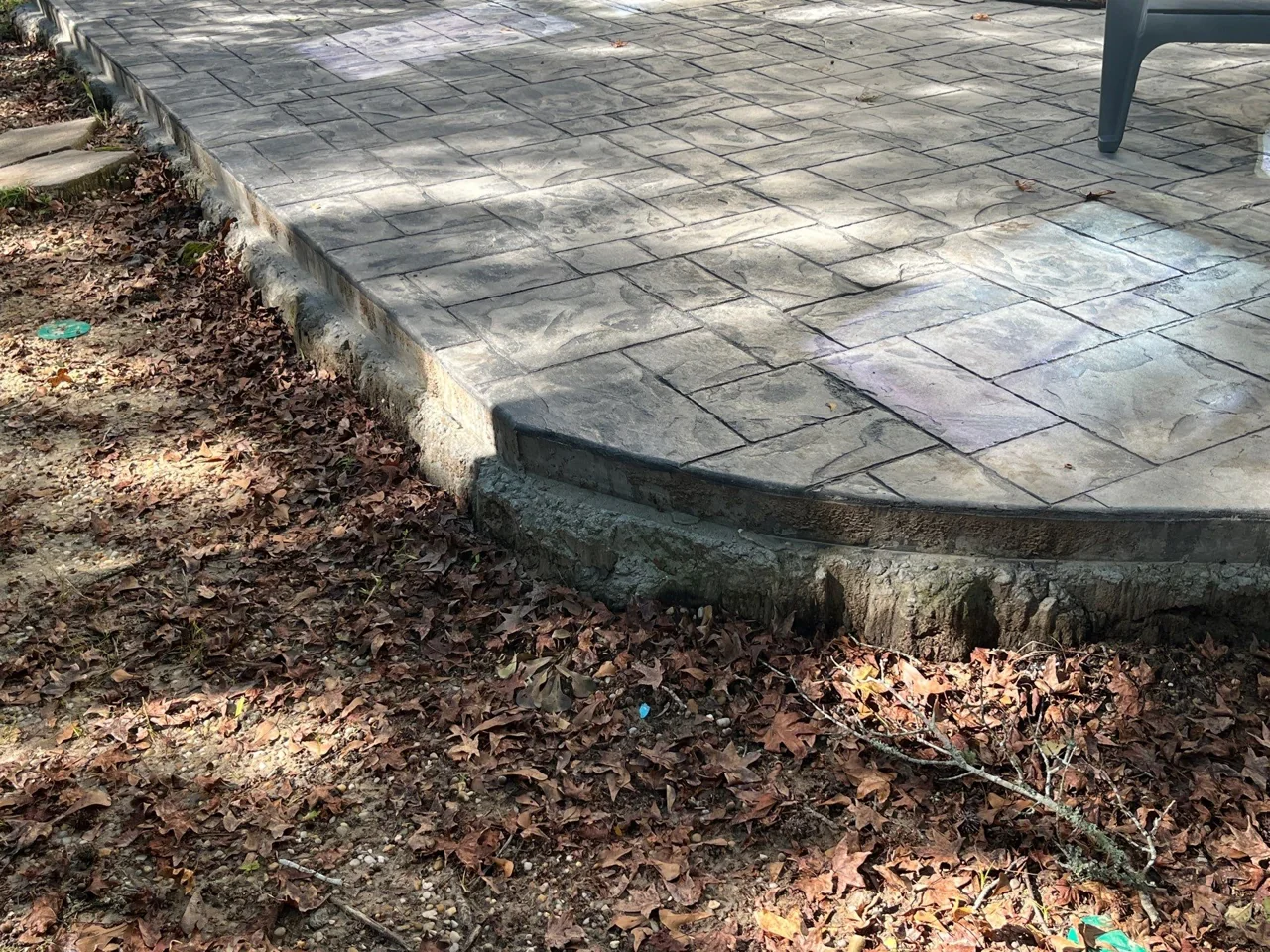
A Johns Island homeowner asked Contract Exteriors about a new back deck and expressed interest in screening part of it. The starting photographs show a paved patio, the back of the house, nearby trees and the garden. This is a planning example, not a completed screened porch or a documented increase in property value.
The request raises a bigger question than adding mesh to a finished room. It involves deciding how open and enclosed areas might work together and what construction the plan would need. The recorded interest in screening doesn't establish a chosen system, roof design, approved structure or final budget.
That distinction matters for your own estimate. Screening a suitable covered porch is one project. Creating an outdoor floor, cover and enclosure is another. Ask the contractor to explain what already exists, what can appropriately remain and what must be added. You can then decide whether the benefit is worth the real scope instead of comparing your plan with the price of somebody else's simple rescreen.
Buy insect protection with realistic expectations
In its June 2026 coastal gardening guidance, Clemson Extension identifies screened porches among ways to help reduce mosquito nuisance around the home. That supports the basic reason many South Carolina homeowners consider one. It doesn't mean every porch will exclude every insect or that screening replaces attention to the yard.
The actual mesh and the enclosure's details matter. Ask which product is proposed, what insects it is intended to address and how doors and other openings will be handled. If tiny insects are the concern, explain that before the product is selected. Our small-bug guide covers why standard screening may not answer every situation.
Keep the promise proportionate. A screened porch can make the outdoor setting more usable while still being outdoors. Doors open, screens can be damaged and maintenance remains part of ownership. You should understand the intended protection and its limits without being sold an absolute bug-free result. That lets you judge the value against the nuisance you're actually trying to reduce.
Sources: Clemson Extension: June2026 coastal mosquito guidance
YOUR HOME. OUR EXPERIENCE.
Thinking about a better screened porch?
Talk with Contract Exteriors about your existing porch, screen choices and the way you want to use the space. Start with a free estimate.
Book Your Free EstimateOur team will call to discuss your project and confirm appointment details.
Be clear about weather and comfort
Screening does not make a porch a sealed room. Outdoor temperatures, wind and wind-driven rain can still affect how and when you use it. A roof may provide cover, but the complete setting determines what happens at the sides. Choose furniture and expectations that suit an outdoor space rather than assuming indoor-room performance.
Spend time at the proposed location before the consultation. Notice the sun, breeze and view during the hours you expect to use it. If there is an existing roof, think about the shade already there. If there isn't, discuss the proposed cover as its own part of the design and budget.
If your real goal is year-round conditioned use, say so at the beginning. A screened room and a windowed patio room are different conversations, and even an enclosure with windows does not automatically become conditioned living space. Our porch-conversion guide helps separate those choices. It's better to identify the intended use now than to buy screens while hoping they will perform like walls and glass.
Make room for furniture, movement and the view
Measure the furniture you would actually keep, including the space needed to pull out chairs. Then consider the route from the house to the porch and onward to the yard. A table that technically fits can still make the room awkward if everyone has to squeeze past it to reach the door.
In the Johns Island starting setting, the patio lies directly outside the house with the garden beyond. A future enclosed area would become part of that everyday route. The design should consider both the place to sit and the way someone carries a tray, goes outside or reaches the open portion of the yard. No final layout is asserted for this inquiry.
Also compare the proposed screen divisions with your seated view. Phifer's screening resources distinguish products intended for visibility, privacy and other priorities. Ask for actual samples rather than assuming all mesh looks the same. The best fit is the balance you prefer at your house, not necessarily the darkest or least visible option in a showroom.
Understand what makes the quote larger or smaller
Begin by asking whether the existing floor, roof and supporting structure are suitable for the proposed enclosure. That assessment sets the project you are pricing. New support, a different cover or a changed footprint can make the scope very different from adding screens within a suitable existing space.
Then identify the system, screen material, doors, finishes and any other requested work. Lighting or electrical changes need to be described with the right responsibilities. Retained surfaces and items excluded from the price should be just as clear as the new components. Don't use the square footage alone to decide whether two estimates are comparable.
For an actual address, have the responsible professional confirm applicable approvals and requirements, including any association review. A Johns Island postal address doesn't by itself identify the permitting authority for every property. This guide doesn't quote local permit fees or an installed price for the featured inquiry. Compare current written proposals for your complete project before judging affordability.
YOUR HOME. OUR EXPERIENCE.
Ready to talk through your screened-room plans?
Bring your questions about screens, doors and what can stay to Contract Exteriors. Get help comparing the next steps for your porch.
Book Your Free EstimateOur team will call to discuss your project and confirm appointment details.
Count the small ownership jobs too
Screens and doors need care, and outdoor surfaces still collect dirt and debris. Ask how the selected mesh is cleaned and repaired, how a damaged panel would be replaced and what access is needed. A porch that looks easy to own in a photograph may have details worth understanding before installation.
Phifer's cleaning guidance varies by screening material. Follow the actual product instructions rather than treating every mesh with the same brush or cleaner. Keep the door and surrounding gaps in the maintenance conversation too. The enclosure works as an arrangement of parts, not as a roll of mesh considered on its own.
For pets and children, separate ordinary wear resistance from safety. A stronger insect screen is not automatically a guard, impact-rated barrier or pet-containment system. If the layout needs fall protection or you have a specific containment requirement, have that addressed independently in the complete design. Choose screening for its documented role rather than assuming the word durable covers every use.
Consider an open area alongside the enclosure
You may not want every outdoor activity inside the same boundary. A screened sitting area and an open part of the yard can serve different purposes. Think about where people gather, where they move between the house and garden and whether an enclosure would interrupt something you already enjoy. This is a layout choice, not an instruction to make the project larger.
Ask to see a simpler alternate if the first plan puts too much inside the enclosure or exceeds the budget. A smaller useful screened space may suit you better than a larger room with awkward circulation. Equally, reducing dimensions until your intended table no longer works is not a meaningful saving. Judge the arrangement by actual furniture and movement, with the complete construction and any separate safety requirements appropriately assessed.
Decide what would make the project worthwhile for you
A screened porch is a promising investment in daily use when you already want to be outdoors and insect protection would help you stay there. It is a weaker match when you need indoor temperature control, expect complete rain exclusion or cannot see yourself using the space regularly after paying for it.
Before requesting the estimate, write down three things: the activities you want, the conditions that currently stop you and what you want to retain. Include furniture dimensions and photographs of the house-to-yard route. Our project builder can organize those preferences without requiring you to choose every construction detail in advance.
Contract Exteriors can discuss a screened-room plan and the scope your property would require. Ask about an open area alongside it if that better suits the way you use the yard, as the Johns Island inquiry illustrates. Worth it doesn't have to mean the biggest enclosure. It means a well-defined outdoor place that you expect to use, at a price and level of upkeep you understand.
Another Angle
Useful space is measured through habits
An enclosure adds boundaries before it adds value. Whether those boundaries improve a home depends on the activities they support and the connections they preserve. A screened porch can be a generous intermediate space between indoors and the garden, but its success is not established by its size or the amount of new construction.
The Johns Island starting setting makes that intermediate role clear. A paved terrace lies immediately outside the house, with trees and a fenced garden around it. Introducing an enclosure would change the experience of leaving the house and looking into the yard. It would create a room-like foreground where there is presently an open outdoor surface.
The design question is therefore which part of that transition should become a place to stay. A sitting area may benefit from a defined boundary while another route remains open. The best arrangement can preserve both experiences. Enclosing everything available may actually reduce the variety that makes a garden useful and engaging.
A route should not consume the room
Circulation is easily overlooked when a plan is judged by square footage. A porch can appear spacious on paper while the door-to-yard route runs through the only practical furniture arrangement. In use, the room becomes a corridor with chairs beside it. Its enclosure may be substantial, yet its value as a place to settle is limited.
The strongest plans establish a clear place to sit alongside a clear way through. Neither needs to be grand. A modest room with a protected seating zone can be more inviting than a larger one in which every movement disrupts the table. Furniture and door positions should be considered together rather than settled in separate stages.
View and shade then become part of the same composition. A seated person experiences the mesh and frame divisions differently from someone walking across the yard. A useful opening should be placed where it contributes to that actual experience. The ambition is not the absence of all visible framing, but an arrangement in which necessary divisions do not compete with the reason to sit there.
Leave the garden a role
A screened porch is most compelling when it remains connected to something outside it: a planted edge, a tree canopy, an open lawn or an ordinary view that changes through the day. Treating the enclosure as a self-contained object can weaken the very outdoor relationship the project was meant to improve.
That can justify restraint in both footprint and furnishings. More enclosed area may require more structure, more furniture and a more complicated transition to the yard. A smaller room may leave a clearer open area alongside it. There is no universal winner; the tradeoff should be visible in the plan rather than discovered after the work is complete.
The architectural value of a screened porch lies in this negotiated boundary. It offers a place to pause without entirely withdrawing indoors. If the proposed arrangement supports a real habit, frames a worthwhile outlook and preserves a comfortable route, it has a coherent reason to exist. If those relationships are absent, additional square footage alone is unlikely to create them. Judge the room by the life it makes possible around that boundary.
A FEW MORE ANSWERS
Questions homeowners ask
Will a screened porch keep every bug out?
No absolute exclusion is promised. The actual mesh, intact panels, door details and other openings affect protection; identify the insects you want to address before selecting a system.
Does screening make a porch air-conditioned space?
No. Screening alone does not create a sealed or conditioned room. A different enclosure and any conditioning require a separate discussion and appropriate assessment.
Is screening an existing porch the same as building a new one?
No. A suitable existing covered space may need a different scope from a project requiring a new floor, support, cover and enclosure. Compare complete proposals.
Will screens block the view?
Every mesh and frame layout changes the view to some extent. Compare samples and proposed divisions from your normal seats; visibility and privacy products serve different priorities.
Can insect screen act as a railing or contain my dog?
Do not assume that. Tear resistance does not establish fall protection or rated containment. Have the complete design address any separate safety requirement.
Will I recover the cost when I sell?
A fixed return is not established. Evaluate the use you expect, the complete installed cost and upkeep rather than relying on a guaranteed resale percentage.
Sources and review
Contract Exteriors project evidence: Internal project records and original CompanyCam photographs support the project examples described in this article. Customer records and identifying details remain private. Project examples are separate from the manufacturer guidance and other published references below.
Actual Contract Exteriors request and original existing-condition photographs privately matched to the same property. Requested work is separated from selected products and completed results; private customer details omitted.
- Contract Exteriors project evidence — Private request and original existing-condition photographs matched to the same property. Public link opens the company portfolio, not private customer records.
- Clemson Extension: June2026 coastal mosquito guidance
- Phifer: screening features and priorities
- Phifer: insect screening care and product FAQs
Editorial review details
Reviewed for Contract Exteriors by Bill Schum, Marketing Director, Contract Exteriors, on November 16, 2026. Scope: Editorial oversight, source and project-record checks, photo-originality review, and mobile/desktop presentation checks. Research and editing were supported by AI tools. Design commentary reflects an editorial perspective and does not constitute professional architectural or engineering advice or a property-specific site assessment.
Our sourcing and corrections standards · Report a correction