
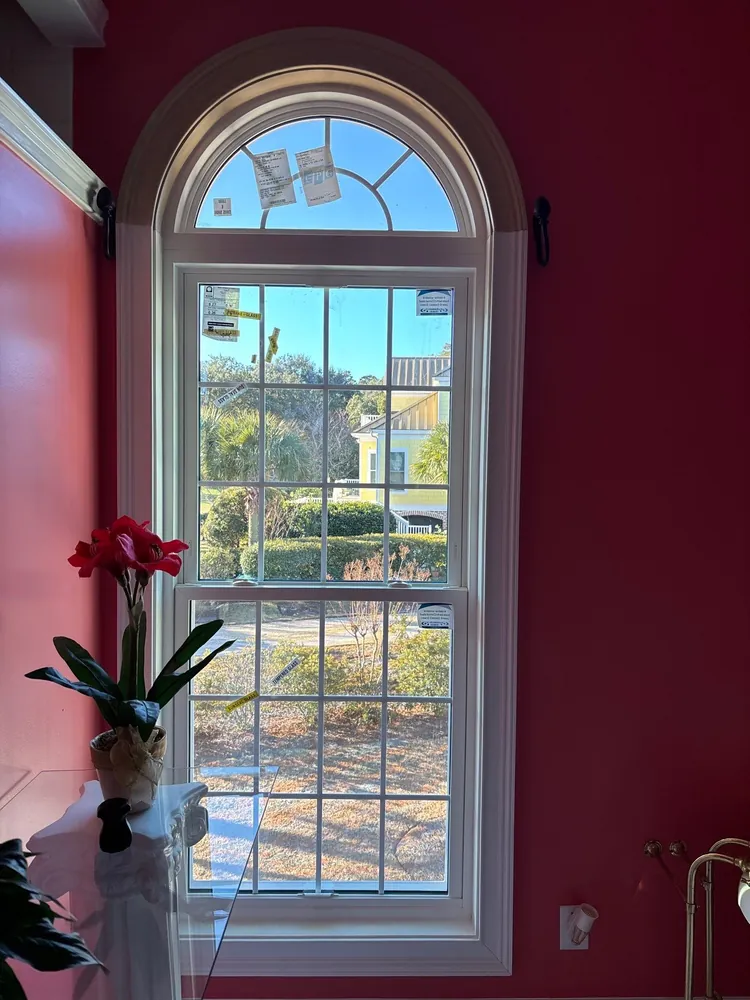
Window Glass for Hot, Sunny Rooms
Quick answer
Compare visible transmittance alongside solar heat gain and U-factor for the exact window. Consider the shade and the time of day you use the room.
Try this. Take a photo from your usual seat during the troublesome sun. Ask each bidder to list all three ratings for that opening.
From the project. The documented Pawleys Island six-window project shows the coverings, replacement work and installed window group. It documents the selection without measuring a heat or daylight outcome. Project sources
Project photos by Contract Exteriors Pawleys Island, South Carolina
Read the full article TranscriptRelated videos
All videos
Related articles
All articlesVideo transcript
Will glass that lets in less sun heat make your room too dark? It can, but the two ratings answer different questions. Ask how much visible light comes through the exact window as well as how much sun heat it admits.
The room matters. In this Pawleys Island window project, you can see how blinds, curtains and where you sit change the light you experience. Think about the hours you spend in your own room.
Check the ratings for the exact window in each quote. The solar heat gain rating tells you how much heat from sunlight enters. Visible transmittance covers daylight. U-factor tells you how well the window insulates.
This six-window project shows one documented glass choice. It does not tell us how much cooler the room became. For your home, compare the proposals against the afternoon sun and any shade you plan to keep.
Take a photo from your usual seat when the sun bothers you most. Ask each bidder to mark all three ratings for that opening on the written quote.

YOUR HOME. YOUR NEXT CHAPTER.
Bring your plans
to life.
Fresh siding. A deck made for gathering. A home that feels more like you. Talk through your ideas with a Contract Exteriors expert and find the right next step for your home.
Speak to an ExpertContract Exteriors will call to discuss your project and confirm appointment details.